
Chasse-galerie
In its own language: La Chasse-galerie
from Canadian French for 'chasing' or 'hunting'
A French-Canadian folktale about lumberjacks who fly a canoe to visit lovers on New Year's Eve
La Chasse-galerie is a popular tale from Quebec in which loggers make a pact with the devil to fly their bark canoe through the air. The story blends older European myths with Indigenous legends and was cemented by Honoré Beaugrand in 1892.
- Written by Honoré Beaugrand in 1892
- Loggers fly a canoe to visit lovers
- Must not touch church crosses
- Blends French and Indigenous legends
- Inspired Montreal amusement park ride
What it is
La Chasse-galerie is a well-known legend from Quebec that features a group of lumberjacks seeking a magical way to travel home. The men use a bewitched canoe that flies through the night sky to reach their sweethearts during a holiday celebration. This tale belongs to the broader category of folk narratives involving supernatural travel and pacts with dark forces. It serves as a cautionary story about the dangers of breaking religious rules and losing one's soul to evil influences.
Where it comes from
The narrative combines elements from different cultural traditions. It draws from a French legend about a nobleman named Gallery who was punished for skipping Sunday mass by flying eternally through the skies. When French settlers arrived in Canada, they merged this story with an Indigenous legend about a flying canoe. The modern version was popularized by Honoré Beaugrand, who published his account in 1892. His work focused on loggers working near the Gatineau River who made a deal with the devil to return home quickly.
How it is done
The journey begins after the men drink heavily on New Year's Eve. They paddle their canoe into the air, traveling hundreds of kilometers to visit their partners. The magic requires strict adherence to two rules: they must not mention God's name or touch any church crosses. If they break these conditions, the devil claims their souls. The men try to stay sober to keep their minds clear, but accidents often occur during the return trip due to drunkenness or interference from the devil himself.
Tools and materials
The central object is a traditional bark canoe, which becomes capable of flight through the devil's power. The story frequently mentions rum, which the men drink before the journey and sometimes during it, leading to mistakes. Church steeples with crosses are significant landmarks that the canoe must avoid touching. The navigator's role is critical, as his ability to steer determines whether the crew survives the magical voyage.
Chasse-galerie, drawn and placed
- Living
- Revived
- Fading
- Historical
- Legendary
- Performed
- Lineage
- variant of the Wild Hunt
- Timing
- New Year's Eve
What it is for
The primary motivation for the journey is love and longing. The loggers want to see their sweethearts and join in the New Year's festivities despite being far away at remote camps. The tale explores themes of desire and the risks taken to satisfy them. It also serves as a moral lesson about the consequences of making deals with evil forces and the importance of maintaining faith and sobriety.
Who does it
Honoré Beaugrand is credited with writing the most famous version of the story. He was a writer and historian who helped preserve French-Canadian folklore. Other authors, such as Edward C. Woodley and J.E. LeRossignol, have also published variations of the tale. Scholars study these versions to understand how European myths adapted to North American settings and cultures.
Peoples and places
The legend is deeply rooted in French-Canadian culture, particularly among communities in Quebec. It reflects the history of lumber camps and the lives of voyageurs. The story also incorporates elements from First Nations traditions, showing how different groups influenced each other. Variations exist in Acadian regions, where details like axe handles are added to the narrative. The tale remains a key part of Quebec's cultural identity.
At a glance: who, where and when
Occasions
What people believe
The story operates within a worldview where spiritual forces interact directly with human actions. The devil is a real threat who can claim souls if religious boundaries are crossed. Blasphemy and disrespect for sacred symbols like crosses lead to immediate punishment. The narrative reinforces the importance of community, loyalty to partners, and adherence to religious norms in a harsh frontier environment.
When it is done
The events typically take place on New Year's Eve, a time when workers seek relief from their labor. The timing allows for a brief escape from the isolation of winter camps. The return journey happens under moonless skies, adding to the danger and mystery of the flight. The story is often retold during winter festivals and celebrations of French-Canadian heritage.
How scholars and sceptics see it
Researchers view La Chasse-galerie as a fusion of European and Indigenous mythologies. It is seen as a Canadian variant of the Wild Hunt, a widespread European motif. Anthropologists note how the story adapts to reflect local industries like logging and fur trading. Literary critics analyze the different endings, some of which involve eternal damnation while others allow redemption.
Cautions and what is closed
The tale warns against the dangers of alcohol consumption and blasphemy. In many versions, the men lose control because of drinking, leading to near-disasters. The story highlights the risk of making pacts with evil entities, which can result in the loss of one's soul. It serves as a moral guide for maintaining spiritual integrity in difficult circumstances.
Compare and confuse
The legend is related to the Faustian bargain, where humans trade their souls for temporary gains. It shares themes with the Wild Hunt, a spectral procession of hunters across the sky. Unlike the Flying Dutchman, which involves a cursed ship, this story focuses on a canoe and romantic motives. The tale is distinct from other flying vehicle myths by its specific connection to Quebec's logging history.
Law and persecution
There are no legal restrictions associated with the legend itself. However, the story has been adapted into various forms of media, including films and stage plays, which are subject to standard copyright laws. The public domain status of some early versions allows for free adaptation and retelling.
Questions people ask about Chasse-galerie
What is La Chasse-galerie?
It is a French-Canadian legend about lumberjacks who fly a canoe through the air to visit their sweethearts on New Year's Eve. The story originates from Quebec and blends European and Indigenous myths.
How does the magic work?
The men make a pact with the devil to fly their canoe. They must not mention God's name or touch any church crosses during the journey. Breaking these rules results in the loss of their souls.
Where did the story come from?
It combines a French legend about a nobleman punished for skipping mass with an Indigenous tale of a flying canoe. Honoré Beaugrand popularized the version featuring Gatineau River loggers.
What happens if they fail?
If they blaspheme or touch a cross, the devil takes their souls. Some versions say they are condemned to fly forever, while others allow them to escape if they remain faithful to the rules.
Good reading and sources
The facts on this page come from the Wikipedia article "Chasse-galerie", written by its contributors and used under the CC BY-SA 4.0 licence, and from its Wikidata record (CC0). EveryJaadu rewrote the text in its own words, with AI assistance, and compares every page with the article to make sure no passage is copied. It may be reused under the same CC BY-SA 4.0 licence with a link back.
It may contain mistakes. Names and customs differ from one community to the next, and some knowledge is closed to outsiders and left out here. This page describes belief and practice. It does not say that any of it works, it is not a how-to, and it is not medical advice. If something is wrong, tell us. Last refreshed 2026-10-06.
More from Canada
All the entries from Canada 🇺🇸 United States and 1 moreBigfoot
A large, hairy humanoid creature of North American folklore and cryptozoologyFigure · Wonder and entertainment Legendary
🇺🇸 United States and 1 moreBigfoot
A large, hairy humanoid creature of North American folklore and cryptozoologyFigure · Wonder and entertainment Legendary
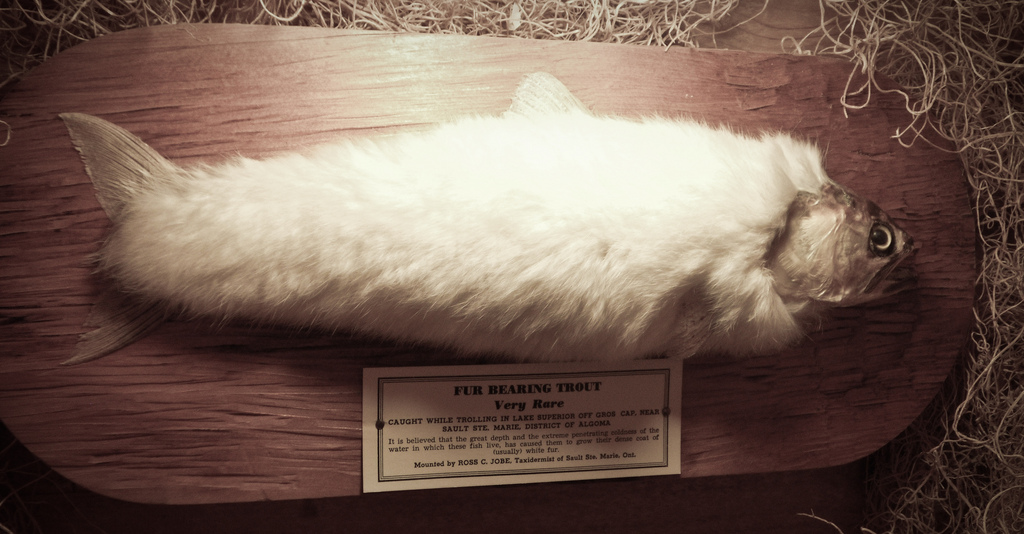 🇮🇸 Iceland and 2 moreFur-bearing troutLoðsilungur
A legendary fish with a coat of fur, found in North American and Icelandic tall tales.Figure · Wonder and entertainment Legendary
🇮🇸 Iceland and 2 moreFur-bearing troutLoðsilungur
A legendary fish with a coat of fur, found in North American and Icelandic tall tales.Figure · Wonder and entertainment Legendary
 🇺🇸 United States and 1 moreFearsome critters
Tall tale animals from North American logging camps used to jest and explain the wild.Figure · Wonder and entertainment · Luck and prosperity Historical
🇬🇱 Greenland and 2 moreThe Goose Wife
A circumpolar myth of a hunter and a woman who sheds her bird skinFigure · Wonder and entertainment Legendary
🇺🇸 United States and 1 moreFearsome critters
Tall tale animals from North American logging camps used to jest and explain the wild.Figure · Wonder and entertainment · Luck and prosperity Historical
🇬🇱 Greenland and 2 moreThe Goose Wife
A circumpolar myth of a hunter and a woman who sheds her bird skinFigure · Wonder and entertainment Legendary
Related elsewhere
All figure 🇮🇳 India and 5 moreKinnaraकिन्नर (Sanskrit)
A half-human, half-bird creature from Hindu and Buddhist myth, known for music and devotion.Being · Love and attraction · Wonder and entertainment Legendary
🇮🇳 India and 5 moreKinnaraकिन्नर (Sanskrit)
A half-human, half-bird creature from Hindu and Buddhist myth, known for music and devotion.Being · Love and attraction · Wonder and entertainment Legendary
 🇬🇧 United Kingdom and 2 moreKing ArthurBrenin Arthur
A legendary British king and folk hero of medieval literature and Welsh mythologyFigure · Power and authority · Wonder and entertainment Legendary
🇬🇧 United Kingdom and 2 moreKing ArthurBrenin Arthur
A legendary British king and folk hero of medieval literature and Welsh mythologyFigure · Power and authority · Wonder and entertainment Legendary
 🇪🇬 Egypt and 1 moreSphinx
A mythical hybrid with a human head and lion body, serving as guardian or riddler in Egyptian and Greek traditions.Being · Protection · Wonder and entertainment Legendary
🇪🇬 Egypt and 1 moreSphinx
A mythical hybrid with a human head and lion body, serving as guardian or riddler in Egyptian and Greek traditions.Being · Protection · Wonder and entertainment Legendary