Fur-bearing trout
In its own language: Loðsilungur
from the physical description of a fish covered in hair-like growths
A legendary fish with a coat of fur, found in North American and Icelandic tall tales.
The fur-bearing trout is a mythical creature appearing in the folklore of Iceland and North America. Stories claim the fish grows a thick coat of fur to survive freezing waters. These tall tales often serve as humorous hoaxes or explanations for strange biological phenomena.
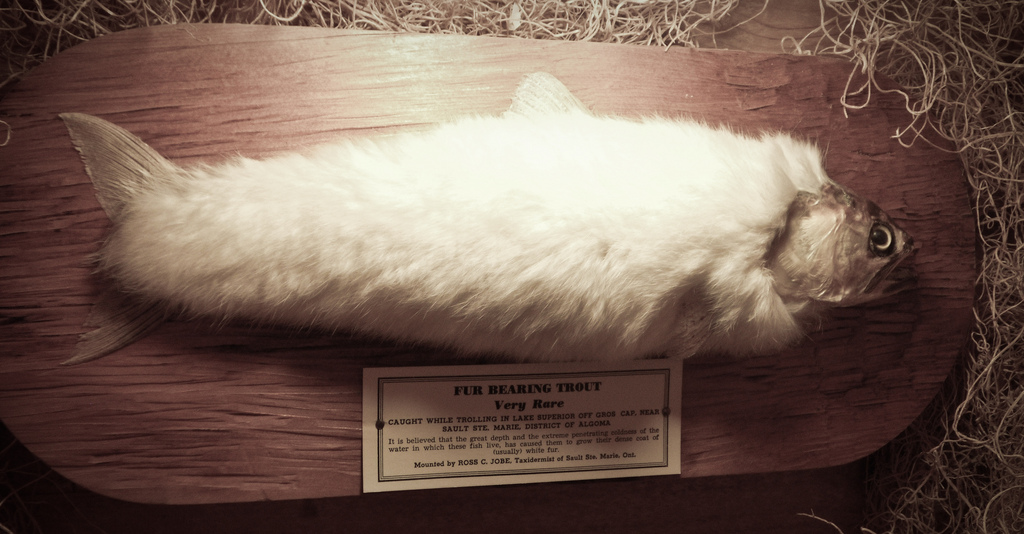
- Ross C. Jobe created a taxidermy specimen with rabbit fur.
- The Icelandic Loðsilungur is blamed for human wickedness.
- J.H. Hicken published an early American account in 1929.
- Saprolegnia fungus can make fish look like they have fur.
- Robert Benchley wrote a humorous essay about the fish in 1936.
What it is
The fur-bearing trout is a legendary aquatic creature featured in the folk traditions of Iceland and North America. It is described as a fish that has developed a dense coat of fur. This adaptation is said to help the animal retain body heat in extremely cold environments. The creature belongs to the category of fantastic beasts and urban legends. It is not a real biological species but a product of storytelling and practical jokes.
Where it comes from
Tales about hairy fish date back to the seventeenth century. A Scottish immigrant wrote to relatives about "furried animals and fish" in the New World. In Iceland, the Loðsilungur is linked to demons and giants. American publications began featuring the story in the twentieth century. J.H. Hicken wrote about it in a 1929 Montana Wildlife article. Robert Benchley also included a version in his 1936 book. Wilbur Foshay promoted a local version in Colorado.
How it is done
Stories describe how the fish acquires its coat. One theory suggests the cold water causes the fur to grow. Another claims hair tonic was spilled into rivers, causing the growth. Fishermen are sometimes depicted acting as barbers to lure the fish. They offer free trims to attract the creatures from the water. Some accounts say the fur falls off when the fish is removed from the cold water.
Tools and materials
Taxidermy specimens have been created to support these stories. Ross C. Jobe made a famous example using white rabbit fur. He attached the fur to a trout body. This specimen was sent to the Royal Museum of Scotland. The hoax was discovered when the purchaser learned the truth. Other descriptions mention reddish hair on the lower jaw and fins.
Fur-bearing trout, drawn and placed
- Living
- Revived
- Fading
- Historical
- Legendary
- Performed
- Lineage
- North American and Icelandic folklore
What it is for
These tales function as humor and entertainment. They explain strange occurrences through fantasy. In Iceland, the fish is seen as a punishment for human wickedness. Some stories claim eating the fish causes pregnancy. Others use the concept to mock local authorities or businesses. The legend serves as a shared cultural joke across regions.
Who does it
Scholars and historians study these narratives as examples of folklore. Writers like Sjón have explored the Icelandic versions. Taxidermists like Ross C. Jobe created physical props for the myths. Journalists and magazine editors helped spread the American versions. The practitioners are storytellers and hoaxers rather than magical ritualists.
Peoples and places
The legend appears in both Icelandic and American cultures. Icelanders know the creature as the Loðsilungur. Americans tell stories about trout in the Arkansas River and Lake Superior. Canadian tales involve a specimen caught near Sault Ste. Marie. Each region adds unique details to the core idea of a hairy fish.
At a glance: who, where and when
What people believe
The worldview behind these tales mixes natural observation with fantasy. People see fish affected by cotton mold or hair-like structures. They interpret these anomalies as evidence of furry fish. The belief holds that extreme cold changes biology dramatically. It also reflects a trust in local experts who promote the hoax.
When it is done
No specific festivals or holy days are tied to the creature. The stories appear whenever new hoaxes are published. Media coverage spikes when a new specimen is reported. The legend persists year-round as part of regional identity.
How scholars and sceptics see it
Biologists confirm no such species exists. They point to Saprolegnia fungus as a cause of fur-like growths. The whalefish Mirapinna esau has hairlike outgrowths. Scholars view the trout as a social construct and a prank. The taxidermy specimen is studied as a historical artifact of deception.
Cautions and what is closed
Some Icelandic stories warn the fish is poisonous. Eating it is said to cause severe health issues. The taxidermy hoax caused confusion in scientific circles. Museums had to correct their records after the fraud was revealed. No physical harm comes from the legend itself.
Compare and confuse
The fur-bearing trout is related to other fearsome critters. It shares traits with the Loch Ness Monster and Bigfoot. Both are legendary animals used to explain unknown phenomena. The Icelandic Lodsilungur is a specific regional variant. American versions focus on commercial and humorous angles.
Questions people ask about Fur-bearing trout
What is a fur-bearing trout?
It is a legendary creature from Icelandic and North American folklore. Stories claim the fish grows a coat of fur to survive freezing water. It is not a real animal but a product of tall tales and hoaxes.
Where does the legend come from?
Tales date back to the seventeenth century. Scottish immigrants wrote about hairy fish in the New World. Icelandic legends call the creature the Loðsilungur. American magazines popularized the story in the twentieth century.
Is there any real fish that looks like it has fur?
Yes, some fish develop fur-like growths from disease. The Saprolegnia fungus can cover fish in white tufts. The whalefish Mirapinna esau has hairlike structures on its body.
Why do people tell stories about hairy fish?
The tales serve as humor and community bonding. They explain strange biological events through fantasy. Hoaxers create specimens to trick museums and the public.
Good reading and sources
- Fur-bearing trout on WikipediaEncyclopedia
- More photos on Wikimedia CommonsPhotos and video
- Wikidata recordOpen data
The facts on this page come from the Wikipedia article "Fur-bearing trout", written by its contributors and used under the CC BY-SA 4.0 licence, and from its Wikidata record (CC0). EveryJaadu rewrote the text in its own words, with AI assistance, and compares every page with the article to make sure no passage is copied. It may be reused under the same CC BY-SA 4.0 licence with a link back.
It may contain mistakes. Names and customs differ from one community to the next, and some knowledge is closed to outsiders and left out here. This page describes belief and practice. It does not say that any of it works, it is not a how-to, and it is not medical advice. If something is wrong, tell us. Last refreshed 2026-10-06.
More from Iceland
All the entries from Iceland 🇸🇪 Sweden and 2 moreFreyja
Norse goddess of love, war, and seiðr magic who rides a chariot pulled by catsBeing · Love and attraction · Seeing and foretelling Legendary
🇮🇸 IcelandHjúki and Bil
A brother and sister pair from Norse mythology who follow the Moon across the skyFigure Legendary
🇸🇪 Sweden and 2 moreFreyja
Norse goddess of love, war, and seiðr magic who rides a chariot pulled by catsBeing · Love and attraction · Seeing and foretelling Legendary
🇮🇸 IcelandHjúki and Bil
A brother and sister pair from Norse mythology who follow the Moon across the skyFigure Legendary
 🇬🇷 Greece and 1 moreSea Swine
A mythical sea creature depicted with dragon feet and a navel eye in early mapsFigure · Wonder and entertainment Legendary
🇬🇷 Greece and 1 moreSea Swine
A mythical sea creature depicted with dragon feet and a navel eye in early mapsFigure · Wonder and entertainment Legendary
 🇸🇪 Sweden and 4 moreStarkadStarkaðr
A Norse warrior cursed to commit crimes across three lifetimesFigure · Cursing and harm Legendary
🇸🇪 Sweden and 4 moreStarkadStarkaðr
A Norse warrior cursed to commit crimes across three lifetimesFigure · Cursing and harm Legendary
Related elsewhere
All figure 🇬🇧 United Kingdom and 2 moreKing ArthurBrenin Arthur
A legendary British king and folk hero of medieval literature and Welsh mythologyFigure · Power and authority · Wonder and entertainment Legendary
🇬🇧 United Kingdom and 2 moreKing ArthurBrenin Arthur
A legendary British king and folk hero of medieval literature and Welsh mythologyFigure · Power and authority · Wonder and entertainment Legendary
 🇪🇬 Egypt and 1 moreSphinx
A mythical hybrid with a human head and lion body, serving as guardian or riddler in Egyptian and Greek traditions.Being · Protection · Wonder and entertainment Legendary
🇪🇬 Egypt and 1 moreSphinx
A mythical hybrid with a human head and lion body, serving as guardian or riddler in Egyptian and Greek traditions.Being · Protection · Wonder and entertainment Legendary
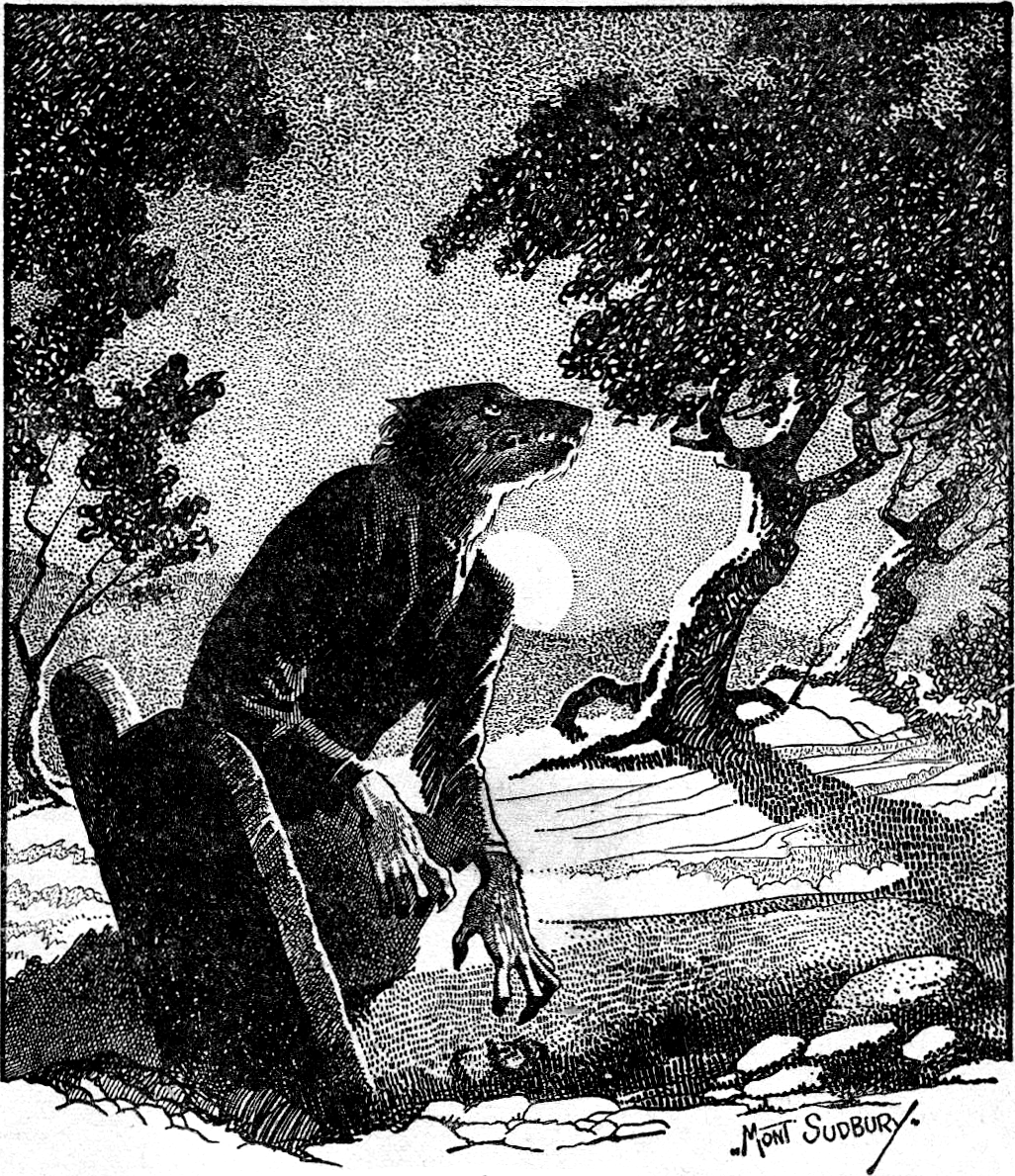 🇫🇷 France and 5 moreWerewolf
A mythical shapeshifter that turns into a wolf, central to European witch-hunts and Gothic horror.Being · Cursing and harm · Wonder and entertainment Legendary
🇫🇷 France and 5 moreWerewolf
A mythical shapeshifter that turns into a wolf, central to European witch-hunts and Gothic horror.Being · Cursing and harm · Wonder and entertainment Legendary
 🇬🇧 United KingdomBeltane Fire Festival
A modern Edinburgh performance celebrating the start of summer with fire and danceRite · Wonder and entertainment · Power and authority Living
🇬🇧 United KingdomBeltane Fire Festival
A modern Edinburgh performance celebrating the start of summer with fire and danceRite · Wonder and entertainment · Power and authority Living