Ancient Egyptian afterlife beliefs
A system of rituals and texts guiding the soul through the underworld to eternal rebirth
Ancient Egyptians practiced complex rituals to guide the dead through the Duat, or underworld, toward a peaceful rebirth. Religious doctrines emphasized moral conduct during life and specific funerary rites to ensure the soul's safe passage and continued existence.
- Pyramid Texts were the earliest spells, carved into royal tombs.
- Coffin Texts expanded access to afterlife spells for common people.
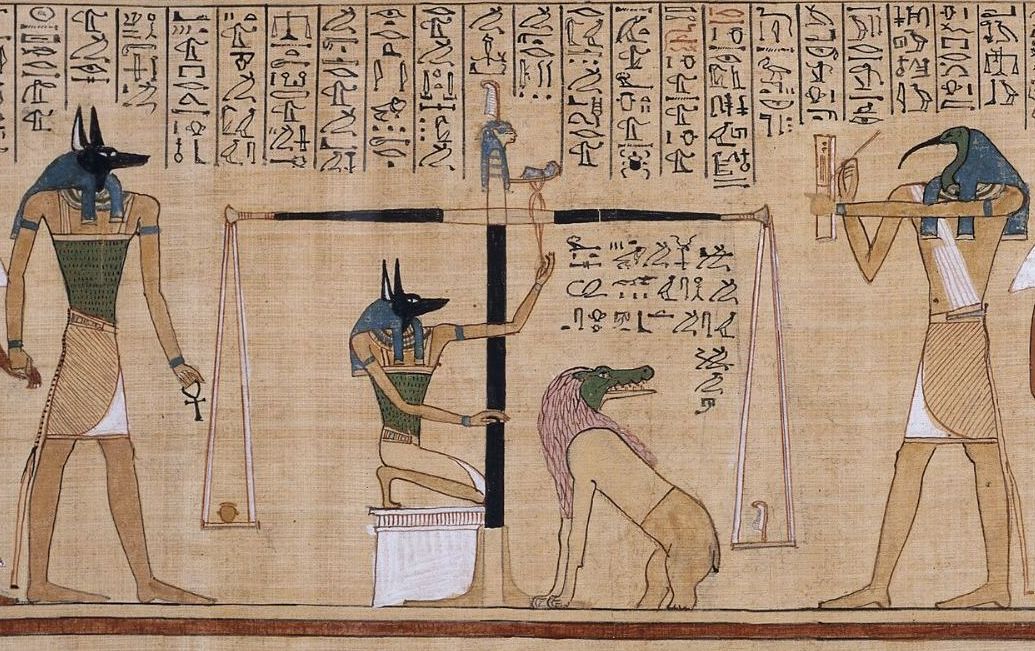
- The Book of the Dead combined earlier texts on papyrus.
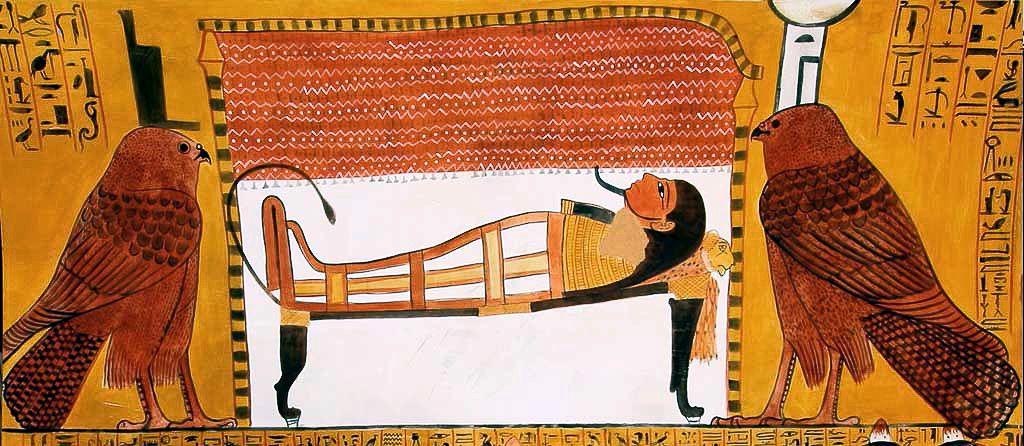
- Mummification preserved the body as a vessel for the returning soul.
- Model boats were buried with pharaohs to mimic Ra's journey.
What it is
Ancient Egyptian afterlife beliefs formed a comprehensive framework for understanding existence beyond death. The culture viewed the journey to the Duat as a perilous passage requiring specific knowledge and divine assistance. Souls faced judgment and transformation to achieve eternal life. This worldview integrated religious ideals with social practices, binding the community through shared funeral customs and textual traditions. The goal was not merely survival but a renewed, perpetual existence in a realm mirroring the fertile lands of the living.
Where it comes from
These doctrines evolved alongside Egyptian writing and religious structures. Early formulations appeared in royal pyramids, later expanding to include common citizens through coffin inscriptions. The belief system solidified over centuries, adapting from exclusive royal privileges to more accessible texts like the Book of the Dead. It emerged from a deep cultural emphasis on maintaining cosmic order and ensuring the continuity of the soul through proper ritual observance and moral integrity.
How it is done
The living performed extensive rituals to support the deceased. Tombs were prepared with offerings, texts, and grave goods to aid the journey. Mummification preserved the physical body as a vessel for the spirit. Coffins were decorated with spells to protect the soul. Families left food and items at the tomb to sustain the Ka. Model boats were buried to facilitate travel. These actions ensured the dead could navigate the underworld, avoid dangers, and successfully undergo judgment before Osiris.
Tools and materials
Texts played a central role in the afterlife preparation. Pyramid Texts, Coffin Texts, and the Book of the Dead provided essential spells and maps. Papyrus scrolls contained detailed instructions for the journey. Coffins served as protective shells inscribed with transformative magic. Amulets, such as the heart scarab, offered specific safeguards against false testimony. Tomb walls featured illustrations of the netherworld. Model boats represented transport vessels for the pharaohs.
Ancient Egyptian afterlife beliefs, drawn and placed
- Living
- Revived
- Fading
- Historical
- Legendary
- Performed
- Lineage
- Ancient Egyptian religion
- Timing
- after death and burial
What it is for
The primary aim was to secure a peaceful rebirth and eternal existence. Believers sought to avoid spiritual destruction and ensure the soul's continued presence. Rituals were designed to grant protection from underworld hazards and facilitate successful judgment. The living acted to guarantee the deceased's smooth transition. Moral conduct during life was considered vital for achieving this favorable fate. The practices reinforced social cohesion and religious devotion across generations.
Who does it
Priests and ritual specialists oversaw funerary ceremonies and mummification. They recited spells and performed necessary rites to activate the protective texts. The living family members maintained the tomb and provided regular offerings. Common people participated by commissioning texts and preparing their own burials. Pharaohs received elaborate preparations involving vast wealth and specialized boat constructions. The process required collective community effort to support the deceased's journey.
Peoples and places
The beliefs were central to ancient Egyptian culture, influencing all social strata. While initially reserved for royalty, later texts became available to the general population. The practice unified Egyptians through shared religious language and funeral customs. Different periods saw variations in tomb design and text usage, reflecting evolving theological nuances. Despite these changes, the core desire for eternal life through proper ritual adherence remained constant across the civilization.
At a glance: who, where and when
Peoples
Belief worlds
Occasions


What people believe
The worldview posited a multi-layered cosmos including the Duat, a realm of judgment and rebirth. The soul comprised distinct parts: the Ka, representing life force, and the Ba, symbolizing mobility. Deities like Osiris judged the dead, while Ra's solar journey influenced concepts of nightly underworld travel. The heart was weighed against truth, requiring magical aids to prevent false witness. Eternal life was viewed as a cyclical renewal, mirroring natural phenomena like the sun's rise and fall.
When it is done
Funeral rites were conducted immediately following death to prepare the body and soul. Burial occurred within a timeframe allowing for proper mummification and tomb preparation. Offerings were made regularly at the tomb to sustain the Ka. Specific texts were associated with different stages of the soul's journey, often linked to celestial cycles. The twelve-hour division of the underworld reflected the sun god's nightly path, structuring the afterlife timeline around cosmic rhythms.
How scholars and sceptics see it
Historians analyze these beliefs as a reflection of ancient Egyptian societal values and religious evolution. Anthropologists study the rituals as mechanisms for social cohesion and psychological comfort regarding mortality. Researchers examine the textual corpus to trace theological developments from the Old Kingdom to the New Kingdom. Skeptics view the practices as cultural constructs rather than literal descriptions of an afterlife. The focus remains on understanding how these beliefs shaped daily life and political authority.
Cautions and what is closed
Modern interest in Egyptian artifacts has led to commercialization, but the original practices are not active. There are no contemporary warnings or restrictions related to the ancient rituals themselves. The subject is purely historical, with no living practitioners or active cults requiring caution.
Compare and confuse
Similar concepts of underworld journeys appear in other ancient cultures, though Egyptian beliefs are distinct in their emphasis on textual guides and bodily preservation. The judgment of the heart differs from other mythological trials. The integration of solar mythology with the afterlife is unique to Egyptian theology. Comparisons with later religions often highlight differences in resurrection concepts and moral accountability frameworks.
Questions people ask about Ancient Egyptian afterlife beliefs
What is the Ancient Egyptian afterlife?
It is a realm called the Duat where souls journey after death. Egyptians believed in eternal rebirth and judgment by gods like Osiris. Proper rituals and texts ensured a peaceful transition and continued existence beyond the physical world.
Where did these beliefs originate?
They originated in ancient Egypt, evolving from early royal pyramid inscriptions to broader cultural practices. The doctrines developed alongside writing and religious structures, becoming accessible to all citizens over centuries through texts like the Coffin Texts.
How did Egyptians prepare for the afterlife?
They performed mummification to preserve the body and commissioned texts like the Book of the Dead. Families left offerings at tombs and buried model boats. Moral conduct during life was also considered essential for passing judgment and achieving eternal life.
Good reading and sources
The facts on this page come from the Wikipedia article "Ancient Egyptian afterlife beliefs", written by its contributors and used under the CC BY-SA 4.0 licence, and from its Wikidata record (CC0). EveryJaadu rewrote the text in its own words, with AI assistance, and compares every page with the article to make sure no passage is copied. It may be reused under the same CC BY-SA 4.0 licence with a link back.
It may contain mistakes. Names and customs differ from one community to the next, and some knowledge is closed to outsiders and left out here. This page describes belief and practice. It does not say that any of it works, it is not a how-to, and it is not medical advice. If something is wrong, tell us. Last refreshed 2026-10-05.
More from Egypt
All the entries from Egypt 🇪🇬 EgyptCurse
A spoken wish for misfortune to befall a person or placeBelief · Cursing and harm · Luck and prosperity Historical
🇪🇬 EgyptCurse
A spoken wish for misfortune to befall a person or placeBelief · Cursing and harm · Luck and prosperity Historical
 🇱🇾 Libya and 4 moreTraditional Berber religionAmazigh religion
Ancient beliefs of Northwest Africa centered on celestial bodies, caves, and ancestors.Tradition · Speaking with spirits and the dead · Luck and prosperity Historical
🇱🇾 Libya and 4 moreTraditional Berber religionAmazigh religion
Ancient beliefs of Northwest Africa centered on celestial bodies, caves, and ancestors.Tradition · Speaking with spirits and the dead · Luck and prosperity Historical
 🇪🇬 EgyptCurse of the pharaohs
A belief that disturbing ancient Egyptian tombs brings illness or death to the living.Belief · Cursing and harm Historical
🇪🇬 EgyptCurse of the pharaohs
A belief that disturbing ancient Egyptian tombs brings illness or death to the living.Belief · Cursing and harm Historical
 🇩🇿 Algeria and 1 moreAhmad al-Buniأحمد البوني المالكي
A medieval Sufi scholar known for works on letter mysticism and talismansText · Power and authority · Seeing and foretelling Historical
🇩🇿 Algeria and 1 moreAhmad al-Buniأحمد البوني المالكي
A medieval Sufi scholar known for works on letter mysticism and talismansText · Power and authority · Seeing and foretelling Historical
Related elsewhere
All tradition 🇮🇩 Indonesia and 4 moreKejawènꦏꦗꦮꦺꦤ꧀ (Kajawèn)
A Javanese tradition blending animism, Hinduism, Buddhism and Islam into a path of inner harmony.Tradition · Protection · Speaking with spirits and the dead Living
🇮🇩 Indonesia and 4 moreKejawènꦏꦗꦮꦺꦤ꧀ (Kajawèn)
A Javanese tradition blending animism, Hinduism, Buddhism and Islam into a path of inner harmony.Tradition · Protection · Speaking with spirits and the dead Living
 🇺🇸 United StatesGhost DanceNanissaanah
A circular movement seeking spiritual renewal and reunion with ancestorsRite · Speaking with spirits and the dead · Change and initiation Living
🇺🇸 United StatesGhost DanceNanissaanah
A circular movement seeking spiritual renewal and reunion with ancestorsRite · Speaking with spirits and the dead · Change and initiation Living
 🇮🇳 IndiaChakraचक्र
Meditation points in the subtle body used in Hindu and Buddhist yogaTradition · Speaking with spirits and the dead · Change and initiation Living
🇮🇳 IndiaChakraचक्र
Meditation points in the subtle body used in Hindu and Buddhist yogaTradition · Speaking with spirits and the dead · Change and initiation Living
 🇮🇶 Iraq and 5 moreGrimoire
A textbook containing instructions for spells, rituals, and the creation of magical objects.Text · Protection · Healing Historical
🇮🇶 Iraq and 5 moreGrimoire
A textbook containing instructions for spells, rituals, and the creation of magical objects.Text · Protection · Healing Historical