Baskerville effect
Named after Sir Charles Baskerville from Arthur Conan Doyle's novel The Hound of the Baskervilles
A theory that superstition about unlucky numbers causes heart attacks through stress
The Baskerville effect is a proposed psychological phenomenon where fear of an unlucky number triggers fatal heart events. It was named after a fictional character and tested on Chinese and Japanese populations in the United States and Hong Kong.
- Named after a fictional character who died of fright
- Proposed by David Phillips at UC San Diego
- Focuses on the number four being unlucky
- Critics found no statistical proof in later studies
- Tested on Chinese and Japanese American death records
What it is
The Baskerville effect describes a situation where belief in bad luck leads to physical harm. Researchers suggested that extreme anxiety over specific dates could cause heart failure in vulnerable individuals. This idea links cultural fear directly to biological collapse. It treats superstition as a dangerous force rather than just a story.
Where it comes from
David Phillips and his team at the University of California, San Diego, introduced this concept. They studied death records from 1973 to 1998. Their work focused on Chinese and Japanese Americans living in America. They noticed higher death rates on certain days. The name comes from a famous detective story involving a cursed family member who dies of fright.
How it is done
The theory relies on statistical observation of death certificates. Researchers looked for spikes in cardiac events on days linked to negative meanings. For example, they checked if deaths rose when the date contained the number four. They compared these figures against average daily totals to find unusual patterns.
Tools and materials
The primary tools were public health records and telephone directories. Scientists used Yellow Pages listings to see how many people avoided the number four in phone numbers. They also analyzed computerized death certificates from San Diego. These documents provided the raw numbers needed for their calculations.
Baskerville effect, drawn and placed
- Living
- Revived
- Fading
- Historical
- Legendary
- Performed
- Lineage
- Psychological superstition studies
- Timing
- On days associated with unlucky numbers
What it is for
This concept explains why some people might die from fear. It suggests that cultural taboos can become lethal traps. The goal of studying it is to understand the power of belief over the body. It highlights how mental stress can trigger physical illness in superstitious communities.
Who does it
Academic researchers and statisticians developed this hypothesis. David Phillips led the initial investigations. Later scholars like Gary Smith and Nirmal Panesar examined the data critically. They are experts in epidemiology and social science, not magic practitioners.
Peoples and places
The effect was first identified in Chinese and Japanese American communities in California. The number four sounds like the word for death in these languages. Studies later extended to the Chinese population in Hong Kong. Different regions showed varying levels of avoidance behavior regarding this number.
At a glance: who, where and when
Who does it
Belief worlds
What people believe
The core belief is that numbers carry spiritual weight. In East Asian cultures, the digit four is often seen as ominous. People may change phone numbers or skip floor levels to avoid it. The theory claims this avoidance creates enough panic to stop a heart.
When it is done
The focus falls on the fourth day of every month. Some studies also looked at the fourteenth and twenty-fourth. Researchers checked both the lunar and Gregorian calendars. They sought to match death spikes with these specific calendar dates.
How scholars and sceptics see it
Many experts rejected the original findings. Gary Smith argued that the initial study cherry-picked data. He noted that other years showed no such peaks. Nirmal Panesar found no difference in Hong Kong mortality rates. Jonathan Jarry pointed out that the statistical method was flawed.
Cautions and what is closed
The theory has been largely discredited by scientific review. Critics say the data does not support a causal link. There is no evidence that superstition alone kills people. The initial results were likely due to random chance or poor methodology.
Compare and confuse
Similar ideas exist regarding other unlucky numbers like thirteen in Western culture. However, the Baskerville effect specifically targets the number four in Asian contexts. It differs from general stress studies by focusing on cultural numerology.
Questions people ask about Baskerville effect
What is the Baskerville effect?
It is a theory suggesting that fear of an unlucky number causes heart attacks. The name comes from a Sherlock Holmes novel character who died of fright.
Why is the number four important?
In Chinese and Japanese languages, the word for four sounds like the word for death. This makes the number culturally unlucky and feared.
Who discovered this effect?
David Phillips and colleagues at UC San Diego proposed it based on death records from 1973 to 1998 showing higher mortality on the fourth.
Is the effect scientifically proven?
No. Subsequent studies by Gary Smith and others found no significant peaks. Experts consider the original findings statistically flawed.
Good reading and sources
The facts on this page come from the Wikipedia article "Baskerville effect", written by its contributors and used under the CC BY-SA 4.0 licence, and from its Wikidata record (CC0). EveryJaadu rewrote the text in its own words, with AI assistance, and compares every page with the article to make sure no passage is copied. It may be reused under the same CC BY-SA 4.0 licence with a link back.
It may contain mistakes. Names and customs differ from one community to the next, and some knowledge is closed to outsiders and left out here. This page describes belief and practice. It does not say that any of it works, it is not a how-to, and it is not medical advice. If something is wrong, tell us. Last refreshed 2026-10-07.
More from the United States
All the entries from the United States 🇺🇸 United StatesSalem Witch Trials
A colonial legal crisis where over two hundred people faced accusations of sorcery in Massachusetts.Belief · Cursing and harm Historical
🇺🇸 United StatesSalem Witch Trials
A colonial legal crisis where over two hundred people faced accusations of sorcery in Massachusetts.Belief · Cursing and harm Historical
 🇺🇸 United States and 1 moreGroundhog DayGrund'sau dåk
A North American custom using a burrowing rodent to forecast the end of winterTradition · Seeing and foretelling · Luck and prosperity Living
🇺🇸 United States and 1 moreGroundhog DayGrund'sau dåk
A North American custom using a burrowing rodent to forecast the end of winterTradition · Seeing and foretelling · Luck and prosperity Living
 🇺🇸 United States and 1 moreMedicine wheel
Circular stone formations built by Indigenous peoples of North America for ceremony and astronomy.Tradition · Speaking with spirits and the dead · Power and authority Living
🇺🇸 United States and 1 moreMedicine wheel
Circular stone formations built by Indigenous peoples of North America for ceremony and astronomy.Tradition · Speaking with spirits and the dead · Power and authority Living
 🇺🇸 United States and 7 moreSatanic panic
A moral panic over unsubstantiated claims of Satanic cults abusing children in the late twentieth centuryBelief · Cursing and harm Historical
🇺🇸 United States and 7 moreSatanic panic
A moral panic over unsubstantiated claims of Satanic cults abusing children in the late twentieth centuryBelief · Cursing and harm Historical
Related elsewhere
All belief 🇷🇸 Serbia and 5 moreVampire
An undead creature from folklore that feeds on the blood or life force of the livingBeing · Cursing and harm · Luck and prosperity Legendary
🇷🇸 Serbia and 5 moreVampire
An undead creature from folklore that feeds on the blood or life force of the livingBeing · Cursing and harm · Luck and prosperity Legendary
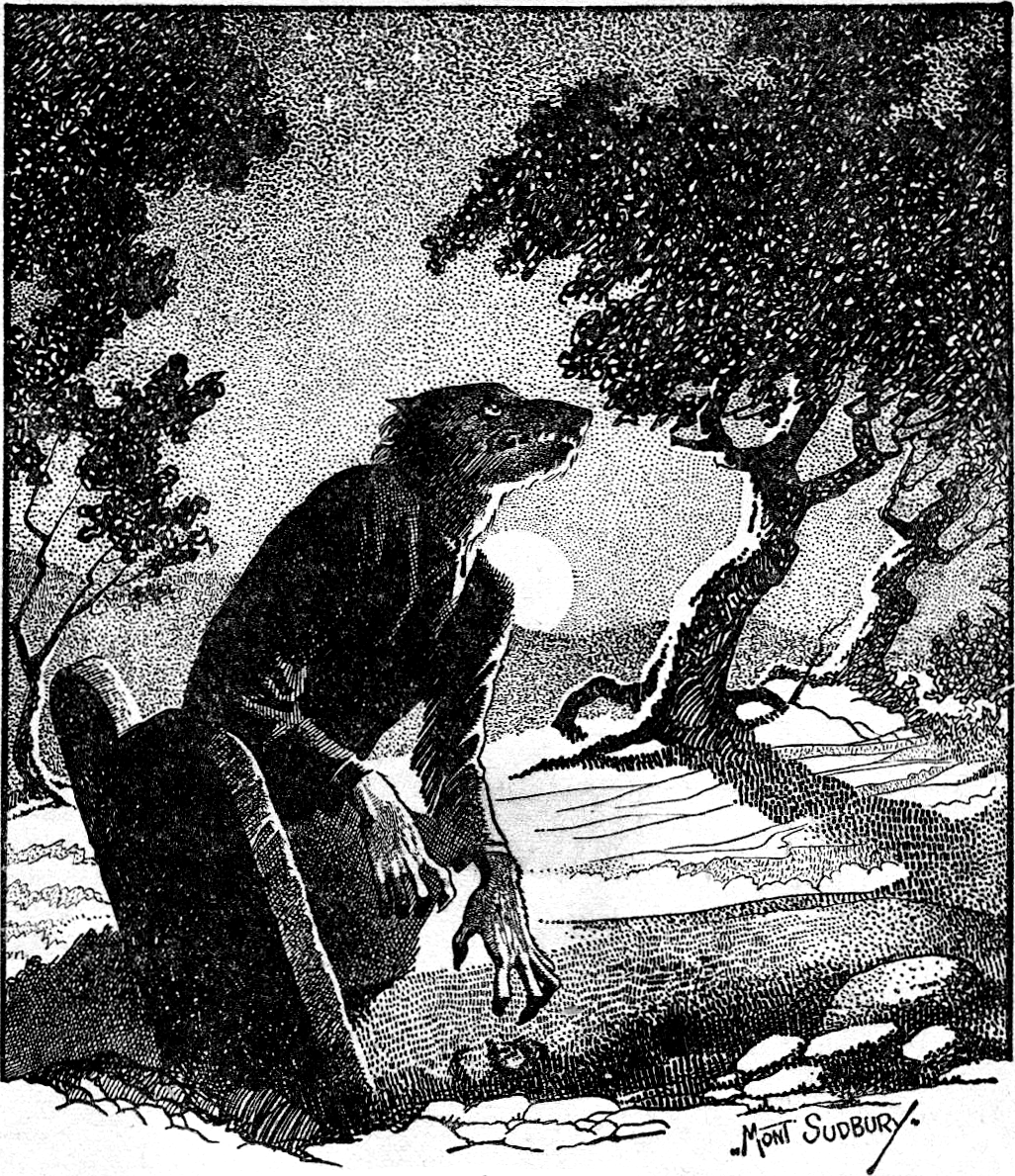 🇫🇷 France and 5 moreWerewolf
A mythical shapeshifter that turns into a wolf, central to European witch-hunts and Gothic horror.Being · Cursing and harm · Wonder and entertainment Legendary
🇫🇷 France and 5 moreWerewolf
A mythical shapeshifter that turns into a wolf, central to European witch-hunts and Gothic horror.Being · Cursing and harm · Wonder and entertainment Legendary
 🇪🇬 Egypt and 1 moreLilithלִילִית
A feminine figure from Mesopotamian and Jewish mythology, often depicted as a night demon or spirit.Being · Cursing and harm Legendary
🇪🇬 Egypt and 1 moreLilithלִילִית
A feminine figure from Mesopotamian and Jewish mythology, often depicted as a night demon or spirit.Being · Cursing and harm Legendary
 🇪🇬 EgyptCurse
A spoken wish for misfortune to befall a person or placeBelief · Cursing and harm · Luck and prosperity Historical
🇪🇬 EgyptCurse
A spoken wish for misfortune to befall a person or placeBelief · Cursing and harm · Luck and prosperity Historical