
Astrological symbols
from Greek glyphs for radiance and monograms of deity names
Glyphs used to map celestial bodies and their positions in horoscopes
Astrological symbols are a system of glyphs representing planets, zodiac signs, and other celestial points. They originated in medieval Byzantine codices and were refined during the European Renaissance. Practitioners use them to record planetary angles and aspects in natal charts.
- Sun symbol resembles Egyptian hieroglyph but link is unproven
- Jupiter and Saturn are monograms of Greek names
- Uranus symbol combines iron and gold alchemical signs
- Vesta symbol based on goddess's altar with sacred fire
- Russian astrologers use unique aspect symbols
What it is
Astrological symbols form a visual language for recording the positions of celestial bodies. The system includes glyphs for the classical planets, the twelve signs of the zodiac, and various astrological points like the lunar nodes. These marks allow practitioners to map the sky at a specific moment. The symbols serve as shorthand for complex astronomical data within horoscopes. They represent both physical objects and abstract relationships between them.
Where it comes from
The earliest known versions of these symbols appear in medieval Byzantine codices that preserved ancient Greek horoscopes. In original papyri, the Sun was a circle with a radiance glyph and the Moon a crescent. Planetary symbols for Mercury, Venus, Jupiter, and Saturn evolved from late Classical Greek forms. Jupiter and Saturn symbols are monograms of their Greek names. The modern sun symbol appeared during the European Renaissance. It resembles an Egyptian hieroglyph but its connection remains unproven.
How it is done
Practitioners place symbols on a chart to show where planets were located when a person was born. Each glyph stands for a specific body or point. Aspects are marked with special symbols to show angles between planets. Russian astrologers sometimes use unique aspect symbols alongside standard ones. The placement of these marks creates a snapshot of the heavens for interpretation.
Tools and materials
The tools are the glyphs themselves. The Sun is a circle with a dot. The Moon is a crescent. Mercury uses a stylized caduceus. Venus has a mirror-like loop. Mars shows a circle with an arrow. Jupiter and Saturn use monograms. Uranus combines iron and gold alchemical signs. Neptune uses a trident. Pluto has multiple variants including a PL monogram. Asteroids use items like Ceres' sickle and Vesta's altar.
Astrological symbols, drawn and placed
- Living
- Revived
- Fading
- Historical
- Legendary
- Performed
- Lineage
- Western astrology
- Timing
- during chart casting
What it is for
These symbols help diviners track planetary influences. They record the geometry of the sky for horoscope reading. The marks indicate which gods or energies are active. They allow astrologers to note aspects and lots without writing long descriptions. The system provides a standardized way to share celestial data across different traditions.
Who does it
Diviners and astrologers use these symbols daily. They must learn the shape and meaning of each glyph. Training involves memorizing the classical planets and zodiac signs. Modern practitioners also study newer symbols for asteroids and centaurs. The skill requires precision in drawing and interpreting the chart layout.
Peoples and places
The tradition began with Greek and Byzantine scholars. It spread through Europe during the Renaissance. Russian astrologers have developed distinct aspect symbols. Western practitioners generally follow the Renaissance standard. Some groups incorporate symbols for newly discovered trans-Neptunian objects. The usage varies by region and specific astrological school.
At a glance: who, where and when
What people believe
The symbols reflect a worldview where celestial bodies influence earthly events. Each glyph carries the essence of its planet. The arrangement of symbols reveals fate and character. Practitioners believe the marks connect to ancient myths and deities. The system assumes a correspondence between the macrocosm and microcosm.
When it is done
Symbols are used whenever a birth time is recorded. They appear in daily horoscopes and electional charts. Specific symbols mark solar returns and lunar phases. The zodiac signs correspond to seasonal periods. Aspect symbols highlight key moments in planetary cycles.
How scholars and sceptics see it
Historians trace the symbols to Byzantine manuscripts. Researchers note the Renaissance refinement of earlier Greek forms. Scholars observe that some symbols resemble Egyptian or Chinese logographs without confirming a link. Astronomers distinguish these glyphs from scientific notation. The evolution of the symbols reflects changes in astrological theory over centuries.
Cautions and what is closed
Some symbols for modern discoveries lack universal acceptance. Different software programs may use conflicting glyphs for asteroids. Users should verify which symbol set a source employs. Misinterpretation can occur if the wrong variant is used. There is no risk of harm, only potential confusion in chart reading.
Compare and confuse
Astrological symbols differ from astronomical notations. Alchemical symbols influenced some planetary marks. Gender symbols share visual similarities with Venus and Mars glyphs. The system is distinct from the Aztec or Maya calendars despite using similar circular motifs. Russian aspect symbols offer an alternative to the standard Western set.
Questions people ask about Astrological symbols
Where did astrological symbols come from?
They originated in medieval Byzantine codices preserving ancient Greek horoscopes. The modern forms were refined during the European Renaissance. Early Greek papyri used simple shapes like circles and crescents.
What do the planetary symbols look like?
Mercury is a stylized caduceus. Venus has a mirror loop. Mars shows a circle with an arrow. Jupiter and Saturn are monograms. The Sun is a circle with a dot. The Moon is a crescent.
Are there symbols for modern planets?
Yes. Uranus combines iron and gold signs. Neptune uses a trident. Pluto has a PL monogram or bident. Symbols for asteroids like Ceres and Vesta were created after their discovery in the 19th century.
Good reading and sources
- Astrological symbols on WikipediaEncyclopedia
- More photos on Wikimedia CommonsPhotos and video
- Wikidata recordOpen data
The facts on this page come from the Wikipedia article "Astrological symbols", written by its contributors and used under the CC BY-SA 4.0 licence, and from its Wikidata record (CC0). EveryJaadu rewrote the text in its own words, with AI assistance, and compares every page with the article to make sure no passage is copied. It may be reused under the same CC BY-SA 4.0 licence with a link back.
It may contain mistakes. Names and customs differ from one community to the next, and some knowledge is closed to outsiders and left out here. This page describes belief and practice. It does not say that any of it works, it is not a how-to, and it is not medical advice. If something is wrong, tell us. Last refreshed 2026-10-13.
More from Greece
All the entries from Greece 🇬🇷 Greece and 5 moreBay Laurelδάφνη
An aromatic Mediterranean plant used in cooking and as a symbol of victory and purification.Substance · Protection · Cleansing and purification Living
🇬🇷 Greece and 5 moreBay Laurelδάφνη
An aromatic Mediterranean plant used in cooking and as a symbol of victory and purification.Substance · Protection · Cleansing and purification Living
 🇮🇪 Ireland and 5 moreCairn
A human-made stack of stones used as a marker, memorial, or religious symbol across many cultures.Tradition · Protection · Speaking with spirits and the dead Living
🇮🇪 Ireland and 5 moreCairn
A human-made stack of stones used as a marker, memorial, or religious symbol across many cultures.Tradition · Protection · Speaking with spirits and the dead Living
 🇬🇷 GreeceOrphismὈρφικά
A Greek mystery tradition based on the myth of Dionysus and the soul's journeyTradition Historical
🇬🇷 GreeceOrphismὈρφικά
A Greek mystery tradition based on the myth of Dionysus and the soul's journeyTradition Historical
 🇬🇷 Greece and 5 moreCrossroads (folklore)
A junction between worlds where spirits are met and deals are madeBelief · Speaking with spirits and the dead · Cursing and harm Living
🇬🇷 Greece and 5 moreCrossroads (folklore)
A junction between worlds where spirits are met and deals are madeBelief · Speaking with spirits and the dead · Cursing and harm Living
Related elsewhere
All belief 🇮🇶 Iraq and 4 moreAstrology
A system of divination that links human affairs to the positions of celestial bodiesTradition · Seeing and foretelling · Luck and prosperity Living
🇮🇶 Iraq and 4 moreAstrology
A system of divination that links human affairs to the positions of celestial bodiesTradition · Seeing and foretelling · Luck and prosperity Living
 🇮🇳 India and 3 morePalmistry
A divination practice that reads the lines and shapes of the hand to predict fate or characterOracle · Seeing and foretelling · Luck and prosperity Living
🇮🇳 India and 3 morePalmistry
A divination practice that reads the lines and shapes of the hand to predict fate or characterOracle · Seeing and foretelling · Luck and prosperity Living
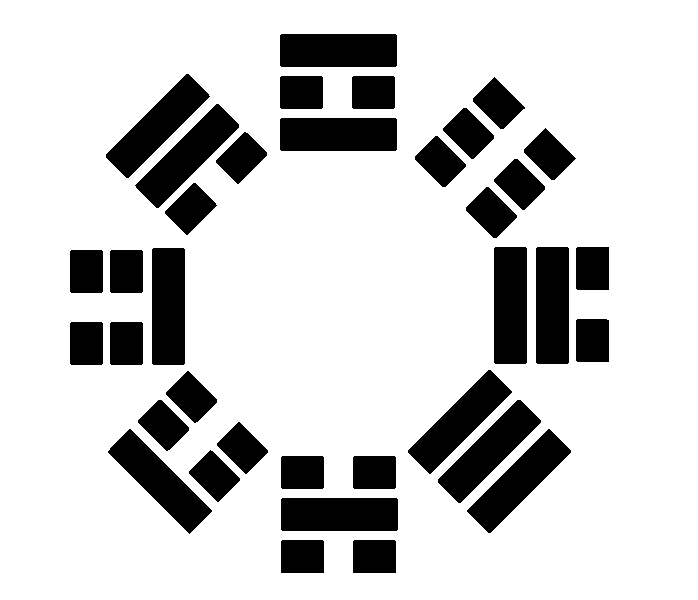 🇨🇳 China and 1 moreBagua八卦
A set of eight trigram symbols from China used in divination, cosmology, and feng shui.Tradition · Seeing and foretelling · Protection Living
🇨🇳 China and 1 moreBagua八卦
A set of eight trigram symbols from China used in divination, cosmology, and feng shui.Tradition · Seeing and foretelling · Protection Living
 🇮🇩 Indonesia and 2 moreDukun
A traditional healer and spirit medium in Indonesian folk practiceTradition · Healing · Seeing and foretelling Living
🇮🇩 Indonesia and 2 moreDukun
A traditional healer and spirit medium in Indonesian folk practiceTradition · Healing · Seeing and foretelling Living