
Đạo Mẫu
from Sino-Vietnamese Đạo meaning path or religion, and Mẫu meaning mother
A Vietnamese shamanic tradition honouring mother goddesses through ritual performance.
Đạo Mẫu is a Vietnamese folk religion centred on the veneration of mother goddesses. It emerged in the sixteenth century and blends indigenous beliefs with Taoist and Buddhist elements. The practice is distinguished by its shamanic rituals where performers embody deities rather than being possessed by them.
- Established in Vietnam in the sixteenth century
- Central ritual is hầu bóng, serving the reflections
- Practitioners maintain control, unlike spirit mediums
- Recognised by UNESCO in December 2016
- Most prominent form is the Four Palaces denomination
What it is
Đạo Mẫu is a branch of Vietnamese folk religion focused on the worship of mother goddesses. It developed as a distinct system in the sixteenth century. While it shares roots with broader local traditions, it follows a more shamanic structure. Practitioners view the tradition as a systematic way to honour divine feminine figures. These figures range from historical leaders to legendary spirits. The belief system integrates various spiritual entities into a cohesive hierarchy. It serves as a cultural anchor for communities seeking connection with these powerful maternal forces.
Where it comes from
The tradition was established in Vietnam during the sixteenth century. Scholars suggest it draws together disparate beliefs into a unified framework. It evolved alongside Taoism and Buddhism, absorbing their influences. The core concept centres on a pantheon of female deities. Some figures are based on real historical women, while others are purely mythological. This blend creates a unique spiritual landscape specific to the region. The practice has faced periods of suppression but remains active today.
How it is done
The central ritual is known as hầu bóng, or serving the reflections. In this ceremony, a priest or priestess dresses and acts like a deity. The performer mimics the god's movements and mannerisms. This is often mistaken for spirit possession. However, the practitioner maintains full control of their body. They feel the deity's essence without allowing a spirit to enter. This distinguishes the act from mediumship practices found elsewhere in Asia. The performance is a deliberate artistic and religious expression.
Tools and materials
Performers use elaborate costumes and props to represent specific deities. The attire reflects the status and realm of the goddess being honoured. Musical instruments accompany the ritual to set the tone. The physical setting is arranged to mirror the divine palaces. These tools help the practitioner embody the character accurately. The visual presentation is crucial for the audience's understanding of the hierarchy.
Đạo Mẫu, drawn and placed
- Living
- Revived
- Fading
- Historical
- Legendary
- Performed
- Lineage
- Vietnamese folk religion
- Timing
- during sacred ceremonies
What it is for
The tradition aims to honour and commune with mother goddesses. It seeks to appreciate the role of women in society. Practitioners believe the rituals bring spiritual power and protection. The ceremonies serve as a bridge between the human and divine worlds. Communities participate to maintain cultural continuity and spiritual balance. The worship reinforces social values regarding maternal authority and respect.
Who does it
The main practitioners are called thanh đồng. They act as mediatory agents between humans and deities. These individuals are trained to perform the sacred rituals. They are considered priests rather than mediums or shamans. Both men and women can serve in this role. The training involves learning the specific gestures and songs for each deity. Their status is respected within the community as religious leaders.
Peoples and places
The tradition is primarily practiced in Vietnam. It is most prominent in the northern regions under the Four Palaces denomination. Other areas have developed variations influenced by local beliefs. The practice has spread slightly to neighbouring countries like China and Myanmar. However, it remains deeply rooted in Vietnamese culture. Different communities may honour slightly different sets of goddesses depending on their location.
At a glance: who, where and when


What people believe
The worldview includes a hierarchical pantheon of deities. The Four Palaces model organises gods into realms: Heaven, Mountains, Water, and Earth. Each realm has a primary Mother Goddess and attendant courtiers. These beings are believed to influence earthly affairs. The tradition acknowledges both indigenous spirits and imported religious figures. It views the divine as accessible through proper ritual conduct and respect.
When it is done
The ceremonies are performed when requested by the community or individual. There is no single annual festival mentioned for the entire tradition. The timing depends on the needs of the participants and the availability of the priest.
How scholars and sceptics see it
Scholars like Ngô Đức Thịnh analyse the tradition as a systematic worship structure. They note its shamanic nature compared to other folk religions. Researchers distinguish hầu bóng from spirit mediumship due to the lack of possession. Anthropologists study how the practice preserves cultural identity. Historians track its evolution from the sixteenth century to the present day.
Cautions and what is closed
The Vietnamese government initially proscribed the practice as superstition. It was banned until 1987 when restrictions were lifted. Practitioners must navigate legal and social expectations carefully. The rituals are closed to outsiders who do not understand the context. Misinterpretation of the performance as mere entertainment is common. Respect for the sacred nature of the ceremony is required.
Compare and confuse
Đạo Mẫu is often confused with general spirit mediumship. Unlike lên đồng, it does not involve loss of control. It differs from standard ancestor worship by focusing on goddesses. It shares elements with Taoism and Buddhism but remains distinct. The Four Palaces system is unique to this Vietnamese tradition.
Law and persecution
The practice was officially banned by the state in the twentieth century. Authorities classified it as a superstitious activity. In 1987, the government allowed the rituals to resume. UNESCO recognised the ritual in December 2016. This recognition helped legitise the practice culturally and legally.
Questions people ask about Đạo Mẫu
What is Đạo Mẫu?
It is a Vietnamese folk religion dedicated to the worship of mother goddesses. It combines indigenous beliefs with Taoist and Buddhist influences. The tradition focuses on honouring divine feminine figures through ritual.
How does the main ritual differ from possession?
The ritual called hầu bóng involves a priest mimicking a deity. The performer keeps full control of their body. They do not allow a spirit to enter or possess them. This makes it distinct from mediumship practices.
Where did this tradition originate?
It originated in Vietnam during the sixteenth century. It grew out of local folk religion. The practice has remained primarily within Vietnam, though it influences nearby cultures.
Who performs the rituals?
Trained priests and priestesses called thanh đồng perform the rites. They act as mediators between people and deities. They are respected religious leaders within their communities.
Good reading and sources
- Đạo Mẫu on WikipediaEncyclopedia
- More photos on Wikimedia CommonsPhotos and video
- Wikidata recordOpen data
The facts on this page come from the Wikipedia article "Đạo Mẫu", written by its contributors and used under the CC BY-SA 4.0 licence, and from its Wikidata record (CC0). EveryJaadu rewrote the text in its own words, with AI assistance, and compares every page with the article to make sure no passage is copied. It may be reused under the same CC BY-SA 4.0 licence with a link back.
It may contain mistakes. Names and customs differ from one community to the next, and some knowledge is closed to outsiders and left out here. This page describes belief and practice. It does not say that any of it works, it is not a how-to, and it is not medical advice. If something is wrong, tell us. Last refreshed 2026-10-06.
More from Vietnam
All the entries from Vietnam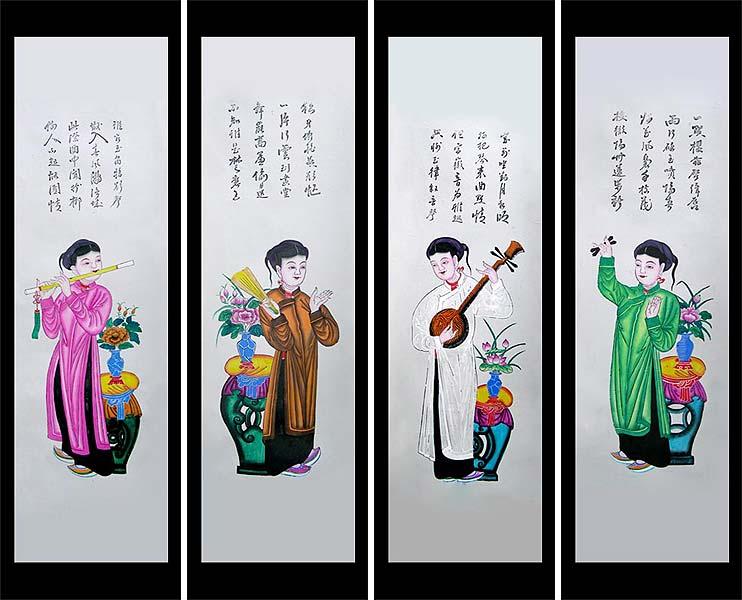 🇻🇳 Vietnam and 1 moreVietnamese folk religiontín ngưỡng dân gian Việt Nam
A collection of local spirit worship and ancestral veneration in VietnamTradition · Protection · Healing Living
🇻🇳 Vietnam and 1 moreVietnamese folk religiontín ngưỡng dân gian Việt Nam
A collection of local spirit worship and ancestral veneration in VietnamTradition · Protection · Healing Living
 🇻🇳 Vietnam and 5 moreTếtTết Nguyên Đán
The Vietnamese lunisolar new year and the most important annual celebration in VietnamTradition · Luck and prosperity · Speaking with spirits and the dead Living
🇻🇳 Vietnam and 5 moreTếtTết Nguyên Đán
The Vietnamese lunisolar new year and the most important annual celebration in VietnamTradition · Luck and prosperity · Speaking with spirits and the dead Living
 🇱🇦 Laos and 3 moreTai folk religionສາສະໜາຜີ
Spirits, ancestor rites, and soul-calling ceremonies of the Tai peoplesTradition · Protection · Healing Living
🇱🇦 Laos and 3 moreTai folk religionສາສະໜາຜີ
Spirits, ancestor rites, and soul-calling ceremonies of the Tai peoplesTradition · Protection · Healing Living
 🇲🇾 Malaysia and 5 morePenanggalan
A floating head with trailing organs from Malay folklore, said to hunt pregnant women and newborns.Being · Cursing and harm Legendary
🇲🇾 Malaysia and 5 morePenanggalan
A floating head with trailing organs from Malay folklore, said to hunt pregnant women and newborns.Being · Cursing and harm Legendary
Related elsewhere
All tradition 🇮🇶 Iraq and 5 moreGrimoire
A textbook containing instructions for spells, rituals, and the creation of magical objects.Text · Protection · Healing Historical
🇵🇾 Paraguay and 3 moreGuarani mythology
The oral traditions of the Tupi-Guarani peoples regarding gods, spirits and creationTradition · Speaking with spirits and the dead · Power and authority Living
🇮🇶 Iraq and 5 moreGrimoire
A textbook containing instructions for spells, rituals, and the creation of magical objects.Text · Protection · Healing Historical
🇵🇾 Paraguay and 3 moreGuarani mythology
The oral traditions of the Tupi-Guarani peoples regarding gods, spirits and creationTradition · Speaking with spirits and the dead · Power and authority Living
 🇮🇳 India and 2 moreHomaहोम
A fire ritual found across Asian religions where offerings are burned as a votive exchange with the divine.Rite · Protection · Speaking with spirits and the dead Living
🇮🇳 India and 2 moreHomaहोम
A fire ritual found across Asian religions where offerings are burned as a votive exchange with the divine.Rite · Protection · Speaking with spirits and the dead Living
 🇺🇸 United States and 1 moreMedicine wheel
Circular stone formations built by Indigenous peoples of North America for ceremony and astronomy.Tradition · Speaking with spirits and the dead · Power and authority Living
🇺🇸 United States and 1 moreMedicine wheel
Circular stone formations built by Indigenous peoples of North America for ceremony and astronomy.Tradition · Speaking with spirits and the dead · Power and authority Living