Protection
Warding off the evil eye, spirits, illness and bad luck: amulets, wards and thresholds.
Protection is the most widespread aim of magic. People hang, wear, bury, burn and recite things to keep out the evil eye, harmful spirits, illness and bad luck. The blue nazar, the hamsa, the horseshoe, the red thread, the Japanese omamori and the Ethiopian protective scroll all serve it. This page covers what is guarded, who is thought to need guarding, and how different societies see the practice. It is a good place to start with the subject.
What is guarded
The most guarded are the vulnerable and the valued: newborns, brides, pregnant women, livestock, new houses and travellers. Doorways, windows and crossroads get special care, since they are where inside meets outside. Practices include hanging a lemon and chillies in India, a horseshoe in Britain and Ireland, an eye-bead in Turkey, a mezuzah on Jewish doorposts and a spirit house in Thailand. Beyond doors, people protect journeys, wells, boats and herds, and the guarded thing is usually whatever the family can least afford to lose.
Against what
The danger named varies. In the Middle East and Mediterranean it is the evil eye, a harm said to come from envy or praise. In sub-Saharan Africa it is often witchcraft or a rival's sorcery. In Europe it was witches, fairies and the devil, and in East Asia hungry ghosts and ill-fortune. Protective practice therefore tells a researcher what a community fears and who it suspects. Some marks are drawn in chalk, paint or henna and renewed each year, and others are made once and left to fade.
Faith and the objects
Religions deal with protective objects in different ways. Many Muslim scholars accept verses of the Quran recited for protection and disapprove of beads or knots believed to work by themselves. Catholic Christians use blessed medals, holy water and the sign of the cross. Sikhism rejects talismans, while Buddhist monks bless protective threads and tattoos in Thailand and Cambodia. Official teaching often differs from practice in the village, where one household may wear a charm quietly and say a prayer at the same time.
Scholars and the market
Psychologists suggest protective objects ease anxiety and give a sense of control. Sceptics note that no test has shown them to prevent harm. Commerce is large: charms are mass-produced, and some sellers charge heavily for items promised to ward off disaster. Anyone in real danger or illness should turn to practical help first. Believers usually say the protection is a matter of trust and care, and many say the object matters less than the intention and the community that stands behind it.
Protection on EveryJaadu
The entries written up so far, best known first.
 🇮🇳 India and 3 moreYakshiniयक्षिणी
Some guard, some haunt: female nature spirits of Hindu, Buddhist and Jain loreBeing · Protection · Luck and prosperity Living
🇮🇳 India and 3 moreYakshiniयक्षिणी
Some guard, some haunt: female nature spirits of Hindu, Buddhist and Jain loreBeing · Protection · Luck and prosperity Living
 🇮🇳 IndiaTaraतारा (Sanskrit), তারা (Bengali)
A fierce Hindu goddess of protection and wisdom, central to the Mahavidya tradition.Being · Protection · Power and authority Living
🇮🇳 IndiaTaraतारा (Sanskrit), তারা (Bengali)
A fierce Hindu goddess of protection and wisdom, central to the Mahavidya tradition.Being · Protection · Power and authority Living
 🇮🇳 IndiaBhadrakaliभद्रकाली
A fierce Hindu goddess worshipped in Kerala and Nashik for protection and spiritual knowledgeBeing · Protection · Speaking with spirits and the dead Living
🇮🇳 IndiaBhadrakaliभद्रकाली
A fierce Hindu goddess worshipped in Kerala and Nashik for protection and spiritual knowledgeBeing · Protection · Speaking with spirits and the dead Living
 🇮🇳 India and 5 moreBhairavaभैरव
A fierce manifestation of Shiva and a Buddhist protector deity worshipped across South and East Asia.Being · Protection · Cursing and harm Living
🇮🇳 India and 5 moreBhairavaभैरव
A fierce manifestation of Shiva and a Buddhist protector deity worshipped across South and East Asia.Being · Protection · Cursing and harm Living
 🇳🇵 NepalTaleju𑐟𑐮𑐾𑐖𑐸 (Newar) / तलेजु (Devanagari)
A royal goddess of the Kathmandu Valley, worshipped as Durga and Tara.Being · Protection · Power and authority Living
🇳🇵 NepalTaleju𑐟𑐮𑐾𑐖𑐸 (Newar) / तलेजु (Devanagari)
A royal goddess of the Kathmandu Valley, worshipped as Durga and Tara.Being · Protection · Power and authority Living
 🇵🇪 Peru and 1 moreApu
Sacred mountain spirits in Andean tradition that protect communities and control natural resourcesBeing · Protection · Healing Living
🇵🇪 Peru and 1 moreApu
Sacred mountain spirits in Andean tradition that protect communities and control natural resourcesBeing · Protection · Healing Living
 🇮🇳 IndiaMangalaमंगल (Maṅgala)
A Hindu deity of Mars, war, and the planet's red lightBeing · Power and authority · Protection Living
🇮🇳 IndiaMangalaमंगल (Maṅgala)
A Hindu deity of Mars, war, and the planet's red lightBeing · Power and authority · Protection Living
 🇮🇳 India and 1 moreYoginiयोगिनी
A female master of yoga and tantra, or a fierce goddess aspect in Indian temples.Tradition · Power and authority · Protection Historical
🇮🇳 India and 1 moreYoginiयोगिनी
A female master of yoga and tantra, or a fierce goddess aspect in Indian temples.Tradition · Power and authority · Protection Historical
 🇮🇳 India and 5 moreHanumanहनुमान्
A divine vanara deity of devotion and strength in HinduismBeing · Protection · Power and authority Living
🇮🇳 India and 5 moreHanumanहनुमान्
A divine vanara deity of devotion and strength in HinduismBeing · Protection · Power and authority Living
 🇮🇳 India and 3 moreYakshaयक्ष (Sanskrit), ยักษ์ (Thai)
Nature spirits and guardian deities in South and Southeast Asian traditionsBeing · Protection · Power and authority Living
🇮🇳 India and 3 moreYakshaयक्ष (Sanskrit), ยักษ์ (Thai)
Nature spirits and guardian deities in South and Southeast Asian traditionsBeing · Protection · Power and authority Living
 🇮🇳 India and 2 moreBrahmarakshasaब्रह्मराक्षसः
A cursed Brahmin spirit in Hindu lore, feared for harm and venerated in temples.Being · Cursing and harm · Protection Living
🇮🇳 India and 2 moreBrahmarakshasaब्रह्मराक्षसः
A cursed Brahmin spirit in Hindu lore, feared for harm and venerated in temples.Being · Cursing and harm · Protection Living
 🇮🇳 India and 3 moreDakiniḍākinī
A goddess figure in Hinduism and Buddhism, ranging from flesh-eating demoness to enlightened energy.Being · Cursing and harm · Power and authority Historical
🇮🇳 India and 3 moreDakiniḍākinī
A goddess figure in Hinduism and Buddhism, ranging from flesh-eating demoness to enlightened energy.Being · Cursing and harm · Power and authority Historical
 🇮🇳 IndiaKaliकाली
A fierce Hindu goddess of time and destruction, worshipped as a protective mother.Being · Protection · Cursing and harm Living
🇮🇳 IndiaKaliकाली
A fierce Hindu goddess of time and destruction, worshipped as a protective mother.Being · Protection · Cursing and harm Living
 🇮🇳 India and 1 moreSantoshi Mataसंतोषी माता
A Hindu goddess of contentment worshipped through a Friday ritual fast.Being · Protection · Luck and prosperity Living
🇮🇳 India and 1 moreSantoshi Mataसंतोषी माता
A Hindu goddess of contentment worshipped through a Friday ritual fast.Being · Protection · Luck and prosperity Living
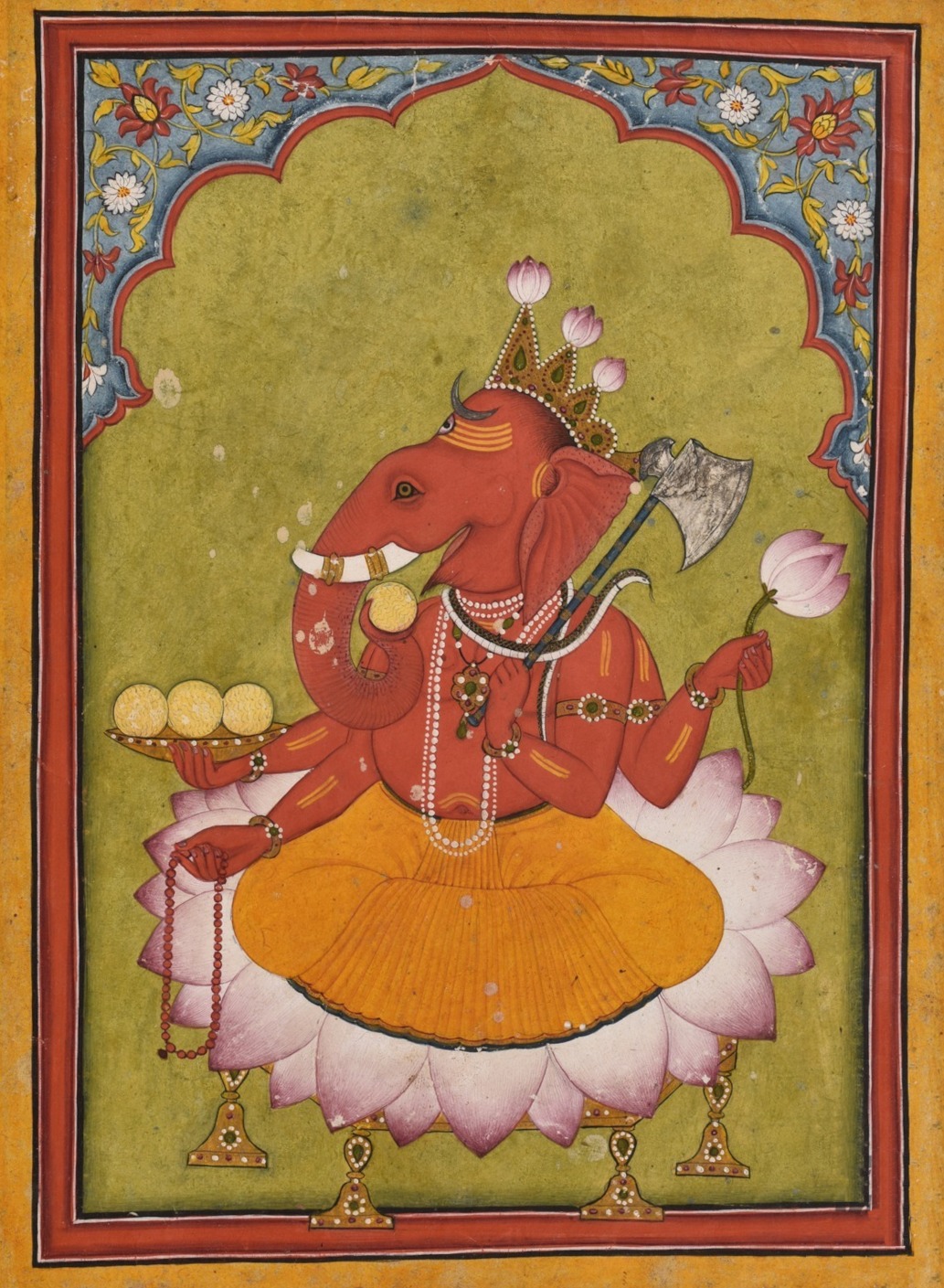 🇮🇳 India and 5 moreGaneshaगणेश (Gaṇeśa)
An elephant-headed Hindu deity worshipped as the remover of obstacles and patron of wisdom.Being · Protection · Luck and prosperity Living
🇮🇳 India and 5 moreGaneshaगणेश (Gaṇeśa)
An elephant-headed Hindu deity worshipped as the remover of obstacles and patron of wisdom.Being · Protection · Luck and prosperity Living
 🇮🇳 India and 5 moreKartikeyaKārttikeya
Hindu god of war and victory, son of Shiva and ParvatiBeing · Power and authority · Protection Living
🇮🇳 India and 5 moreKartikeyaKārttikeya
Hindu god of war and victory, son of Shiva and ParvatiBeing · Power and authority · Protection Living
 🇮🇳 India and 2 moreBhootभूत
A restless spirit of the dead in South Asian belief and folkloreBeing · Cursing and harm · Protection Living
🇮🇳 India and 2 moreBhootभूत
A restless spirit of the dead in South Asian belief and folkloreBeing · Cursing and harm · Protection Living
 🇮🇳 India and 4 moreMakaraमकर
A legendary sea-creature in Hindu mythology and a symbol of water and thresholdsBeing · Protection · Power and authority Historical
🇮🇳 India and 4 moreMakaraमकर
A legendary sea-creature in Hindu mythology and a symbol of water and thresholdsBeing · Protection · Power and authority Historical
 🇮🇳 IndiaKirtimukhaकीर्तिमुख
A swallowing face motif in Hindu and Buddhist temple architecture across South and Southeast AsiaBeing · Protection · Cleansing and purification Historical
🇮🇳 IndiaKirtimukhaकीर्तिमुख
A swallowing face motif in Hindu and Buddhist temple architecture across South and Southeast AsiaBeing · Protection · Cleansing and purification Historical
 🇵🇾 Paraguay and 2 moreKurupiCurupí
A Guaraní forest spirit known for his elongated phallus and role as a protector or abductor.Being · Protection · Cursing and harm Legendary
🇵🇾 Paraguay and 2 moreKurupiCurupí
A Guaraní forest spirit known for his elongated phallus and role as a protector or abductor.Being · Protection · Cursing and harm Legendary
 🇵🇾 ParaguayJasy Jatere
A Guaraní spirit of the moon who guards yerba mate and enforces the siestaBeing · Protection · Luck and prosperity Legendary
🇵🇾 ParaguayJasy Jatere
A Guaraní spirit of the moon who guards yerba mate and enforces the siestaBeing · Protection · Luck and prosperity Legendary
 🇮🇳 India and 2 moreAiravataऐरावत
A pristine white mythic elephant that carries the king of gods and controls the rains.Being · Power and authority · Protection Legendary
🇮🇳 India and 2 moreAiravataऐरावत
A pristine white mythic elephant that carries the king of gods and controls the rains.Being · Power and authority · Protection Legendary
 🇮🇳 India and 1 moreVarahiवाराही (Vārāhī)
A Hindu mother goddess with a sow face, worshipped in Tantric rites for protection and powerBeing · Protection · Power and authority Living
🇮🇳 India and 1 moreVarahiवाराही (Vārāhī)
A Hindu mother goddess with a sow face, worshipped in Tantric rites for protection and powerBeing · Protection · Power and authority Living
Photo credits on this page
The small pictures above come from Wikimedia Commons under free licences. Some are cropped to fit.
- Bhoot: Anilbhardwajnoida, CC BY-SA 3.0, source
- Tara: Chore Bagan Art Studio, Public domain, source
- Kurupi: FrankOWeaver, CC BY-SA 3.0, source
- Yaksha: Gunkarta ( talk ), CC BY-SA 3.0, source
- Brahmarakshasa: Chaitnyags, CC BY-SA 4.0, source
- Dakini: Didier Descouens, Public domain, source
- Kali: Raja Ravi Varma, Public domain, source
- Santoshi Mata: Nishu0246, CC BY-SA 4.0, source
- Ganesha: anonymous, Public domain, source
- Kartikeya: Dassmahen, CC BY-SA 4.0, source
- Bhadrakali: unknown Basholi artist, Public domain, source
- Bhairava: Saankav, CC BY-SA 4.0, source
- Taleju: Unknown author, CC BY-SA 4.0, source
- Vahana: Unknown Nepali, Public domain, source
- Kirtimukha: Sailko, CC BY 3.0, source
- Airavata: Unknown, India, Rajasthan, Amber, South Asia, Public domain, source
- Apu: Cecilia Sacsa, CC BY-SA 4.0, source
- Mangala: E. A. Rodrigues, Public domain, source
- Yogini: Soumendra Barik, CC BY-SA 3.0, source
- Makara: Subbhashinee S, CC BY-SA 3.0, source
- Jasy Jatere: Patty P, Public domain, source
- Hanuman: Niranjan Arminius, CC BY-SA 2.0, source
- Yakshini: Brihaspati, CC BY-SA 4.0, source