Shamans
Specialists who travel to or call the spirit world on behalf of a community.
A shaman is a specialist who is believed to travel to, call or negotiate with the spirit world on behalf of a community. The word comes from the Evenki language of Siberia, and scholars now apply it to Mongolian, Korean, Sami, Amazonian and many other traditions. Many communities use their own words and dislike the general label. This page covers how shamans are chosen, who may be one, and how the term has been used and misused.
Calling and training
A shaman is usually described as chosen, often through illness, dreams or visions, and then trained by a senior. In Korea, the mudang may undergo a spirit illness called sinbyeong before initiation. In the Amazon, long apprenticeship and dietary rules are reported. In Mongolia and Siberia, the drum, costume and songs are inherited and taught. Many communities say a person who refuses the call risks suffering. The drum, rattle, mirror and costume are tools of the trade, and the songs they sing are often learned from earlier shamans or received in dreams.
Gender and standing
Gender patterns differ. Korean shamans are mostly women, while Siberian traditions include both men and women, and some, as with the Sami noaidi, were mostly men. Status also varies: a shaman may be honoured, feared or looked down on. In Korea, mudang have long been low in social rank while hired for the most important family rites. Shamans often have an ordinary life as hunters, farmers or herders, and are called on only when a community needs them.
Suppression and revival
Shamanism has been persecuted. Soviet authorities imprisoned and killed Siberian shamans, Chinese and Japanese governments restricted shamanic rites in modern times, and Christian missions banned them. Since the 1990s there has been revival in Mongolia, Tuva and Buryatia. In Korea, shaman rites are now listed as intangible cultural heritage, even as Protestant groups criticise them. Soviet campaigns treated shamans as enemies of progress, and some were killed as class enemies in the 1930s.
Appropriation and scholarship
Mircea Eliade's 1951 book on shamanism made the word global, and critics say it flattened very different practices. Neo-shamanism and paid workshops in the West sell techniques without community authority, which many Indigenous leaders oppose. Some ceremonies and knowledge are closed to outsiders, and a visitor should ask before attending or recording anything. Scholars also note that shamanism is a Western category, and critics suggest it has been stretched over practices that have little in common.
Shamans on EveryJaadu
The entries written up so far, best known first.
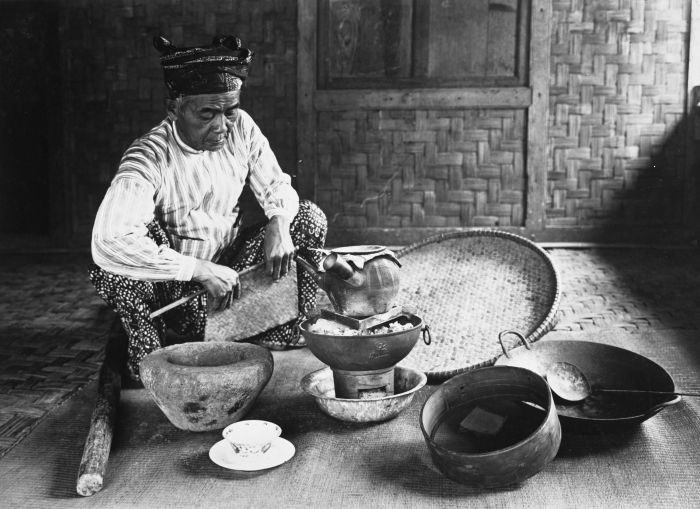 🇮🇩 Indonesia and 2 moreDukun
A traditional healer and spirit medium in Indonesian folk practiceTradition · Healing · Seeing and foretelling Living
🇮🇩 Indonesia and 2 moreDukun
A traditional healer and spirit medium in Indonesian folk practiceTradition · Healing · Seeing and foretelling Living
 🇮🇷 Iran and 4 moreJinnجِنّ
Supernatural beings in Islamic and pre-Islamic Arabian belief, capable of shapeshifting and living in society.Being · Protection · Cursing and harm Living
🇮🇷 Iran and 4 moreJinnجِنّ
Supernatural beings in Islamic and pre-Islamic Arabian belief, capable of shapeshifting and living in society.Being · Protection · Cursing and harm Living
 🇦🇺 AustraliaKurdaitchakwertatye
A ritual executioner and feathered shoes of the Arrernte people in Central Australia.Tradition · Cursing and harm · Power and authority Historical
🇦🇺 AustraliaKurdaitchakwertatye
A ritual executioner and feathered shoes of the Arrernte people in Central Australia.Tradition · Cursing and harm · Power and authority Historical
 🇲🇾 Malaysia and 1 morePawang
A shaman from Indonesia and Malaysia who commands spirits, weather, and wild animals.Being · Protection · Cursing and harm Living
🇨🇱 Chile and 3 moreGualichu
An evil spirit feared in Mapuche and Tehuelche traditions, and a word for bad luckBeing · Cursing and harm Historical
🇨🇦 CanadaPinga
An Inuit goddess of the hunt and medicine who oversees caribou herds and souls.Being · Healing · Cursing and harm Historical
🇺🇸 United StatesChepi
A spirit of the dead in Narragansett belief, called upon for vengeance.Being · Cursing and harm · Speaking with spirits and the dead Historical
🇲🇾 Malaysia and 1 morePawang
A shaman from Indonesia and Malaysia who commands spirits, weather, and wild animals.Being · Protection · Cursing and harm Living
🇨🇱 Chile and 3 moreGualichu
An evil spirit feared in Mapuche and Tehuelche traditions, and a word for bad luckBeing · Cursing and harm Historical
🇨🇦 CanadaPinga
An Inuit goddess of the hunt and medicine who oversees caribou herds and souls.Being · Healing · Cursing and harm Historical
🇺🇸 United StatesChepi
A spirit of the dead in Narragansett belief, called upon for vengeance.Being · Cursing and harm · Speaking with spirits and the dead Historical
 🇦🇺 AustraliaCleverman
A traditional Aboriginal healer and cultural keeper in Australia with varied magical abilities.Being · Healing · Cursing and harm Living
🇦🇺 AustraliaCleverman
A traditional Aboriginal healer and cultural keeper in Australia with varied magical abilities.Being · Healing · Cursing and harm Living
Photo credits on this page
The small pictures above come from Wikimedia Commons under free licences. Some are cropped to fit.
- Dukun: Unknown author, CC BY-SA 3.0, source
- Jinn: VenusFeuerFalle, CC0, source
- Kurdaitcha: Unknown author, CC BY 4.0, source
- Pawang: Unknown author, CC BY-SA 3.0, source
- Mimi: Photo by and ©2002 Dustin M. Ramsey ( Kralizec! ), CC BY-SA 2.5, source