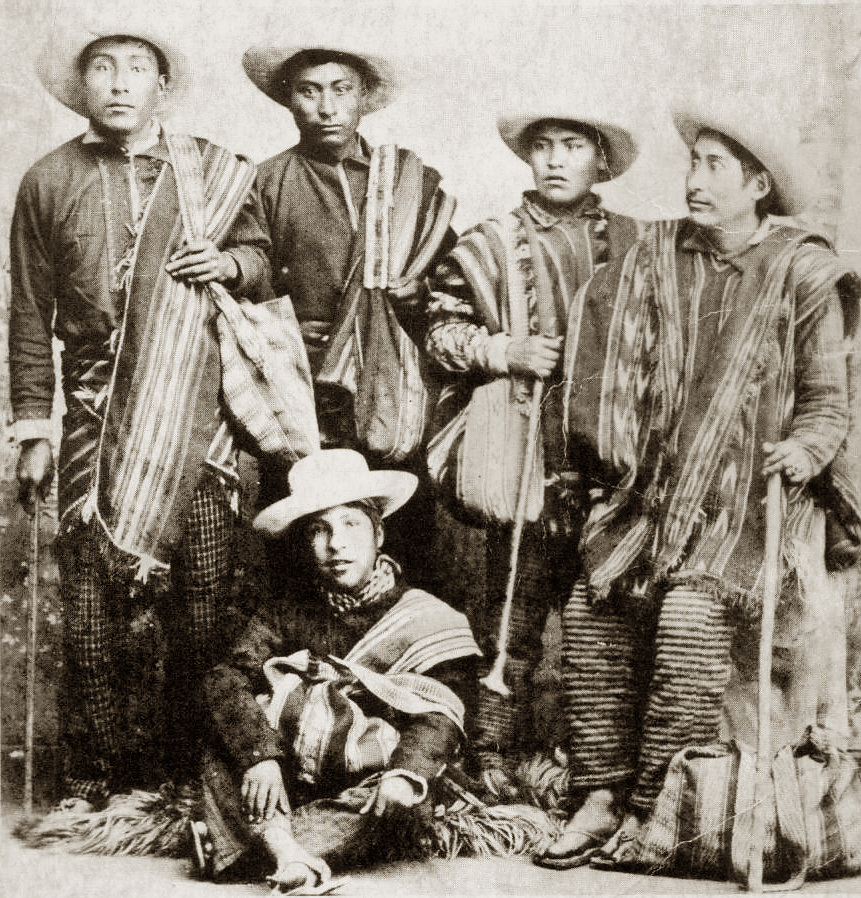
Kallawaya
possibly from khalla-wayai or k'alla wayai, though its exact linguistic origin remains uncertain
An itinerant group of traditional Andean healers known for their medicinal plant knowledge and ritual practices
The Kallawaya are an indigenous people from the Bolivian Andes who travel on foot to practice traditional medicine. Their healing system combines extensive botanical knowledge with spiritual beliefs about harmony between the body and nature.
- Descendants of Tiwanaku and Mollo cultures
- Treated malaria during Panama Canal construction
- Use Machaj juyay, a critically endangered language
- Travel on foot through the Andes
- Known for brain surgery around 700 AD
What it is
The Kallawaya are an indigenous group in Bolivia recognized as itinerant traditional healers. They travel across the Andes to treat patients using a system rooted in pre-Inca traditions. Their practice involves diagnosing illness as a disconnection from the natural world and restoring balance through herbal remedies and spiritual rituals. This tradition has persisted for approximately one thousand years.
Where it comes from
UNESCO identifies the Kallawaya as descendants of the Tiwanaku and Mollo cultures. Historical records suggest they performed complex procedures like brain surgery by 700 AD. They gained wider recognition during the construction of the Panama Canal, where they treated malaria using plant-based remedies. Some sources credit them with early uses of quinine for disease control.
How it is done
Healers perform a ceremonial dance before departing, wearing rhea feather garments for protection. They carry bags filled with herbs and talismans while walking ancient trails. Musicians play drums and pan flutes to establish contact with the spirit world. Practices vary by location, emphasizing prevention in rural areas and reactive treatment in cities.
Tools and materials
The primary tools are medicinal plants gathered from diverse ecosystems including the Amazon, altiplano, and mid-Andean regions. Healers know hundreds of species, some introduced from Africa or Europe. Ritual items include suri feather clothing and khapchos containing mixed remedies and protective talismans.
Kallawaya, drawn and placed
- Living
- Revived
- Fading
- Historical
- Legendary
- Performed
- Lineage
- Tiwanaku and Mollo cultures
- Timing
- during journeys to treat patients
What it is for
The tradition aims to heal physical and mental illnesses by restoring harmony between the patient and their environment. It serves communities across several South American countries. The healers address both common ailments and specific disorders, maintaining health through preventive care and targeted treatments.
Who does it
Men are primarily trained as natural healers, while women often serve as midwives and pediatric specialists. Training involves learning the esoteric Machaj juyay language and mastering hundreds of plant species. New practitioners must prove lineage and pass community review by ayllu leaders to join organizations like KASFRO.
Peoples and places
The Kallawaya originate from Bautista Saavedra and Muñecas provinces in Bolivia. They travel extensively through Argentina, Chile, Ecuador, Peru, and Panama. Their network spans multiple nations, connecting urban centers with remote villages to provide healthcare services based on ancestral knowledge.
At a glance: who, where and when
Who does it
Peoples
Belief worlds
Occasions

What people believe
Health depends on harmony between the human body and the surrounding environment. Illness results from disconnection from nature. Spiritual forces interact with physical health, requiring rituals to maintain balance. The healer acts as a bridge between the natural and spiritual worlds through ceremony and plant medicine.
When it is done
Rituals occur before journeys begin. Musicians perform Kantu ceremonies to connect with spirits prior to patient visits. The timing aligns with travel needs rather than fixed annual festivals, adapting to the movement patterns of the itinerant healers.
How scholars and sceptics see it
Researchers study the Kallawaya pharmacopoeia for drug leads and botanical diversity. Anthropologists examine their role in preserving indigenous knowledge. Studies highlight their unique language and medical systems. Scholars note the integration of exotic plants into traditional frameworks.
Cautions and what is closed
Until the early 21st century, these practices were illegal in Bolivia and neighboring countries. Only Western-trained physicians were legally permitted to practice medicine. Restrictions limited access to traditional care despite its effectiveness and cultural significance.
Compare and confuse
The Kallawaya differ from other indigenous groups by their itinerant lifestyle and specialized trade language. While many cultures use herbal medicine, the Kallawaya system is distinct in its geographic range and historical continuity. Their practice shares roots with broader Andean traditions but maintains unique characteristics.
Questions people ask about Kallawaya
What is the Kallawaya?
The Kallawaya are an indigenous group from Bolivia known as itinerant traditional healers. They travel across the Andes to treat patients using plant-based remedies and spiritual rituals rooted in pre-Inca traditions.
Where do the Kallawaya come from?
They trace their origins to the Tiwanaku and Mollo cultures in the Bolivian Andes. Their existence spans approximately one thousand years, with documented practices dating back to at least 700 AD.
How do Kallawaya healers treat illness?
They view illness as a disconnection from nature. Treatment involves restoring harmony through herbal medicines, spiritual ceremonies, and rituals that connect the patient with the natural and spirit worlds.
What language do they use?
Their trade language is Machaj juyay, considered critically endangered. It combines Quechua grammar with vocabulary from extinct Puquina and other regional languages, used specifically for medicinal and ritual contexts.
Good reading and sources
- Kallawaya on WikipediaEncyclopedia
- More photos on Wikimedia CommonsPhotos and video
- Wikidata recordOpen data
The facts on this page come from the Wikipedia article "Kallawaya", written by its contributors and used under the CC BY-SA 4.0 licence, and from its Wikidata record (CC0). EveryJaadu rewrote the text in its own words, with AI assistance, and compares every page with the article to make sure no passage is copied. It may be reused under the same CC BY-SA 4.0 licence with a link back.
It may contain mistakes. Names and customs differ from one community to the next, and some knowledge is closed to outsiders and left out here. This page describes belief and practice. It does not say that any of it works, it is not a how-to, and it is not medical advice. If something is wrong, tell us. Last refreshed 2026-10-05.
More from Bolivia
All the entries from Bolivia 🇧🇴 Bolivia and 2 moreYatiri
A lightning-struck healer in Aymara communities who restores balance with nature and ancestorsTradition · Healing · Speaking with spirits and the dead Living
🇵🇾 Paraguay and 3 moreGuarani mythology
The oral traditions of the Tupi-Guarani peoples regarding gods, spirits and creationTradition · Speaking with spirits and the dead · Power and authority Living
🇵🇪 Peru and 1 morePishtacoñañaq; kharisiri
An Andean bogeyman said to steal human fat for oil and medicineBeing · Cursing and harm · Power and authority Living
🇧🇴 Bolivia and 2 moreYatiri
A lightning-struck healer in Aymara communities who restores balance with nature and ancestorsTradition · Healing · Speaking with spirits and the dead Living
🇵🇾 Paraguay and 3 moreGuarani mythology
The oral traditions of the Tupi-Guarani peoples regarding gods, spirits and creationTradition · Speaking with spirits and the dead · Power and authority Living
🇵🇪 Peru and 1 morePishtacoñañaq; kharisiri
An Andean bogeyman said to steal human fat for oil and medicineBeing · Cursing and harm · Power and authority Living
 🇵🇪 Peru and 1 moreApu
Sacred mountain spirits in Andean tradition that protect communities and control natural resourcesBeing · Protection · Healing Living
🇵🇪 Peru and 1 moreApu
Sacred mountain spirits in Andean tradition that protect communities and control natural resourcesBeing · Protection · Healing Living
Related elsewhere
All tradition 🇹🇭 Thailand and 3 moreThai Buddha amuletsพระเครื่อง (phrakhrueang)
Sacred Buddhist images and relics worn for protection, merit, and fortune in Thailand.Charm · Protection · Luck and prosperity Living
🇹🇭 Thailand and 3 moreThai Buddha amuletsพระเครื่อง (phrakhrueang)
Sacred Buddhist images and relics worn for protection, merit, and fortune in Thailand.Charm · Protection · Luck and prosperity Living
 🇨🇳 China and 5 moreGuanyin觀音 (Guānyīn)
The Bodhisattva of compassion, worshipped across East Asia as a listener to human sufferingBeing · Protection · Healing Living
🇨🇳 China and 5 moreGuanyin觀音 (Guānyīn)
The Bodhisattva of compassion, worshipped across East Asia as a listener to human sufferingBeing · Protection · Healing Living
 🇺🇸 United StatesFolk healer
An unlicensed community member who provides healing care using local plants and traditional knowledge.Tradition · Healing · Protection Historical
🇺🇸 United StatesFolk healer
An unlicensed community member who provides healing care using local plants and traditional knowledge.Tradition · Healing · Protection Historical
 🇪🇬 Egypt and 1 moreEye of Horuswḏꜣt
A stylized eye symbol in ancient Egypt representing healing and cosmic orderCharm · Protection · Healing Historical
🇪🇬 Egypt and 1 moreEye of Horuswḏꜣt
A stylized eye symbol in ancient Egypt representing healing and cosmic orderCharm · Protection · Healing Historical