
Witch trials in the early modern period
A wave of prosecutions across Europe and British America from the 1400s to the late 1700s.
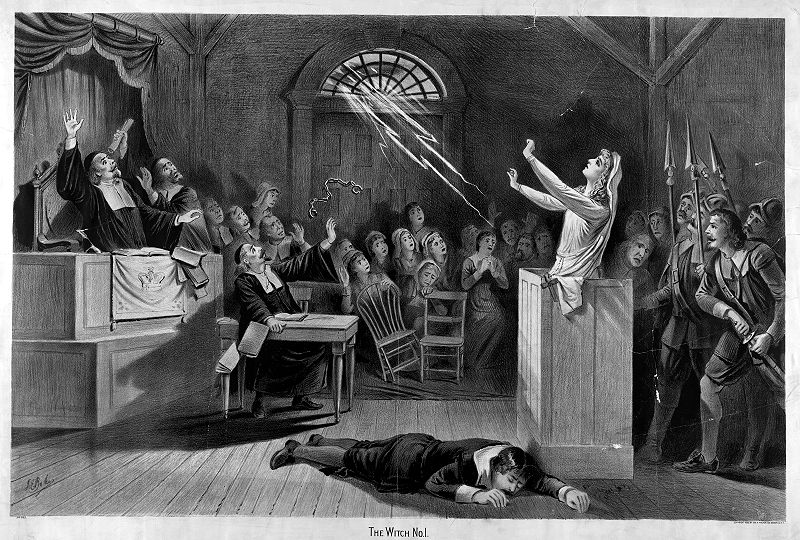
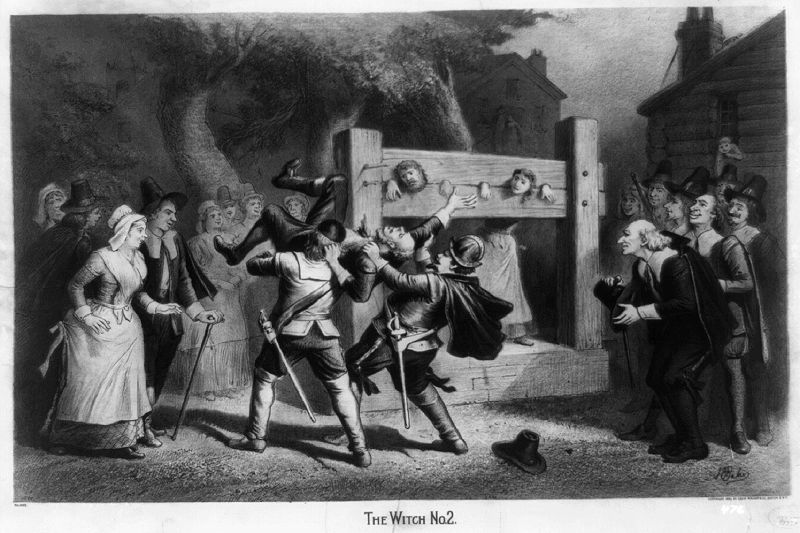
Between 1400 and 1775, roughly 100,000 people faced prosecution for witchcraft in Europe and British America. Authorities executed between 40,000 and 60,000 individuals, with the vast majority of deaths occurring on European soil.
- Approximately 100,000 people faced prosecution between 1400 and 1775.
- Executions ranged from 40,000 to 60,000, mostly in Europe.
- Peak activity occurred between 1560 and 1630.
- About 80% of the convicted were women over age 40.
- The Malleus Maleficarum influenced legal approaches to witchcraft.
What it is
This era marks a distinct historical period where communities prosecuted individuals for practicing witchcraft. The phenomenon spanned from approximately 1400 to 1775 across Europe and British America. Prosecutors viewed these acts as serious crimes against society and religion. The scale was massive, involving tens of thousands of cases. Most legal actions resulted in execution rather than imprisonment or fines. The intensity varied significantly by region, with some areas experiencing far more severe persecution than others.
Where it comes from
The roots lie in shifting Christian doctrine regarding magic. Medieval theology initially dismissed witchcraft as pagan superstition. However, theologians like Thomas Aquinas began exploring the possibility of demonic collaboration. This intellectual shift allowed clergy to view certain magical acts as real supernatural powers granted by the Devil. By the 13th century, inquisitorial branches emerged to hunt heretics. These groups later turned their attention to those accused of making pacts with Satan, creating a unified concept of diabolical witchcraft.
How it is done
Accusations typically originated from neighbors within local communities. Lower-class residents often initiated formal charges against one another. Legal proceedings varied by region but frequently involved inquisitorial procedures. In some places, authorities abolished penalties for false accusations, encouraging more claims. Convicted individuals faced various punishments depending on local laws. Burning at the stake remained a common method of execution, traditionally reserved for religious heresy. Trials relied heavily on surviving records, though many documents were lost or destroyed over time.
Tools and materials
Legal texts and theological treatises served as primary tools for prosecutors. The Malleus Maleficarum provided a structured framework for identifying and punishing witches. It categorized offenses into levels of severity. Inquisitors used Latin terminology like sortilegia to describe witchcraft. Records of confessions and testimonies formed the basis of evidence. Physical tools were rarely mentioned; the focus remained on spiritual corruption and demonic alliances.
Witch trials in the early modern period, drawn and placed
- Living
- Revived
- Fading
- Historical
- Legendary
- Performed
- Lineage
- Christian demonology
What it is for
Society sought to eliminate perceived threats to the Christian social order. Authorities aimed to purge communities of those believed to collaborate with evil forces. The goal was to protect the faithful from harm caused by curses or malevolent magic. Religious leaders wanted to enforce doctrinal purity. Neighbors used accusations to resolve personal conflicts or settle scores. The process reinforced community boundaries and highlighted the dangers of straying from accepted religious norms.
Who does it
Inquisitors and local magistrates conducted most trials. Clergy members played a central role in defining the crime and guiding proceedings. Dominican friars became particularly zealous in their pursuit of accused witches. Ordinary citizens acted as accusers, bringing forward complaints against neighbors. Scholars note that magical healers, known as cunning folk, were sometimes targeted but represented a minority of those prosecuted. The legal system relied on written records, though many were lost to time or deliberate destruction.
Peoples and places
The practice was widespread across Western Europe and its colonies. France, Germany, Switzerland, and Italy experienced high volumes of trials. The Holy Roman Empire saw particularly severe persecutions. British America also participated in this wave of prosecutions. Regional differences existed in how charges were framed and punishments administered. Some areas focused on diabolism, while others emphasized sorcery. The demographic profile of the accused showed a strong skew toward older women, who made up the majority of those convicted.
At a glance: who, where and when


What people believe
Central to these trials was the belief in a demonic pact. Accused individuals were thought to have renounced God to serve the Devil. This alliance granted them supernatural powers to cause harm. Witches were seen as part of a secret assembly dedicated to Satanic worship. This view contrasted sharply with earlier medieval beliefs that denied the reality of such pacts. Theological debates raged over whether witchcraft was an illusion or a real threat. Ultimately, the prevailing opinion held that these acts posed a genuine danger to souls and society.
How scholars and sceptics see it
Historians analyze this period through surviving legal records and theological texts. Early works by authors like Lamothe-Langon presented exaggerated accounts of mass executions. Researchers emphasize the gradual evolution of anti-witchcraft doctrine. They highlight the role of printing presses in spreading influential manuals. Studies show that the peak of trials coincided with periods of religious conflict and war. Scholars continue to debate the exact numbers and regional variations.
Cautions and what is closed
The trials led to the execution of tens of thousands of people. Many were innocent victims of neighborly disputes or social prejudice. Women, particularly those over forty, bore the brunt of the accusations. The legal process often lacked due protection for the accused. False accusations could ruin reputations and destroy families. The fear of witchcraft created an atmosphere of suspicion and paranoia. Communities were torn apart by internal conflicts and external pressures to conform to religious orthodoxy.
Compare and confuse
These trials differ from earlier medieval accusations, which were less frequent and often linked to political figures. Later periods saw a decline in prosecutions as skepticism grew. Other regions had different concepts of harmful magic that did not always involve demonic pacts. The term 'witchcraft' itself evolved to encompass a broader range of alleged sins. Comparisons can be drawn to other forms of religious persecution during the same era.
Questions people ask about Witch trials in the early modern period
What is the early modern witch trial period?
It refers to the historical era from roughly 1400 to 1775 when European and American societies prosecuted large numbers of people for witchcraft. This period saw significant legal actions and executions driven by religious and social fears.
Where did these trials primarily take place?
They occurred mainly across Europe and British America. Countries like France, Germany, Switzerland, and Italy experienced high volumes of cases, with the Holy Roman Empire being particularly severe.
Who were the main targets of these accusations?
Most of those convicted were women, typically over the age of 40. Accusations often came from neighbors within local communities, reflecting social tensions and prejudices.
What role did the Malleus Maleficarum play?
Published in 1486, this book provided a framework for identifying and punishing witches. It promoted the idea of a demonic pact and influenced legal proceedings and public perception for centuries.
Good reading and sources
- BBC Radio 4BBC, Article
- Last Person Executed as a Witch in Europe Gets a MuseumSmithsonian Magazine, Article
- Papua New Guinea Considers Repealing Sorcery Law (Published 2013)The New York Times, Article
The facts on this page come from the Wikipedia article "Witch trials in the early modern period", written by its contributors and used under the CC BY-SA 4.0 licence, and from its Wikidata record (CC0). EveryJaadu rewrote the text in its own words, with AI assistance, and compares every page with the article to make sure no passage is copied. It may be reused under the same CC BY-SA 4.0 licence with a link back.
It may contain mistakes. Names and customs differ from one community to the next, and some knowledge is closed to outsiders and left out here. This page describes belief and practice. It does not say that any of it works, it is not a how-to, and it is not medical advice. If something is wrong, tell us. Last refreshed 2026-10-06.
More from France
All the entries from France 🇫🇷 France and 2 moreÉliphas Lévi
A French writer who shaped modern occult thought and ceremonial magic.Text · Power and authority · Speaking with spirits and the dead Historical
🇫🇷 France and 2 moreÉliphas Lévi
A French writer who shaped modern occult thought and ceremonial magic.Text · Power and authority · Speaking with spirits and the dead Historical
 🇬🇧 United Kingdom and 4 moreCorn dolly
A woven straw figure made from the last sheaf of a European harvest to house the crop spirit.Tradition · Protection · Speaking with spirits and the dead Revived
🇬🇧 United Kingdom and 4 moreCorn dolly
A woven straw figure made from the last sheaf of a European harvest to house the crop spirit.Tradition · Protection · Speaking with spirits and the dead Revived
 🇬🇧 United Kingdom and 5 moreAleister Crowley
English occultist and founder of the religion of ThelemaText · Power and authority · Change and initiation Living
🇬🇧 United Kingdom and 5 moreAleister Crowley
English occultist and founder of the religion of ThelemaText · Power and authority · Change and initiation Living
 🇩🇪 Germany and 2 moreFranz Anton Mesmer
A German physician who proposed a universal fluid of natural energy and founded mesmerism.Tradition · Healing Historical
🇩🇪 Germany and 2 moreFranz Anton Mesmer
A German physician who proposed a universal fluid of natural energy and founded mesmerism.Tradition · Healing Historical
Related elsewhere
All tradition 🇪🇬 Egypt and 1 moreLilithלִילִית
A feminine figure from Mesopotamian and Jewish mythology, often depicted as a night demon or spirit.Being · Cursing and harm Legendary
🇪🇬 Egypt and 1 moreLilithלִילִית
A feminine figure from Mesopotamian and Jewish mythology, often depicted as a night demon or spirit.Being · Cursing and harm Legendary
 🇪🇬 EgyptCurse
A spoken wish for misfortune to befall a person or placeBelief · Cursing and harm · Luck and prosperity Historical
🇪🇬 EgyptCurse
A spoken wish for misfortune to befall a person or placeBelief · Cursing and harm · Luck and prosperity Historical
 🇹🇷 Turkey and 5 moreEvil eye
A curse caused by an envious look and the charms used to block itBelief · Protection · Cursing and harm Living
🇹🇷 Turkey and 5 moreEvil eye
A curse caused by an envious look and the charms used to block itBelief · Protection · Cursing and harm Living
 🇮🇳 India and 5 moreHoliहोली
A Hindu spring festival marked by coloured powders and bonfires to celebrate love and virtue.Tradition · Love and attraction · Cursing and harm Living
🇮🇳 India and 5 moreHoliहोली
A Hindu spring festival marked by coloured powders and bonfires to celebrate love and virtue.Tradition · Love and attraction · Cursing and harm Living