
Tawûsî Melek
In its own language: تاوسی مەلەک
from Kurdish, meaning 'Peacock Angel'
The central angel of Yazidism, known as the Peacock Angel and leader of the Seven Mysteries.
Tawûsî Melek is the principal figure in Yazidi theology, appointed by God to lead the seven Divine Beings who govern the world. He is venerated by Kurds in Iraq and Iran as a benevolent emanation of light, not as a source of evil.
- Leader of the Seven Mysteries in Yazidi theology
- Symbolized by the peacock and rainbow
- Venerated in Iraq and Iran by Kurds
- Accused of devil worship leading to persecution
- Central figure in the New Year festival
What it is
Tawûsî Melek stands as the primary deity within Yazidi belief, serving as the Lord of this World. He leads the Heptad, a group of seven Divine Beings also called the Seven Angels or heft sirr. These beings manage all worldly affairs under God's authority. Yazidis view him as a pure, benevolent emanation of God rather than a fallen spirit. He is credited with creating the cosmos from a cosmic egg after passing a divine test. Nature itself, with its cycles of light and dark, flows from his presence. He holds power across the sky, sea, and mountains, embodying the totality of the physical realm.
Where it comes from
Yazidi cosmogony draws from Ancient Mesopotamian and Indo-Iranian traditions, differing from Abrahamic narratives. The religion traces its reform to Sheikh Adi Ibn Musafir, whom believers consider an incarnation of Tawûsî Melek. In myth, the angel descended to earth as light, transforming into a seven-coloured peacock. This bird flew over the world to bless it before resting in Lalish. The rainbow serves as a key symbol of his blessing. These origins link Yazidism closely to Zoroastrian and Vedic concepts of divine order.
How it is done
Worship involves honouring the peacock as a sacred symbol of diversity and nature's colours. Hunting or harming the bird is strictly forbidden. Devotees display peacock images in shrines like Lalish and in their homes. During the New Year, hundreds of lamps are lit to mark the angel's descent. The community avoids using words associated with evil spirits in other faiths. Gatherings where such figures are cursed are shunned, as acknowledging independent evil diminishes God's power.
Tools and materials
The peacock feather and the bird itself act as primary symbols of the angel. Rainbows represent his blessing and connection to the divine light. Lamps are used during festivals to signify his arrival on earth. Images of the peacock adorn holy sites and personal spaces. These items reflect the diversity of nature and the life-giving rays of the sun.
Tawûsî Melek, drawn and placed
- Living
- Revived
- Fading
- Historical
- Legendary
- Performed
- Lineage
- Yazidi creation mythology
- Timing
- on the first Wednesday of Nisan for the New Year
What it is for
Believers seek his guidance as the manager of worldly events. The community looks to him for spiritual renewal during the spring festival. His role ensures that the natural world functions according to divine will. Followers revere him to maintain harmony with the environment and the spiritual hierarchy.
Who does it
The practice belongs to the Yazidi community, primarily Kurds in Iraq and Iran. Yarsanis also venerate a similar figure named Malak Tawus. Leadership within Yazidism includes priests and spiritual guides who interpret the teachings. Ordinary households keep sacred symbols in their homes. The tradition emphasizes purity and obedience to the divine order established by the angel.
Peoples and places
Yazidis form the core community, concentrated in northwestern Iraq and parts of Iran. They face historical persecution due to misunderstandings about their beliefs. Yarsanis, another Kurdish group, share theological similarities but have distinct cycles of revelation. Both groups reject the concept of Satan found in Islam and Christianity. Their shared heritage reflects ancient regional religious currents.
At a glance: who, where and when
Who does it
Belief worlds
Occasions


What people believe
God created seven Divine Beings to oversee creation. Tawûsî Melek leads them as the chief archangel. Evil does not exist as an independent force; humans create the concept to excuse moral failure. Free will allows people to choose right from wrong. The angel represents eternal light and benevolence. Worship focuses on gratitude for the world's order rather than fear of punishment.
When it is done
The first Wednesday of Nisan marks the angel's descent and the start of the New Year. This day brings joyous renewal and celebrates spring. Hundreds of lamps are lit on the eve of the feast. The number of lamps matches the days in the year. Sersal is the main festival dedicated to his memory and blessing.
How scholars and sceptics see it
Researchers note that Yazidi beliefs stem from pre-Islamic Iranian and Mesopotamian roots. Anthropologists highlight the community's unique cosmology separate from Abrahamic faiths. Historians document how external accusations led to severe persecution. Scholars clarify that the term 'devil-worship' stems from misinterpreting the avoidance of evil names.
Cautions and what is closed
Centuries of violent persecution have targeted Yazidis as 'devil-worshippers'. Muslim and Christian critics falsely linked the angel to Satan or Ahriman. This misconception forced communities into remote mountain areas. Modern violence continues in regions like Sinjar. The taboo against certain Arabic words has been twisted to suggest hidden connections to evil.
Compare and confuse
The figure is often confused with Satan in Islamic and Christian traditions. Some scholars compare him to Ahriman in Zoroastrianism, though the roles differ. Yarsanism features a parallel figure, Malak Tawus, within its own cycle of divine manifestations. Both groups share Kurdish cultural roots but maintain distinct theological frameworks.
Law and persecution
Legal protection varies across regions where Yazidis live. Historical laws enforced discrimination based on false accusations. Recent conflicts have endangered their safety and religious freedom. International bodies recognize their status as a persecuted minority. Local authorities sometimes fail to prevent attacks on their communities.
Today
Diaspora communities maintain traditions abroad while facing assimilation pressures. Revival efforts focus on preserving sacred texts and rituals. Commerce occasionally exploits peacock imagery without religious context. Appropriation by outsiders ignores the deep spiritual significance. The community continues to celebrate Sersal despite past traumas.
Questions people ask about Tawûsî Melek
Who is Tawûsî Melek?
He is the central angel of Yazidism, leading the seven Divine Beings who govern the world. Believers see him as a benevolent emanation of God, not a fallen spirit.
Where does this belief come from?
It originates in ancient Mesopotamian and Indo-Iranian traditions. The religion was reformed by Sheikh Adi, considered an incarnation of the angel.
Why is the peacock important?
The peacock symbolizes the angel's descent and the diversity of nature. Its feathers represent the rainbow and life-giving light. Harming the bird is forbidden.
Are Yazidis devil worshippers?
No. Accusations stem from misunderstanding their avoidance of evil names. They believe evil is not an independent entity and reject the concept of Satan.
When is he celebrated?
He is honored on the first Wednesday of Nisan during the New Year. Hundreds of lamps are lit to mark his descent and bring renewal.
Good reading and sources
- Encyclopaedia BritannicaArticle
- National GeographicNational Geographic, Article
- Who are the Yazidis and why is Isis hunting them?The Guardian, Article
- Library of Congress CatalogLibrary of Congress, Article
- Tawûsî Melek on WikipediaEncyclopedia
- More photos on Wikimedia CommonsPhotos and video
- Wikidata recordOpen data
The facts on this page come from the Wikipedia article "Tawûsî Melek", written by its contributors and used under the CC BY-SA 4.0 licence, and from its Wikidata record (CC0). EveryJaadu rewrote the text in its own words, with AI assistance, and compares every page with the article to make sure no passage is copied. It may be reused under the same CC BY-SA 4.0 licence with a link back.
It may contain mistakes. Names and customs differ from one community to the next, and some knowledge is closed to outsiders and left out here. This page describes belief and practice. It does not say that any of it works, it is not a how-to, and it is not medical advice. If something is wrong, tell us. Last refreshed 2026-10-06.
More from Iraq
All the entries from Iraq 🇮🇶 Iraq and 1 moreRabisu
A wind spirit in Akkadian myth sent to correct human transgressionsBeing · Cursing and harm · Cleansing and purification Historical
🇮🇶 Iraq and 1 moreRabisu
A wind spirit in Akkadian myth sent to correct human transgressionsBeing · Cursing and harm · Cleansing and purification Historical
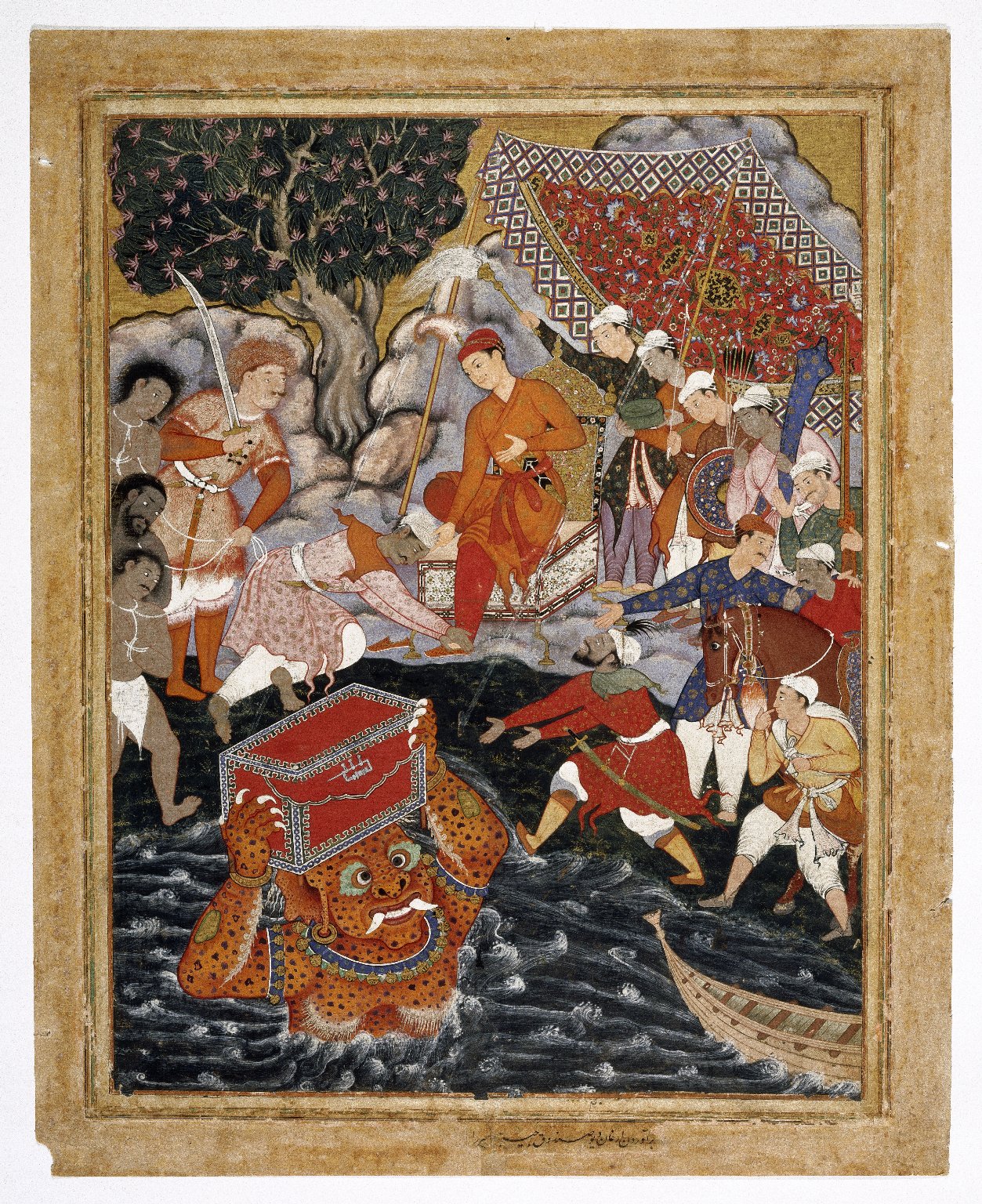 🇪🇬 Egypt and 3 moreIfritعفريت
A class of powerful chthonic spirits in Islamic tradition and folkloreBeing · Cursing and harm · Power and authority Historical
🇮🇶 Iraq and 1 morePazuzu𒀭𒅆𒊒𒍪𒍪 (pà.zu.zu)
A Mesopotamian wind demon and protective amulet against child-harming spiritsBeing · Protection · Cursing and harm Historical
🇪🇬 Egypt and 3 moreIfritعفريت
A class of powerful chthonic spirits in Islamic tradition and folkloreBeing · Cursing and harm · Power and authority Historical
🇮🇶 Iraq and 1 morePazuzu𒀭𒅆𒊒𒍪𒍪 (pà.zu.zu)
A Mesopotamian wind demon and protective amulet against child-harming spiritsBeing · Protection · Cursing and harm Historical
 🇮🇶 Iraq and 1 moreLamassu𒀭𒆗 (dlamma)
A Mesopotamian guardian spirit, a winged bull with a human head, set to watch the gatesBeing · Protection · Power and authority Historical
🇮🇶 Iraq and 1 moreLamassu𒀭𒆗 (dlamma)
A Mesopotamian guardian spirit, a winged bull with a human head, set to watch the gatesBeing · Protection · Power and authority Historical
Related elsewhere
All being 🇮🇳 India and 2 moreHomaहोम
A fire ritual found across Asian religions where offerings are burned as a votive exchange with the divine.Rite · Protection · Speaking with spirits and the dead Living
🇮🇳 India and 2 moreHomaहोम
A fire ritual found across Asian religions where offerings are burned as a votive exchange with the divine.Rite · Protection · Speaking with spirits and the dead Living
 🇮🇶 Iraq and 5 moreGrimoire
A textbook containing instructions for spells, rituals, and the creation of magical objects.Text · Protection · Healing Historical
🇮🇶 Iraq and 5 moreGrimoire
A textbook containing instructions for spells, rituals, and the creation of magical objects.Text · Protection · Healing Historical
 🇺🇸 United States and 1 moreMedicine wheel
Circular stone formations built by Indigenous peoples of North America for ceremony and astronomy.Tradition · Speaking with spirits and the dead · Power and authority Living
🇺🇸 United States and 1 moreMedicine wheel
Circular stone formations built by Indigenous peoples of North America for ceremony and astronomy.Tradition · Speaking with spirits and the dead · Power and authority Living