
Staff of Moses
In its own language: maṭṭeh
from Hebrew maṭṭeh, meaning rod or staff
A walking stick with miraculous powers in Jewish and Islamic tradition
The Staff of Moses is a biblical and Quranic walking stick used by the prophet to perform miracles. It is said to have turned into a serpent, split the Red Sea, and produced water from stone.
- Legend says it was created on the sixth day of creation.
- It was said to be carved from sapphire with God's name.
- Moses used it to turn the Nile river into blood.
- It was kept at Topkapı Palace in Istanbul until recently.
- A relic in Soissons Cathedral is claimed to be part of it.
What it is
The Staff of Moses is a sacred object described in religious texts as a simple walking stick that gained supernatural abilities. It served as an instrument for divine power, allowing its holder to perform acts that defied natural laws. The staff is central to the narrative of the Exodus, where it demonstrated authority over nature and enemies. In later traditions, it became a symbol of prophetic legitimacy and royal authority, often linked to other legendary figures like King David.
Where it comes from
Jewish legend holds that the staff was created during the sixth day of creation. It passed through the hands of several biblical patriarchs before reaching Moses. One Midrashic tale compares it to a sword in a stone; it was embedded in the garden of Jethro, Moses' father-in-law. Only the one destined to lead Israel out of Egypt could remove it. This story emphasizes the staff's pre-ordained purpose and divine selection of its user.
How it is done
Moses used the staff to command natural elements. He struck rocks to release drinking water for his people. He extended it over the Red Sea to part the waters. In confrontations with Egyptian sorcerers, he transformed the staff into a serpent, which then swallowed their serpents. He also used it to bring plagues upon Egypt, including turning the Nile River blood-red. These actions were performed on divine command to demonstrate superiority over other powers.
Tools and materials
The primary tool is a wooden staff, identified in Hebrew as a maṭṭeh. Some legends describe it as being carved from sapphire and engraved with the name of God and mnemonics for the Ten Plagues. Its physical appearance is secondary to its function as a conduit for divine will. The transformation into a serpent is a key visual element of its power, striking fear and awe in observers.
Staff of Moses, drawn and placed
- Living
- Revived
- Fading
- Historical
- Legendary
- Performed
- Lineage
- Abrahamic prophetic tradition
What it is for
The staff was used to protect the Israelites, provide them with sustenance, and defeat their oppressors. It served as a sign of God's presence and authority. For Moses, it was a tool of leadership and judgment. Later, it was viewed as a scepter of kingship, used by David and his descendants until the Temple's destruction. Its disappearance signaled the end of the Davidic line and its anticipated return marks the coming of the Messiah.
Who does it
Moses was the primary user, acting as a prophet and leader. Aaron also used a similar rod, leading scholars to debate if they were the same object. Rabbinical commentators analyzed the staff's history and properties. In Islamic tradition, the staff (ʿaṣā) is revered as a miracle-working object of a prophet. Modern scholars and historians study the textual references and relic claims without practicing its magic.
Peoples and places
The staff is significant in both Jewish and Islamic traditions. In Judaism, it is linked to the Patriarchs, Moses, and the Davidic monarchy. Legends connect it to Jacob, Judah, and David. In Islam, it is mentioned in the Quran as a sign of prophethood. Relic traditions place it in Constantinople and later Istanbul, appealing to Muslim devotion. Christian relic hunters in the Middle Ages also sought it, claiming it had been moved to France.
At a glance: who, where and when


What people believe
Believers hold that the staff was a vessel for divine power, not merely a magical item. Its ability to change form and control nature proved the supremacy of the one God. The transformation into a serpent was a contest of spiritual power against Egyptian magic. The staff's journey through history, from creation to the Messiah, reflects a belief in a continuous thread of prophetic authority and divine plan across generations.
How scholars and sceptics see it
Rabbinical scholars debated whether Moses' and Aaron's rods were identical due to their interchangeable powers. Historians trace the relic's claimed path from Jerusalem to Constantinople, then to Soissons, and finally to Istanbul. Scholars note the similarities between the staff legend and other heroic myths, such as the sword in the stone. The identification of the staff at Topkapı Palace is based on local tradition rather than scientific verification.
Cautions and what is closed
The staff's use involved severe consequences. Moses struck a rock in anger instead of speaking to it, which resulted in him being barred from the Promised Land. This event highlights the strict requirements for obedience when wielding divine power. The relic's history involves political upheaval, including the sack of Constantinople and the conquest of Egypt, which led to its relocation. Claims of its current location are matters of faith and tradition.
Compare and confuse
The staff is related to the crosier, a bishop's staff, and the caduceus, a heraldic symbol. It is distinct from Nehushtan, the bronze serpent on a pole. In Mandaean practice, priests use a staff called Margna. The concept of a magical wand or rod appears in many cultures, but the Staff of Moses is unique in its specific biblical and Quranic narrative and historical relic claims.
Today
The staff is displayed at Topkapı Palace in Istanbul as part of the Sacred Relics collection. It was placed there after Sultan Selim I brought relics from Egypt in 1517. The palace opened these items to the public in 1962. In France, Soissons Cathedral still claims to hold a portion of the staff, believed to have been brought there after the 1204 sack of Constantinople. The object remains a focus of religious veneration and historical curiosity.
Questions people ask about Staff of Moses
What is the Staff of Moses?
It is a walking stick used by the prophet Moses, described in the Bible and Quran. It is believed to have performed miracles like turning into a serpent and splitting the sea.
Where did the staff come from?
Jewish legend states it was made on the sixth day of creation. It passed through patriarchs like Jacob and Joseph before reaching Moses, who found it in his father-in-law's garden.
What miracles did it perform?
It turned into a snake, parted the Red Sea, and struck rocks to produce water. It was also used to bring plagues upon Egypt, such as turning the Nile red.
Is the staff still around today?
Traditions claim parts of it exist. One is said to be in Topkapı Palace in Istanbul. Another fragment is kept in Soissons Cathedral in France, brought there after 1204.
Who uses the staff now?
It is not actively used for magic. It is venerated as a holy relic in Islamic and Jewish traditions. Scholars study its history and the stories associated with it.
Good reading and sources
The facts on this page come from the Wikipedia article "Staff of Moses", written by its contributors and used under the CC BY-SA 4.0 licence, and from its Wikidata record (CC0). EveryJaadu rewrote the text in its own words, with AI assistance, and compares every page with the article to make sure no passage is copied. It may be reused under the same CC BY-SA 4.0 licence with a link back.
It may contain mistakes. Names and customs differ from one community to the next, and some knowledge is closed to outsiders and left out here. This page describes belief and practice. It does not say that any of it works, it is not a how-to, and it is not medical advice. If something is wrong, tell us. Last refreshed 2026-10-13.
More from Israel
All the entries from Israel 🇮🇱 IsraelRed stringחוט השני
A scarlet wool bracelet worn to ward off the evil eye and bring good luckCharm · Protection · Luck and prosperity Living
🇮🇱 IsraelRed stringחוט השני
A scarlet wool bracelet worn to ward off the evil eye and bring good luckCharm · Protection · Luck and prosperity Living
 🇪🇬 Egypt and 5 moreTalisman
An object believed to channel specific forces for protection, healing, or influence.Charm · Protection · Healing Historical
🇪🇬 Egypt and 5 moreTalisman
An object believed to channel specific forces for protection, healing, or influence.Charm · Protection · Healing Historical
 🇸🇾 Syria and 5 moreBaetyl
A sacred stone, often a meteorite, believed to house a deity in ancient Near Eastern and Mediterranean traditions.Charm · Power and authority · Speaking with spirits and the dead Historical
🇸🇾 Syria and 5 moreBaetyl
A sacred stone, often a meteorite, believed to house a deity in ancient Near Eastern and Mediterranean traditions.Charm · Power and authority · Speaking with spirits and the dead Historical
 🇮🇱 Israel and 5 moreTefillinתְּפִלִּין
Black leather boxes containing Torah scrolls, worn by Jewish men during weekday prayers.Charm · Speaking with spirits and the dead · Protection Living
🇮🇱 Israel and 5 moreTefillinתְּפִלִּין
Black leather boxes containing Torah scrolls, worn by Jewish men during weekday prayers.Charm · Speaking with spirits and the dead · Protection Living
Related elsewhere
All charm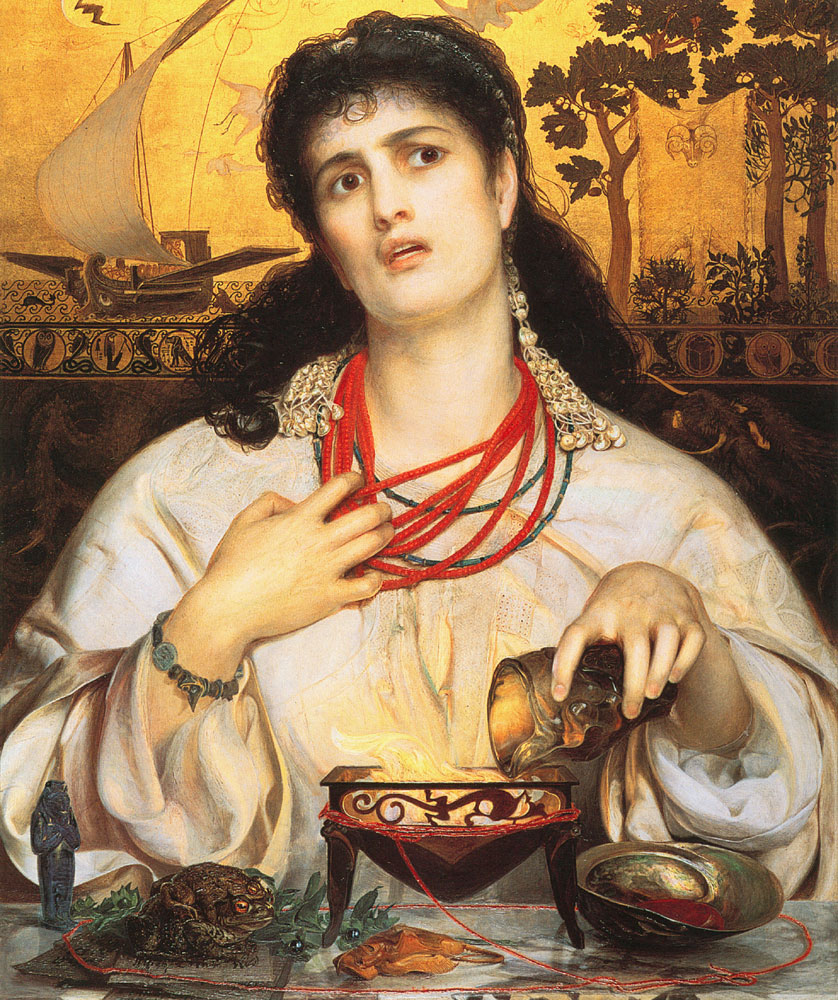 🇬🇷 GreeceMedeaΜήδεια
A sorceress and princess of Colchis who aids Jason and uses magic for revenge.Figure · Cursing and harm · Healing Legendary
🇬🇷 GreeceMedeaΜήδεια
A sorceress and princess of Colchis who aids Jason and uses magic for revenge.Figure · Cursing and harm · Healing Legendary
 🇦🇺 AustraliaRainbow Serpent
A creator spirit of water and land in Aboriginal Australian mythologyBeing · Healing · Cursing and harm Living
🇦🇺 AustraliaRainbow Serpent
A creator spirit of water and land in Aboriginal Australian mythologyBeing · Healing · Cursing and harm Living
 🇿🇦 South AfricaSympathetic magic
A magical principle based on imitation and contact to influence the worldTradition · Protection · Healing Historical
🇫🇮 FinlandVäki
A supernatural power in Finnish mythology found in nature and objectsBelief · Cursing and harm · Healing Historical
🇿🇦 South AfricaSympathetic magic
A magical principle based on imitation and contact to influence the worldTradition · Protection · Healing Historical
🇫🇮 FinlandVäki
A supernatural power in Finnish mythology found in nature and objectsBelief · Cursing and harm · Healing Historical