Spiritual mapping
A Christian practice of mapping locations to identify and pray against territorial demons
Some Christians use spiritual mapping to locate demonic forces tied to specific places. Practitioners believe strategic prayer can defeat these entities and transform communities.
- C. Peter Wagner promoted the concept in the US after visiting Argentina.
- George Otis coined the term in his 1991 book Last of the Giants.
- Practitioners draw lines on maps to identify demonic corridors.
- Plan Resistencia in Argentina tested early spiritual mapping methods.
- The practice is linked to the New Apostolic Reformation movement.
What it is
Spiritual mapping is a method used by some Christians to identify demonic influence over specific geographic areas. Practitioners hold that territorial spirits control regions, cities, or neighborhoods. The process involves researching local history and using prayer to discern which demons are present. This belief system is part of a broader concept called spiritual warfare. It aims to conquer these spiritual forces through targeted intercession. The goal is often social transformation or the expansion of Christian missions. Scholars describe it as a form of geomancy adapted for Christian theology.
Where it comes from
The movement emerged in the late 1980s within evangelical circles. Its roots lie in the church growth movement and missions work in Argentina. Eduardo Lorenzo and other pastors began using spiritual warfare techniques there. C. Peter Wagner visited Argentina in 1985 and adopted these ideas. He helped formalize the practice in the United States. George Otis coined the term in his 1991 book. The concept draws on biblical stories, such as Daniel battling the prince of Persia. It also incorporates elements of dominion theology and neo-charismatic beliefs.
How it is done
Practitioners research a location's history and spiritual background. They then map out areas believed to be controlled by demons. Lines are drawn on maps to connect these strongholds. These lines are viewed as corridors for demonic activity. Prayer marches and intense intercession are used to attack these points. Prophets may claim visions to identify specific demon names. Some practitioners burn objects they deem occult idols. The process seeks to break spiritual power over a community through collective prayer.
Tools and materials
Maps are central to the practice. Practitioners draw lines between significant locations. These lines represent demonic transit routes. Specific items like statues or books may be burned if deemed idolatrous. Prayer is the primary tool for engagement. Researchers study historical records and local culture. Visions and intuitive impressions guide the identification of spirits. Names of demons like Jezebel or Baal are assigned to regions.
Spiritual mapping, drawn and placed
- Living
- Revived
- Fading
- Historical
- Legendary
- Performed
- Lineage
- New Apostolic Reformation
What it is for
The aim is to remove demonic influence from a territory. Practitioners believe this allows for greater evangelistic success. It is used to address perceived social problems like addiction or violence. Some seek to prepare the ground for Christ's return. Others aim to protect communities from witchcraft or evil spirits. The practice is also used to justify aggressive missionary efforts in non-Christian regions.
Who does it
Pastors, missionaries, and prophets lead these efforts. C. Peter Wagner and George Otis were key figures. Cindy Jacobs organized seminars on the topic. Practitioners often belong to New Apostolic Reformation networks. They view themselves as soldiers in a spiritual battle. Training involves learning to discern spirits and interpret visions. Some work with local churches to implement mapping projects.
Peoples and places
The practice originated in Argentina among evangelical groups. It spread to the United States through Wagner and Otis. It has been reported in Kenya and Colombia. In Haiti, practitioners have mapped voodoo influences. The movement appeals to those interested in strategic evangelism. It is common in neo-charismatic and independent charismatic circles. Different cultures adapt the method to their local spiritual contexts.
At a glance: who, where and when
What people believe
Spiritual mapping assumes an invisible world of spirits interacts with humans. Territorial spirits are seen as powerful entities controlling regions. This worldview resembles animism but attributes power to God. Christians believe they can access divine power to defeat demons. Demons are thought to deceive people and control systems. Cities are viewed as having collective identities influenced by these forces. Prayer is believed to have real effects on spiritual realities.
When it is done
No fixed calendar governs the practice. Activities depend on local needs and prophetic guidance. Prayer marches may occur during specific campaigns. Mapping projects are often ongoing or project-based. There are no universal holy days associated with the method. Timing is determined by the perceived urgency of spiritual battles.
How scholars and sceptics see it
Sociologists classify spiritual mapping as a religious strategy. Sean McCloud compares it to Third Wave geomancy. Charles Kraft notes its similarity to animist worldviews. Critics argue it promotes superstition or fear. Some scholars see it as a modern adaptation of ancient practices. Anthropologists study its impact on local communities. Skeptics question the validity of territorial spirit claims.
Cautions and what is closed
Accusations of witchcraft can harm individuals. Burning objects may cause property damage or legal issues. The practice can create fear within communities. Some practitioners target minority religions unfairly. Critics warn against attributing social problems to demons. There is a risk of psychological distress for those accused. The method lacks empirical scientific support.
Compare and confuse
Spiritual mapping is similar to folk geomancy. It shares features with traditional exorcism rituals. Some compare it to shamanic journeying. The concept of territorial spirits appears in other religions. However, it is distinct in its Christian theological framework. It differs from general prayer by focusing on geographic targeting.
Questions people ask about Spiritual mapping
What is spiritual mapping?
It is a Christian practice where believers map locations to identify and pray against territorial demons. They believe these spirits control regions and can be defeated through strategic intercession.
Where did it originate?
The movement began in Argentina in the 1980s among evangelical pastors. It was later formalized in the United States by C. Peter Wagner and George Otis.
How do practitioners use maps?
They draw lines between sites to mark demonic strongholds. These lines are seen as corridors for evil spirits. Prayer is directed at these points to break their power.
Is it part of mainstream Christianity?
It is primarily found in neo-charismatic and independent charismatic circles. Mainstream denominations generally do not endorse the practice due to its speculative nature.
Good reading and sources
The facts on this page come from the Wikipedia article "Spiritual mapping", written by its contributors and used under the CC BY-SA 4.0 licence, and from its Wikidata record (CC0). EveryJaadu rewrote the text in its own words, with AI assistance, and compares every page with the article to make sure no passage is copied. It may be reused under the same CC BY-SA 4.0 licence with a link back.
It may contain mistakes. Names and customs differ from one community to the next, and some knowledge is closed to outsiders and left out here. This page describes belief and practice. It does not say that any of it works, it is not a how-to, and it is not medical advice. If something is wrong, tell us. Last refreshed 2026-10-06.
More from Argentina
All the entries from Argentina 🇲🇽 Mexico and 5 moreSanta MuerteNuestra Señora de la Santa Muerte
A female skeletal folk saint in Mexico and the Americas, worshipped for protection, healing, and safe passage.Tradition · Protection · Healing Living
🇲🇽 Mexico and 5 moreSanta MuerteNuestra Señora de la Santa Muerte
A female skeletal folk saint in Mexico and the Americas, worshipped for protection, healing, and safe passage.Tradition · Protection · Healing Living
 🇦🇷 Argentina and 2 moreSan La Muerte
A skeletal folk saint venerated in South America for protection and favorsTradition · Protection · Healing Living
🇦🇷 Argentina and 2 moreSan La Muerte
A skeletal folk saint venerated in South America for protection and favorsTradition · Protection · Healing Living
 🇧🇷 Brazil and 2 moreCandomblé
An Afro-Brazilian religion blending West African spirits with Catholic imageryTradition · Speaking with spirits and the dead · Healing Living
🇧🇷 Brazil and 2 moreCandomblé
An Afro-Brazilian religion blending West African spirits with Catholic imageryTradition · Speaking with spirits and the dead · Healing Living
 🇵🇷 Puerto Rico and 5 moreChupacabrachupacabras
A legendary creature said to drain livestock of blood, emerging from Puerto Rico in the mid-1990sBeing · Cursing and harm Legendary
🇵🇷 Puerto Rico and 5 moreChupacabrachupacabras
A legendary creature said to drain livestock of blood, emerging from Puerto Rico in the mid-1990sBeing · Cursing and harm Legendary
Related elsewhere
All belief 🇮🇳 IndiaKaliकाली
A fierce Hindu goddess of time and destruction, worshipped as a protective mother.Being · Protection · Cursing and harm Living
🇬🇧 United KingdomGlaistig
A Scottish shape-shifting spirit linked to cattle, deer, and haunted castles.Being · Protection · Cursing and harm Legendary
🇮🇳 IndiaKaliकाली
A fierce Hindu goddess of time and destruction, worshipped as a protective mother.Being · Protection · Cursing and harm Living
🇬🇧 United KingdomGlaistig
A Scottish shape-shifting spirit linked to cattle, deer, and haunted castles.Being · Protection · Cursing and harm Legendary
 🇮🇩 IndonesiaNyi Roro KidulRatu Laut Selatan
The spirit queen of Java's southern coast and guardian of the Indian OceanBeing · Protection · Cursing and harm Living
🇮🇩 IndonesiaNyi Roro KidulRatu Laut Selatan
The spirit queen of Java's southern coast and guardian of the Indian OceanBeing · Protection · Cursing and harm Living
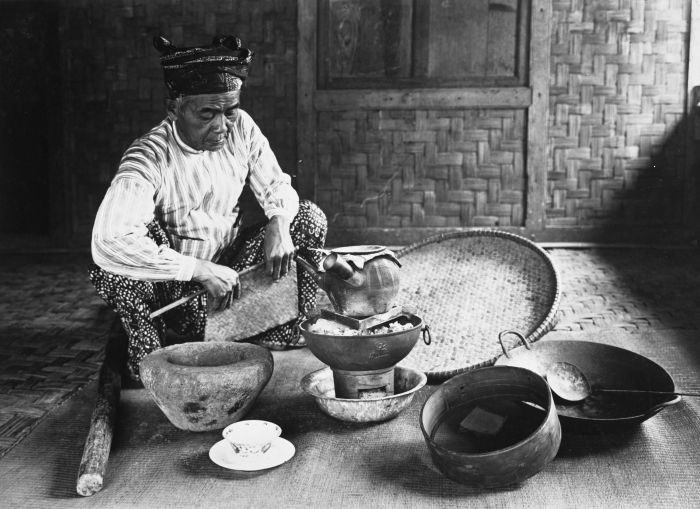 🇮🇩 Indonesia and 2 moreDukun
A traditional healer and spirit medium in Indonesian folk practiceTradition · Healing · Seeing and foretelling Living
🇮🇩 Indonesia and 2 moreDukun
A traditional healer and spirit medium in Indonesian folk practiceTradition · Healing · Seeing and foretelling Living