
Samlesbury witches
Three Lancashire women acquitted in a 1612 trial linked to anti-Catholic propaganda
The Samlesbury witches were three women accused of witchcraft in England during the early seventeenth century. Their case stands out because they were cleared of charges that included child murder and cannibalism after their accuser was revealed to be coached by a hidden priest.
- Three women acquitted in 1612 Lancashire witch trial
- Accuser Grace Sowerbutts was coached by a Catholic priest
- Charges included child murder and cannibalism
- Trial viewed as anti-Catholic propaganda by historians
- Judge Sir Edward Bromley exposed the witness's lies
What it is
The term refers to Jane Southworth, Jennet Bierley, and Ellen Bierley, three women from Lancashire who faced accusations of witchcraft in August 1612. The charges were severe, alleging that they had killed and eaten a baby and transformed into animals. Unlike many contemporaries, these women were found not guilty. Their case is often viewed as a political maneuver rather than a genuine hunt for sorcery, serving to demonstrate royal authority in a region considered difficult to control.
Where it comes from
The accusations emerged from a broader wave of witch hunts in Lancashire, sparked by the Pendle Hill cases earlier that year. King James I had promoted strict laws against witchcraft and held strong views on the subject. However, the Samlesbury case appears rooted in local religious tensions. Lancashire had many Catholics who refused to attend Anglican services. Authorities may have used the witch trials to target these recusants, framing them as enemies of the state under the guise of fighting magic.
How it is done
The prosecution relied entirely on the testimony of Grace Sowerbutts, a fourteen-year-old girl. She claimed the women had haunted her, stolen a baby, and attended secret meetings with dark entities. The defense did not need to prove innocence; instead, it focused on discrediting the witness. The judge exposed that Grace had been coached by a Catholic priest. Once this manipulation was revealed, the case collapsed immediately, leading to an acquittal.
Samlesbury witches, drawn and placed
- Living
- Revived
- Fading
- Historical
- Legendary
- Performed
- Lineage
- English witch trials
What it is for
The accusations served multiple purposes depending on who was involved. For the accusers, it was a way to settle personal scores or gain attention. For the authorities, it was a tool to assert control over Lancashire and suppress Catholic influence. The trial demonstrated that the government could purge the region of both supposed witches and political dissidents. It reinforced the power of the Anglican church and the state against those who remained loyal to Rome.
Who does it
The women were ordinary residents of the Samlesbury area, caught in a web of family and religious conflict. Jane Southworth was the widow of a man disinherited by his father for converting to Anglicanism. Her father-in-law, a prominent Catholic, reportedly disliked her. The trial was conducted by Sir Edward Bromley, a judge seeking favor with the king. He played a crucial role in uncovering the truth about the witness, showing skepticism toward the claims made against the women.
Peoples and places
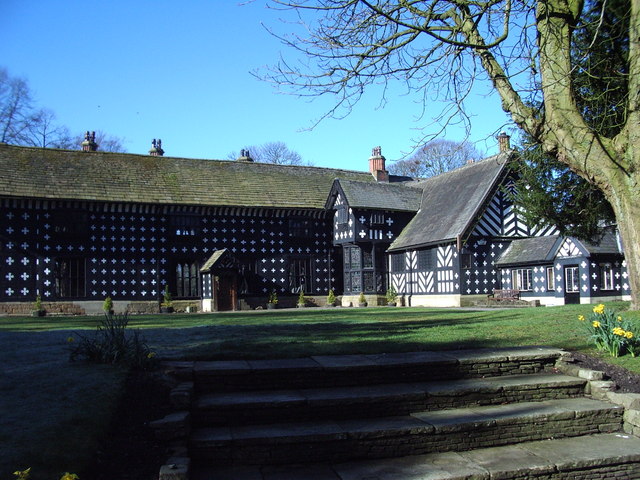
The case is specific to Lancashire, England, during the reign of James I. It reflects the unique religious landscape of the time, where Catholicism persisted in remote areas despite legal penalties. The women were part of a divided family, highlighting how internal conflicts could spill over into public accusations. The case is often compared to the nearby Pendle witch trials, but it differs significantly in its outcome and underlying motives.
At a glance: who, where and when
Who does it
Peoples
What people believe
The accusations drew on common fears of the era: that witches could harm children, eat human flesh, and change shape. These beliefs were fueled by religious anxiety and the idea that the devil worked through human agents. However, the trial also challenged these beliefs by exposing the fabrication of evidence. It showed that such stories could be invented for political ends, undermining the credibility of the accusations when examined closely.
How scholars and sceptics see it
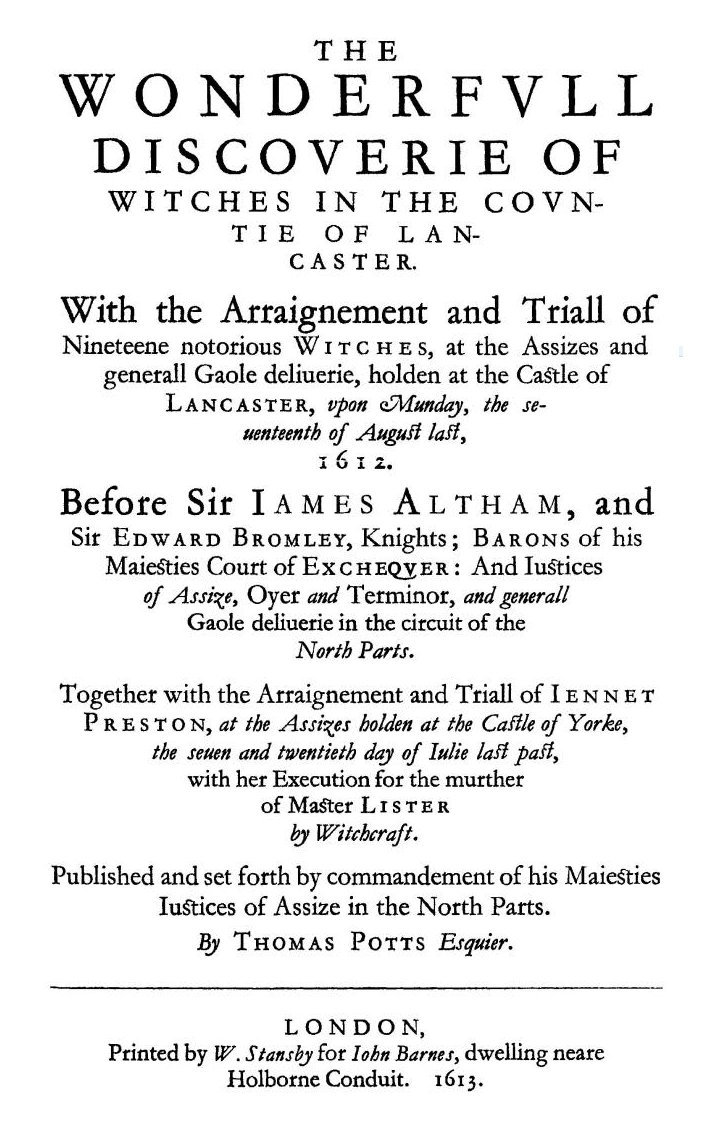
Historians like Hugh Trevor-Roper see the Samlesbury case as part of a larger pattern where witch trials were used to combat religious heresy. They argue that both Catholic and Protestant authorities sought to eliminate opposition by labeling it as witchcraft. Some scholars describe the trial as a show-trial designed to intimidate Catholics. The publication of the proceedings by Thomas Potts provides a detailed record, though it is known to reflect the judges' perspective rather than a neutral account.
Cautions and what is closed
The trial highlights the dangers of false accusations and political manipulation. Grace Sowerbutts was used as a pawn by a priest, leading to unjust charges against innocent women. The case shows how easily justice can be subverted when witnesses are coerced or coached. It also illustrates the risks faced by those in religious minority groups, who could be targeted under the guise of enforcing moral or magical laws.
Compare and confuse
The Samlesbury witches are often discussed alongside the Pendle witches, who were tried at the same assizes. While the Pendle cases resulted in executions, the Samlesbury women were acquitted. This contrast underscores the different outcomes possible even within the same judicial process. The case is also distinct from other witch trials due to its clear political motivation and the exposure of the witness's deception.
Law and persecution
Witchcraft was illegal under English law, carrying the death penalty for causing harm. The 1604 Act against Conjuration enforced these penalties. However, the Samlesbury case shows that the law could be applied selectively. The judge's decision to acquit the women, based on the witness's perjury, demonstrates that legal standards could still protect the accused if evidence was scrutinized carefully. The case did not lead to changes in the law but served as a notable example of judicial skepticism.
Questions people ask about Samlesbury witches
Who were the Samlesbury witches?
They were Jane Southworth, Jennet Bierley, and Ellen Bierley, three women from Lancashire accused of witchcraft in 1612. They were acquitted after their accuser was revealed to be lying.
Why were they accused?
They were accused of harming a girl named Grace Sowerbutts, killing a baby, and attending sabbats. Historians believe the charges were partly motivated by anti-Catholic sentiment.
How did they escape conviction?
The judge discovered that the main witness, Grace Sowerbutts, had been coached by a Catholic priest. This exposure led to the immediate collapse of the prosecution's case.
What is the historical significance of this trial?
It is seen as an example of using witch trials to target religious dissenters. The acquittal highlights the role of judicial skepticism in preventing wrongful convictions during this period.
Good reading and sources
The facts on this page come from the Wikipedia article "Samlesbury witches", written by its contributors and used under the CC BY-SA 4.0 licence, and from its Wikidata record (CC0). EveryJaadu rewrote the text in its own words, with AI assistance, and compares every page with the article to make sure no passage is copied. It may be reused under the same CC BY-SA 4.0 licence with a link back.
It may contain mistakes. Names and customs differ from one community to the next, and some knowledge is closed to outsiders and left out here. This page describes belief and practice. It does not say that any of it works, it is not a how-to, and it is not medical advice. If something is wrong, tell us. Last refreshed 2026-10-05.
More from the United Kingdom
All the entries from the United Kingdom 🇬🇧 United Kingdom and 2 moreKing ArthurBrenin Arthur
A legendary British king and folk hero of medieval literature and Welsh mythologyFigure · Power and authority · Wonder and entertainment Legendary
🇬🇧 United Kingdom and 2 moreKing ArthurBrenin Arthur
A legendary British king and folk hero of medieval literature and Welsh mythologyFigure · Power and authority · Wonder and entertainment Legendary
 🇬🇧 United KingdomBideford witch trial
The final English hangings for witchcraft in 1682.Belief · Cursing and harm Historical
🇬🇧 United KingdomPaisley witches
A 1697 Scottish witch trial ending in mass execution after a child's illness sparked local panic.Belief · Cursing and harm Historical
🇬🇧 United KingdomBideford witch trial
The final English hangings for witchcraft in 1682.Belief · Cursing and harm Historical
🇬🇧 United KingdomPaisley witches
A 1697 Scottish witch trial ending in mass execution after a child's illness sparked local panic.Belief · Cursing and harm Historical
 🇬🇧 United KingdomWitch trials in early modern Scotland
A period of judicial persecution where thousands were executed for alleged sorcery and diabolic pactsBelief · Cursing and harm Historical
🇬🇧 United KingdomWitch trials in early modern Scotland
A period of judicial persecution where thousands were executed for alleged sorcery and diabolic pactsBelief · Cursing and harm Historical
Related elsewhere
All belief 🇪🇬 Egypt and 1 moreLilithלִילִית
A feminine figure from Mesopotamian and Jewish mythology, often depicted as a night demon or spirit.Being · Cursing and harm Legendary
🇪🇬 Egypt and 1 moreLilithלִילִית
A feminine figure from Mesopotamian and Jewish mythology, often depicted as a night demon or spirit.Being · Cursing and harm Legendary
 🇪🇬 EgyptCurse
A spoken wish for misfortune to befall a person or placeBelief · Cursing and harm · Luck and prosperity Historical
🇪🇬 EgyptCurse
A spoken wish for misfortune to befall a person or placeBelief · Cursing and harm · Luck and prosperity Historical
 🇲🇽 Mexico and 5 moreLa Llorona
A vengeful ghost in Hispanic American folklore who mourns drowned children near water.Figure · Cursing and harm Living
🇯🇵 JapanKitsunetsuki狐憑き
A Japanese folk belief in which a fox spirit enters and controls a human host.Belief · Cursing and harm · Speaking with spirits and the dead Historical
🇲🇽 Mexico and 5 moreLa Llorona
A vengeful ghost in Hispanic American folklore who mourns drowned children near water.Figure · Cursing and harm Living
🇯🇵 JapanKitsunetsuki狐憑き
A Japanese folk belief in which a fox spirit enters and controls a human host.Belief · Cursing and harm · Speaking with spirits and the dead Historical