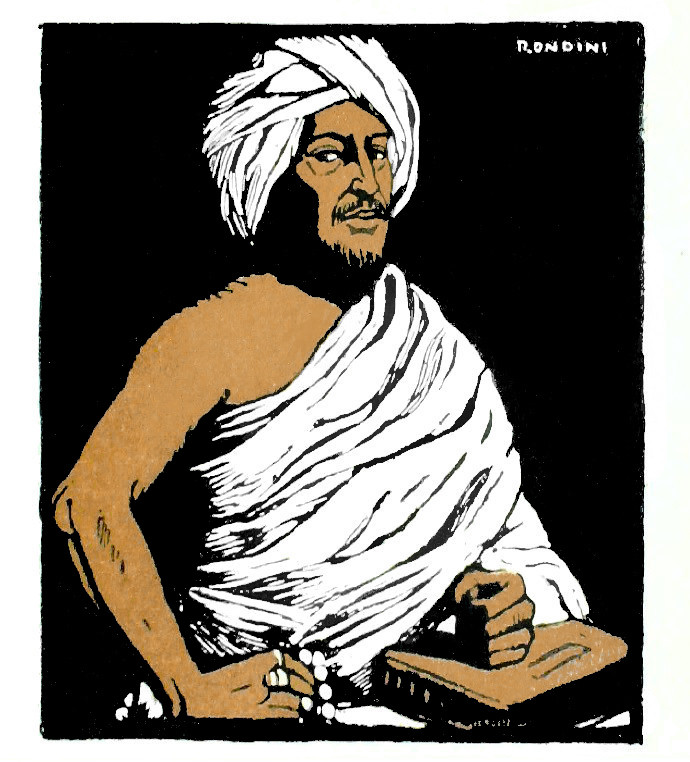
Salihiyya
In its own language: الصالحية
Named after its founder, Sayyid Muhammad Salih
A Somali Sufi order founded by Sayyid Muhammad Salih, known for its strict stance against saint intercession and anti-co
The Salihiyya is a Sufi Islamic order established in the Horn of Africa. It traces its roots to the teachings of Ahmad ibn Idris al-Fasi but was formally organized by his nephew, Sayyid Muhammad Salih. The group is noted for rejecting the practice of seeking intercession through saints, a core tenet of other orders like the Qadiriyya.
- Founded by Sayyid Muhammad Salih, nephew of Ahmad ibn Idris al-Fasi
- Rejects saint intercession, labeling it as Shirk
- Opposed to the Qadiriyya order's doctrine of Tawassul
- Led armed anti-colonial resistance in the Horn of Africa
- Popularized in Somalia by leaders like Sayyid Muhammad Gulid
What it is
The Salihiyya represents a specific path within Sufi Islam, primarily active in Somalia and neighboring areas. It distinguishes itself through a rigid theological position that forbids asking saints for help when praying to God. This practice, which other groups consider standard, is viewed by the Salihiyya as a form of idolatry. The order emerged from earlier teachings but developed into a distinct movement with its own leadership and structure.
Where it comes from
The spiritual lineage begins with Ahmad ibn Idris al-Fasi, a scholar from Morocco who lived during the late eighteenth and early nineteenth centuries. His students carried his ideas widely. One of these students was Sayyid Muhammad Salih, who traveled to Sudan and Somalia. He adapted the teachings to create a new branch named after himself, separating it from the broader Idrisiyya network.
How it is done
Practitioners follow a strict interpretation of monotheism that excludes any mediation by holy figures. They reject the concept of Tawassul, or intercession, which is central to the Qadiriyya order. This theological difference created a sharp divide between the two groups. The Salihiyya also engaged in political action, using their religious authority to organize resistance against foreign control in the region.
Salihiyya, drawn and placed
- Living
- Revived
- Fading
- Historical
- Legendary
- Performed
- Lineage
- Idrisiyya
What it is for
The order aimed to purify Islamic practice by removing what they saw as corrupt innovations. It also served as a framework for political mobilization. Leaders used the order to unite people against colonial powers. The movement provided both spiritual guidance and a structure for armed struggle, particularly under figures like Mohammed Abdullah Hassan.
Who does it
Sayyid Muhammad Salih founded the order after studying under Ahmad ibn Idris al-Fasi. Later leaders, such as Sayyid Muhammad Gulid and Isma'il ibn Ishaq al-Urwayni, helped spread the teachings across different regions of Somalia. These figures were responsible for establishing local branches and gaining followers in areas like Jowhar and the Middle Juba.
Peoples and places
The Salihiyya is most strongly associated with Somali communities. It gained significant traction in the Horn of Africa, influencing social and political life in Somalia and parts of Ethiopia. The order's rejection of the dominant Qadiriyya order made it a unique voice in the region's religious landscape, appealing to those seeking a stricter or more independent form of Islam.
At a glance: who, where and when
What people believe
Central to the Salihiyya worldview is the absolute rejection of saintly intercession. They believe that calling upon saints constitutes Shirk, or associating partners with God. This stands in direct opposition to the Qadiriyya, which holds that saints possess the power to intercede on behalf of believers. The Salihiyya view this traditional belief as a deviation from pure monotheism.
Compare and confuse
The Salihiyya is often contrasted with the Qadiriyya, the largest and oldest Sufi order in Somalia. While the Qadiriyya embraces intercession, the Salihiyya rejects it entirely. Both orders trace some influence back to Ahmad ibn Idris al-Fasi, but they diverged sharply on theological grounds, leading to a long-standing rivalry.
Questions people ask about Salihiyya
What is the Salihiyya?
It is a Sufi Islamic order originating in the Horn of Africa, known for its strict rejection of saint intercession and its historical role in anti-colonial resistance.
Who founded the Salihiyya?
The order was established by Sayyid Muhammad Salih, a student of the Moroccan scholar Ahmad ibn Idris al-Fasi, who adapted the teachings into a distinct path.
How does it differ from the Qadiriyya?
The Salihiyya forbids asking saints for help in prayer, viewing it as idolatry, while the Qadiriyya believes saints can intercede with God on behalf of believers.
Good reading and sources
- Salihiyya on WikipediaEncyclopedia
- More photos on Wikimedia CommonsPhotos and video
- Wikidata recordOpen data
The facts on this page come from the Wikipedia article "Salihiyya", written by its contributors and used under the CC BY-SA 4.0 licence, and from its Wikidata record (CC0). EveryJaadu rewrote the text in its own words, with AI assistance, and compares every page with the article to make sure no passage is copied. It may be reused under the same CC BY-SA 4.0 licence with a link back.
It may contain mistakes. Names and customs differ from one community to the next, and some knowledge is closed to outsiders and left out here. This page describes belief and practice. It does not say that any of it works, it is not a how-to, and it is not medical advice. If something is wrong, tell us. Last refreshed 2026-10-07.
More from Somalia
All the entries from Somalia 🇪🇬 Egypt and 5 moreZārزار
A spirit possession tradition and healing ritual in the Horn of Africa and Middle EastTradition · Healing · Speaking with spirits and the dead Living
🇪🇬 Egypt and 5 moreZārزار
A spirit possession tradition and healing ritual in the Horn of Africa and Middle EastTradition · Healing · Speaking with spirits and the dead Living
 🇸🇴 Somalia and 5 moreFrankincense
An aromatic tree resin harvested for incense, perfume, and religious ritualSubstance · Speaking with spirits and the dead · Power and authority Living
🇸🇴 Somalia and 5 moreFrankincense
An aromatic tree resin harvested for incense, perfume, and religious ritualSubstance · Speaking with spirits and the dead · Power and authority Living
Related elsewhere
All tradition 🇮🇳 India and 5 moreAstrology
A divinatory practice that reads human fate through the positions of celestial bodies.Belief · Seeing and foretelling · Luck and prosperity Living
🇮🇳 India and 5 moreAstrology
A divinatory practice that reads human fate through the positions of celestial bodies.Belief · Seeing and foretelling · Luck and prosperity Living
 🇬🇧 United Kingdom and 2 moreKing ArthurBrenin Arthur
A legendary British king and folk hero of medieval literature and Welsh mythologyFigure · Power and authority · Wonder and entertainment Legendary
🇬🇧 United Kingdom and 2 moreKing ArthurBrenin Arthur
A legendary British king and folk hero of medieval literature and Welsh mythologyFigure · Power and authority · Wonder and entertainment Legendary
 🇫🇷 FranceHoly GrailSaint Graal
A cup or stone from Arthurian tales that grants healing and eternal lifeFigure · Healing · Luck and prosperity Legendary
🇫🇷 FranceHoly GrailSaint Graal
A cup or stone from Arthurian tales that grants healing and eternal lifeFigure · Healing · Luck and prosperity Legendary
 🇮🇳 India and 2 morePalmistry
A divination method that interprets the lines and shapes of the hand to predict fate or reveal character.Oracle · Seeing and foretelling · Power and authority Living
🇮🇳 India and 2 morePalmistry
A divination method that interprets the lines and shapes of the hand to predict fate or reveal character.Oracle · Seeing and foretelling · Power and authority Living