
Frankincense
from Old French franc encens, meaning 'true incense'
An aromatic tree resin harvested for incense, perfume, and religious ritual
Frankincense is a fragrant resin tapped from Boswellia trees in the Horn of Africa and Arabia. It has been traded for millennia and burned as incense in Jewish, Christian, and other traditions.
- 90% of global production comes from the Horn of Africa
- Word means 'true incense' in Old French
- Used in Jewish and Christian religious rituals
- Trees produce resin starting at eight years old
- Overexploitation threatens Boswellia populations
What it is
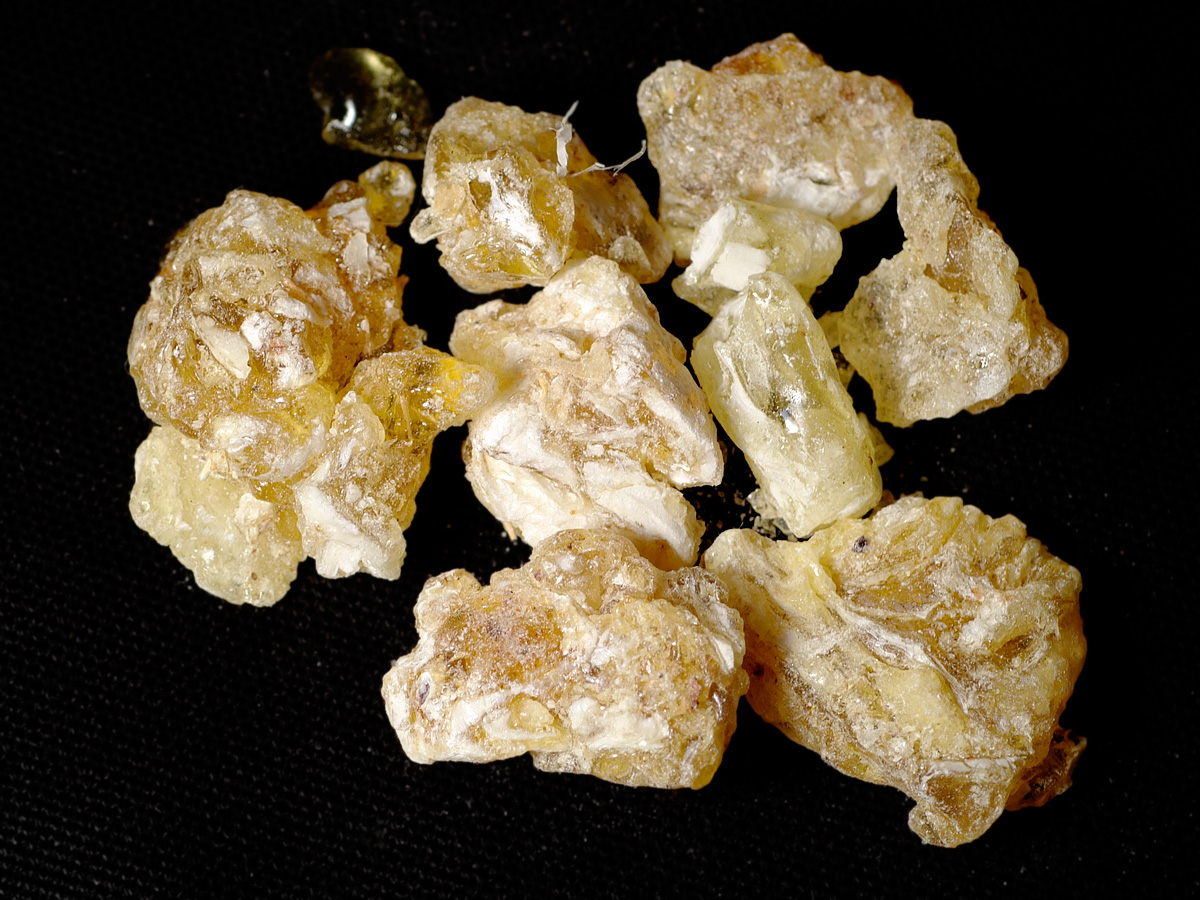
Frankincense is an aromatic resin obtained from trees of the genus Boswellia. The substance is collected by tapping the bark, allowing the sap to harden into tears. It is primarily used as incense and in perfumes. The resin is valued for its scent and has been a significant trade commodity for centuries. Different species produce resins with varying qualities, which are sorted by hand. The most opaque resins are generally considered the highest grade. The word derives from Old French, indicating high quality.
Where it comes from
The English term comes from Old French franc encens, meaning 'true incense'. The Greek word líbanos is linked to Lebanon, suggesting the spice route passed through Mount Lebanon. Medieval Latin olibanum likely evolved from Greek or Arabic terms. Ancient Egyptians referenced it in the third millennium BCE. Hebrew scripture prescribes its use in sacred altars. It was also offered by the magi in the New Testament.
How it is done
Trees begin producing resin at eight to ten years old. Harvesters tap the trees two to three times annually. Final taps yield the best quality due to higher terpene content. The resin flows out when the trunk is notched. It hardens into lumps that are gathered and sorted. Heavily tapped trees produce fewer viable seeds compared to untouched ones. The process relies on manual labor and traditional knowledge of tree care.
Tools and materials
The primary material is the resin from Boswellia trees. Key species include B. sacra, B. frereana, and B. serrata. Resin is burned in thuribles during religious ceremonies. Essential oils are extracted via steam distillation. The oil contains monoterpenes and sesquiterpenes but lacks boswellic acids found in solvent extracts. Chemical analysis identifies compounds like incensole acetate and alpha-boswellic acid.
Frankincense, drawn and placed
- Living
- Revived
- Fading
- Historical
- Legendary
- Performed
- Lineage
- Incense trade
- Timing
- harvested two to three times per year
What it is for
It serves as a holy offering in Jewish tradition and was used in Catholic Mass. Perfume makers utilize it for its scent. Some communities believe it has therapeutic properties, though clinical evidence remains weak. It is burned to create fragrance and atmosphere. The resin is also used in aromatherapy and traditional medicine practices across various cultures.
Who does it
Harvesting is done by local communities in the Horn of Africa and Arabia. In Somalia, it is collected in Bari and Sanaag regions. Farmers and gatherers rely on this income source. Religious priests burn it in rituals. Scholars study its chemical composition and ecological impact. The work involves physical labor in arid, often conflict-affected regions.
Peoples and places
Somalis harvest the majority of global production. Omani sites like Sumhuram were ancient trading hubs. Hebrews used it in Temple rituals. Egyptians depicted its transport in temple art. Indian species like B. serrata are also traded. The resin moved along routes reaching China and Europe. Different regions value specific species based on local preferences and availability.
At a glance: who, where and when
Belief worlds
Occasions


What people believe
In Hebrew tradition, it was a holy offering not for personal enjoyment. Christians associate it with the gifts of the magi. It symbolizes purity and devotion in various rites. The scent is believed to carry prayers upward. Its white color signifies cleanliness. The resin's durability represents permanence in spiritual contexts.
When it is done
Harvesting occurs two to three times yearly. Final taps produce the best quality. Trees must reach eight to ten years before tapping begins. Religious festivals often feature its burning. Daily rituals in some households include its use. The timing aligns with tree biology and seasonal cycles.
How scholars and sceptics see it
Researchers note declining tree populations due to overexploitation. Studies show heavily tapped trees have low seed germination rates. Ecologists warn of habitat loss and beetle attacks. Clinical studies on therapeutic effects are inconclusive. Historians trace its trade routes through ancient empires. Chemists analyze its volatile compounds for modern applications.
Cautions and what is closed
Overharvesting threatens Boswellia species. One species is near threatened. Habitat loss reduces tree numbers. Poverty drives overtapping in some areas. Burning may release irritants. Commercial claims about health benefits lack strong evidence. Legal protections exist but enforcement varies. Sustainable harvesting practices are essential for survival.
Compare and confuse
Myrrh is another resin often confused with frankincense. Both come from similar families. Benzoin and copal are related resins. Agarwood offers a different aromatic profile. Mastic comes from a distinct tree species. All share uses in incense and traditional medicine. Their scents vary based on chemical composition.
Law and persecution
UNESCO designated Omani sites as World Heritage locations. CITES does not cover all Boswellia species. Experts argue for stricter protection. Local laws regulate harvesting in some regions. International trade faces scrutiny regarding sustainability. Conservation efforts aim to balance income needs with ecological preservation.
Rites that involve Frankincense
Questions people ask about Frankincense
What is frankincense?
It is an aromatic resin tapped from Boswellia trees. The hardened sap forms tears used in incense and perfume. It has been traded for thousands of years across continents.
Where does it come from?
Most comes from Somalia and Ethiopia. Oman and India also produce significant amounts. The trees grow in arid regions of the Horn of Africa and Arabia.
Why is it called frankincense?
The name comes from Old French franc encens. This means 'true incense' or 'high-quality incense'. It distinguishes it from lower grades of resin.
How is it harvested?
Harvesters tap the tree bark twice yearly. The sap flows out and hardens into lumps. Workers gather and sort the resin by hand. Quality depends on the timing of the taps.
Is it safe to use?
It is generally safe for incense and perfume. Clinical evidence for health benefits is weak. Some people may experience irritation. Consult experts for medical advice.
Good reading and sources
- Encyclopaedia BritannicaArticle
- Frankincense trees—of biblical lore—are being tapped out for essential oilsNational Geographic, Article
- Land of FrankincenseUNESCO, Heritage listing
- Frankincense on WikipediaEncyclopedia
- More photos on Wikimedia CommonsPhotos and video
- Wikidata recordOpen data
The facts on this page come from the Wikipedia article "Frankincense", written by its contributors and used under the CC BY-SA 4.0 licence, and from its Wikidata record (CC0). EveryJaadu rewrote the text in its own words, with AI assistance, and compares every page with the article to make sure no passage is copied. It may be reused under the same CC BY-SA 4.0 licence with a link back.
It may contain mistakes. Names and customs differ from one community to the next, and some knowledge is closed to outsiders and left out here. This page describes belief and practice. It does not say that any of it works, it is not a how-to, and it is not medical advice. If something is wrong, tell us. Last refreshed 2026-10-05.
More from Somalia
All the entries from Somalia 🇪🇬 Egypt and 5 moreZārزار
A spirit possession tradition and healing ritual in the Horn of Africa and Middle EastTradition · Healing · Speaking with spirits and the dead Living
🇪🇬 Egypt and 5 moreZārزار
A spirit possession tradition and healing ritual in the Horn of Africa and Middle EastTradition · Healing · Speaking with spirits and the dead Living
 🇸🇴 Somalia and 2 moreSalihiyyaالصالحية
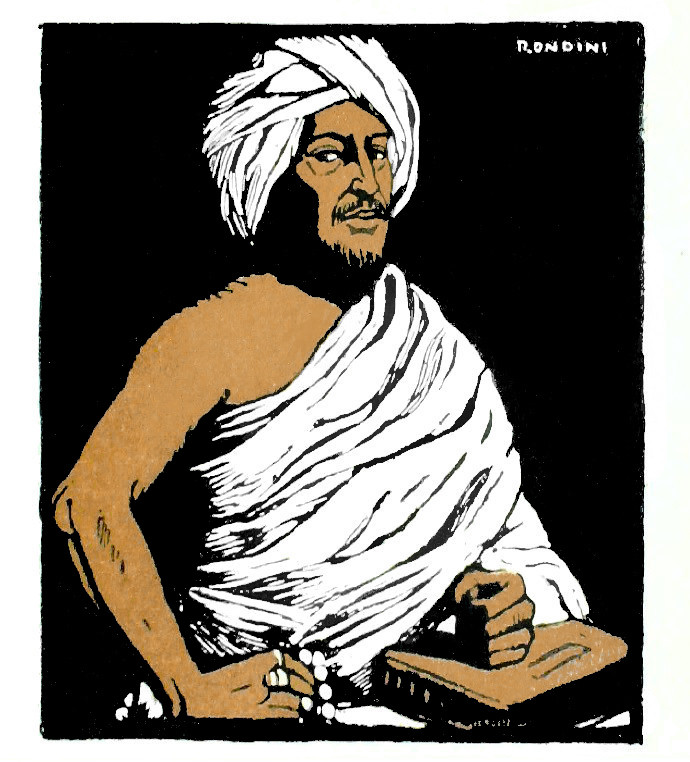
A Somali Sufi order founded by Sayyid Muhammad Salih, known for its strict stance against saint intercession and anti-coTradition · Power and authority Historical
🇸🇴 Somalia and 2 moreSalihiyyaالصالحية
A Somali Sufi order founded by Sayyid Muhammad Salih, known for its strict stance against saint intercession and anti-coTradition · Power and authority Historical
Related elsewhere
All substance 🇺🇸 United States and 1 moreMedicine wheel
Circular stone formations built by Indigenous peoples of North America for ceremony and astronomy.Tradition · Speaking with spirits and the dead · Power and authority Living
🇺🇸 United States and 1 moreMedicine wheel
Circular stone formations built by Indigenous peoples of North America for ceremony and astronomy.Tradition · Speaking with spirits and the dead · Power and authority Living
 🇮🇶 Iraq and 5 moreGrimoire
A textbook containing instructions for spells, rituals, and the creation of magical objects.Text · Protection · Healing Historical
🇳🇴 NorwayEsbat
A monthly Wiccan ritual held at the full or new moon for worship and community.Rite · Speaking with spirits and the dead · Love and attraction Living
🇮🇶 Iraq and 5 moreGrimoire
A textbook containing instructions for spells, rituals, and the creation of magical objects.Text · Protection · Healing Historical
🇳🇴 NorwayEsbat
A monthly Wiccan ritual held at the full or new moon for worship and community.Rite · Speaking with spirits and the dead · Love and attraction Living