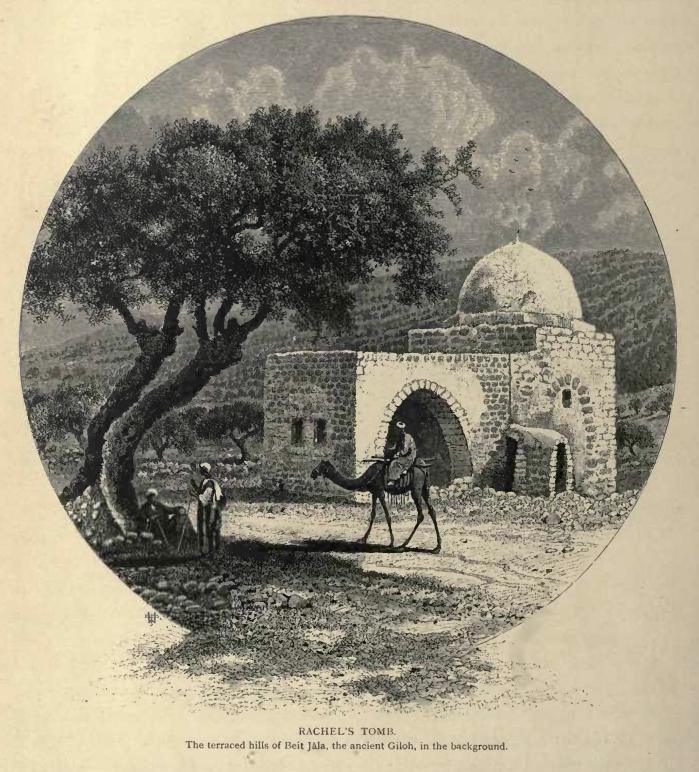
Rachel's Tomb
In its own language: Qever Raḥel; Qabr Rāḥīl
Named for the biblical matriarch Rachel
A shared holy site near Bethlehem revered by Jews, Christians, and Muslims
This structure is believed to hold the remains of the biblical matriarch Rachel. It stands at the northern entrance to Bethlehem in the West Bank. The location draws pilgrims from three major faiths.
- Revered by Jews, Christians, and Muslims
- Located near Bethlehem in the West Bank
- Built in the style of a traditional maqam
- Pilgrims visit during Passover and Lag B'Omer
- Subject of ongoing political and legal disputes
What it is
The site serves as a sacred destination for multiple religious communities. It is widely recognized as the resting place of Rachel, a central figure in Jewish scripture. The physical structure resembles a maqam, which is an Arabic term for a shrine. Visitors from different backgrounds gather here to pay respects. The location holds deep spiritual significance across cultural lines. It functions as a point of connection rather than division.
Where it comes from
Early Christian records from the fourth century mention the tomb. These texts place it near Jerusalem. Later accounts describe a church built on the spot. The name appears in various historical travel logs. Some scholars argue the burial actually occurred further north. They suggest a textual error placed it at Bethlehem. Despite this debate, the local site remains the primary focus of veneration.
How it is done
Pilgrims walk or ride to the site during specific times. Many visit during Passover and Lag B'Omer. People pray around the structure and make petitions. Dancing occurs near the tomb during these gatherings. Visitors often leave stones or carve names into markers. Women historically collected stones to aid childbirth. The rituals vary slightly between groups but share common themes.
Tools and materials
A matzevah marks the grave according to scripture. This stone pillar serves as a memorial. The building itself features domes and columns. Historical descriptions mention marble stones. A mihrab allows for Muslim prayer direction. Drinking fountains and cisterns support visitors. The architecture blends different regional styles over centuries.
Rachel's Tomb, drawn and placed
- Living
- Revived
- Fading
- Historical
- Legendary
- Performed
- Lineage
- Abrahamic pilgrimage traditions
- Timing
- Passover and Lag B'Omer
What it is for
People seek comfort and divine intervention here. Mothers pray for safe delivery of children. Families ask for protection and blessings. The site offers a space for communal mourning and joy. It strengthens identity for Jewish travelers. For others, it provides a link to ancient history. The shared nature of the site encourages mutual respect.
Who does it
Ordinary people visit as pilgrims seeking spiritual aid. Scholars study the historical layers of the location. Religious leaders maintain the grounds and rules. Historians analyze the conflicting textual evidence. The community manages access through established agreements. No single group claims exclusive ownership today.
Peoples and places
Jews view the site as a cornerstone of their heritage. Muslims have maintained a presence there for centuries. Christians also recognize its biblical importance. The location sits within the broader Levantine culture. Different groups navigate the space according to local customs. Tensions sometimes arise over control and access rights.
At a glance: who, where and when
Peoples
Belief worlds
Occasions


What people believe
The site connects believers to the patriarchal era. It represents the lineage of the twelve tribes. Stories tell of Jacob placing stones over the grave. These tales reinforce the sanctity of the ground. The shared reverence suggests a common spiritual root. Faith in the matriarch’s intercession drives many visits.
When it is done
Major visits occur during Passover and Lag B'Omer. Daily prayers continue throughout the year. Specific festivals draw larger crowds from nearby cities. The lunar calendar influences some traditional observances. Life events like births and weddings may prompt visits. The site remains open for continuous worship.
How scholars and sceptics see it
Academics examine the geographical discrepancies in scripture. Some propose alternative locations near Ramah. Others defend the Bethlehem identification based on tradition. Archaeological findings show no direct cavern underneath. Historians track the shifting political control of the area. Anthropologists study the social dynamics of shared worship.
Cautions and what is closed
Political barriers restrict movement to the site. Checkpoints limit access for certain groups. Reports indicate restrictions on Christian and Muslim entry. The separation wall affects local community life. Legal disputes continue regarding sovereignty. Visitors must navigate complex security arrangements.
Compare and confuse
Similar shrines exist throughout the Middle East. Maqams often serve multiple religious communities. Other biblical tombs face location debates. The practice of leaving stones appears elsewhere. Shared holy sites require careful diplomatic management.
Law and persecution
International bodies have debated the status of the site. Agreements define security responsibilities between parties. Barriers have altered the physical landscape. UNESCO statements affirm its connection to Palestine. Local laws govern visiting hours and behavior. Access remains a sensitive political issue.
Rites that involve Rachel's Tomb
Questions people ask about Rachel's Tomb
Who is buried at Rachel's Tomb?
It is believed to be the burial place of the biblical matriarch Rachel. This view is held by Jews, Christians, and Muslims. Some scholars suggest other locations might be correct.
Where is the tomb located?
It stands at the northern entrance to Bethlehem in the West Bank. The site is near a checkpoint and surrounded by barriers.
When do people visit the tomb?
Major pilgrimages happen during Passover and Lag B'Omer. Daily visits occur for personal prayers and life events.
Is the site exclusive to one religion?
No, it is held in esteem by three faiths. Historical records show shared veneration for centuries.
What is the architectural style?
It resembles a maqam, an Arabic shrine type. The current structure dates to the Ottoman period with earlier foundations.
Good reading and sources
- Rachel's Tomb on WikipediaEncyclopedia
- More photos on Wikimedia CommonsPhotos and video
- Wikidata recordOpen data
The facts on this page come from the Wikipedia article "Rachel's Tomb", written by its contributors and used under the CC BY-SA 4.0 licence, and from its Wikidata record (CC0). EveryJaadu rewrote the text in its own words, with AI assistance, and compares every page with the article to make sure no passage is copied. It may be reused under the same CC BY-SA 4.0 licence with a link back.
It may contain mistakes. Names and customs differ from one community to the next, and some knowledge is closed to outsiders and left out here. This page describes belief and practice. It does not say that any of it works, it is not a how-to, and it is not medical advice. If something is wrong, tell us. Last refreshed 2026-10-05.
More from Palestine
All the entries from Palestine 🇪🇬 Egypt and 4 moreAlchemy in the medieval Islamic world
The study of matter and spirit by scholars in the early Islamic CaliphateTradition · Change and initiation · Power and authority Historical
🇪🇬 Egypt and 4 moreAlchemy in the medieval Islamic world
The study of matter and spirit by scholars in the early Islamic CaliphateTradition · Change and initiation · Power and authority Historical
 🇵🇸 PalestineHekhalot literatureספרות ההיכלות והמרכבה
Jewish visionary texts describing ascents to heavenly palaces and chariotsText · Speaking with spirits and the dead · Change and initiation Historical
🇵🇸 PalestineHekhalot literatureספרות ההיכלות והמרכבה
Jewish visionary texts describing ascents to heavenly palaces and chariotsText · Speaking with spirits and the dead · Change and initiation Historical
 🇮🇱 Israel and 2 moreUpsherinאָפּשערן (opshern)
A first haircut ceremony for Jewish boys, marking the start of formal study.Rite · Speaking with spirits and the dead · Power and authority Living
🇮🇱 Israel and 5 moreBirkat haMinimברכת המינים
A Jewish liturgical curse against apostates and Christians within the daily standing prayerRite · Cursing and harm · Binding and oaths Historical
🇮🇱 Israel and 2 moreUpsherinאָפּשערן (opshern)
A first haircut ceremony for Jewish boys, marking the start of formal study.Rite · Speaking with spirits and the dead · Power and authority Living
🇮🇱 Israel and 5 moreBirkat haMinimברכת המינים
A Jewish liturgical curse against apostates and Christians within the daily standing prayerRite · Cursing and harm · Binding and oaths Historical
Related elsewhere
All tradition 🇰🇪 Kenya and 1 moreMaasai religion
The spiritual beliefs of the semi-nomadic Maasai people of East AfricaTradition · Protection · Healing Living
🇰🇪 Kenya and 1 moreMaasai religion
The spiritual beliefs of the semi-nomadic Maasai people of East AfricaTradition · Protection · Healing Living
 🇪🇸 Spain and 5 moreSt John's Eve
A Christian vigil marked by bonfires and plant gathering on the summer solstice eveRite · Protection · Speaking with spirits and the dead Living
🇪🇸 Spain and 5 moreSt John's Eve
A Christian vigil marked by bonfires and plant gathering on the summer solstice eveRite · Protection · Speaking with spirits and the dead Living
 🇸🇳 Senegal and 1 moreSerer religionA ƭat Roog
The traditional faith of the Serer people, centred on the supreme deity Roog and ancestral veneration.Tradition · Protection · Speaking with spirits and the dead Living
🇸🇳 Senegal and 1 moreSerer religionA ƭat Roog
The traditional faith of the Serer people, centred on the supreme deity Roog and ancestral veneration.Tradition · Protection · Speaking with spirits and the dead Living
 🇮🇶 Iraq and 5 moreGrimoire
A textbook containing instructions for spells, rituals, and the creation of magical objects.Text · Protection · Healing Historical
🇮🇶 Iraq and 5 moreGrimoire
A textbook containing instructions for spells, rituals, and the creation of magical objects.Text · Protection · Healing Historical