
Hekhalot literature
In its own language: ספרות ההיכלות והמרכבה
from Hebrew heikhal, meaning 'Palaces'
Jewish visionary texts describing ascents to heavenly palaces and chariots
Hekhalot literature is a genre of Jewish esoteric texts from late antiquity to the Early Middle Ages. It describes visions of entering heaven alive and ascending through celestial palaces.
- Describes visions of entering heaven alive
- Overlaps with Merkabah Chariot mysticism
- Includes texts like Hekhalot Rabbati
- Uses Kedushah hymns to induce trance
- Influenced later Kabbalistic traditions
What it is
Hekhalot literature comprises Jewish esoteric and revelatory texts produced between late antiquity and the Early Middle Ages. The term derives from the Hebrew word for palaces, reflecting the genre's focus on visions of entering heaven while still alive. This body of work overlaps significantly with Merkabah mysticism, or Chariot literature, which centers on Ezekiel's vision of the divine throne-chariot. Together, they are sometimes called the Books of the Palaces and the Chariot. The texts often feature pseudepigraphic narratives, attributing writings to biblical or talmudic figures rather than their actual authors. They serve as foundational sources for later Kabbalistic motifs, drawing upon earlier traditions such as the heavenly ascents of Enoch found in the Dead Sea Scrolls and Pseudepigrapha.
Where it comes from
Scholars generally place the composition of Hekhalot literature in Palestine during the period spanning late antiquity to the early medieval era. Some researchers suggest the ideas originated in Talmudic times or even earlier. Michael Swartz argues that these concepts were common knowledge among Jews during the early classical piyyut period, roughly the fifth to seventh centuries. The literature seeks continuity with Rabbinic texts but stands apart as a distinct genre.
How it is done
The texts describe ritual ascents into the heavens, often led by figures like Rabbi Akiva or Rabbi Ishmael. These journeys involve passing through seven heavens to seek revelations about the holy name of God or to examine divine decrees. The practice likely involved reciting hymns based on the Kedushah prayer, which may have been used to induce trance states in mystics. James Davila suggests that practitioners, possibly functioning as shamans, applied these ideas practically. The hymns emphasize a sacred time that is present and simultaneous, rather than following a standard calendar. Descenders would recite specific accounts of the chariot, hearing these sounds during their spiritual journey.
Tools and materials
Central to the practice are the Kedushah prayer and associated hymns. These liturgical elements were not merely read but likely performed to facilitate altered states of consciousness. The texts themselves, such as Hekhalot Rabbati and Maaseh Merkavah, serve as guides for the ascent. Specific names of God and divine dimensions, as explored in Shi'ur Qomah, are key components. The literature also references the Sword of Moses and the Alphabet of Rabbi Akiva, suggesting the use of magical formulas or letters. The visualizations of palaces and chariots act as mental structures for the mystic's journey.
Hekhalot literature, drawn and placed
- Living
- Revived
- Fading
- Historical
- Legendary
- Performed
- Lineage
- Rabbinic literature
What it is for
The primary aim is to achieve direct communion with the divine realm through visionary experience. Practitioners sought revelations regarding the holy name of God, believing this knowledge held transformative power. Other goals included examining divine decrees, such as those concerning the Ten Martyrs. The texts offer a path for the worthy to ascend beyond earthly limitations. This pursuit was driven by a desire to understand the structure of heaven and the nature of God. It represents an attempt to bridge the gap between the human and the divine through intense spiritual discipline and ritual performance.
Who does it
The tradition involves mystics who functioned as descenders or ascenders into the heavenly realms. The texts attribute these experiences to prominent rabbinic figures like Akiva and Ishmael, though the actual practitioners were likely part of a specialized group. Their training involved mastering prayers, hymns, and perhaps secret names. They operated within a framework that valued esoteric knowledge over public religious observance. Their status was defined by their ability to access hidden celestial truths.
Peoples and places
The literature is rooted in Jewish tradition, specifically emerging from Palestine. It reflects the spiritual concerns of Jews during late antiquity and the early Middle Ages. While centered in Palestine, the ideas spread and influenced later Jewish thought across the diaspora. The tradition connects with the wider Rabbinic world but maintains a distinct, secretive character. It appeals to those seeking direct, personal experience of the divine rather than solely relying on textual study.
At a glance: who, where and when
What people believe
The worldview posits a structured heaven composed of multiple palaces and levels. Divine presence is concentrated in specific locations accessible only through ritual means. The concept of sacred time allows for a simultaneous encounter with the eternal. God's name holds immense power, and knowing it grants access to higher realities. The texts assume that certain individuals can transcend physical death to visit heaven alive.
When it is done
The texts do not rely on a standard calendrical system for their timing. Instead, they emphasize a continuous, ongoing sacred time that exists outside normal historical progression. Rituals may have been performed at various times, but the focus is on the immediate presence of the divine. The hymns create a sense of eternal now, allowing the mystic to step out of linear time. There is no specific festival mentioned for these ascents. The practice seems available to the prepared individual whenever the conditions for trance and revelation are met.
How scholars and sceptics see it
Researchers view Hekhalot literature as a crucial link between Second Temple Judaism and later Kabbalah. Scholars note its pseudepigraphic nature, attributing texts to ancient figures to lend them authority. Michael Swartz highlights its role in early Jewish piety, suggesting widespread familiarity with its themes. James Davila analyzes the ritual aspects, comparing practitioners to shamans. Historians trace its development through the transition from late antiquity to the medieval period. Critics and skeptics may view the visions as psychological phenomena or literary constructs. Anthropologists study it as an example of religious ecstasy and altered states.
Cautions and what is closed
Accessing the heavenly realms was believed to require strict purity and preparation. Failure could result in spiritual harm or death, as implied by the risks taken by the rabbinic figures. The knowledge was closed to outsiders and uninitiated Jews. Some practices involved invoking divine names, which carried significant weight and risk. The tradition emphasizes the secrecy of these visions, warning against casual disclosure. The intensity of the trance states could be physically and mentally demanding.
Compare and confuse
Hekhalot literature is closely related to Merkabah mysticism, often discussed together as a combined tradition. It shares motifs with Christian and Gnostic ascent literature, though its Jewish context is distinct. Later Kabbalah, particularly the Zohar, draws heavily on these earlier palace and chariot visions. It differs from mainstream Rabbinic Judaism by focusing on experiential mysticism rather than legal halakha. Similar texts include the Book of Enoch and the Apocalypse of Abraham. The term Heikhalot is sometimes confused with general Jewish mysticism, but it refers to a specific genre of visionary texts.
Law and persecution
The texts were preserved within Jewish communities but were not always publicly taught. Their esoteric nature meant they were restricted to a select few. However, the secretive nature of the knowledge limited its spread. Its influence persisted through later Kabbalistic works, ensuring its survival despite its early marginal status.
Questions people ask about Hekhalot literature
What is Hekhalot literature?
It is a genre of Jewish esoteric texts from late antiquity describing visions of ascending to heavenly palaces and chariots while alive.
Where does the name come from?
It comes from the Hebrew word heikhal, meaning palaces, reflecting the texts' focus on celestial structures.
Who practiced these rituals?
Mystics, possibly acting as shamans, performed rituals to induce trance and ascend through the heavens.
How does it relate to Kabbalah?
Many motifs of later Kabbalah are based on Hekhalot texts, making it a foundational source for Jewish mysticism.
Good reading and sources
The facts on this page come from the Wikipedia article "Hekhalot literature", written by its contributors and used under the CC BY-SA 4.0 licence, and from its Wikidata record (CC0). EveryJaadu rewrote the text in its own words, with AI assistance, and compares every page with the article to make sure no passage is copied. It may be reused under the same CC BY-SA 4.0 licence with a link back.
It may contain mistakes. Names and customs differ from one community to the next, and some knowledge is closed to outsiders and left out here. This page describes belief and practice. It does not say that any of it works, it is not a how-to, and it is not medical advice. If something is wrong, tell us. Last refreshed 2026-10-05.
More from Palestine
All the entries from Palestine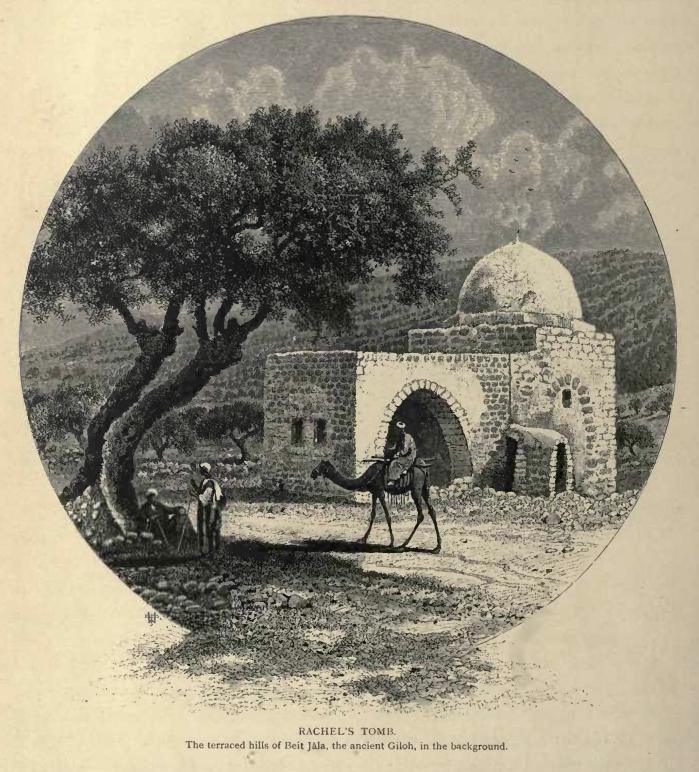 🇵🇸 Palestine and 1 moreRachel's TombQever Raḥel; Qabr Rāḥīl
A shared holy site near Bethlehem revered by Jews, Christians, and MuslimsTradition · Speaking with spirits and the dead · Protection Living
🇵🇸 Palestine and 1 moreRachel's TombQever Raḥel; Qabr Rāḥīl
A shared holy site near Bethlehem revered by Jews, Christians, and MuslimsTradition · Speaking with spirits and the dead · Protection Living
 🇮🇱 Israel and 2 moreUpsherinאָפּשערן (opshern)
A first haircut ceremony for Jewish boys, marking the start of formal study.Rite · Speaking with spirits and the dead · Power and authority Living
🇮🇱 Israel and 2 moreUpsherinאָפּשערן (opshern)
A first haircut ceremony for Jewish boys, marking the start of formal study.Rite · Speaking with spirits and the dead · Power and authority Living
 🇬🇷 Greece and 5 moreSibylΣίβυλλα (Sibylla)
Ancient Greek prophetesses who spoke divine counsel at holy shrinesFigure · Seeing and foretelling · Power and authority Legendary
🇬🇷 Greece and 5 moreSibylΣίβυλλα (Sibylla)
Ancient Greek prophetesses who spoke divine counsel at holy shrinesFigure · Seeing and foretelling · Power and authority Legendary
Related elsewhere
All text 🇮🇳 IndiaChakraचक्र
Meditation points in the subtle body used in Hindu and Buddhist yogaTradition · Speaking with spirits and the dead · Change and initiation Living
🇮🇳 IndiaChakraचक्र
Meditation points in the subtle body used in Hindu and Buddhist yogaTradition · Speaking with spirits and the dead · Change and initiation Living
 🇮🇳 India and 2 moreKalachakraདུས་ཀྱི་འཁོར་ལོ།
A Tibetan Buddhist tantric deity and system of yogic time cyclesTradition · Change and initiation · Speaking with spirits and the dead Living
🇮🇳 India and 2 moreKalachakraདུས་ཀྱི་འཁོར་ལོ།
A Tibetan Buddhist tantric deity and system of yogic time cyclesTradition · Change and initiation · Speaking with spirits and the dead Living
 🇳🇬 NigeriaOrunmilaỌ̀rúnmìlà
Yoruba deity of wisdom and the creator of the Ifá divination systemBeing · Seeing and foretelling · Speaking with spirits and the dead Living
🇳🇬 NigeriaOrunmilaỌ̀rúnmìlà
Yoruba deity of wisdom and the creator of the Ifá divination systemBeing · Seeing and foretelling · Speaking with spirits and the dead Living
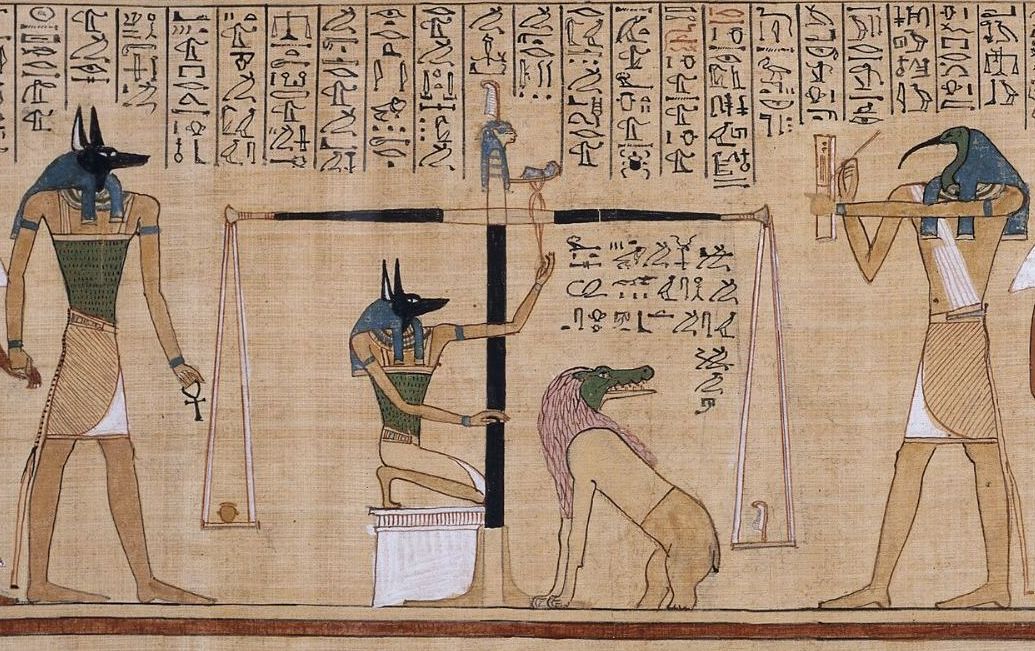 🇪🇬 EgyptAncient Egyptian afterlife beliefs
A system of rituals and texts guiding the soul through the underworld to eternal rebirthTradition · Protection · Speaking with spirits and the dead Historical
🇪🇬 EgyptAncient Egyptian afterlife beliefs
A system of rituals and texts guiding the soul through the underworld to eternal rebirthTradition · Protection · Speaking with spirits and the dead Historical