
Precious coral
from Greek Gorgeia, linked to Medusa the Gorgon
A marine skeleton harvested for jewelry and worn as a protective charm in several cultures
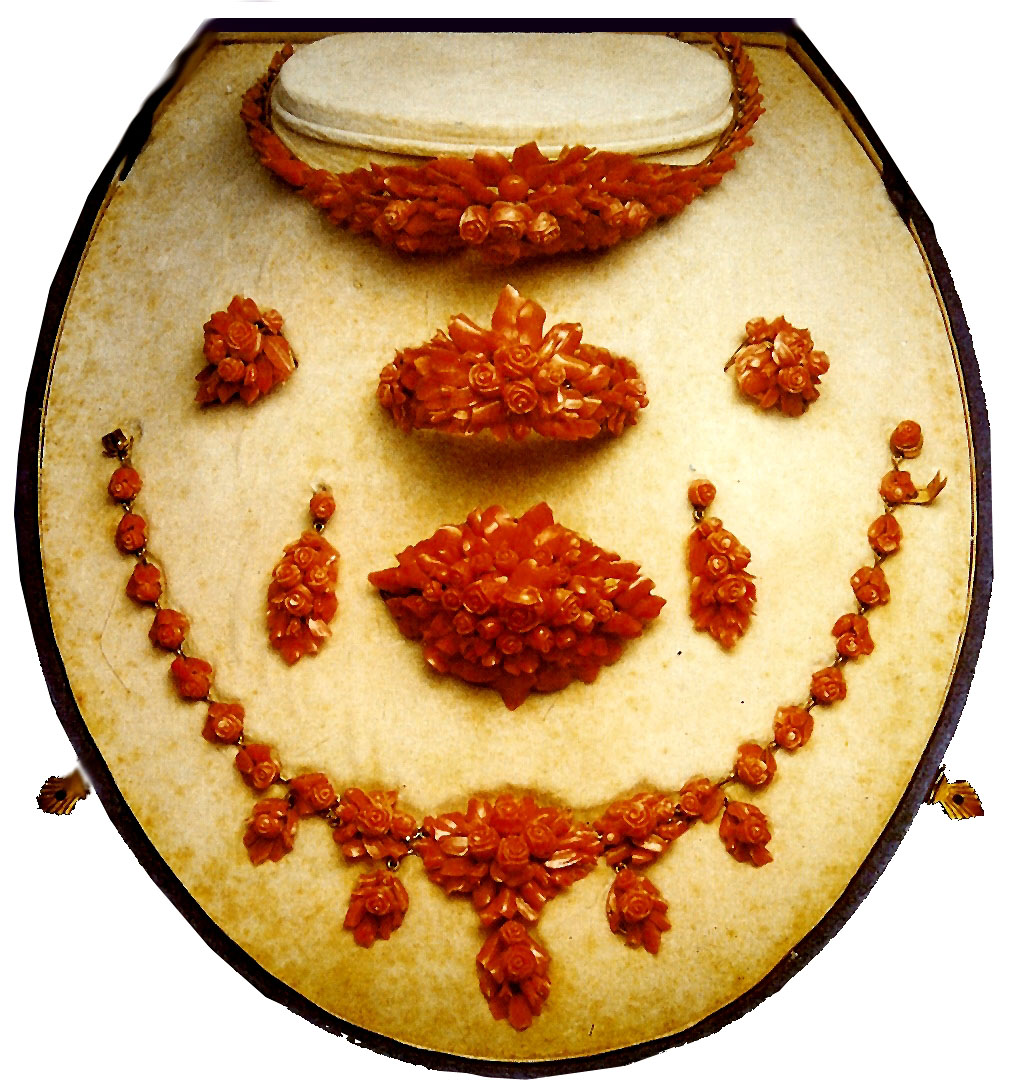
Precious coral refers to the hard skeletons of Corallium species, especially C. rubrum, which grow in deep Mediterranean and Pacific waters. The material is carved into beads and cabochons, and has been worn since antiquity as an amulet against harm and infertility.
- Corallium rubrum grows at depths up to 300 meters in the Mediterranean
- Torre del Greco established a Royal Society for coral fishing in 1790
- Hindus wear red coral on the ring finger to honor Mars
- Yoruba kings wear red coral necklaces to display high rank
- Shallow colonies near Alghero have declined due to intensive harvesting
What it is
Precious coral describes the durable skeletons of marine animals in the genus Corallium. These structures form in dark, rocky underwater environments across the Mediterranean and western Pacific oceans. Historically, it has served as both a decorative gemstone and a functional talisman. Communities have valued its vivid color and resilience for centuries, carving it into ornaments that are worn close to the skin.
Where it comes from
Greek mythology attributes the creation of coral to the blood of Medusa falling onto seaweed after Perseus used her head. Ancient Romans believed the substance possessed medicinal virtues and could diagnose illness by changing color. Pliny the Elder noted that early European tribes used it for weapon decoration before Eastern markets drove up demand.
How it is done
The skeletons are harvested from depths ranging from shallow coastal caves to over three hundred meters below the surface. Once collected, the naturally matte branches are cut and polished to achieve a smooth finish. Artisans typically shape the soft stone into beads or cabochons rather than faceted gems. In Italy, specialized schools taught cutting techniques, and factories processed raw material into finished goods for global trade.
Tools and materials
The primary material is the calcium carbonate skeleton overlaid with carotenoid pigments. Jewelry makers use polishing equipment to reveal the stone's natural gloss. Traditional wearers string the beads into necklaces or wristlets. In Hindu astrology, the stone is set into rings specifically for the finger, while West African leaders wear elaborate necklaces and anklets to denote status.
Precious coral, drawn and placed
- Living
- Revived
- Fading
- Historical
- Legendary
- Performed
- Lineage
- Mediterranean gem trade
What it is for
People wear precious coral to ward off the evil eye and protect children from danger. In parts of Italy, women historically wore it to aid fertility. Hindu astrologers prescribe the stone to please Mars and improve personal fortune. West African royalty use it to signal high social rank and authority. Dutch fishing communities incorporated it into traditional female costumes as a cultural staple.
Who does it
Fishermen harvest the coral from the sea floor using specialized gear. Skilled artisans in centers like Torre del Greco cut and polish the raw skeletons. Astrologers recommend specific wearing methods for planetary alignment. Community elders and titled chiefs select the finest pieces for ceremonial dress. Modern conservation efforts involve researchers monitoring population health in protected marine zones.
Peoples and places
Italian communities maintain a strong tradition of wearing cerasuolo for protection. Indian practitioners integrate the stone into Vedic astrology systems. Japanese and Taiwanese regions host deep-water species distinct from Mediterranean varieties. Yoruba and Bini peoples in West Africa reserve red coral for kings and chieftains. Dutch fishermen historically included it in regional dress codes. Roman ancestors hung branches around infants for safety.
At a glance: who, where and when
Who does it
Belief worlds


What people believe
Ancient texts describe coral as a living entity capable of sensing danger or disease. Hindus associate the stone with the planet Mars, believing it channels specific cosmic energies. Greeks linked its origin to the mythical Gorgon Medusa. Romans thought it could heal snakebites and scorpion stings. These beliefs transformed a biological structure into a powerful spiritual object across multiple civilizations.
When it is done
Harvesting occurs year-round but focuses on specific depth zones depending on seasonal currents. Trade peaks align with historical commercial hubs like Marseille and Naples. Festivals in Ladakh feature coral ornaments alongside turquoise. Religious observances in India may involve wearing the stone during specific planetary hours. Traditional Dutch attire dictates daily wear within fishing villages.
How scholars and sceptics see it
Historians trace the shift of trade power from Spain and France to Italy during the nineteenth century. Anthropologists study how West African societies use coral to enforce social hierarchy. Geologists analyze the calcium carbonate composition and growth patterns of colonies. Conservationists document the impact of intensive fishing on shallow water populations near Corsica and Sardinia.
Cautions and what is closed
Overfishing has severely depleted shallow coral colonies in the Mediterranean. Climate change threatens the survival of remaining deep-water habitats. Some traditional remedies involving coral consumption lack scientific validation. Colonial powers once monopolized fisheries, displacing local workers. Modern regulations aim to balance economic demand with ecological preservation.
Compare and confuse
Black coral serves a similar ornamental purpose but belongs to a different biological family. Amber and pearls are other organic gemstones valued for their natural origins. Red coral differs from synthetic imitations by possessing unique internal spicule structures. It shares protective symbolism with other stones like jade or turquoise in various Asian traditions.
Questions people ask about Precious coral
What is precious coral?
It is the hard skeleton of marine corals in the genus Corallium, primarily C. rubrum. The material is red or pink and is carved into jewelry. It has been used for thousands of years as both a gem and a protective charm.
Where does red coral come from?
It originates from deep underwater caves and rocky bottoms in the Mediterranean Sea and western Pacific. Major sources include Italy, Japan, and Taiwan. The Mediterranean species is particularly prized for its vibrant color.
Why do people wear red coral?
Many believe it protects against the evil eye and harm. In Italy, it is worn to help with infertility. Hindus wear it to please the planet Mars. West African chiefs wear it to show their high social status.
How is red coral used in astrology?
In Hindu astrology, red coral represents the planet Mars. Practitioners wear it on the ring finger to gain favor from this celestial body. It is believed to bring strength and vitality to the wearer.
Is red coral endangered?
Intensive fishing has damaged shallow Mediterranean colonies significantly. Climate change also poses a threat to their survival. Protected marine areas in Corsica and Sardinia help preserve some populations.
Good reading and sources
- Precious coral on WikipediaEncyclopedia
- More photos on Wikimedia CommonsPhotos and video
- Wikidata recordOpen data
The facts on this page come from the Wikipedia article "Precious coral", written by its contributors and used under the CC BY-SA 4.0 licence, and from its Wikidata record (CC0). EveryJaadu rewrote the text in its own words, with AI assistance, and compares every page with the article to make sure no passage is copied. It may be reused under the same CC BY-SA 4.0 licence with a link back.
It may contain mistakes. Names and customs differ from one community to the next, and some knowledge is closed to outsiders and left out here. This page describes belief and practice. It does not say that any of it works, it is not a how-to, and it is not medical advice. If something is wrong, tell us. Last refreshed 2026-10-05.
More from Italy
All the entries from Italy 🇬🇷 Greece and 5 moreBay Laurelδάφνη
An aromatic Mediterranean plant used in cooking and as a symbol of victory and purification.Substance · Protection · Cleansing and purification Living
🇬🇷 Greece and 5 moreBay Laurelδάφνη
An aromatic Mediterranean plant used in cooking and as a symbol of victory and purification.Substance · Protection · Cleansing and purification Living
 🇮🇹 Italy and 5 moreRelic
An object or body part kept to honor a holy person and mark their connection to the divineCharm · Protection · Healing Living
🇮🇹 Italy and 5 moreRelic
An object or body part kept to honor a holy person and mark their connection to the divineCharm · Protection · Healing Living
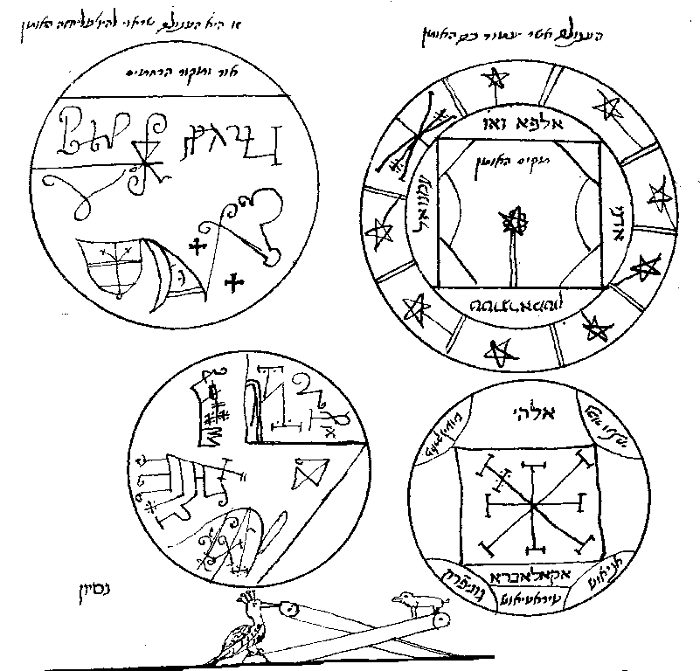 🇮🇹 Italy and 2 moreKey of SolomonClavicula Salomonis
A Renaissance grimoire attributed to King Solomon, detailing ritual preparations and invocations.Text · Cursing and harm · Love and attraction Historical
🇮🇹 Italy and 2 moreKey of SolomonClavicula Salomonis
A Renaissance grimoire attributed to King Solomon, detailing ritual preparations and invocations.Text · Cursing and harm · Love and attraction Historical
 🇩🇪 Germany and 5 moreWitch trials in the Holy Roman Empire
A wave of executions across Central Europe between the fifteenth and eighteenth centuries.Belief · Cursing and harm Historical
🇩🇪 Germany and 5 moreWitch trials in the Holy Roman Empire
A wave of executions across Central Europe between the fifteenth and eighteenth centuries.Belief · Cursing and harm Historical
Related elsewhere
All substance 🇨🇳 ChinaZhang Guolao张果老
A Taoist immortal known for his white donkey and fish drum, said to be a bat spirit.Figure · Protection · Luck and prosperity Legendary
🇨🇳 ChinaZhang Guolao张果老
A Taoist immortal known for his white donkey and fish drum, said to be a bat spirit.Figure · Protection · Luck and prosperity Legendary
 🇦🇷 Argentina and 2 moreSan La Muerte
A skeletal folk saint venerated in South America for protection and favorsTradition · Protection · Healing Living
🇦🇷 Argentina and 2 moreSan La Muerte
A skeletal folk saint venerated in South America for protection and favorsTradition · Protection · Healing Living
 🇺🇸 United States and 5 moreMojo bag
A cloth pouch holding charms for protection, luck, or love in the Hoodoo tradition.Charm · Protection · Healing Living
🇺🇸 United States and 5 moreMojo bag
A cloth pouch holding charms for protection, luck, or love in the Hoodoo tradition.Charm · Protection · Healing Living
 🇰🇷 South Korea and 1 moreKorean shamanismKorean shamanism (Korean: Korean shamanism)
A traditional practice of ritual specialists who mediate between the human and spirit worlds.Tradition · Healing · Protection Living
🇰🇷 South Korea and 1 moreKorean shamanismKorean shamanism (Korean: Korean shamanism)
A traditional practice of ritual specialists who mediate between the human and spirit worlds.Tradition · Healing · Protection Living