Peleiades
In its own language: Πελειάδες
from Greek peliades, meaning 'doves'
Sacred women of the Oracle at Dodona, linked to doves and Zeus
The Peleiades were priestesses serving Zeus and Dione at the ancient Oracle at Dodona in Epirus. Their name means 'doves', a title derived from their association with sacred birds rather than celestial stars.
- Sacred women of Zeus and Dione at Dodona
- Name means 'doves' in Greek
- Connected to a black dove myth by Herodotus
- Often confused with the star cluster Pleiades
- Served Ancient Epirotes in Greece
What it is
The Peleiades served as sacred women at the Oracle of Dodona, a major divination site in ancient Greece. They were dedicated to Zeus and his consort Dione. The term translates directly to 'doves'. This title likely reflects their ritual connection to these birds, which held religious significance at the sanctuary. They are distinct from the Pleiades, a cluster of stars often confused with them due to similar spelling. Their role involved facilitating communication with the divine within the oracle's precincts.
Where it comes from
Herodotus recorded a myth about a black dove initiating the oracle in the fifth century BC. Scholars suggest this story may explain an older, archaic name for the priestesses that had lost its original meaning. The name element 'pel-' might relate to words for 'black' or 'grey', such as those found in names like Peleus or Pelops. Pindar used the term poetically to describe a flock of doves, but this was a literary device rather than a strict mythic definition. The confusion with the star cluster Pleiades persists in modern discussions.
How it is done
Specific rituals performed by the Peleiades are not detailed in the surviving texts. They functioned as intermediaries at the Dodona oracle. Their presence marked the sanctity of the site dedicated to Zeus and Dione. The association with doves suggests they may have cared for or interpreted signs from these birds, though the exact nature of their daily duties remains obscure. They operated within the broader framework of Epirote religious practice.
Tools and materials
Doves were central to their identity and possibly their ritual life. A black dove appears in foundational myths regarding the oracle's start. The bird symbolized their sacred office.
Peleiades, drawn and placed
- Living
- Revived
- Fading
- Historical
- Legendary
- Performed
- Lineage
- Ancient Greek religion
What it is for
They served the religious needs of worshippers visiting the Oracle at Dodona. Their primary function was to support the divinatory practices associated with Zeus and Dione. By maintaining the sacred space and symbols, they enabled the community to seek guidance from the gods. Their work was essential to the operation of one of the oldest oracles in Greece.
Who does it
The Peleiades were women chosen for their sacred role. They belonged to the religious structure of Ancient Epirus. As priestesses, they held a status linked to the highest deities of the pantheon. They represent a specialized female religious class within the ancient Greek world.
Peoples and places
The practice is tied to the Ancient Epirotes, the inhabitants of the region where Dodona stood. It is part of the indigenous Greek religious tradition before the dominance of later philosophical schools. The cult specifically honored Zeus and Dione, reflecting local variations of the wider Greek pantheon. The site remained significant throughout antiquity.
At a glance: who, where and when
Who does it
Peoples
Belief worlds
What people believe
The belief system centered on Zeus and Dione receiving messages through the oracle. The dove played a symbolic role in this theology, possibly representing the voice of the god or the messenger between realms. The myth of the black dove suggests an early animistic or naturalistic origin for the cult. The priestesses embodied this connection, acting as living links to the divine forces.
When it is done
No specific festivals or calendar dates are mentioned for the Peleiades in the provided text. Their service would have been continuous or tied to general oracle operations. The lack of specific timing details leaves their annual schedule unknown.
How scholars and sceptics see it
Historians note the distinction between the Peleiades and the Pleiades stars. Commentators analyze Pindar's poetic use of the term versus its literal religious meaning. Theories exist regarding the etymological roots of their name, linking it to colors like grey or black. These linguistic studies help reconstruct the history of the cult despite limited direct evidence.
Cautions and what is closed
They are historical figures from a closed, ancient religion. Modern understanding relies on fragmented textual references and archaeological context.
Compare and confuse
They are frequently mistaken for the Pleiades, the seven sister stars. This error arises from phonetic similarity. Unlike the nymphs of the Pleiades, the Peleiades were human priestesses. They share the 'dove' motif with Aphrodite, whose chariot was drawn by doves, but their function was strictly oracular rather than romantic.
Questions people ask about Peleiades
Who were the Peleiades?
They were sacred women and priestesses serving at the Oracle of Dodona in ancient Greece. They were dedicated to Zeus and the Mother Goddess Dione, acting as key figures in the sanctuary's religious life.
What does the name Peleiades mean?
The name comes from the Greek word for 'doves'. It reflects their association with these birds, which were considered sacred at the oracle. The term highlights their spiritual connection to the divine messengers.
Are the Peleiades the same as the Pleiades?
No. The Peleiades were human priestesses. The Pleiades are a cluster of stars. The two are often confused due to similar spelling, but they belong to different categories: one is religious personnel, the other is astronomical.
Where did they serve?
They served at Dodona, located in the region of Epirus in northern Greece. This was one of the oldest and most important oracles in the ancient Greek world, dedicated primarily to Zeus.
Good reading and sources
The facts on this page come from the Wikipedia article "Peleiades", written by its contributors and used under the CC BY-SA 4.0 licence, and from its Wikidata record (CC0). EveryJaadu rewrote the text in its own words, with AI assistance, and compares every page with the article to make sure no passage is copied. It may be reused under the same CC BY-SA 4.0 licence with a link back.
It may contain mistakes. Names and customs differ from one community to the next, and some knowledge is closed to outsiders and left out here. This page describes belief and practice. It does not say that any of it works, it is not a how-to, and it is not medical advice. If something is wrong, tell us. Last refreshed 2026-10-06.
More from Greece
All the entries from Greece 🇷🇸 Serbia and 5 moreVampire
An undead creature from folklore that feeds on the blood or life force of the livingBeing · Cursing and harm · Luck and prosperity Legendary
🇷🇸 Serbia and 5 moreVampire
An undead creature from folklore that feeds on the blood or life force of the livingBeing · Cursing and harm · Luck and prosperity Legendary
 🇬🇷 GreeceTriple Goddess
A Neopagan deity representing three female life stages and lunar phasesBeing · Power and authority Living
🇬🇷 GreeceTriple Goddess
A Neopagan deity representing three female life stages and lunar phasesBeing · Power and authority Living
 🇬🇷 GreeceCirceΚίρκη
A Greek goddess and witch known for turning men into beasts with her potionsBeing · Cursing and harm · Love and attraction Legendary
🇬🇷 GreeceCirceΚίρκη
A Greek goddess and witch known for turning men into beasts with her potionsBeing · Cursing and harm · Love and attraction Legendary
 🇬🇷 Greece and 3 moreHellhound
A mythological canine that guards the underworld or serves demonic forces across global folkloreBeing · Protection · Cursing and harm Legendary
🇬🇷 Greece and 3 moreHellhound
A mythological canine that guards the underworld or serves demonic forces across global folkloreBeing · Protection · Cursing and harm Legendary
Related elsewhere
All being 🇮🇳 IndiaChakraचक्र
Meditation points in the subtle body used in Hindu and Buddhist yogaTradition · Speaking with spirits and the dead · Change and initiation Living
🇮🇳 IndiaChakraचक्र
Meditation points in the subtle body used in Hindu and Buddhist yogaTradition · Speaking with spirits and the dead · Change and initiation Living
 🇳🇬 NigeriaOrunmilaỌ̀rúnmìlà
Yoruba deity of wisdom and the creator of the Ifá divination systemBeing · Seeing and foretelling · Speaking with spirits and the dead Living
🇳🇬 NigeriaOrunmilaỌ̀rúnmìlà
Yoruba deity of wisdom and the creator of the Ifá divination systemBeing · Seeing and foretelling · Speaking with spirits and the dead Living
 🇮🇳 India and 2 moreHomaहोम
A fire ritual found across Asian religions where offerings are burned as a votive exchange with the divine.Rite · Protection · Speaking with spirits and the dead Living
🇮🇳 India and 2 moreHomaहोम
A fire ritual found across Asian religions where offerings are burned as a votive exchange with the divine.Rite · Protection · Speaking with spirits and the dead Living
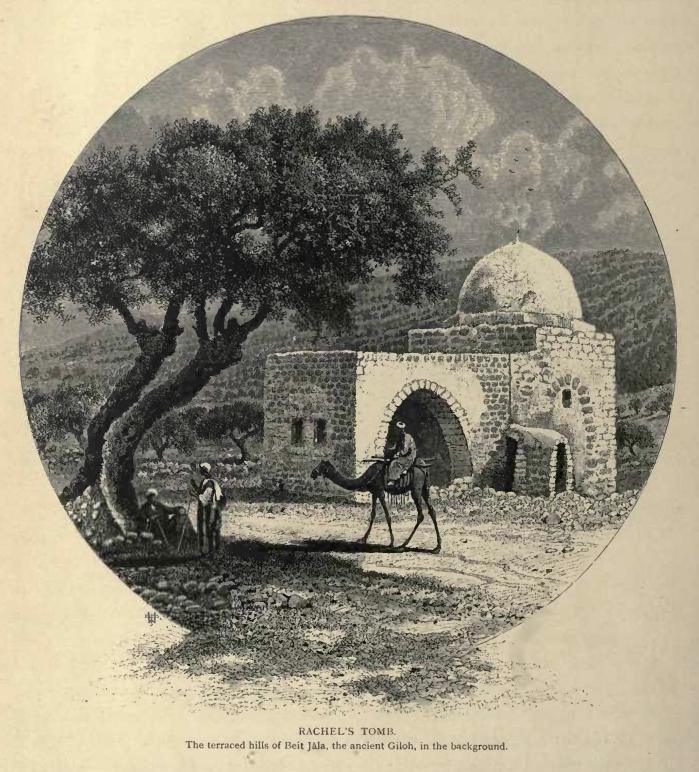 🇵🇸 Palestine and 1 moreRachel's TombQever Raḥel; Qabr Rāḥīl
A shared holy site near Bethlehem revered by Jews, Christians, and MuslimsTradition · Speaking with spirits and the dead · Protection Living
🇵🇸 Palestine and 1 moreRachel's TombQever Raḥel; Qabr Rāḥīl
A shared holy site near Bethlehem revered by Jews, Christians, and MuslimsTradition · Speaking with spirits and the dead · Protection Living