Metamorphosis
A stage illusion where a magician and assistant instantly swap places inside a locked container.
Metamorphosis is a classic stage magic effect in which two performers exchange positions within a confined space. It was invented by John Nevil Maskelyne and later popularized by Harry Houdini. The act relies on speed and misdirection to create the appearance of instantaneous travel.
- Invented by John Nevil Maskelyne
- Popularized by Harry Houdini
- Also known as Substitution Trunk
- John Taylor created Suspended Animation
- Method exposed by Val Valentino
What it is
Metamorphosis is a well-known stage illusion involving a rapid exchange between a magician and an assistant. The performers switch places while confined within a large container, such as a trunk or box. This effect creates the visual impression that one person has vanished and another has appeared in the same spot without any visible movement. It is a staple of escape artistry and theatrical magic performances worldwide.
Where it comes from
The illusion was originally invented by the British magician John Nevil Maskelyne. It became most famously associated with Harry Houdini, who performed it with his wife Bess. Houdini’s version helped cement the trick’s reputation for speed and precision. Over time, other magicians have adopted and adapted the basic premise for their own acts.
Tools and materials
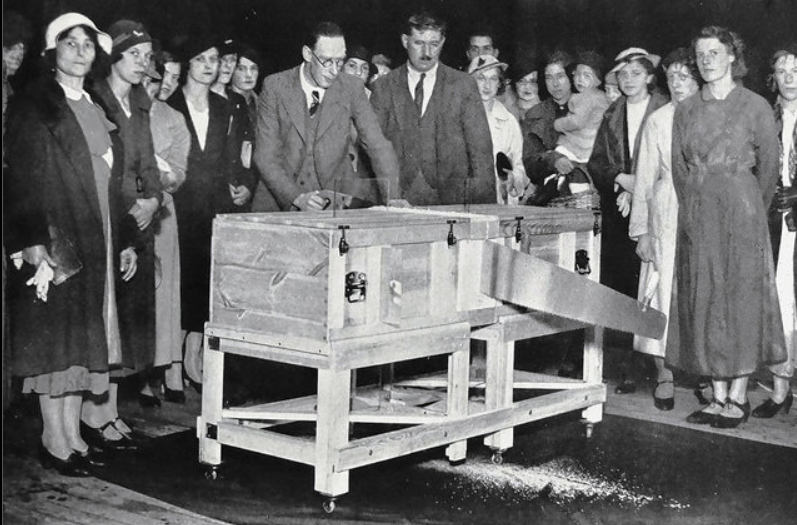
The primary tool is a large wooden trunk or box capable of holding a person. Magicians often use restraints like handcuffs, ropes, or bags to add drama. A large curtain is essential for hiding the exchange. Variations may include acrylic tanks filled with water or steel cages suspended in the air to increase the perceived danger.
Metamorphosis, drawn and placed
- Living
- Revived
- Fading
- Historical
- Legendary
- Performed
- Lineage
- Stage magic
What it is for
The illusion is designed to entertain audiences by demonstrating impossible speed and skill. It showcases the performer's ability to manipulate perception and execute complex physical maneuvers. Spectators are meant to be amazed by the apparent violation of physical laws, creating a sense of wonder and disbelief.
Who does it
Professional stage magicians and escape artists perform this illusion. Many require years of training to master the timing and physical coordination needed. Harry Houdini and modern performers like Criss Angel and John Taylor have defined different styles. The role of the assistant is critical, requiring trust and precise synchronization with the lead performer.
Peoples and places
The trick originated in the United Kingdom but gained global fame through American performers. Australian illusionist John Taylor created a notable aerial variation called Suspended Animation. Various international troupes, including The Pendragons, have performed the standard trunk version. The illusion has become a universal part of Western stage magic repertoire.
At a glance: who, where and when
Who does it
What people believe
There is no supernatural belief attached to the Metamorphosis illusion. It is understood by both performers and audiences as a mechanical and psychological trick. The effect relies entirely on sleight of hand, hidden compartments, and cognitive misdirection. Scholars of magic analyze it as a study in human perception and reaction times.
How scholars and sceptics see it
Magic historians view Metamorphosis as a key development in performance art. Researchers note its evolution from simple substitution to high-risk stunts involving water and height. Critics often debate the ethical implications of dangerous variations. The exposure of methods by figures like Val Valentino highlights the tension between secrecy and public revelation in the field.
Cautions and what is closed
Some modern variations involve significant physical risks. Performers using underwater tanks or suspended platforms face potential dangers such as drowning or injury if equipment fails. These high-stakes versions require rigorous safety protocols. Audiences should understand that these are controlled professional acts with inherent hazards managed by experts.
Compare and confuse
Metamorphosis is related to other substitution tricks and escape acts. It differs from simple vanish effects by involving two people and a confined space. Variations like the Aquarian Illusion add environmental elements like water. The core concept remains consistent across cultures, though local magicians may adapt the props to suit their style.
Today
The illusion remains popular in contemporary magic shows. Modern performers continue to innovate with new props and settings. Rights to specific variations, such as John Taylor’s Suspended Animation, are commercially licensed. The trick continues to inspire new generations of magicians seeking to master the art of rapid substitution.
Questions people ask about Metamorphosis
What is the Metamorphosis illusion?
It is a stage magic effect where a magician and assistant instantly swap places inside a locked trunk or box using speed and misdirection.
Who invented the Metamorphosis trick?
The illusion was invented by British magician John Nevil Maskelyne in the late 19th century.
How does the basic Metamorphosis trick work?
An assistant is locked in a box while the magician stands on top. A curtain hides them briefly, allowing them to swap positions before the curtain drops.
Are there dangerous versions of this illusion?
Yes, variations like the Aquarian Illusion involve water tanks or suspended cages, adding risks of drowning or injury if something goes wrong.
Good reading and sources
The facts on this page come from the Wikipedia article "Metamorphosis (illusion)", written by its contributors and used under the CC BY-SA 4.0 licence, and from its Wikidata record (CC0). EveryJaadu rewrote the text in its own words, with AI assistance, and compares every page with the article to make sure no passage is copied. It may be reused under the same CC BY-SA 4.0 licence with a link back.
It may contain mistakes. Names and customs differ from one community to the next, and some knowledge is closed to outsiders and left out here. This page describes belief and practice. It does not say that any of it works, it is not a how-to, and it is not medical advice. If something is wrong, tell us. Last refreshed 2026-10-05.
More from the United Kingdom
All the entries from the United Kingdom 🇬🇧 United KingdomEgyptian Hall
A London exhibition hall known for magic shows and Egyptian-style architecture, demolished in 1905.Illusion · Wonder and entertainment Historical
🇬🇧 United KingdomEgyptian Hall
A London exhibition hall known for magic shows and Egyptian-style architecture, demolished in 1905.Illusion · Wonder and entertainment Historical
 🇩🇪 Germany and 2 morePhantasmagoria
A horror theatre using magic lanterns to project frightening images in the darkIllusion · Wonder and entertainment Historical
🇩🇪 Germany and 2 morePhantasmagoria
A horror theatre using magic lanterns to project frightening images in the darkIllusion · Wonder and entertainment Historical
 🇬🇧 United Kingdom and 1 moreSawing a woman in half
A stage illusion where an assistant appears to be cut into pieces inside a box or on a tableIllusion · Wonder and entertainment Living
🇬🇧 United Kingdom and 1 moreSawing a woman in half
A stage illusion where an assistant appears to be cut into pieces inside a box or on a tableIllusion · Wonder and entertainment Living
 🇬🇧 United KingdomIsaac Fawkes
An English conjurer who moved magic from the fairground to fashionable London society.Illusion · Wonder and entertainment Historical
🇬🇧 United KingdomIsaac Fawkes
An English conjurer who moved magic from the fairground to fashionable London society.Illusion · Wonder and entertainment Historical
Related elsewhere
All illusion 🇪🇬 Egypt and 1 moreSphinx
A mythical hybrid with a human head and lion body, serving as guardian or riddler in Egyptian and Greek traditions.Being · Protection · Wonder and entertainment Legendary
🇷🇺 Russia and 3 moreNart sagaНарты кадджытæ
A collection of epic tales from the North Caucasus about a legendary group of heroes.Text · Wonder and entertainment Historical
🇨🇱 ChileChilean mythology
The myths and legends of Chile, blending indigenous roots with colonial influences.Tradition · Wonder and entertainment Living
🇪🇬 Egypt and 1 moreSphinx
A mythical hybrid with a human head and lion body, serving as guardian or riddler in Egyptian and Greek traditions.Being · Protection · Wonder and entertainment Legendary
🇷🇺 Russia and 3 moreNart sagaНарты кадджытæ
A collection of epic tales from the North Caucasus about a legendary group of heroes.Text · Wonder and entertainment Historical
🇨🇱 ChileChilean mythology
The myths and legends of Chile, blending indigenous roots with colonial influences.Tradition · Wonder and entertainment Living
 🇨🇳 ChinaLan Caihe藍采和
An ambiguous Taoist immortal known for a flower basket and wandering songsBeing · Wonder and entertainment Legendary
🇨🇳 ChinaLan Caihe藍采和
An ambiguous Taoist immortal known for a flower basket and wandering songsBeing · Wonder and entertainment Legendary