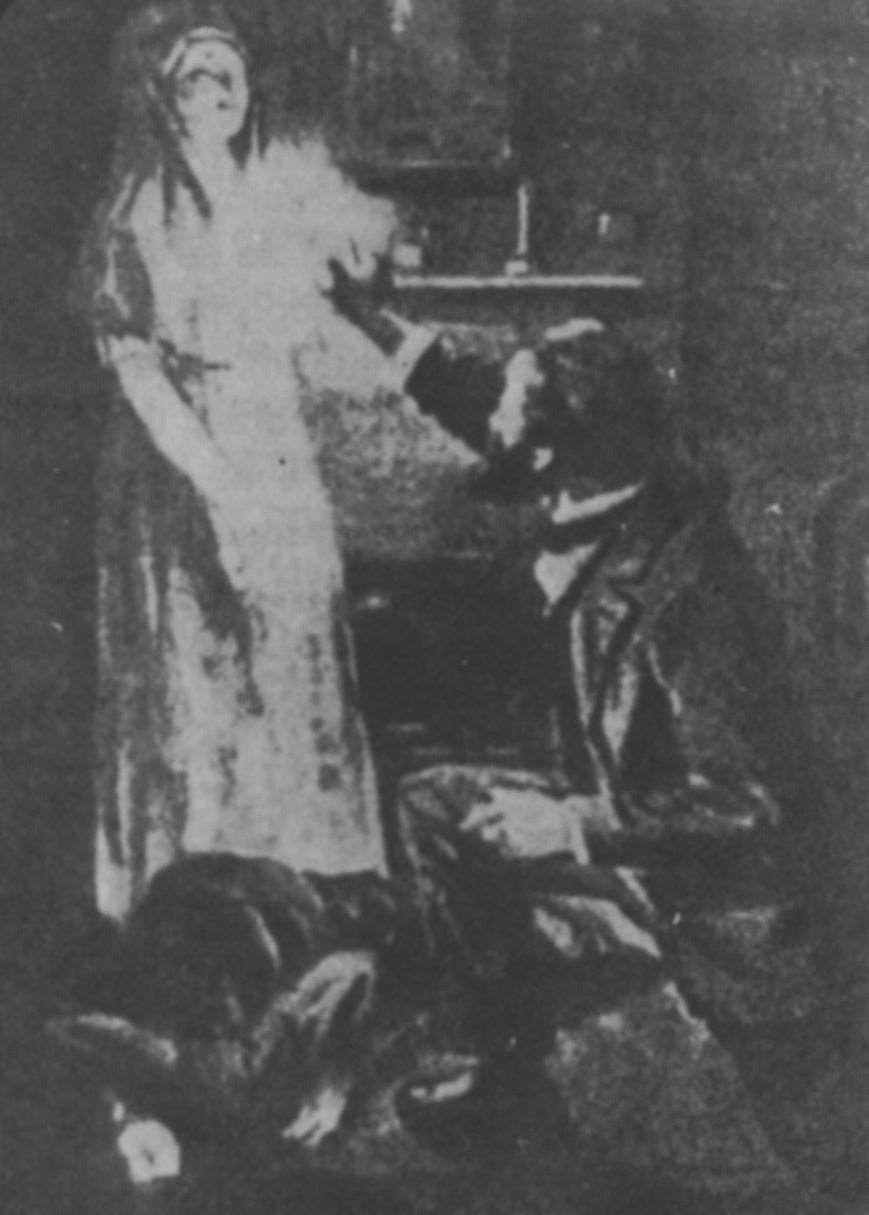
Materialization (paranormal)
The claimed appearance of matter from unknown sources in spiritualist séances
In Spiritualism and paranormal literature, materialization is the creation or appearance of physical matter from unknown sources. Laboratory experiments have not confirmed its existence, and numerous cases involving mediums have been exposed as fraudulent deceptions.
- Robert Browning exposed Daniel Dunglas Home's foot as a fake spirit face in 1855.
- Florence Cook's 'Katie King' was revealed as a confederate introduced by the medium.
- Eva Carrière's ectoplasm was made from magazine cut-outs pinned together.
- Harry Houdini replicated Franek Kluski's paraffin molds using his hands.
- P. C. Sorcar described Sathya Sai Baba's ash feats as common sleight of hand.
What it is
Materialization, also called manifestation, refers to the claimed creation or sudden appearance of physical matter from unknown sources during spiritualist gatherings. Practitioners and believers hold that spirits or unseen forces can form objects, substances, or even human-like figures out of thin air. This phenomenon is a central focus of certain religious movements and paranormal literature. However, scientific investigation has never confirmed these events through controlled laboratory experiments. Instead, the history of materialization is marked by repeated exposures of trickery, where mediums used sleight of hand and hidden props to deceive sitters.
Where it comes from
The practice emerged prominently in the late nineteenth century within the Spiritualism movement. Early incidents included Robert Browning attending a séance in 1855 where a spirit face appeared, only for him to discover it was the bare foot of the medium, Daniel Dunglas Home. This event highlighted the deceptive nature of early demonstrations. Over time, psychical researchers began systematically investigating these claims. By the early twentieth century, a series of high-profile exposures led to a significant decline in the popularity of materialization séances, as the public and scholars grew skeptical of the reported phenomena.
How it is done
Mediums typically conducted materialization rituals inside darkened rooms known as cabinets or behind curtains. Sitters would sit in darkness while the medium claimed to summon spirits. Figures were said to emerge from the shadows, sometimes touching the sitters or forming objects like ash or molds. Investigators found that mediums often used secret compartments in chairs, stiffened muslin, masks, wigs, and beards to create false appearances. In some cases, ectoplasm, a supposed spiritual substance, was claimed to form images. Researchers later discovered this ectoplasm was actually cut-out paper faces from magazines, held together with pins and string, or created using gauze and handkerchiefs.
Tools and materials
Fraudulent materializations relied on everyday items disguised as supernatural effects. Mediums used stiffened muslin wrapped around their heads to mimic spirit forms. Secret compartments in chairs concealed wigs, cloths, and beards used to dress up as spirits. Ectoplasmic manifestations were constructed from magazine cut-outs, pins, and string. Some performers used bowls of hot paraffin wax, dipping hands into it to create molds that appeared to be spirit limbs. Magicians demonstrated how easily these effects could be replicated using simple props like combs, gauze, and ash capsules.
Materialization (paranormal), drawn and placed
- Living
- Revived
- Fading
- Historical
- Legendary
- Performed
What it is for
Believers sought materialization to prove the existence of the afterlife and communicate with deceased loved ones. The appearance of physical forms was seen as tangible evidence of spiritual presence. Followers of certain gurus reported spontaneous manifestations of holy ash, known as vibuthi, which they believed held sacred power. These displays were intended to inspire faith and demonstrate the guru's supernatural abilities. For skeptics and investigators, studying these claims served to expose deception and understand the psychological factors behind belief in paranormal phenomena.
Who does it
The primary practitioners were mediums who claimed the ability to channel spirits. Many were exposed as frauds by psychical researchers and magicians. Notable figures included Florence Cook, Christopher Chambers, Charles Eldred, and Franek Kluski. These individuals often worked in private settings, such as their own homes or rented rooms, where they could control the environment. Researchers like W. W. Baggally, Everard Feilding, and Harry Houdini played a crucial role in uncovering their methods. Scholars and historians analyze these cases to understand the social context of Spiritualism and the mechanics of deception.
Peoples and places
Materialization claims appeared across various cultures and regions. In Europe, particularly in Britain, Germany, and Austria, psychical researchers extensively documented fraudulent séances. In India, Hindu swamis and gurus, such as Gyatri Swami, Sathya Sai Baba, and Swami Premananda, claimed to perform materializations of objects or substances. Indian magicians like P. C. Sorcar analyzed these claims, suggesting they resulted from sleight of hand tricks rather than supernatural powers. Bulgarian royalty and French presidents were among the faces used in magazine cut-outs by mediums.
At a glance: who, where and when
Who does it
Belief worlds
What people believe
Spiritualists believe that materialization proves the survival of consciousness after death. They hold that spirits can manipulate physical matter to interact with the living world. Some researchers proposed alternative explanations, such as ideoplasty, where the medium's mind projects images onto ectoplasm. Skeptics argue that these beliefs stem from wishful thinking and the desire for contact with the dead. Psychical researchers emphasized the need for rigorous testing, noting that many alleged phenomena could be explained by ordinary deception. The lack of scientific confirmation reinforces the view that materialization is a product of human ingenuity rather than supernatural force.
When it is done
Séances claiming materialization occurred at various times, often in private gatherings without fixed schedules. Some mediums held regular sessions over extended periods, such as Franek Kluski's séances in Paris and Warsaw between 1920 and 1923. Followers of gurus reported spontaneous manifestations at home, triggered by devotion or specific rituals. There are no widely recognized festivals or calendar days specifically tied to materialization. The timing of these events depended largely on the medium's availability and the sitters' requests.
How scholars and sceptics see it
Anthropologists and historians view materialization as a key aspect of late nineteenth-century Spiritualism. Psychical researchers like Harry Houdini and Frank Podmore exposed fraudulent techniques, revealing the use of hidden props and misdirection. Scholars note that the exposure of fraud led to a decline in popular interest. Modern analyses focus on the psychological appeal of these practices and the social dynamics of séance culture. The historical record highlights the tension between belief and skepticism in the study of paranormal claims.
Cautions and what is closed
Many mediums were exposed for fraud, leading to legal and social consequences. Investigators found mediums smuggling pins and cut-outs into séances. Some researchers faced ridicule for defending fraudulent claims, as seen with Baron von Schrenck-Notzing. Skeptics warned followers of gurus about sleight of hand tricks used to produce holy ash. The reliance on unverified claims left adherents vulnerable to deception. Magicians demonstrated how easily these effects could be replicated, undermining the credibility of supernatural assertions. The history of materialization serves as a cautionary tale about the importance of critical inquiry.
Compare and confuse
Materialization is often confused with apport, which involves the transference of objects, and evocation, which summons spirits. It differs from telekinesis, which moves objects without physical contact. In Indian traditions, it relates to siddhi, or spiritual attainments. While Spiritualism focuses on spirit communication, other practices emphasize personal power or divine connection. The term manifestation is sometimes used broadly to describe various supernatural appearances. Understanding these distinctions helps clarify the specific claims and methods associated with materialization.
Law and persecution
No specific laws targeted materialization itself, but mediums faced social and professional repercussions when exposed. Fraudulent activities could lead to civil lawsuits or criminal charges depending on jurisdiction. The decline of materialization séances was driven more by public skepticism than legal action. In some regions, spiritual leaders faced scrutiny for making extraordinary claims. The historical record shows that exposure by researchers and magicians was the primary mechanism for challenging these practices. Legal frameworks did not typically address paranormal claims directly, leaving them to the realm of public debate and scientific inquiry.
Today
Materialization as a serious paranormal claim has largely faded from mainstream discourse. Historical accounts remain important for understanding the development of Spiritualism and psychical research. Modern interest focuses on the cultural and psychological aspects of these phenomena. Gurus and spiritual leaders continue to make claims of miraculous appearances, though skeptics remain vigilant. The legacy of materialization persists in popular culture and literature, often romanticized or critiqued. Contemporary studies examine the enduring appeal of supernatural beliefs and the mechanisms of deception.
Questions people ask about Materialization (paranormal)
What is materialization in paranormal contexts?
It is the claimed creation or appearance of physical matter from unknown sources during spiritualist gatherings. Believers see it as proof of spirit communication, while scientists find no evidence supporting these claims.
Where did materialization originate?
It emerged in the late nineteenth century within the Spiritualism movement. Early incidents involved mediums creating fake spirit forms in darkened rooms, leading to widespread public interest before being exposed as fraud.
How did mediums perform materialization?
They used hidden props like stiffened muslin, masks, wigs, and secret compartments. Ectoplasm was often made from magazine cut-outs and pins. Investigators like Harry Houdini showed how easily these tricks could be replicated.
Are there modern examples of materialization?
Some Indian gurus claim to manifest holy ash or objects. Skeptics and magicians argue these are sleight of hand tricks. Historical cases from Europe and India provide detailed records of these claims and their exposures.
Why did materialization decline?
High-profile exposures by psychical researchers and magicians revealed widespread fraud. The lack of scientific confirmation further reduced interest in these phenomena.
Good reading and sources
The facts on this page come from the Wikipedia article "Materialization (paranormal)", written by its contributors and used under the CC BY-SA 4.0 licence, and from its Wikidata record (CC0). EveryJaadu rewrote the text in its own words, with AI assistance, and compares every page with the article to make sure no passage is copied. It may be reused under the same CC BY-SA 4.0 licence with a link back.
It may contain mistakes. Names and customs differ from one community to the next, and some knowledge is closed to outsiders and left out here. This page describes belief and practice. It does not say that any of it works, it is not a how-to, and it is not medical advice. If something is wrong, tell us. Last refreshed 2026-10-15.
More from Germany
All the entries from Germany 🇩🇪 Germany and 7 moreWalpurgis NightWalpurgisnacht
A spring vigil marking the eve of Saint Walpurga's feast day with bonfires and student festivalsRite · Protection · Speaking with spirits and the dead Living
🇩🇪 Germany and 7 moreWalpurgis NightWalpurgisnacht
A spring vigil marking the eve of Saint Walpurga's feast day with bonfires and student festivalsRite · Protection · Speaking with spirits and the dead Living
 🇺🇦 Ukraine and 5 moreMugwortчорнобиль (chornóbyl')
An aromatic herb used in folk medicine, cooking, and magical protection across Eurasia.Substance · Protection · Healing Living
🇺🇦 Ukraine and 5 moreMugwortчорнобиль (chornóbyl')
An aromatic herb used in folk medicine, cooking, and magical protection across Eurasia.Substance · Protection · Healing Living
 🇩🇪 GermanyPied Piper of Hamelinder Rattenfänger von Hameln
A medieval legend about a piper who leads children away from the town of HamelinFigure · Cursing and harm · Luck and prosperity Legendary
🇩🇪 GermanyPied Piper of Hamelinder Rattenfänger von Hameln
A medieval legend about a piper who leads children away from the town of HamelinFigure · Cursing and harm · Luck and prosperity Legendary
 🇷🇺 Russia and 4 moreLady MiddayPoludnitsa
A Slavic noon spirit who watches over fields and punishes those who work during the hottest hours.Being · Cursing and harm · Protection Historical
🇷🇺 Russia and 4 moreLady MiddayPoludnitsa
A Slavic noon spirit who watches over fields and punishes those who work during the hottest hours.Being · Cursing and harm · Protection Historical
Related elsewhere
All belief 🇮🇳 India and 2 moreYantraयन्त्र
A geometric diagram from Indian traditions used for worship and meditationTradition · Protection · Speaking with spirits and the dead Living
🇮🇳 India and 2 moreYantraयन्त्र
A geometric diagram from Indian traditions used for worship and meditationTradition · Protection · Speaking with spirits and the dead Living
 🇮🇳 India and 1 moreAshtamangalaअष्टमङ्गल
A set of eight sacred symbols used in Indian religions to mark auspicious occasions and teach spiritual truths.Tradition · Power and authority · Wonder and entertainment Living
🇮🇳 India and 1 moreAshtamangalaअष्टमङ्गल
A set of eight sacred symbols used in Indian religions to mark auspicious occasions and teach spiritual truths.Tradition · Power and authority · Wonder and entertainment Living
 🇮🇳 India and 1 moreMantraमन्त्रम्
A sacred sound or phrase repeated to focus the mind and invoke spiritual powerText · Speaking with spirits and the dead · Power and authority Living
🇪🇬 EgyptDjedi
A fictional magician from the Westcar Papyrus who resurrects animals and foretells a king's lineage.Figure · Seeing and foretelling · Wonder and entertainment Legendary
🇮🇳 India and 1 moreMantraमन्त्रम्
A sacred sound or phrase repeated to focus the mind and invoke spiritual powerText · Speaking with spirits and the dead · Power and authority Living
🇪🇬 EgyptDjedi
A fictional magician from the Westcar Papyrus who resurrects animals and foretells a king's lineage.Figure · Seeing and foretelling · Wonder and entertainment Legendary