Magical motto
from the Latin word for a short statement expressing a principle or rule of conduct
A chosen name used by occultists to separate their spiritual identity from their everyday life.
Magical mottoes are aliases adopted by members of esoteric orders to create a distinct magical persona. Practitioners typically select these names during initiation ceremonies within groups like the Hermetic Order of the Golden Dawn or Ordo Templi Orientis. The practice serves to shield the individual's mundane identity while allowing them to operate under a new spiritual designation.
- Aleister Crowley chose Perdurabo meaning I will endure
- William Butler Yeats began with Festina Lente
- Moina Mathers was known as Soror V.N.R.
- Samuel MacGregor Mathers used S.R.M.D.
- Mottos were adopted at neophyte initiation
What it is
A magical motto is a specialized alias used within various occult organizations to distinguish a practitioner's spiritual self from their ordinary civilian identity. These names function as nicknames or pen names that allow members to engage in ritual work without exposing their personal lives. The concept is central to the structure of many Western mystery traditions, where individuals are known primarily by their chosen title rather than their birth name. This separation creates a dedicated space for magical experimentation and personal transformation, ensuring that the mundane world does not interfere with esoteric pursuits.
Where it comes from
The practice became prominent within the Hermetic Order of the Golden Dawn in the late nineteenth century. Members adopted these mottoes at the time of their initiation into the lowest grade of the order. While the tradition often utilized Latin, it also incorporated other languages such as Gaelic, Hebrew, and Greek. The choice of language and content was intended to reflect high-minded sentiments or literary allusions. Over time, the practice spread to successor organizations like Alpha et Omega and Stella Matutina, maintaining the requirement for a distinct magical identity.
How it is done
Initiates typically receive their motto upon entering the neophyte grade of an organization. The selection process varies; some members choose their own phrase, while others may be assigned one based on their perceived aptitudes or spiritual needs. As members progress through higher degrees of initiation, they are sometimes permitted to change their motto to reflect their evolving understanding. Documents and correspondence within these groups are often signed using only the initials of the magical motto, reinforcing the anonymity and secrecy of the practice.
Tools and materials
The primary tool is the linguistic phrase itself, often drawn from classical languages like Latin or Greek. These phrases serve as symbols of aspiration and spiritual intent. Common examples include 'Perdurabo' meaning 'I will endure' and 'Sapere Aude' meaning 'Dare to know'. The initials derived from these mottos become the standard method of identification among peers. In some cases, the motto is accompanied by a title such as 'Frater' or 'Soror', which denotes brotherhood or sisterhood within the order.
Magical motto, drawn and placed
- Living
- Revived
- Fading
- Historical
- Legendary
- Performed
- Lineage
- Western esotericism and ceremonial magic
- Timing
- at initiation into neophyte grades
What it is for
The main purpose is to establish a protected magical identity that operates independently of the practitioner's social and professional life. This allows for greater freedom in exploring esoteric concepts without fear of judgment or interference from the mundane world. The motto also serves as a constant reminder of the initiate's spiritual goals and aspirations. By adopting a new name, the magician symbolically leaves behind their previous self and commits to a path of inner development and magical study.
Who does it
Practitioners are typically members of formal occult orders such as the Hermetic Order of the Golden Dawn or the Ordo Templi Orientis. Both men and women participate, often referred to as 'Frater' or 'Soror' followed by their motto initials. Notable figures include Aleister Crowley, William Butler Yeats, and Israel Regardie. Training involves rigorous study of ritual texts and philosophical doctrines, with the motto serving as a key component of one's initiation and ongoing membership status within the hierarchy.
Peoples and places
The tradition is most strongly associated with British and American esoteric groups of the late nineteenth and early twentieth centuries. The Hermetic Order of the Golden Dawn popularized the use of Latin phrases, while later groups like Alpha et Omega incorporated Hebrew and Greek elements. Members came from diverse backgrounds, including poets, artists, and scholars. The practice reflects a broader trend in Western occultism toward creating structured, initiatory systems that mimic religious or academic institutions.
At a glance: who, where and when
Who does it
Belief worlds
Occasions
What people believe
Within these traditions, the magical motto is believed to hold significant power over the practitioner's spiritual trajectory. It is seen as a vessel for intention and a focal point for meditation. The belief system suggests that adopting a new name alters one's energetic signature and aligns the individual with specific cosmic forces or archetypes. This view is rooted in the idea that language shapes reality and that a carefully chosen phrase can influence the outcome of magical workings.
When it is done
Mottoes are typically assigned during initiation ceremonies, which occur at specific points in a member's progression through the order's degrees. There are no fixed calendar dates associated with the adoption of a motto, as it depends on the individual's readiness and the schedule of the local lodge. However, some orders may tie initiations to seasonal festivals or astrological events, indirectly linking the motto to the broader ritual calendar.
How scholars and sceptics see it
Scholars of religion and history view magical mottoes as a mechanism for identity construction within secret societies. Anthropologists note that the practice helps maintain group cohesion and secrecy by creating a parallel social structure. Psychologists interpret the adoption of a new name as a form of role-playing that facilitates personal transformation and psychological integration. Researchers also examine the literary and philosophical influences embedded in the chosen phrases.
Cautions and what is closed
The use of magical mottoes requires discretion, as revealing one's alias could compromise the secrecy of the organization. In historical contexts, exposure of magical identities could lead to social stigma or legal repercussions, particularly during periods of heightened suspicion toward occult activities. Modern practitioners must also navigate issues of cultural appropriation when selecting phrases from non-Western languages or traditions.
Compare and confuse
Magical mottoes are similar to craft names used in folk magic or nomen mysticum in Jewish mysticism. They differ from stage magician aliases, which are used for entertainment purposes rather than spiritual transformation. Unlike religious baptismal names, which signify entry into a faith community, magical mottoes are often self-selected and reflect personal esoteric goals rather than doctrinal adherence.
Questions people ask about Magical motto
What is a magical motto?
It is a chosen alias used by occultists to separate their spiritual identity from their everyday life. Members adopt these names during initiation into magical orders to create a distinct persona for ritual work.
Where did the practice originate?
The practice became prominent in the Hermetic Order of the Golden Dawn in the late nineteenth century. Members selected these names to reflect high-minded sentiments and literary allusions, often in Latin or other classical languages.
Why do magicians use these names?
They serve to protect the practitioner's mundane identity while allowing them to operate freely in magical contexts. The motto acts as a symbol of aspiration and helps maintain the secrecy of the organization.
Can a magical motto be changed?
Yes, members are often free to change their motto upon receiving initiations into higher degrees. This reflects their evolving spiritual understanding and changing role within the order.
Good reading and sources
The facts on this page come from the Wikipedia article "Magical motto", written by its contributors and used under the CC BY-SA 4.0 licence, and from its Wikidata record (CC0). EveryJaadu rewrote the text in its own words, with AI assistance, and compares every page with the article to make sure no passage is copied. It may be reused under the same CC BY-SA 4.0 licence with a link back.
It may contain mistakes. Names and customs differ from one community to the next, and some knowledge is closed to outsiders and left out here. This page describes belief and practice. It does not say that any of it works, it is not a how-to, and it is not medical advice. If something is wrong, tell us. Last refreshed 2026-10-06.
More from Israel
All the entries from Israel 🇬🇷 Greece and 5 moreNecromancy
A form of divination that seeks to speak with the dead for hidden knowledge.Tradition · Seeing and foretelling · Power and authority Historical
🇬🇷 Greece and 5 moreNecromancy
A form of divination that seeks to speak with the dead for hidden knowledge.Tradition · Seeing and foretelling · Power and authority Historical
 🇷🇸 Serbia and 5 moreWolves in folklore, religion and mythology
A global survey of how cultures view the wolf as symbol, spirit or threatBelief · Power and authority · Cursing and harm Historical
🇷🇸 Serbia and 5 moreWolves in folklore, religion and mythology
A global survey of how cultures view the wolf as symbol, spirit or threatBelief · Power and authority · Cursing and harm Historical
 🇬🇧 United Kingdom and 4 moreCorn dolly
A woven straw figure made from the last sheaf of a European harvest to house the crop spirit.Tradition · Protection · Speaking with spirits and the dead Revived
🇬🇧 United Kingdom and 4 moreCorn dolly
A woven straw figure made from the last sheaf of a European harvest to house the crop spirit.Tradition · Protection · Speaking with spirits and the dead Revived
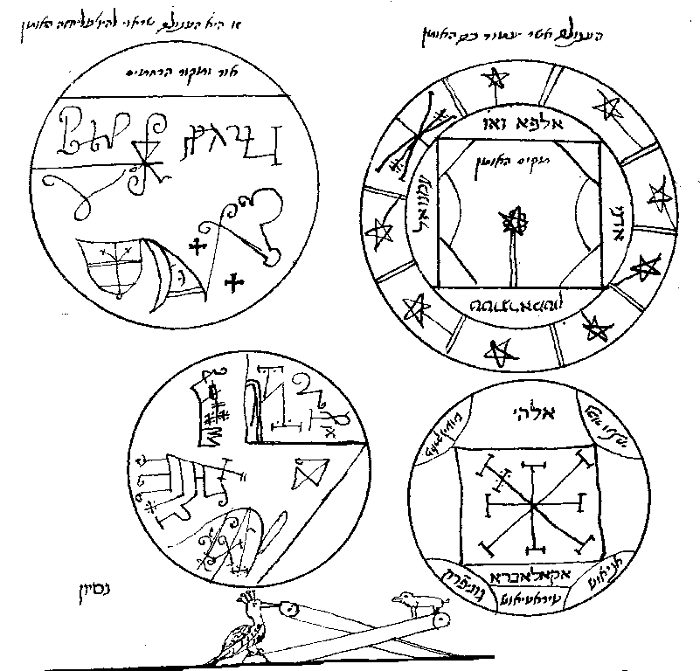 🇮🇹 Italy and 2 moreKey of SolomonClavicula Salomonis
A Renaissance grimoire attributed to King Solomon, detailing ritual preparations and invocations.Text · Cursing and harm · Love and attraction Historical
🇮🇹 Italy and 2 moreKey of SolomonClavicula Salomonis
A Renaissance grimoire attributed to King Solomon, detailing ritual preparations and invocations.Text · Cursing and harm · Love and attraction Historical
Related elsewhere
All belief 🇮🇳 India and 5 moreAstrology
A divinatory practice that reads human fate through the positions of celestial bodies.Belief · Seeing and foretelling · Luck and prosperity Living
🇮🇳 India and 5 moreAstrology
A divinatory practice that reads human fate through the positions of celestial bodies.Belief · Seeing and foretelling · Luck and prosperity Living
 🇮🇳 India and 2 morePalmistry
A divination method that interprets the lines and shapes of the hand to predict fate or reveal character.Oracle · Seeing and foretelling · Power and authority Living
🇮🇳 India and 2 morePalmistry
A divination method that interprets the lines and shapes of the hand to predict fate or reveal character.Oracle · Seeing and foretelling · Power and authority Living
 🇨🇳 China and 3 moreChinese dragon龍
A legendary water deity and imperial symbol in East Asian cultureBeing · Protection · Luck and prosperity Historical
🇨🇳 China and 3 moreChinese dragon龍
A legendary water deity and imperial symbol in East Asian cultureBeing · Protection · Luck and prosperity Historical
 🇮🇳 India and 1 moreGarba
A Gujarati circle dance performed around a central symbol during NavaratriIllusion · Power and authority · Luck and prosperity Living
🇮🇳 India and 1 moreGarba
A Gujarati circle dance performed around a central symbol during NavaratriIllusion · Power and authority · Luck and prosperity Living