Four Palaces
In its own language: Tứ Phủ
A Vietnamese spiritual system where mediums channel four elemental goddesses.
The Four Palaces, or Tứ Phủ, are a framework of spirits in Vietnamese indigenous religion. Mediums wear specific colours to match the four goddesses they channel during rituals. These spirits govern the heavens, forests, water, and earth.
- The Four Palaces are spirits in Vietnamese indigenous religion.
- Mediums wear clothes matching the colour of the possessed spirit.
- Each palace is ruled by a specific mother goddess.
- The system is distinct from the Trần Dynasty spirit.
What it is
The Four Palaces, known as Tứ Phủ, represent a collection of spirits within Vietnamese indigenous religion. These entities inhabit four distinct realms: the Heavens, the Forest, the Water, and the Earth. Each realm is overseen by a specific mother goddess. The system is clearly separated from other venerated figures, such as the Trần Dynasty spirit.
How it is done
Rituals involve mediums entering a state of spirit possession. When a medium is guided by one of the Four Palaces, they wear clothing dyed in a specific colour. This garment signals which of the four deities is currently active through the practitioner.
Tools and materials
The primary tool used in these ceremonies is the medium's attire. The fabric is chosen to match the designated token colour of the possessing spirit. This visual marker helps observers identify the active deity.
Four Palaces, drawn and placed
- Living
- Revived
- Fading
- Historical
- Legendary
- Performed
- Lineage
- Vietnamese indigenous religion
What it is for
Practitioners engage in these rituals to commune with the palace spirits. The goal is to allow the medium to channel the authority of the sky, highlands, water, or earth. This connection facilitates communication between the human and spirit worlds.
Who does it
The practice relies on mediums who serve as vessels for the deities. These individuals are selected or trained to host the spirits of the Four Palaces. Their role is to embody the goddesses during the ceremony.
Peoples and places
This spiritual framework belongs to the indigenous traditions of Vietnam. It remains an active part of the religious landscape, with altars dedicated to the spirits located in numerous temples across the country.
At a glance: who, where and when
What people believe
The core belief holds that four powerful spirits reside in their respective palaces. Each palace is ruled by a mother goddess, including mẫu Thượng Thiên for the upper sky, mẫu Thượng Ngàn for the highlands, mẫu Thoải for water, and mẫu Địa Phủ for the earth.
Compare and confuse
The Four Palaces are distinguished from other local spiritual figures. For instance, the Trần Triều spirit, associated with the Trần Dynasty and its supreme commander, is treated as a completely separate entity from the four palace deities.
Questions people ask about Four Palaces
What are the Four Palaces?
They are a group of spirits in Vietnamese indigenous religion. The spirits reside in realms governing the heavens, forests, water, and earth.
Who channels the Four Palaces?
Mediums act as vessels for these spirits. During rituals, they become possessed by one of the four palace goddesses.
How can you tell which spirit is present?
The medium wears clothes in a specific colour. This colour matches the token colour assigned to the particular palace spirit.
Good reading and sources
The facts on this page come from the Wikipedia article "Four Palaces", written by its contributors and used under the CC BY-SA 4.0 licence, and from its Wikidata record (CC0). EveryJaadu rewrote the text in its own words, with AI assistance, and compares every page with the article to make sure no passage is copied. It may be reused under the same CC BY-SA 4.0 licence with a link back.
It may contain mistakes. Names and customs differ from one community to the next, and some knowledge is closed to outsiders and left out here. This page describes belief and practice. It does not say that any of it works, it is not a how-to, and it is not medical advice. If something is wrong, tell us. Last refreshed 2026-10-14.
More from Vietnam
All the entries from Vietnam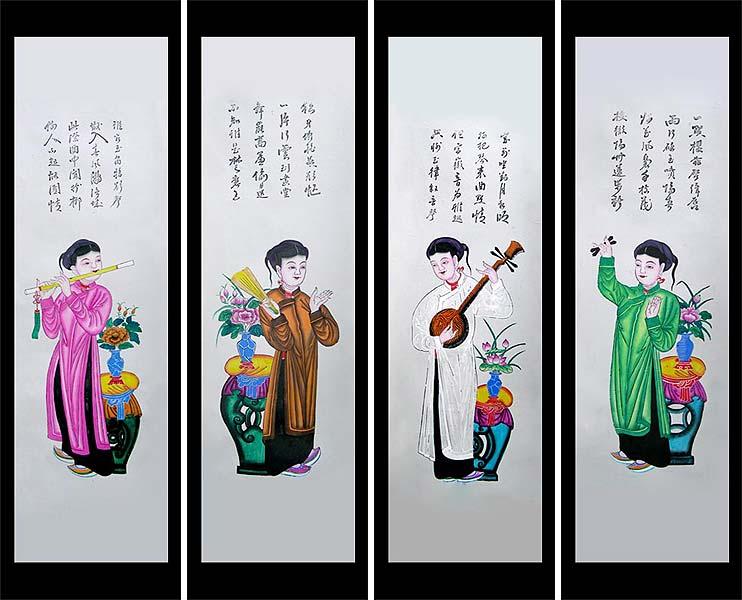 🇻🇳 Vietnam and 1 moreVietnamese folk religiontín ngưỡng dân gian Việt Nam
A collection of local spirit worship and ancestral veneration in VietnamTradition · Protection · Healing Living
🇻🇳 Vietnam and 1 moreVietnamese folk religiontín ngưỡng dân gian Việt Nam
A collection of local spirit worship and ancestral veneration in VietnamTradition · Protection · Healing Living
 🇻🇳 VietnamĐạo Mẫu
A Vietnamese shamanic tradition honouring mother goddesses through ritual performance.Tradition · Speaking with spirits and the dead · Power and authority Living
🇻🇳 VietnamĐạo Mẫu
A Vietnamese shamanic tradition honouring mother goddesses through ritual performance.Tradition · Speaking with spirits and the dead · Power and authority Living
 🇻🇳 Vietnam and 5 moreTếtTết Nguyên Đán
The Vietnamese lunisolar new year and the most important annual celebration in VietnamTradition · Luck and prosperity · Speaking with spirits and the dead Living
🇻🇳 Vietnam and 5 moreTếtTết Nguyên Đán
The Vietnamese lunisolar new year and the most important annual celebration in VietnamTradition · Luck and prosperity · Speaking with spirits and the dead Living
 🇱🇦 Laos and 3 moreTai folk religionສາສະໜາຜີ
Spirits, ancestor rites, and soul-calling ceremonies of the Tai peoplesTradition · Protection · Healing Living
🇱🇦 Laos and 3 moreTai folk religionສາສະໜາຜີ
Spirits, ancestor rites, and soul-calling ceremonies of the Tai peoplesTradition · Protection · Healing Living
Related elsewhere
All tradition 🇮🇳 IndiaChakraचक्र
Meditation points in the subtle body used in Hindu and Buddhist yogaTradition · Speaking with spirits and the dead · Change and initiation Living
🇮🇳 IndiaChakraचक्र
Meditation points in the subtle body used in Hindu and Buddhist yogaTradition · Speaking with spirits and the dead · Change and initiation Living
 🇮🇶 Iraq and 5 moreGrimoire
A textbook containing instructions for spells, rituals, and the creation of magical objects.Text · Protection · Healing Historical
🇮🇶 Iraq and 5 moreGrimoire
A textbook containing instructions for spells, rituals, and the creation of magical objects.Text · Protection · Healing Historical
 🇮🇹 ItalyEtruscan religion
The polytheistic beliefs and divination practices of the ancient Etruscans of ItalyTradition · Seeing and foretelling · Speaking with spirits and the dead Historical
🇮🇹 ItalyEtruscan religion
The polytheistic beliefs and divination practices of the ancient Etruscans of ItalyTradition · Seeing and foretelling · Speaking with spirits and the dead Historical
 🇫🇷 France and 5 moreKabbalahקַבָּלָה
An esoteric school of thought within Judaism focused on the hidden meanings of scripture and the divine.Tradition · Speaking with spirits and the dead · Change and initiation Living
🇫🇷 France and 5 moreKabbalahקַבָּלָה
An esoteric school of thought within Judaism focused on the hidden meanings of scripture and the divine.Tradition · Speaking with spirits and the dead · Change and initiation Living