
Four-leaf clover
from the physical description of the leaf structure
A rare plant mutation believed to bring good luck and used as a symbol of fortune.
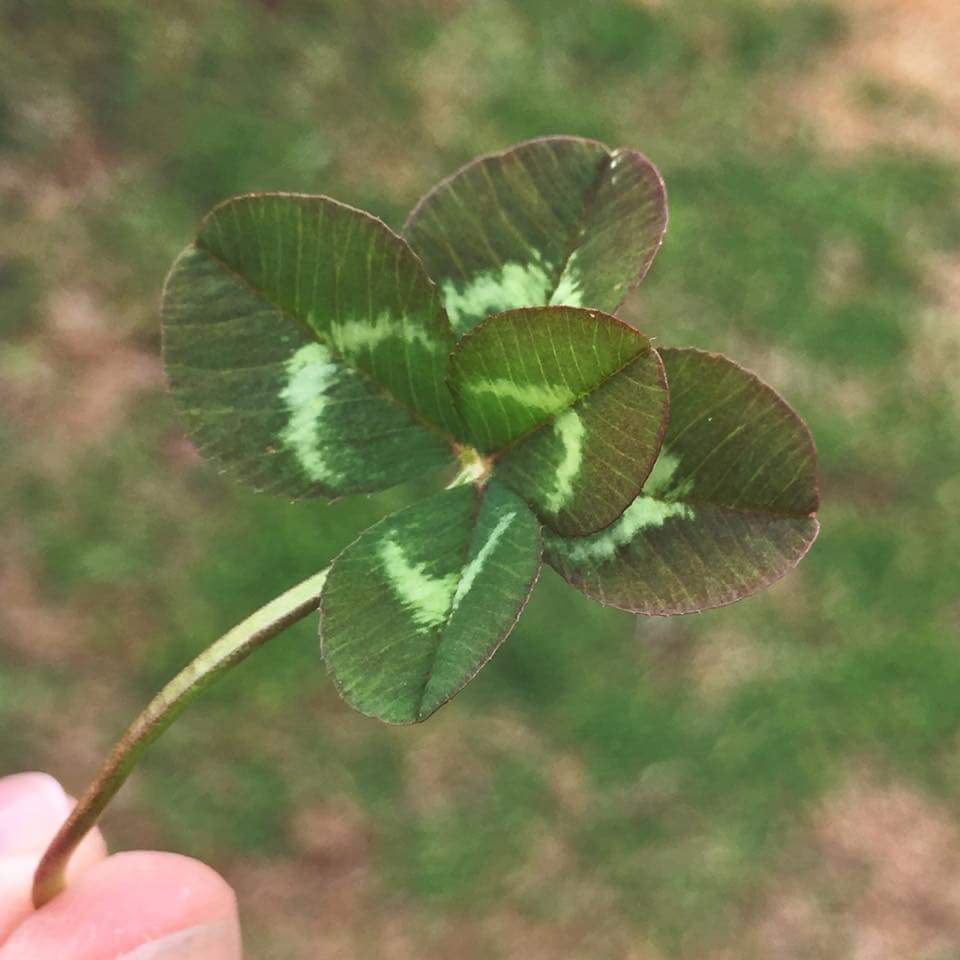
The four-leaf clover is a genetic anomaly of the common three-leaf clover that appears in roughly one out of five thousand plants. It is widely collected as a charm for good fortune, with beliefs about its power dating back to at least the seventeenth century. The object serves as a popular hobby and a cultural icon across Europe and Asia.
- One in approximately 5,000 white clovers is a four-leaf variant.
- Records show clovers with over sixty leaflets have been bred.
- Christians associate the four leaves with hope, faith, love, and luck.
- Ireland is a key location for collectors of rare multi-leaf clovers.
- Fertilizers and hormones can increase the rate of the mutation.
What it is
This entry describes a four-leaf clover, which is a rare biological variation of the standard white clover plant. Instead of the usual three leaflets, these plants produce four. While botanically a misnomer since the entire plant has many leaves, the term refers to individual leaf structures. The object is primarily known as a token of good fortune. People gather them to carry as lucky charms or display them in collections. The rarity of the find contributes to its value as a magical or symbolic item.
Where it comes from
Beliefs surrounding the four-leaf clover date back to at least the seventeenth century. Historical accounts describe sorceresses gathering the plants during the full moon to mix with other ingredients. By the nineteenth century, children associated the plant with fairies and perfect happiness. The modern understanding of its rarity comes from scientific surveys, such as a 2017 study in Europe that found one in every five thousand clovers matches this description. This frequency is much higher than the older belief of one in ten thousand.
How it is done
Collectors search for the plant by visually scanning patches of clover. The technique involves looking for visual breaks in the pattern, as three-leaf clovers form triangles while four-leaf ones form squares. Finding them is considered easiest in the spring before the grass is cut. Some enthusiasts cultivate specific strains that naturally produce more leaflets. Others use fertilizers containing phosphates or plant hormones called auxins to increase the rate of mutations in the soil.
Tools and materials
The primary tool is the white clover plant itself. Collectors may use fertilizer to encourage growth. In some cases, radiation is used on flowers during pollination to create cultivars that produce up to sixty percent four-leaf clovers. Genetic markers are also used by researchers to identify the presence of the trait without waiting for the plant to grow. Other plants like wood sorrel are sometimes mistaken for the real thing.
Four-leaf clover, drawn and placed
- Living
- Revived
- Fading
- Historical
- Legendary
- Performed
- Lineage
- European folk tradition
- Timing
- spring before mowing
What it is for
People seek the four-leaf clover for good luck. Christians have historically used the four leaves to represent hope, faith, love, and luck. Folk traditions suggest the plant grants the power to see fairies. It is also used as a decorative symbol by companies and organizations, including car manufacturers and space exploration firms, to signify performance or fortune.
Who does it
The practice is mainly done by households and hobbyists who collect the plants. Experts scan fields for the anomalies. Scientists and breeders work with the genetics to stabilize the trait. Collectors in Ireland prize five-leaf variants, known as rose clovers. Records are kept by individuals who find large numbers of the plants within set timeframes.
Peoples and places
The tradition is strong in Ireland, where collectors prize rare variants. Japan has a significant culture of finding and breeding multi-leaf clovers, with record holders emerging from there. Bulgaria and Estonia use the symbol in political contexts through agrarian parties. The United States has a history of commercial production and record-breaking collections. The belief in luck is widespread across these regions.
At a glance: who, where and when
Who does it
Peoples
Belief worlds


What people believe
The plant is believed to attract good fortune to the finder. Older stories claim it allows the holder to see supernatural beings like fairies. The rarity of the mutation is seen as a sign of special favor. Some traditions assign specific meanings to each leaflet, linking them to virtues like faith and love. The belief persists despite the scientific explanation of genetic and environmental causes.
When it is done
The best time to find the clovers is in the spring before the first mowing. Historical accounts mention gathering them at night during the full moon. Modern collecting is not tied to a specific festival but is done whenever the plants are accessible. Cultivation can occur year-round with controlled conditions.
How scholars and sceptics see it
Botanists study the genetic factors and environmental conditions that cause the mutation. Researchers have identified specific genes responsible for the four-leaf trait. They also map related traits like red flecks on the leaves. Scientists note that multiple causes, including recessive genes and somatic mutations, can apply to individual plants. Environmental factors like phosphate fertilizers and auxin hormones significantly increase the frequency of the anomaly.
Cautions and what is closed
Some plants sold as four-leaf clovers are actually different species like wood sorrel. Commercial farms produce the plants using genetic engineering or radiation, which may alter their natural status. Collectors should be aware of these distinctions. There are no known health risks associated with handling the plant.
Compare and confuse
The shamrock is a similar Irish symbol but typically refers to the three-leaf variety. Wood sorrel is often confused with the four-leaf clover due to its similar appearance. The quadrifoglio is the Italian term for the same plant structure, used prominently in automotive branding.
Questions people ask about Four-leaf clover
What is a four-leaf clover?
It is a rare genetic mutation of the common white clover that produces four leaflets instead of the usual three. It is widely recognized as a symbol of good luck.
Where does the belief in its luck come from?
The belief dates back to at least the seventeenth century. Historical texts describe sorceresses using the plant in rituals, and later folklore linked it to fairies and happiness.
How rare is a four-leaf clover?
Recent surveys indicate a frequency of about one in five thousand. This is twice as common as the traditional estimate of one in ten thousand.
Can you grow four-leaf clovers intentionally?
Yes. Breeders use specific cultivars, phosphate fertilizers, and plant hormones to increase the likelihood of the mutation appearing in new plants.
Good reading and sources
- Four-leaf clover on WikipediaEncyclopedia
- More photos on Wikimedia CommonsPhotos and video
- Wikidata recordOpen data
The facts on this page come from the Wikipedia article "Four-leaf clover", written by its contributors and used under the CC BY-SA 4.0 licence, and from its Wikidata record (CC0). EveryJaadu rewrote the text in its own words, with AI assistance, and compares every page with the article to make sure no passage is copied. It may be reused under the same CC BY-SA 4.0 licence with a link back.
It may contain mistakes. Names and customs differ from one community to the next, and some knowledge is closed to outsiders and left out here. This page describes belief and practice. It does not say that any of it works, it is not a how-to, and it is not medical advice. If something is wrong, tell us. Last refreshed 2026-10-05.
More from Ireland
All the entries from Ireland 🇬🇧 United Kingdom and 2 moreKing ArthurBrenin Arthur
A legendary British king and folk hero of medieval literature and Welsh mythologyFigure · Power and authority · Wonder and entertainment Legendary
🇬🇧 United Kingdom and 2 moreKing ArthurBrenin Arthur
A legendary British king and folk hero of medieval literature and Welsh mythologyFigure · Power and authority · Wonder and entertainment Legendary
 🇮🇪 IrelandLia Fáil
A standing stone at the Hill of Tara used for royal inaugurations in Irish legendCharm · Power and authority Historical
🇮🇪 IrelandLia Fáil
A standing stone at the Hill of Tara used for royal inaugurations in Irish legendCharm · Power and authority Historical
 🇮🇪 Ireland and 5 moreCairn
A human-made stack of stones used as a marker, memorial, or religious symbol across many cultures.Tradition · Protection · Speaking with spirits and the dead Living
🇮🇪 Ireland and 5 moreCairn
A human-made stack of stones used as a marker, memorial, or religious symbol across many cultures.Tradition · Protection · Speaking with spirits and the dead Living
 🇬🇧 United Kingdom and 4 moreCorn dolly
A woven straw figure made from the last sheaf of a European harvest to house the crop spirit.Tradition · Protection · Speaking with spirits and the dead Revived
🇬🇧 United Kingdom and 4 moreCorn dolly
A woven straw figure made from the last sheaf of a European harvest to house the crop spirit.Tradition · Protection · Speaking with spirits and the dead Revived
Related elsewhere
All charm 🇮🇳 India and 5 moreAstrology
A divinatory practice that reads human fate through the positions of celestial bodies.Belief · Seeing and foretelling · Luck and prosperity Living
🇮🇳 India and 5 moreAstrology
A divinatory practice that reads human fate through the positions of celestial bodies.Belief · Seeing and foretelling · Luck and prosperity Living
 🇪🇬 EgyptCurse
A spoken wish for misfortune to befall a person or placeBelief · Cursing and harm · Luck and prosperity Historical
🇪🇬 EgyptCurse
A spoken wish for misfortune to befall a person or placeBelief · Cursing and harm · Luck and prosperity Historical
 🇪🇬 Egypt and 3 moreAmulet
A portable object worn or carried to ward off harm and invite fortuneCharm · Protection · Luck and prosperity Living
🇪🇬 Egypt and 3 moreAmulet
A portable object worn or carried to ward off harm and invite fortuneCharm · Protection · Luck and prosperity Living
 🇨🇳 China and 3 moreChinese dragon龍
A legendary water deity and imperial symbol in East Asian cultureBeing · Protection · Luck and prosperity Historical
🇨🇳 China and 3 moreChinese dragon龍
A legendary water deity and imperial symbol in East Asian cultureBeing · Protection · Luck and prosperity Historical