Dominican Vudú
In its own language: Vudú Dominicano
A syncretic Afro-Caribbean religion on Hispaniola with its own spirit lineages and titles.
Dominican Vudú is a religious tradition practiced in the Dominican Republic. It blends African spiritual roots with Catholic symbols. Practitioners serve specific spirits through unique initiation paths.
- Uses the Tcha-Tcha lineage with maracas.
- Priests are called Papa Bokos or Mama Mambos.
- Syncretizes lwa with Catholic saints.
- Initiation lasts three to nine days.
- Santa Barbara Africana leads the Petro family.
What it is
This faith operates on the island of Hispaniola. It mixes West African beliefs with Roman Catholic imagery. The system recognizes many spirits called lwa or loa. These entities manage human affairs like love, justice, and war. Followers build relationships with these beings through service and ritual. The practice stands apart from other Caribbean forms by using distinct spiritual lineages.
Where it comes from
The tradition grew from African-Caribbean roots. It developed in the region now known as the Dominican Republic. The island shares history with Haiti, where similar practices exist. One lineage, called Tcha-Tcha, uses maracas for ceremony. This path is considered older than the Asson lineage found in neighboring Haiti. The two traditions share deep historical ties across the border.
How it is done
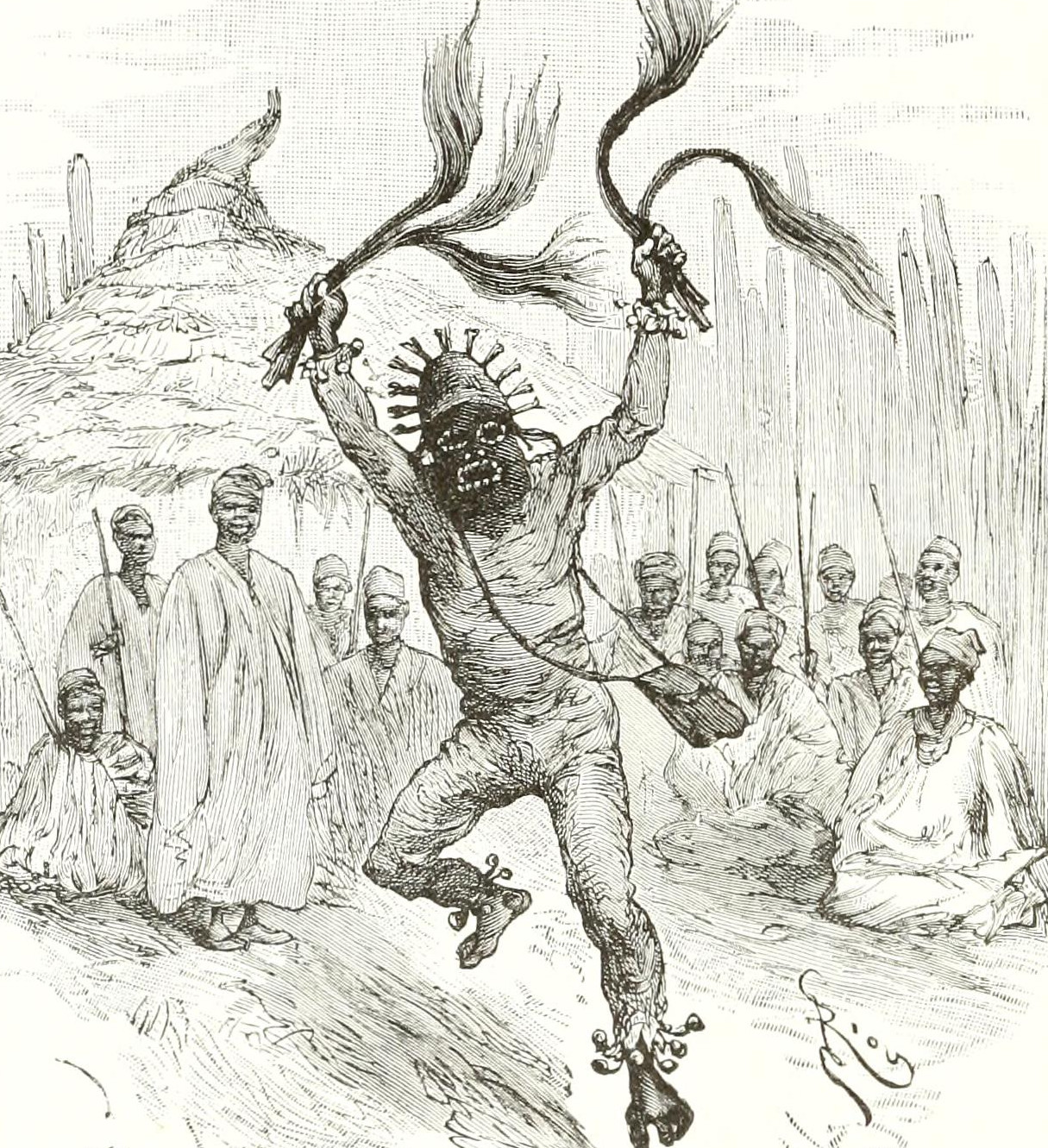
Rituals involve calling upon spirits through music and dance. The Tcha-Tcha lineage relies on the maraca, a rattle instrument. Initiates undergo a process that lasts three to nine days. They must also serve their local community. Successful candidates receive titles indicating their rank. Men become Papa Bokos or Papa Loa. Women become Mama Mambos or Mama Loa.
Tools and materials
The maraca serves as a key ceremonial object. It is known locally as a tcha-tcha. This tool helps guide the spiritual atmosphere. Other materials are not detailed in the available records. The focus remains on the voice of the spirit rather than physical artifacts.
Dominican Vudú, drawn and placed
- Living
- Revived
- Fading
- Historical
- Legendary
- Performed
- Lineage
- Tcha-Tcha
What it is for
Followers seek guidance from various spirits. Anaisa Pye brings happiness and love. Bel Belcan offers protection against evil forces. Candelo sé Difé guards against fire and danger. Santa Marta Dominadora influences relationships between men. Ogun Balenyo supports warriors. Baron connects with death. Metresili handles beauty and wealth. Santa Barbara Africana leads the Petro family of spirits.
Who does it
Leaders are chosen after long training. The highest level takes up to nine days to complete. Candidates must prove their dedication to the group. Titles reflect this achievement. Male priests are called Papa Bokos. Female priests are called Mama Mambos. These leaders act as bridges between people and the spirit world.
Peoples and places
The religion thrives in the Dominican Republic. It also has strong connections to Haiti. Both cultures share the island of Hispaniola. The Tcha-Tcha lineage predates the more famous Haitian Asson style. Despite differences, the two groups remain linked by shared history and spiritual ancestry.
At a glance: who, where and when
Who does it
Peoples
Belief worlds
What people believe
Spirits are central to this worldview. Each lwa has a specific role. Catholic saints represent these same beings. Anaisa Pye matches St. Anne. Bel Belcan matches St. Michael. Candelo sé Difé matches St. Charles Borromeo. Santa Marta Dominadora matches St. Martha. Ogun Balenyo matches St. James. Baron matches St. Elias. Metresili matches Our Lady of Sorrows. Santa Barbara Africana matches the Black Madonna.
When it is done
Each spirit has a dedicated feast day. Anaisa Pye is honored on July 26. Bel Belcan is honored on September 29. Candelo sé Difé is honored on November 4. Santa Marta Dominadora is honored on July 29. Ogun Balenyo is honored on July 25. Baron is honored on November 2. These dates mark important times for worship.
How scholars and sceptics see it
Researchers note the heavy blending of African and Catholic elements. The term 'syncretic' describes this mix. Scholars observe how African deities took on Christian faces. This allowed preservation of old beliefs under new names. The distinction between Tcha-Tcha and Asson lineages shows regional variation within the broader tradition.
Cautions and what is closed
Initiation requires significant time and commitment. The process can last several days. Participants must serve their community first. There are no public details about restricted rites. Outsiders are not invited into the inner circles. The hierarchy remains closed to those who have not completed the full path.
Compare and confuse
This faith resembles Haitian Vodou. Both use lwa and Catholic saints. The main difference lies in the lineage. Dominican Vudú uses Tcha-Tcha. Haitian Vodou often uses Asson. The Tcha-Tcha style is older. Both traditions share the same island home and African roots.
Law and persecution
The practice exists openly in the Dominican Republic. It is recognized as part of the local cultural heritage. No persecution or suppression is recorded in the provided text.
Today
The religion continues to be practiced today. It remains active in the Dominican Republic. The Tcha-Tcha lineage persists alongside newer styles. Practitioners maintain their titles and roles. The connection to Haiti remains strong despite political borders.
Questions people ask about Dominican Vudú
What is Dominican Vudú?
It is a syncretic religion in the Dominican Republic. It blends African beliefs with Catholic saints. Practitioners serve spirits called lwa through ritual and service.
How does it differ from Haitian Vodou?
It uses the Tcha-Tcha lineage. This path relies on maracas. Haitian Vodou often uses the Asson lineage. The Dominican style is considered older.
Who leads the ceremonies?
Male priests are called Papa Bokos. Female priests are called Mama Mambos. They complete an initiation lasting up to nine days.
Which spirits are worshipped?
Believers honor lwa like Anaisa Pye and Baron. Each spirit manages aspects like love or death. They are linked to Catholic saints.
Good reading and sources
The facts on this page come from the Wikipedia article "Dominican Vudú", written by its contributors and used under the CC BY-SA 4.0 licence, and from its Wikidata record (CC0). EveryJaadu rewrote the text in its own words, with AI assistance, and compares every page with the article to make sure no passage is copied. It may be reused under the same CC BY-SA 4.0 licence with a link back.
It may contain mistakes. Names and customs differ from one community to the next, and some knowledge is closed to outsiders and left out here. This page describes belief and practice. It does not say that any of it works, it is not a how-to, and it is not medical advice. If something is wrong, tell us. Last refreshed 2026-10-06.
More from the Dominican Republic
All the entries from the Dominican Republic 🇲🇽 Mexico and 5 moreWitchcraft in Latin AmericaBrujería
A syncretic blend of Indigenous, African, and European magical practices across Latin AmericaTradition · Protection · Healing Living
🇲🇽 Mexico and 5 moreWitchcraft in Latin AmericaBrujería
A syncretic blend of Indigenous, African, and European magical practices across Latin AmericaTradition · Protection · Healing Living
 🇭🇹 Haiti and 1 moreEzili DantorÈzili Dantò
A fierce mother spirit in Haitian Vodou who protects the marginalized and demands loyalty.Being · Protection · Love and attraction Living
🇧🇯 Benin and 2 morePapa Legba
A loa who stands at the crossroads and opens the gate between people and spiritsBeing · Speaking with spirits and the dead · Power and authority Living
🇭🇹 Haiti and 1 moreEzili DantorÈzili Dantò
A fierce mother spirit in Haitian Vodou who protects the marginalized and demands loyalty.Being · Protection · Love and attraction Living
🇧🇯 Benin and 2 morePapa Legba
A loa who stands at the crossroads and opens the gate between people and spiritsBeing · Speaking with spirits and the dead · Power and authority Living
 🇲🇽 Mexico and 5 moreCopal
A tree resin used as incense in Mesoamerica and varnish in EuropeSubstance · Speaking with spirits and the dead · Cleansing and purification Living
🇲🇽 Mexico and 5 moreCopal
A tree resin used as incense in Mesoamerica and varnish in EuropeSubstance · Speaking with spirits and the dead · Cleansing and purification Living
Related elsewhere
All tradition 🇵🇭 Philippines and 1 moreAgimatAnting-anting
A Filipino amulet or charm believed to grant protection, power, and supernatural abilities.Charm · Protection · Love and attraction Living
🇵🇭 Philippines and 1 moreAgimatAnting-anting
A Filipino amulet or charm believed to grant protection, power, and supernatural abilities.Charm · Protection · Love and attraction Living
 🇮🇳 India and 5 moreHanumanहनुमान्
A divine vanara deity of devotion and strength in HinduismBeing · Protection · Power and authority Living
🇮🇳 India and 5 moreHanumanहनुमान्
A divine vanara deity of devotion and strength in HinduismBeing · Protection · Power and authority Living
 🇨🇳 China and 3 moreChinese dragon龍
A legendary water deity and imperial symbol in East Asian cultureBeing · Protection · Luck and prosperity Historical
🇨🇳 China and 3 moreChinese dragon龍
A legendary water deity and imperial symbol in East Asian cultureBeing · Protection · Luck and prosperity Historical
 🇮🇳 India and 2 moreHomaहोम
A fire ritual found across Asian religions where offerings are burned as a votive exchange with the divine.Rite · Protection · Speaking with spirits and the dead Living
🇮🇳 India and 2 moreHomaहोम
A fire ritual found across Asian religions where offerings are burned as a votive exchange with the divine.Rite · Protection · Speaking with spirits and the dead Living