Djákninn á Myrká
from Icelandic words meaning 'deacon' and 'dark river'
An Icelandic ghost story about a dead deacon who returns for his bride on Christmas Eve
Djákninn á Myrká is an Icelandic folk tale classified as ATU 365. It tells of a deceased deacon who rides to claim his living fiancée on Christmas Eve, only to be stopped when she rings the church bell.
- Classified as ATU 365 The Dead Bridegroom
- First published in 1860 by Konrad Maurer
- Ghost cannot say the word for God
- Set in Eyjafjörður, Iceland
- Adapted into film and sculpture
What it is
Djákninn á Myrká is a well-known Icelandic folk tale featuring a revenant. The story centers on a deacon who drowned in a river but returns from the dead on Christmas Eve to take his fiancée to his grave. The narrative follows the classic pattern of a supernatural adversary attempting to carry off a living lover. The tale is deeply embedded in Icelandic cultural memory, reflecting the community's long-standing interest in ghost stories and the supernatural.
Where it comes from
The tale originates from the region of Eyjafjörður in northern Iceland. Its specific author is unknown, as is typical for oral traditions. It was first recorded in print in Konrad Maurer's 1860 collection Isländische Volkssagen der Gegenwart. It appeared in Icelandic in 1862 in Jón Árnason's Íslenzkar þjóðsögur og æfintýri. Scholars classify it under Aarne-Thompson-Uther type 365, linking it to broader European legends of the dead returning for their brides.
How it is done
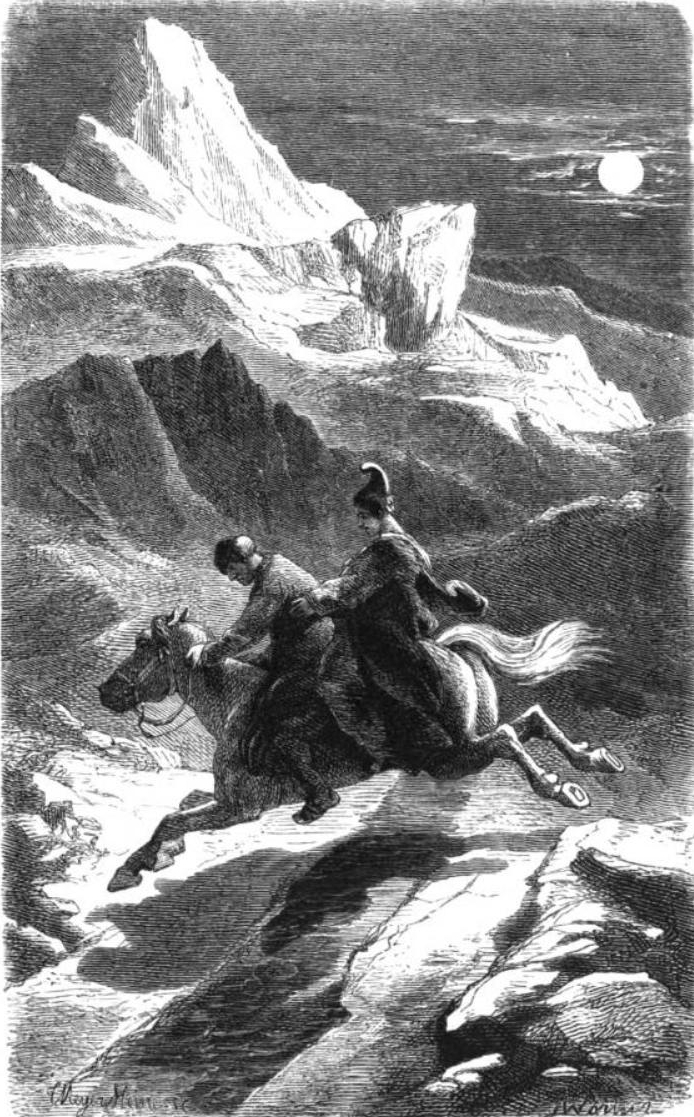
The deacon rides his horse Faxi across the frozen landscape to the farm of his beloved, Guðrún. He arrives dressed in wedding attire, though his face is hidden. During the journey back, his hat falls, revealing a fatal head wound. When he attempts to pull Guðrún into an open grave at his home, she grabs a church bell rope. The ringing summons help, causing the ghost to retreat into the earth with a piece of her coat. An exorcist is later called to ensure the spirit does not return.
Tools and materials
The story relies on specific physical objects to drive the plot. The horse Faxi serves as the vehicle for the undead journey. The church bell acts as a protective tool, its sound breaking the ghost's power. The open grave represents the destination of the soul. The deacon's hidden face and scarf are used to conceal his death until the final moment. These items anchor the supernatural events in a tangible reality.
Djákninn á Myrká, drawn and placed
- Living
- Revived
- Fading
- Historical
- Legendary
- Performed
- Lineage
- ATU 365 The Dead Bridegroom
- Timing
- Christmas Eve
What it is for
The tale serves as a cautionary legend about the dangers of crossing boundaries between the living and the dead. It explores themes of fate and the inevitability of death. The story also highlights the protective power of religious symbols and rituals, such as the church bell and the exorcist. For listeners, it provides entertainment while reinforcing cultural values regarding respect for the deceased and the sanctity of life.
Who does it
The primary figure is the Deacon himself, a religious official who becomes a spectral threat after death. Guðrún acts as the survivor who uses quick thinking and faith to escape. An exorcist appears at the end to resolve the haunting. The story does not describe a formal practice or ritual performed by a specific group, but rather recounts a singular historical event within the folklore tradition.
Peoples and places
The tale is specific to Iceland and the Icelandic people. It reflects local geography, naming real places like Myrká and Hörgá river. The linguistic detail that ghosts cannot say the word for God adds a layer of cultural specificity. While similar stories exist across Europe, the Icelandic version incorporates unique elements of Norse folklore and local landscape, making it a distinct part of the national heritage.
At a glance: who, where and when
What people believe
The narrative operates within a worldview where death is not an absolute end. Spirits can return to the physical world, particularly on significant nights like Christmas Eve. The story suggests that the dead may have unfinished business or possess a dark desire to reunite with the living. However, it also affirms that divine protection exists, as shown by the effectiveness of the church bell and the exorcist against the malevolent force.
When it is done
The central event occurs on Christmas Eve, a time traditionally associated with heightened spiritual activity in many cultures. The timing underscores the vulnerability of the living during the holiday season. The story mentions the burial taking place a week before Christmas, setting the stage for the ghost's return. This seasonal placement makes the tale a staple of winter storytelling in Iceland.
How scholars and sceptics see it
Scholars like John Lindow have analyzed the tale as part of a wider European tradition of the dead bridegroom. Researchers note the linguistic peculiarity of the ghost calling the woman Garún instead of Guðrún, attributing it to a taboo against speaking divine names. Academic studies examine the tale's structure, its use of verse, and its role in preserving the cultural memory of religious change in Iceland.
Cautions and what is closed
The story depicts the danger posed by restless spirits. It illustrates the potential harm that unresolved deaths can bring to the living community. The tale warns against ignoring signs of death or failing to perform proper rites. It also highlights the psychological impact of hauntings, noting how the disturbance affects the sleep and well-being of those nearby.
Compare and confuse
Djákninn á Myrká is closely related to other ballads and tales like Lenore and Sweet William's Ghost. These stories share the motif of a dead lover returning to claim their partner. However, the Icelandic version distinguishes itself through its specific setting and the detailed interaction with the church bell. It shares similarities with other revenant figures like the Draugr, but focuses more on romantic tragedy than pure malice.
Law and persecution
The tale does not involve legal issues or persecution. It is a work of fiction and folklore. There are no records of the story being banned or suppressed. It remains a celebrated part of Icelandic literary history, adapted into various forms of art without controversy.
Questions people ask about Djákninn á Myrká
What is Djákninn á Myrká?
It is an Icelandic folk tale about a deacon who drowns but returns on Christmas Eve to take his fiancée to his grave. The story is a classic example of the dead bridegroom motif found across Europe.
Why does the ghost call her Garún?
In Icelandic legend, ghosts are forbidden from saying the word for God. Since Guðrún's name starts with that word, the spirit calls her Garún to avoid breaking the taboo.
How does the story end?
Guðrún rings a church bell to summon help. The sound forces the ghost to retreat into his grave, leaving behind half of her coat. An exorcist is later called to ensure the spirit stays buried.
Where did this tale originate?
The story originates from northern Iceland, specifically the region around Eyjafjörður. It was collected in the 19th century and has since become a popular part of Icelandic cultural heritage.
Good reading and sources
The facts on this page come from the Wikipedia article "Djákninn á Myrká", written by its contributors and used under the CC BY-SA 4.0 licence, and from its Wikidata record (CC0). EveryJaadu rewrote the text in its own words, with AI assistance, and compares every page with the article to make sure no passage is copied. It may be reused under the same CC BY-SA 4.0 licence with a link back.
It may contain mistakes. Names and customs differ from one community to the next, and some knowledge is closed to outsiders and left out here. This page describes belief and practice. It does not say that any of it works, it is not a how-to, and it is not medical advice. If something is wrong, tell us. Last refreshed 2026-10-07.
More from Iceland
All the entries from Iceland 🇸🇪 Sweden and 2 moreFreyja
Norse goddess of love, war, and seiðr magic who rides a chariot pulled by catsBeing · Love and attraction · Seeing and foretelling Legendary
🇮🇸 IcelandHjúki and Bil
A brother and sister pair from Norse mythology who follow the Moon across the skyFigure Legendary
🇸🇪 Sweden and 2 moreFreyja
Norse goddess of love, war, and seiðr magic who rides a chariot pulled by catsBeing · Love and attraction · Seeing and foretelling Legendary
🇮🇸 IcelandHjúki and Bil
A brother and sister pair from Norse mythology who follow the Moon across the skyFigure Legendary
 🇬🇷 Greece and 1 moreSea Swine
A mythical sea creature depicted with dragon feet and a navel eye in early mapsFigure · Wonder and entertainment Legendary
🇬🇷 Greece and 1 moreSea Swine
A mythical sea creature depicted with dragon feet and a navel eye in early mapsFigure · Wonder and entertainment Legendary
 🇸🇪 Sweden and 4 moreStarkadStarkaðr
A Norse warrior cursed to commit crimes across three lifetimesFigure · Cursing and harm Legendary
🇸🇪 Sweden and 4 moreStarkadStarkaðr
A Norse warrior cursed to commit crimes across three lifetimesFigure · Cursing and harm Legendary
Related elsewhere
All figure 🇪🇬 Egypt and 1 moreLilithלִילִית
A feminine figure from Mesopotamian and Jewish mythology, often depicted as a night demon or spirit.Being · Cursing and harm Legendary
🇪🇬 Egypt and 1 moreLilithלִילִית
A feminine figure from Mesopotamian and Jewish mythology, often depicted as a night demon or spirit.Being · Cursing and harm Legendary
 🇪🇬 EgyptCurse
A spoken wish for misfortune to befall a person or placeBelief · Cursing and harm · Luck and prosperity Historical
🇪🇬 EgyptCurse
A spoken wish for misfortune to befall a person or placeBelief · Cursing and harm · Luck and prosperity Historical
 🇹🇷 Turkey and 5 moreEvil eye
A curse caused by an envious look and the charms used to block itBelief · Protection · Cursing and harm Living
🇹🇷 Turkey and 5 moreEvil eye
A curse caused by an envious look and the charms used to block itBelief · Protection · Cursing and harm Living
 🇮🇶 Iraq and 1 moreRabisu
A wind spirit in Akkadian myth sent to correct human transgressionsBeing · Cursing and harm · Cleansing and purification Historical
🇮🇶 Iraq and 1 moreRabisu
A wind spirit in Akkadian myth sent to correct human transgressionsBeing · Cursing and harm · Cleansing and purification Historical