Aurea Catena Homeri
Latin: aurea catena Homeri, the golden chain of Homer
A German hermetic book from 1723 on the origin of nature and natural things
A German hermetic book on the origin of nature and natural things, first printed in Leipzig in 1723. Anton Kirchweger, who died in 1746, is named as its editor or its author; Pietists read it, and the young Goethe was influenced by it.
- First printed in Leipzig in 1723, in German
- Anton Kirchweger, named as editor or author, died on 8 February 1746
- Pietists read the book, and the young Goethe came under its influence
- A Latin edition appeared in 1757; another was issued at Frankfurt in 1762
- Part of an English translation ran in the Theosophical Society journal Lucifer in 1891
What it is
The book is a hermetic work in German, that is, a piece of esoteric writing. Its Latin title translates as the Golden Chain of Homer, and the fuller German title calls it an account of where nature and natural things come from. The first printing was in Leipzig in 1723. Two more German editions followed, in 1728 and 1738. Anton Kirchweger, who died on 8 February 1746, is identified as either the book's editor or its author. Pietists read it, and it influenced the young Goethe.
Where it comes from
After the first German printing, further editions came out in 1728 and 1738. A Latin version was issued in 1757, and a second Latin version appeared in Frankfurt in 1762. Who made the book is not certain. Kirchweger is described as either its editor or its author, and he died in February 1746, before several of these later editions were printed. The 1723 edition presents itself as corrected from a full manuscript and as enlarged with a genuine third part.
Aurea Catena Homeri, drawn and placed
- Living
- Revived
- Fading
- Historical
- Legendary
- Performed
- Lineage
- hermetic tradition
At a glance: who, where and when
Belief worlds
What people believe
The fuller German title sets out the book's view of nature: natural things are born and begotten, they are preserved, and at the end they are broken down again into the first essence from which they came. One thing, the title says, gives birth to all of them and destroys them once more. The work promises to explain this plainly, in nature's own order, with natural reasons. Pietists were among those who read it.
Today
Nineteenth-century reprints kept the work in circulation, among them an edition dated 1880. An English rendering of sections of the text, made by Sigismund Bacstrom, dates from the closing decades of the 1700s, and in 1891 part of that translation was printed in Lucifer, the journal of the Theosophical Society. Kirchweger's name also appears on a second title, the Microscopium Basilii Valentini, published in 1781.
Questions people ask about Aurea Catena Homeri
What is the Aurea Catena Homeri?
A hermetic book in German. Its Latin title means the Golden Chain of Homer, and its subtitle describes the origin of nature and natural things. Anton Kirchweger, who died in 1746, is named as its editor or its author.
Where does the name come from?
The title is Latin, aurea catena Homeri, meaning the golden chain of Homer. The German editions carry a longer title as well, describing the work as an account of the origin of nature and natural things.
Who wrote it?
That is uncertain in the record. Kirchweger is called either the editor or the author of the book, and he died on 8 February 1746, so some later editions appeared after his death.
Why was the book noticed?
Pietists were among its readers, and the young Goethe was influenced by it. Its German and Latin editions spread through the 1700s, and part of an English translation was printed in a Theosophical journal in 1891.
Is there an English version?
Sections of the work were put into English by Sigismund Bacstrom at some point in the closing decades of the 1700s, and in 1891 a portion of that rendering appeared in Lucifer, the journal of the Theosophical Society.
Good reading and sources
The facts on this page come from the Wikipedia article "Anton Josef Kirchweger", written by its contributors and used under the CC BY-SA 4.0 licence, and from its Wikidata record (CC0). EveryJaadu rewrote the text in its own words, with AI assistance, and compares every page with the article to make sure no passage is copied. It may be reused under the same CC BY-SA 4.0 licence with a link back.
It may contain mistakes. Names and customs differ from one community to the next, and some knowledge is closed to outsiders and left out here. This page describes belief and practice. It does not say that any of it works, it is not a how-to, and it is not medical advice. If something is wrong, tell us. Last refreshed 2026-10-16.
More from Germany
All the entries from Germany 🇬🇧 United Kingdom and 5 moreAleister Crowley
English occultist and founder of the religion of ThelemaText · Power and authority · Change and initiation Living
🇬🇧 United Kingdom and 5 moreAleister Crowley
English occultist and founder of the religion of ThelemaText · Power and authority · Change and initiation Living
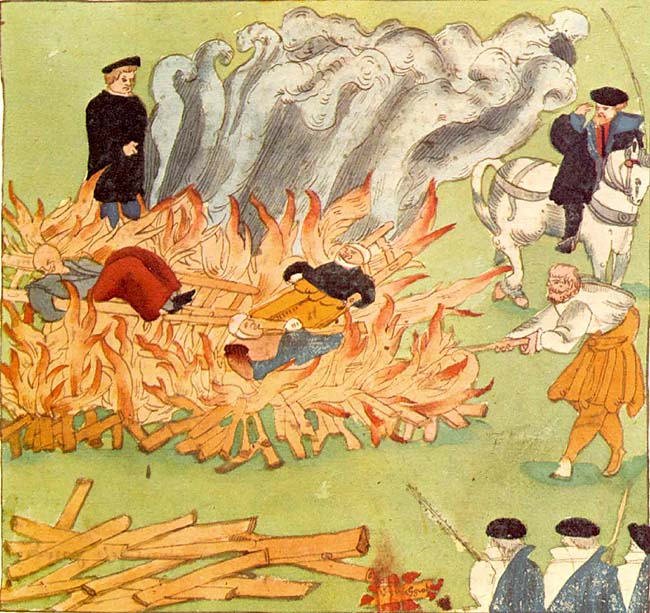 🇩🇪 GermanyMalleus Maleficarum
A 15th-century manual on witchcraft written by Heinrich KramerText · Cursing and harm · Binding and oaths Historical
🇩🇪 GermanyMalleus Maleficarum
A 15th-century manual on witchcraft written by Heinrich KramerText · Cursing and harm · Binding and oaths Historical
Related elsewhere
All text 🇮🇳 India and 1 moreMantraमन्त्रम्
A sacred sound or phrase repeated to focus the mind and invoke spiritual powerText · Speaking with spirits and the dead · Power and authority Living
🇪🇬 Egypt and 1 moreBook of Thoth
A collection of ancient Egyptian texts attributed to the god of writing and knowledge.Text · Power and authority · Seeing and foretelling Historical
🇮🇳 India and 1 moreMantraमन्त्रम्
A sacred sound or phrase repeated to focus the mind and invoke spiritual powerText · Speaking with spirits and the dead · Power and authority Living
🇪🇬 Egypt and 1 moreBook of Thoth
A collection of ancient Egyptian texts attributed to the god of writing and knowledge.Text · Power and authority · Seeing and foretelling Historical
 🇪🇸 Spain and 5 moreIbn Arabiمحيي الدين أبو عبد الله محمد بن علي بن عربي الحاتمي الطائي
A medieval Andalusian mystic and philosopher whose teachings shaped Sufi metaphysics across the Islamic world.Text · Speaking with spirits and the dead · Change and initiation Living
🇪🇸 Spain and 5 moreIbn Arabiمحيي الدين أبو عبد الله محمد بن علي بن عربي الحاتمي الطائي
A medieval Andalusian mystic and philosopher whose teachings shaped Sufi metaphysics across the Islamic world.Text · Speaking with spirits and the dead · Change and initiation Living
 🇮🇱 Israel and 4 moreIsaac Luriaיִצְחָק בן שלמה אשכנזי לוּרְיָא
A sixteenth-century rabbi who founded modern Kabbalah through oral teachings in Safed.Text · Speaking with spirits and the dead · Change and initiation Living
🇮🇱 Israel and 4 moreIsaac Luriaיִצְחָק בן שלמה אשכנזי לוּרְיָא
A sixteenth-century rabbi who founded modern Kabbalah through oral teachings in Safed.Text · Speaking with spirits and the dead · Change and initiation Living