
Anchanchu
A shapeshifting vampire of the Andes that drains blood and demands offerings from miners.
The anchanchu is a legendary creature from Aymara mythology in Bolivia and Peru. It disguises itself as travelers or animals to drain victims of blood, and it serves as a gatekeeper for underground mineral wealth.
- The anchanchu shapeshifts into humans or animals to drain blood.
- It is the illegitimate brother of Ekeko in Aymara mythology.
- Miners offer llama sacrifices to appease the creature before working.
- Healers use a black table offering of dry food waste for treatment.
- In Peru, it is often identified as a Muki or Muqui duende.
What it is
The anchanchu is a mythical being rooted in the folklore of the Aymara people across the Andes Mountains. It is described as a powerful entity that inhabits the desolate caves of the altiplano plateau. The creature is known for its ability to change its physical form to deceive humans. It is feared for its lethal nature, as it seeks to drain the life force of those it encounters through blood consumption.
Where it comes from
The legend originates primarily from the Aymara regions of Bolivia and extends into Peruvian communities. In Bolivian tradition, the anchanchu is said to be the illegitimate brother of Ekeko, born from an affair involving the Mallku of Chakamita. The name and concept have been linked by Spanish colonizers to demonic figures, though indigenous interpretations view it differently. A related deity, Tiw, evolved into the figure known as El Tío, who protects mines and water sources.
How it is done
The creature typically appears at night on mountain paths or near grazing lands. It often takes the shape of a helpless elderly person, a wealthy woman with gold teeth, or a seductive stranger to gain trust. Once close, it attacks by sucking blood from the victim's lips or heart. Victims may suffer from rapid blood loss, madness, or mysterious illnesses. Protection involves prayer, talking aloud, or placing a small stone under the tongue.
Tools and materials
Rituals to appease or treat anchanchu influence involve specific materials. Yatiris or amautas perform the ch'iyara misa, or black table offering, using dry food waste that mimics the creature's excrement. Mining practices require homage to the entity through llama sacrifices burned with dry dung. Dancers wear ceramic masks adorned with taruca horns and play the siku flute to honor the being before extracting resources.
Anchanchu, drawn and placed
- Living
- Revived
- Fading
- Historical
- Legendary
- Performed
- Lineage
- Aymara mythology
- Timing
- at night, during mining activities
What it is for
The anchanchu is primarily viewed as a threat to human safety due to its predatory behavior. However, in the context of mining, it holds a dual role as a guardian of the earth's interior. Miners believe they must pay respect to the anchanchu to safely access underground minerals. This reverence transforms the creature from a mere monster into a necessary spiritual authority over the subterranean world.
Who does it
Yatiris and amautas are the traditional specialists who intervene when someone is afflicted by the anchanchu. These healers conduct rituals to restore balance and health to the victim. In mining contexts, workers and community members participate in dances and sacrifices to maintain a respectful relationship with the entity. The practice relies on oral tradition and spiritual knowledge passed down within the culture.
Peoples and places
The belief is strongest among the Aymara people of Bolivia, where the anchanchu is considered one of the most dangerous evil beings. In Peru, the Aymara community shares similar legends, though the local version often identifies the creature as a Muki or Muqui, a dwarf-like duende associated with gold. The Peruvian narrative emphasizes the creature's connection to underground treasures rather than just its vampiric traits.
At a glance: who, where and when
Peoples
Occasions


What people believe
The anchanchu resides in mankhapacha, the world below and inside the earth. It is part of a cosmology that includes other entities like the kharisiri. The creature is believed to consume its own waste and requires specific offerings to remain satisfied. If the offerings are rejected, the entity will continue to feed on the victim's flesh and blood until death occurs. This reflects a worldview where natural forces demand respect and reciprocity.
When it is done
The anchanchu is active at night, particularly in remote areas. Its influence is acknowledged during mining operations, requiring daily homage. The Alasitas festival in La Paz, held on January 24, celebrates Ekeko, the anchanchu's brother, highlighting the familial connections within the mythological framework. The Diablada dance, evolving since the 1600s, incorporates elements honoring these underground spirits.
How scholars and sceptics see it
Anthropologists note the transformation of indigenous beliefs under Spanish colonialism, where the anchanchu was equated with the devil. Scholars distinguish between the popular vampire stereotype and the original role of the entity as a mineral guardian. Research highlights how the legend persists in modern times, adapting to new cultural contexts while retaining core elements of fear and respect for the natural environment.
Cautions and what is closed
Attacks by the anchanchu are described as fatal, leading to death from blood loss or disease. Victims may experience insanity before succumbing to their injuries. Traditional healing requires immediate intervention by specialists; delays can result in the creature consuming the victim entirely. The belief system warns against traveling alone at night in desolate areas to avoid attracting the creature's attention.
Compare and confuse
The anchanchu is often confused with generic vampire myths due to its blood-drinking habit. However, it differs significantly from European vampires by its shapeshifting abilities and connection to mining. It is related to the Muki of Peru, a similar underground dweller. The figure of El Tío also shares attributes with the anchanchu, reflecting the syncretism between indigenous beliefs and Catholic imagery.
Questions people ask about Anchanchu
What is the anchanchu?
The anchanchu is a legendary creature from Aymara mythology in Bolivia and Peru. It is a shapeshifter that disguises itself as travelers or animals to drink the blood of victims, causing illness or death.
Where does the anchanchu come from?
The legend originates in the Aymara regions of Bolivia and is also found among Aymara communities in Peru. It is deeply tied to the altiplano plateau and the spiritual beliefs surrounding the underground world.
How do you protect yourself from the anchanchu?
Tradition suggests praying or talking aloud when walking alone at night. Placing a small rock under the tongue is also believed to offer protection against the creature's attacks and influence.
Is the anchanchu only a monster?
While it is feared as a blood-drinker, it is also seen as a guardian of mines. Miners pay homage to it through sacrifices and dances to ensure safe access to underground resources.
Good reading and sources
The facts on this page come from the Wikipedia article "Anchanchu", written by its contributors and used under the CC BY-SA 4.0 licence, and from its Wikidata record (CC0). EveryJaadu rewrote the text in its own words, with AI assistance, and compares every page with the article to make sure no passage is copied. It may be reused under the same CC BY-SA 4.0 licence with a link back.
It may contain mistakes. Names and customs differ from one community to the next, and some knowledge is closed to outsiders and left out here. This page describes belief and practice. It does not say that any of it works, it is not a how-to, and it is not medical advice. If something is wrong, tell us. Last refreshed 2026-10-06.
More from Bolivia
All the entries from Bolivia 🇵🇪 Peru and 1 moreApu
Sacred mountain spirits in Andean tradition that protect communities and control natural resourcesBeing · Protection · Healing Living
🇵🇪 Peru and 1 morePishtacoñañaq; kharisiri
An Andean bogeyman said to steal human fat for oil and medicineBeing · Cursing and harm · Power and authority Living
🇵🇪 Peru and 1 moreApu
Sacred mountain spirits in Andean tradition that protect communities and control natural resourcesBeing · Protection · Healing Living
🇵🇪 Peru and 1 morePishtacoñañaq; kharisiri
An Andean bogeyman said to steal human fat for oil and medicineBeing · Cursing and harm · Power and authority Living
 🇧🇴 Bolivia and 5 moreKallawaya
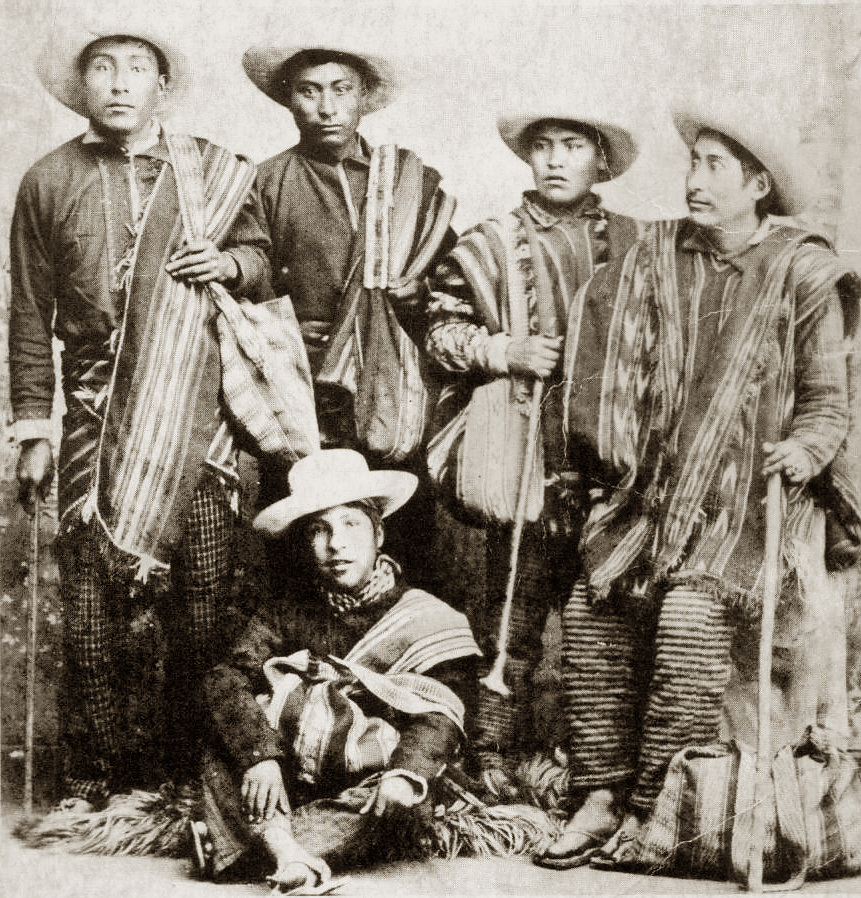
An itinerant group of traditional Andean healers known for their medicinal plant knowledge and ritual practicesTradition · Healing · Protection Living
🇵🇾 Paraguay and 3 moreGuarani mythology
The oral traditions of the Tupi-Guarani peoples regarding gods, spirits and creationTradition · Speaking with spirits and the dead · Power and authority Living
🇧🇴 Bolivia and 5 moreKallawaya
An itinerant group of traditional Andean healers known for their medicinal plant knowledge and ritual practicesTradition · Healing · Protection Living
🇵🇾 Paraguay and 3 moreGuarani mythology
The oral traditions of the Tupi-Guarani peoples regarding gods, spirits and creationTradition · Speaking with spirits and the dead · Power and authority Living
Related elsewhere
All being 🇿🇦 South AfricaSympathetic magic
A magical principle based on imitation and contact to influence the worldTradition · Protection · Healing Historical
🇿🇦 South AfricaSympathetic magic
A magical principle based on imitation and contact to influence the worldTradition · Protection · Healing Historical
 🇮🇸 Iceland and 2 moreSeiðr
A Norse magic of fate and spirit, practiced by seers and sorcerers in the Viking Age.Tradition · Seeing and foretelling · Cursing and harm Revived
🇮🇸 Iceland and 2 moreSeiðr
A Norse magic of fate and spirit, practiced by seers and sorcerers in the Viking Age.Tradition · Seeing and foretelling · Cursing and harm Revived
 🇿🇦 South AfricaGrootslang
A legendary serpent from South Africa said to guard diamonds in a deep cave.Being · Cursing and harm · Power and authority Legendary
🇿🇦 South AfricaGrootslang
A legendary serpent from South Africa said to guard diamonds in a deep cave.Being · Cursing and harm · Power and authority Legendary