Charms, amulets and talismans
Made and worn things: the nazar, the hamsa, the omamori, the mojo bag and the witch bottle.
Charms, amulets and talismans are things made or chosen to carry a purpose. The blue glass nazar in Turkey, the hamsa hand across North Africa and the Middle East, the Japanese omamori, the Haitian pwen, the Italian cornicello and the Hoodoo mojo bag all belong here. They are small, portable and personal, and found on every continent. This page looks at what they are said to do and how they are made, sold and understood.
Amulet or talisman
The two words are often used loosely. An amulet is usually said to protect by what it is, such as a blue bead against the evil eye. A talisman is made or empowered for a purpose, often with writing, a name or a date. Islamic, Jewish, Taoist and Hindu traditions all have written talismans: the Taoist fu, the Jewish kame'a, the Hindu yantra and the Muslim hirz. The common thread is that something small and personal is believed to hold a purpose on behalf of its owner.
Making and keeping
Many charms are made by specialists, then blessed or sold at a temple, shrine or market. Others are made at home, such as a red thread, a knotted cord, or a horseshoe nailed over a door. Practitioners usually say a charm should be kept clean, respected and not shown off. In Japan an omamori is returned to its shrine after a year. Charm makers are often women, jewellers, scribes or temple staff, and the person who makes a charm may not be the person who blesses it.
Faith and suspicion
Religious authorities disagree on charms. Some Islamic scholars allow Quranic verses carried as a reminder and reject objects held to work by themselves. Many Christian churches have blessed medals and scapulars while condemning amulets of folk origin. Sikh teaching rejects charms altogether. Anthropologists read them as ways to hold fear and uncertainty in a form a person can carry. Interpretation is divided within religions too, so one family may treat a bead as decoration while a neighbour treats it as a serious shield.
Market and appropriation
Charms are big business. Evil-eye beads sell as fashion on every high street, and the hamsa appears as a decoration far from its homes. Fakes are common, and some sellers promise outcomes in ways that amount to fraud, particularly in expensive gemstone or lottery charm schemes. Sacred designs used as a logo can offend the community they come from. Designers have taken eyes, hands and runes as motifs, and while many communities are glad to see them shared, others ask that sacred symbols not be turned into trivia or used by brands.
Charm on EveryJaadu
The entries written up so far, best known first.
 🇮🇸 IcelandNábrók
A pair of pants made from human skin, said to generate endless wealth in Icelandic folklore.Charm · Luck and prosperity Legendary
 🇬🇧 United KingdomExcaliburCaledfwlch
King Arthur's legendary blade, said to blind foes and grant rightful ruleCharm · Power and authority · Protection Legendary
 🇯🇵 JapanTide jewels潮干る珠 (Shiohiru-tama) and 潮満つ珠 (Shiomitsu-tama)
Two magical gems from Japanese mythology that control the tides to drown or save enemies.Charm · Cursing and harm · Power and authority Legendary
 🇮🇸 Iceland and 2 moreBrísingamen
The enchanted necklace of the Norse goddess FreyjaCharm · Power and authority Legendary
 🇮🇪 IrelandLúin of CeltcharLúin Celtchair
A fiery Irish spear that burned its wielder unless quenched in bloodCharm · Cursing and harm · Power and authority Legendary
🇮🇷 Iran and 1 moreCup of Jamshidجام جم (jām-e Jam)
A mythical Persian cup used for scrying and seeing the world's truths.Charm · Seeing and foretelling · Power and authority Legendary
 🇬🇷 GreeceNecklace of Harmonia
A cursed golden adornment from Greek myth that brought ruin to the House of ThebesCharm · Cursing and harm Legendary
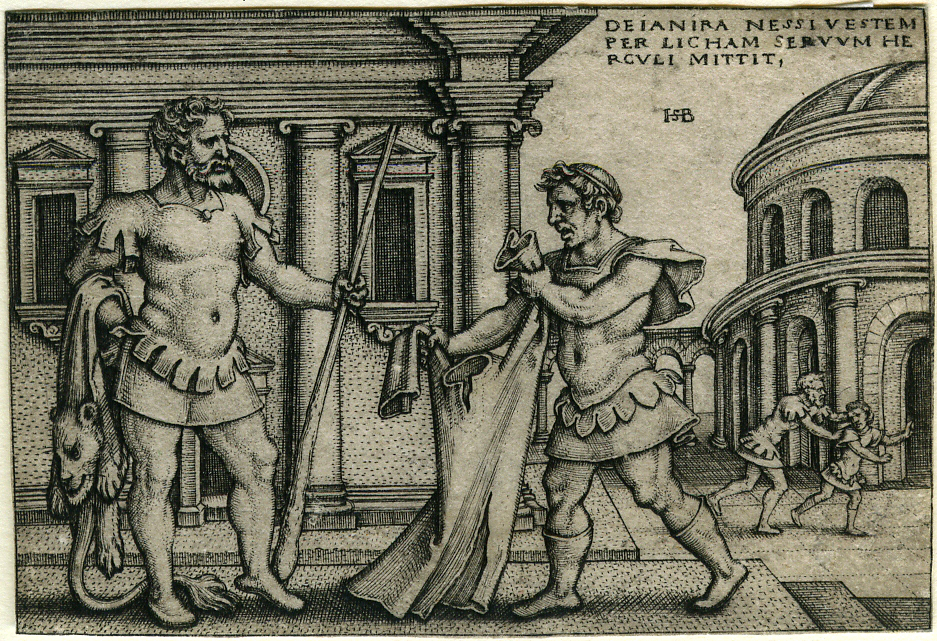 🇬🇷 GreeceShirt of NessusΧιτών τοῦ Νέσσου
A poisoned tunic from Greek myth, and a byword for a fatal giftCharm · Love and attraction · Cursing and harm Legendary
🇮🇸 IcelandSingasteinn
A stone named in a Norse poem about Loki and Heimdall as sealsSubstance · Protection Legendary
 🇯🇵 JapanAme-no-Nuboko天沼矛
The jewel-decorated spear of Japanese myth, used to stir the sea into landCharm · Protection · Change and initiation Legendary
Photo credits on this page
The small pictures above come from Wikimedia Commons under free licences. Some are cropped to fit.
- Ame-no-Nuboko: Kobayashi Eitaku, Public domain, source
- Tide jewels: Shizhao, CC BY-SA 3.0, source
- Lúin of Celtchar: Harold Robert Millar, Public domain, source
- Necklace of Harmonia: Marie-Lan Nguyen, Public domain, source
- Shirt of Nessus: Scan by Yellow Lion, Public domain, source
- Nábrók: Bernard McManus, CC BY 2.0, source
- Excalibur: Unknown author, Public domain, source
- Brísingamen: Nils Blommér, Public domain, source