Pagan and Neopagan: magic in this belief world
Ancient pagan religions, and the modern revival: Wicca, Druidry, Heathenry.
Pagan and Neopagan traditions include the religions of the ancient world, such as Greek, Roman, Norse and Celtic, which survive in fragments, and the modern revival: Wicca, Druidry, Heathenry, Hellenism and Rodnovery. Pagan was a Christian word for the non-Christian. Today many people use it for themselves. This page covers the modern and ancient strands and why they are often confused. Neopaganism is now one of the fastest-growing religious minorities in several Western countries.
Ancient and modern
Ancient pagan religions were state and household religions with temples, sacrifices, oracles and magic. They were replaced or suppressed with the spread of Christianity from the fourth century. Modern Paganism began in the twentieth century: Gerald Gardner's Wicca in the 1950s, Druid orders from the eighteenth century, and Heathen groups in Iceland, Scandinavia and North America. They are new religions drawing on old sources. Ancient religions in Greece, Rome and Egypt had priesthoods and temples, and oracles such as Delphi and Siwa drew visitors from far away.
A contested past
Margaret Murray's 1921 claim that witch trials hit a surviving pagan religion shaped the early movement, and was later rejected by historians such as Norman Cohn and Ronald Hutton. Modern Pagans now often accept their traditions as created and revived, and speak of inspiration. Some Heathen groups have been linked to racist movements, which most Heathens condemn. Wicca is a religion with initiation, a god and goddess and a yearly cycle of eight festivals, while Druidry, Heathenry and others have their own forms.
Gender, law and community
Wicca and Goddess movements gave women priestly roles, and many covens are led by women. Pagans have faced discrimination and moral panics, including the Satanic panic of the 1980s. In Britain, the last Witchcraft Act was replaced in 1951. In Iceland the Asatru Fellowship has been recognised since 1973. Pagan chaplains now serve in prisons and the armed forces in some countries. Many Pagans see themselves as part of an environmental and feminist movement, and others focus on ancestral heritage.
Commerce and ethics
Pagan books, tarot, crystals and festivals are a large market. Wicca borrows from many cultures, which raises questions of appropriation, and some Pagans work to credit sources. Scholars call the field a case study in how religion is invented. Pagans themselves often say that what matters is practice and community. Scholars regard Paganism as part of the religious landscape and no longer as a curiosity, and Pagan studies has become an academic field.
Pagan and Neopagan on EveryJaadu
The entries written up so far, best known first.
 🇮🇳 India and 5 moreAstrology
A divinatory practice that reads human fate through the positions of celestial bodies.Belief · Seeing and foretelling · Luck and prosperity Living
🇮🇳 India and 5 moreAstrology
A divinatory practice that reads human fate through the positions of celestial bodies.Belief · Seeing and foretelling · Luck and prosperity Living
 🇮🇳 India and 5 moreSpirit possession
A global belief that spirits or demons can take control of a person's body and mindBelief · Cursing and harm · Power and authority Living
🇮🇳 India and 5 moreSpirit possession
A global belief that spirits or demons can take control of a person's body and mindBelief · Cursing and harm · Power and authority Living
 🇸🇳 Senegal and 5 morePentagramπεντάγραμμον
A five-pointed star figure used across history for protection, ritual, and cosmologyCharm · Protection · Binding and oaths Living
🇸🇳 Senegal and 5 morePentagramπεντάγραμμον
A five-pointed star figure used across history for protection, ritual, and cosmologyCharm · Protection · Binding and oaths Living
 🇷🇺 Russia and 7 moreSlavic Native FaithРодноверие
A modern polytheistic movement drawing on Slavic folklore, romanticism, and global spiritual traditions.Tradition · Speaking with spirits and the dead · Power and authority Living
🇷🇺 Russia and 7 moreSlavic Native FaithРодноверие
A modern polytheistic movement drawing on Slavic folklore, romanticism, and global spiritual traditions.Tradition · Speaking with spirits and the dead · Power and authority Living
 🇮🇪 Ireland and 2 moreTriquetra
A three-arc knot used in medieval art and modern pop culturePower and authority Living
🇮🇪 Ireland and 2 moreTriquetra
A three-arc knot used in medieval art and modern pop culturePower and authority Living
 🇬🇷 GreeceTriple Goddess
A Neopagan deity representing three female life stages and lunar phasesBeing · Power and authority Living
🇬🇷 GreeceTriple Goddess
A Neopagan deity representing three female life stages and lunar phasesBeing · Power and authority Living
 🇳🇴 Norway and 2 moreValknut
A symbol of three interlocked triangles found on Germanic artifacts and used in modern Heathenry.Belief · Power and authority Living
🇳🇴 Norway and 2 moreValknut
A symbol of three interlocked triangles found on Germanic artifacts and used in modern Heathenry.Belief · Power and authority Living
 🇬🇧 United Kingdom and 2 moreOrder of Nine Angles
A British Satanic network linked to neo-Nazism and violent extremismTradition · Cursing and harm · Power and authority Living
🇬🇧 United Kingdom and 2 moreOrder of Nine Angles
A British Satanic network linked to neo-Nazism and violent extremismTradition · Cursing and harm · Power and authority Living
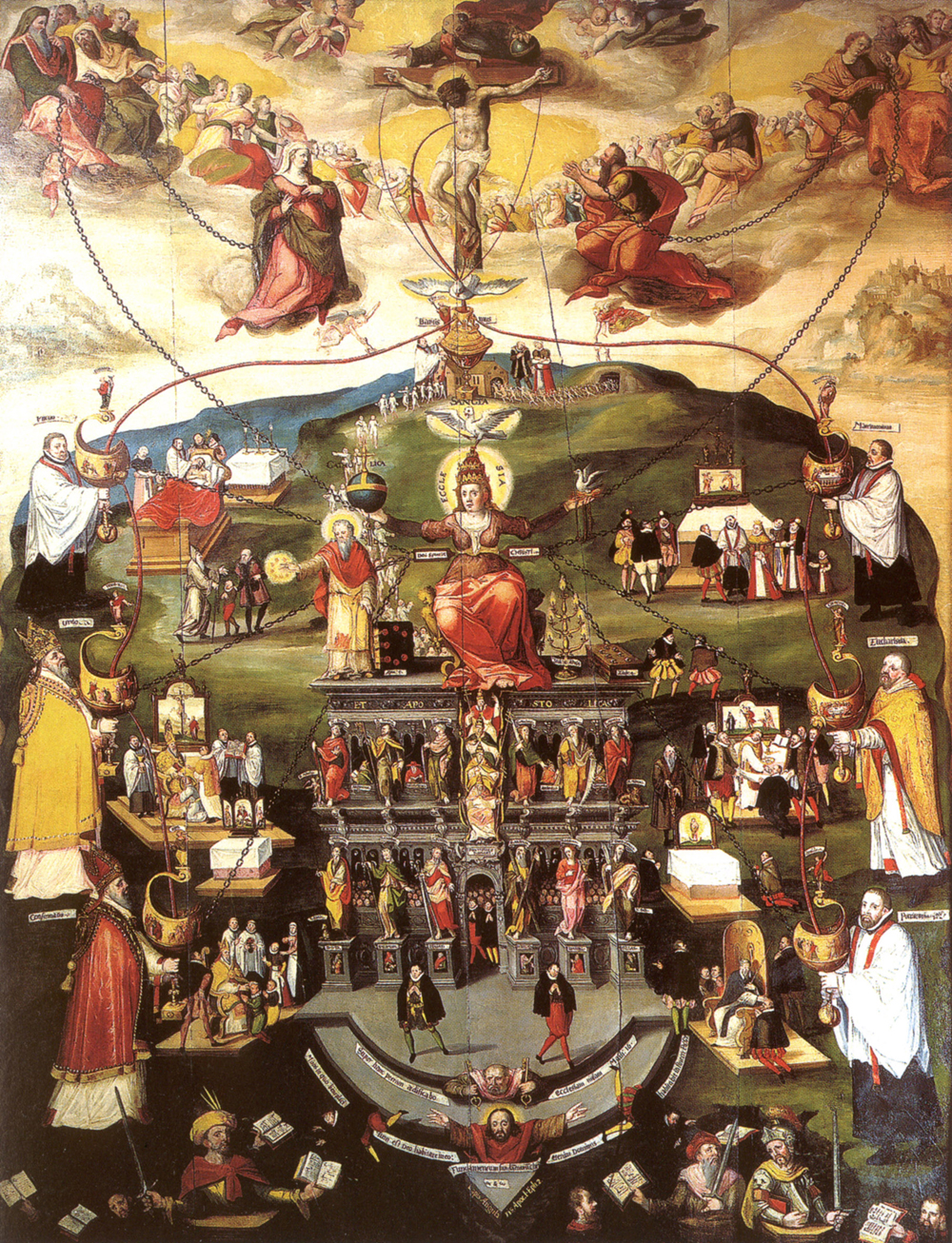 🇬🇷 GreeceSacred mysteriesμυστήριον
Secret ceremonies and divine doctrines held to exceed human reasonBelief · Speaking with spirits and the dead · Change and initiation Living
🇬🇷 GreeceSacred mysteriesμυστήριον
Secret ceremonies and divine doctrines held to exceed human reasonBelief · Speaking with spirits and the dead · Change and initiation Living
Photo credits on this page
The small pictures above come from Wikimedia Commons under free licences. Some are cropped to fit.
- Spirit possession: Unknown author, CC BY 4.0, source
- Astrology: Wilfredor, CC0, source
- Pentagram: Tomruen, Attribution, source
- Slavic Native Faith: Union of Slavic Rodnover Communities (Союз Славянских Общин Славянской, CC BY-SA 4.0, source
- Triquetra: Wiglaf at English Wikipedia, Public domain, source
- Order of Nine Angles: Unknown author, CC BY 4.0, source
- Sacred mysteries: Johannes Hopffe, Public domain, source
- Valknut: Sacrificial_scene_on_Hammars_(I).JPG : Berig derivative work: The Man, CC BY-SA 3.0, source
- Triple Goddess: Unknown author, Public domain, source