Jemaa el-Fna
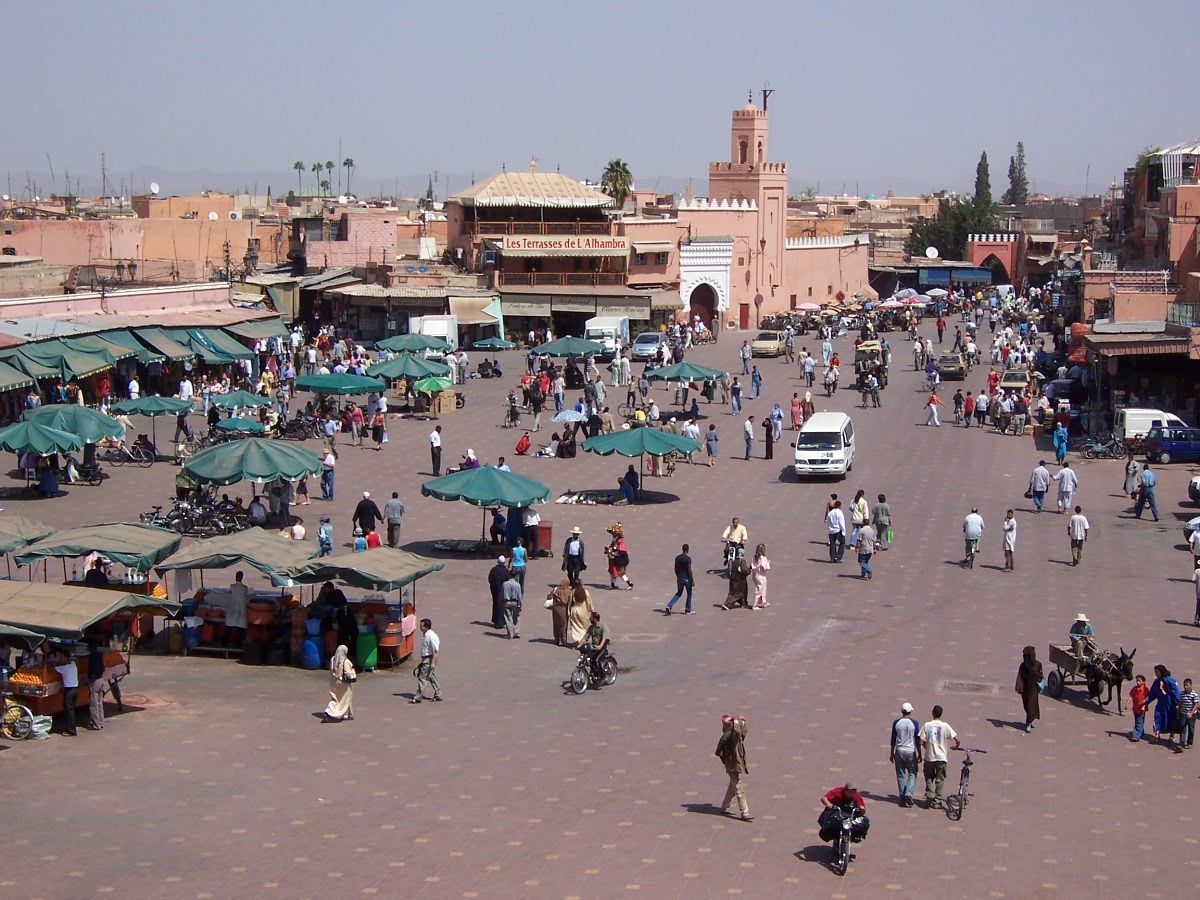
The great square of Marrakech where storytellers, musicians, snake charmers and herbalists have drawn crowds for centuries.
Practised and told of here
Best time: March to May and September to November; evenings are best.
Jemaa el-Fna was named by UNESCO as a masterpiece of oral and intangible heritage in 2001. By day it is a market, and by evening a ring of food stalls and performers.
Healers and herbalists
In one corner, herb sellers lay out dried plants, minerals and animal parts, sometimes with healers who give advice or write charms. Moroccans may consult them for health, love or protection. Claims are not tested, and some advice can be dangerous, so visitors should not take medicine from any such stall.
Performers
Gnawa musicians, storytellers and snake handlers perform for tips. Some snakes are kept in poor conditions. Henna painters work in the square, and visitors should avoid black henna, which can burn.
Visiting
Performers expect money if you photograph them. Agree beforehand. Avoid buying products made from protected animals.
A respectful visit to Jemaa el-Fna
Living communities are not a show. Ask before photographing a person or a ceremony, and follow local rules.
- The herb stalls Look but do not buy remedies.
- A storyteller's circle Listen from the edge.
- The Koutoubia mosque See the tower at the square's edge.
- The medina souks Walk north into the lanes.
Written by the EveryJaadu desk with AI assistance. Background: "Jemaa el-Fnaa" on Wikipedia. Opening hours, markets and ceremonies change; check locally before travelling. If something is wrong, tell us.
No entries here yet. New pages are added every day.