Vajrayana
In its own language: Vajrayāna
Sanskrit for Diamond Vehicle or Thunderbolt Vehicle
A Buddhist path using rituals and mantras for rapid awakening
Vajrayana is a branch of Mahayana Buddhism that uses esoteric rituals to reach enlightenment quickly. It emerged in India between the fifth and seventh centuries CE. Practitioners rely on secret teachings passed from teacher to student.
- Emerges in India between 5th and 7th centuries CE
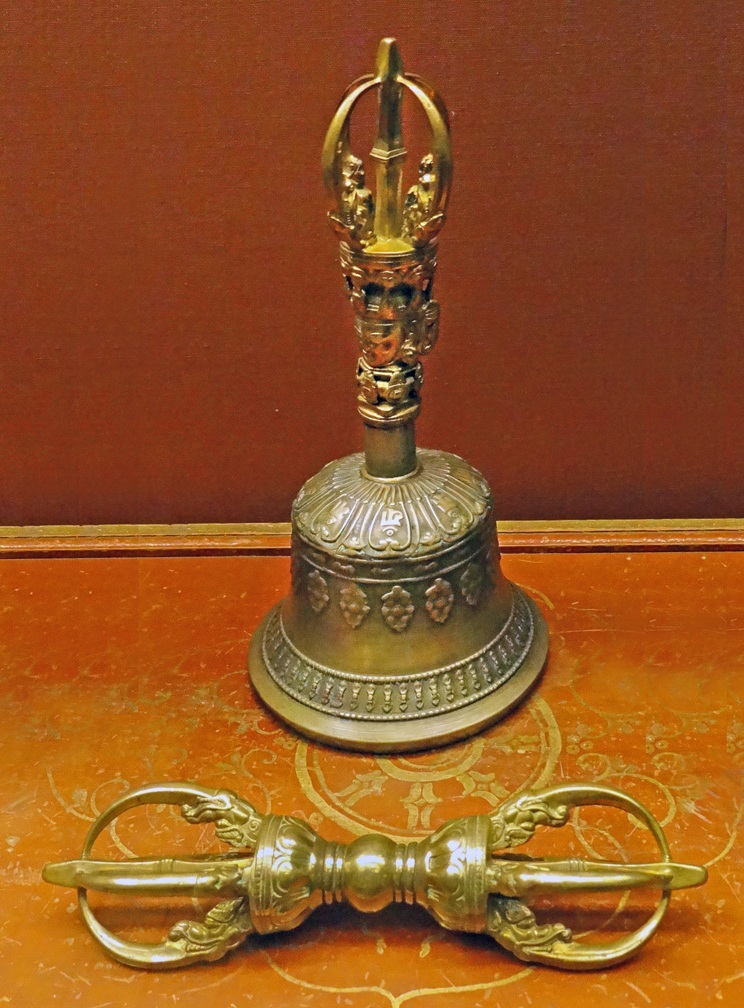
- Uses vajra and bell in rituals
- Relies on guru-student initiation
- Includes deity yoga visualization
- Spread to Tibet, Japan, and China
What it is
Vajrayana is a vehicle within Mahayana Buddhism focused on esoteric practices. It aims for rapid spiritual awakening through specific rituals. The tradition uses mantras, symbolic gestures, and visualizations. These methods help transform ordinary experiences into paths toward liberation. It emphasizes direct transmission from a guru to a student. This ensures the teachings remain pure and effective. Practitioners often visualize themselves as deities. This practice, called deity yoga, helps change one's perception of reality.
Where it comes from
The tradition emerged in medieval India between the fifth and seventh centuries CE. It developed from pre-existing tantric traditions in Hinduism. These early practices influenced South Asian Mahayana Buddhism. Wandering yogis known as mahasiddhas played a key role. They used methods different from standard monastic life. Some practiced in sacred sites or charnel grounds. The movement challenged established Buddhist norms in Bengal by the eighth century. Later texts expanded the corpus of tantric literature.
How it is done
Practitioners engage in deity yoga, visualizing themselves as enlightened beings. Rituals involve mantras, dhāraṇīs, and mudrās. Mandalas serve as spiritual diagrams for meditation. A guru initiates students through ceremonies. This transmission preserves the lineage back to the Buddha. Some early texts describe left-hand practices with taboo substances. These are rare today and often replaced by imagined consorts. The vajra and bell are used together in rituals. They symbolize the union of wisdom and compassion.
Tools and materials
The vajra represents indestructibility and irresistible force. It is paired with a bell during ceremonies. Mantras are sacred sounds used for focus. Dhāraṇīs act as mnemonic codes. Mudrās are symbolic hand gestures. Mandalas are complex spiritual diagrams. Wrathful deities appear in visual imagery. These aids help internalize concepts and confront obstacles. The vajra embodies the mind realizing ultimate truth.
Vajrayana, drawn and placed
- Living
- Revived
- Fading
- Historical
- Legendary
- Performed
- Lineage
- Mahayana Buddhism
What it is for
The goal is rapid spiritual awakening and liberation. Practices aim to transform poisons into wisdom. Early texts sought worldly ends like wealth or health. Later works focused on enlightenment. Deity yoga transforms perception of reality. The tradition honors feminine energy through female Buddhas. Practices sometimes challenge dualistic thinking. This helps practitioners transcend conventional limits.
Who does it
Teachings pass directly from a guru or vajracarya to a student. Initiation ceremonies mark this bond. The lineage traces back to the historical Buddha. Mahasiddhas were wandering yogis who thrived in medieval India. They lived outside monasteries. In Tibet, it became the dominant spiritual tradition. In Japan, Kukai established Shingon Buddhism. Chinese Esoteric Buddhism blended with existing traditions. Each region adapted core practices to local culture.
Peoples and places
Vajrayana spread across Asia from its Indian origins. In Tibet, it integrated local beliefs into Tibetan Buddhism. Japan developed Shingon Buddhism emphasizing mantras. China created Esoteric Buddhism, now mostly merged with exoteric forms. The tradition is strong in the Himalayan regions. It includes areas like Nepal and Bhutan. Different sub-traditions maintain core esoteric principles. Each adapts to its specific cultural context while preserving the path to enlightenment.
At a glance: who, where and when


What people believe
The tradition views the vajra as an adamantine symbol. It shatters ordinary stones but cannot be broken. This represents the union of emptiness and bliss. Tantric bliss merges with the realization of truth. Female Buddhas and dakini spirits are venerated. The path acknowledges feminine energy. Practices may use taboo substances in ritual contexts. This challenges conventional norms to transcend duality. The imperial metaphor of consecration reflects political power structures.
How scholars and sceptics see it
Scholars debate the exact origins of Vajrayana. Some link it to Hindu tantric substrates. Alexis Sanderson notes similarities with Shaiva texts. He cites shared rituals, deities, and terminology. Ronald Davidson questions the chronology of these influences. He argues Saiva tantras appeared later than some Buddhist ones. David Gray sees influence from pre-existing tantric traditions. Scholars also study the mahasiddhas and their radical methods. The dating of tantras remains difficult and disputed.
Cautions and what is closed
Some early practices involved taboo substances like alcohol or meat. These left-hand methods are rare in modern times. They are often replaced by visualization techniques. Initiations require strict adherence to lineage rules. Outsiders cannot access closed knowledge without proper training. The tradition maintains secrecy to preserve purity. Misuse of mantras or rituals is considered harmful. Practitioners must follow the guru's guidance carefully.
Compare and confuse
Vajrayana is part of the broader Mahayana tradition. It differs from exoteric Buddhism in its esoteric methods. It shares roots with Hindu tantra and Shaivism. Terms like Mantrayana highlight its mantra focus. Esoteric Buddhism is a Western term for the same path. Shingon in Japan and Tibetan Buddhism are major branches. Chinese Esoteric Buddhism has largely merged with other forms. All share the goal of rapid awakening through ritual.
Questions people ask about Vajrayana
What is Vajrayana?
It is a branch of Mahayana Buddhism using esoteric rituals for rapid awakening. It emerged in medieval India and spread across Asia.
How are teachings transmitted?
Through direct initiation from a guru to a student. This preserves the lineage and ensures the purity of the practices.
What tools are used?
Practitioners use mantras, mandalas, mudras, and the vajra. The vajra symbolizes indestructible wisdom and compassion.
Where is it practiced?
It originated in India. Major traditions exist in Tibet, Japan (Shingon), and historically in China.
Good reading and sources
- Vajrayana on WikipediaEncyclopedia
- More photos on Wikimedia CommonsPhotos and video
- Wikidata recordOpen data
The facts on this page come from the Wikipedia article "Vajrayana", written by its contributors and used under the CC BY-SA 4.0 licence, and from its Wikidata record (CC0). EveryJaadu rewrote the text in its own words, with AI assistance, and compares every page with the article to make sure no passage is copied. It may be reused under the same CC BY-SA 4.0 licence with a link back.
It may contain mistakes. Names and customs differ from one community to the next, and some knowledge is closed to outsiders and left out here. This page describes belief and practice. It does not say that any of it works, it is not a how-to, and it is not medical advice. If something is wrong, tell us. Last refreshed 2026-10-06.
More from India
All the entries from India 🇮🇳 IndiaChakraचक्र
Meditation points in the subtle body used in Hindu and Buddhist yogaTradition · Speaking with spirits and the dead · Change and initiation Living
🇮🇳 IndiaChakraचक्र
Meditation points in the subtle body used in Hindu and Buddhist yogaTradition · Speaking with spirits and the dead · Change and initiation Living
 🇮🇳 IndiaMahakaleshwar JyotirlingaMahākāleśvara
A sacred Shiva shrine in Ujjain, India, known for its south-facing idol and ancient origins.Tradition · Protection · Power and authority Living
🇮🇳 IndiaMahakaleshwar JyotirlingaMahākāleśvara
A sacred Shiva shrine in Ujjain, India, known for its south-facing idol and ancient origins.Tradition · Protection · Power and authority Living
 🇮🇳 India and 5 moreKolamகோலம்
A daily geometric floor drawing made with rice flour at the home entrance in South IndiaTradition · Protection · Luck and prosperity Living
🇮🇳 India and 5 moreKolamகோலம்
A daily geometric floor drawing made with rice flour at the home entrance in South IndiaTradition · Protection · Luck and prosperity Living
 🇮🇳 India and 5 moreHoliहोली
A Hindu spring festival marked by coloured powders and bonfires to celebrate love and virtue.Tradition · Love and attraction · Cursing and harm Living
🇮🇳 India and 5 moreHoliहोली
A Hindu spring festival marked by coloured powders and bonfires to celebrate love and virtue.Tradition · Love and attraction · Cursing and harm Living
Related elsewhere
All tradition 🇬🇧 United Kingdom and 5 moreAleister Crowley
English occultist and founder of the religion of ThelemaText · Power and authority · Change and initiation Living
🇬🇧 United Kingdom and 1 moreChaos magic
A modern magical system that treats belief as a flexible tool rather than a fixed truth.Tradition · Change and initiation · Power and authority Living
🇬🇧 United Kingdom and 5 moreAleister Crowley
English occultist and founder of the religion of ThelemaText · Power and authority · Change and initiation Living
🇬🇧 United Kingdom and 1 moreChaos magic
A modern magical system that treats belief as a flexible tool rather than a fixed truth.Tradition · Change and initiation · Power and authority Living
 🇳🇬 NigeriaOrunmilaỌ̀rúnmìlà
Yoruba deity of wisdom and the creator of the Ifá divination systemBeing · Seeing and foretelling · Speaking with spirits and the dead Living
🇳🇬 NigeriaOrunmilaỌ̀rúnmìlà
Yoruba deity of wisdom and the creator of the Ifá divination systemBeing · Seeing and foretelling · Speaking with spirits and the dead Living
 🇮🇳 India and 5 moreFountain of Youth
A legendary spring said to reverse aging and cure illness, appearing in myths across the world.Belief · Healing · Change and initiation Legendary
🇮🇳 India and 5 moreFountain of Youth
A legendary spring said to reverse aging and cure illness, appearing in myths across the world.Belief · Healing · Change and initiation Legendary