
Torma
In its own language: གཏོར་མ
from the Tibetan root gtor-ba, meaning to cast away or scatter
Sculpted offerings of flour and butter used in Tibetan Buddhist rituals
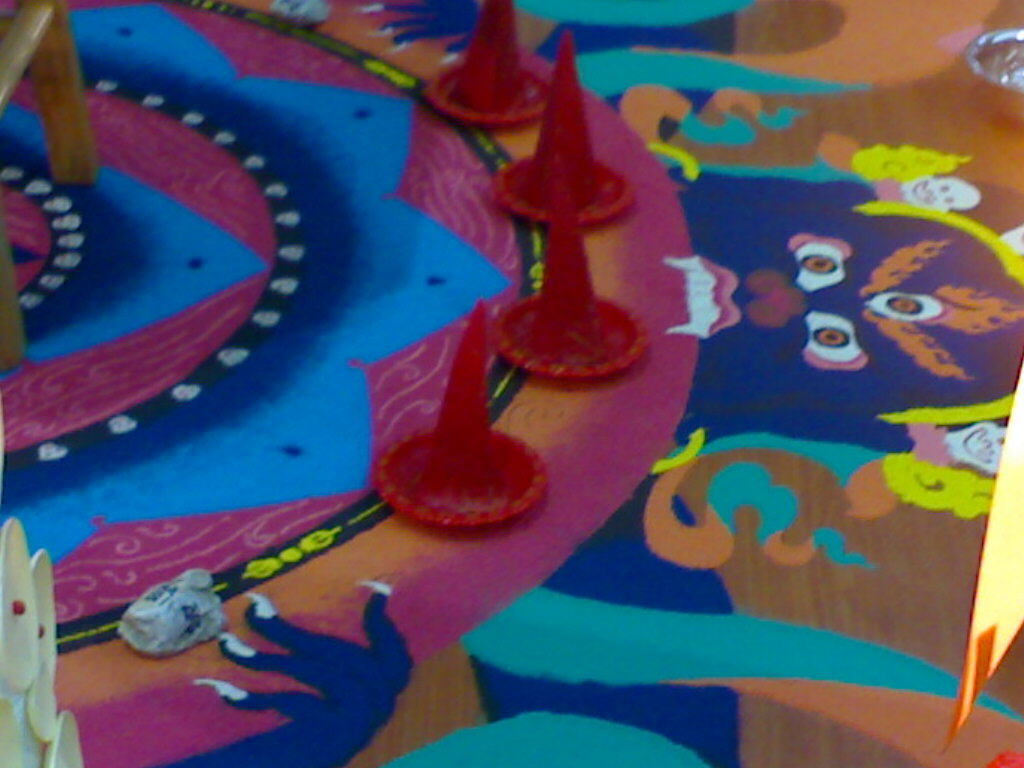
Tormas are ritual sculptures made from barley flour and butter within Tibetan Buddhism. They serve as offerings to deities, protectors, and spirits, or represent tantric figures on shrines. The practice adapts ancient Indian cake traditions into specific conical forms for spiritual purposes.
- Sculpted from barley flour and yak butter
- Typically formed into a conical shape
- Dyed white or red for main bodies
- Root word means to cast away or scatter
- Used to appease spirits and represent deities
What it is
A torma is a sculpted object crafted primarily from a mixture of barley flour and yak butter. These items function as central components in tantric Buddhist ceremonies, serving as physical representations of deities or as edible offerings. While they resemble cakes, their construction follows strict ritual geometry, typically forming a cone. They appear on altars, held on special bases like skulls, or placed directly on shrine plates. Some versions are consumed by practitioners during feast practices, while others remain as permanent symbolic fixtures.
Where it comes from
The custom of offering baked goods predates the arrival of Tibetan Buddhism in the region. It draws from older Indian traditions involving flat offering cakes known as bali or balingha in Sanskrit. The Tibetan term derives from the verb gtor-ba, which translates to casting away, breaking up, or scattering. This linguistic root reflects the dual purpose of the object: presenting an offering to the divine while simultaneously symbolizing the practitioner's release from attachment to material things.
How it is done
Artisans mix barley flour with butter to create a pliable dough. The mixture is often dyed white or red for the main body. Skilled hands shape the dough into specific geometric forms dictated by the ritual's intent. Simple cones represent peaceful deities, while complex layered structures depict wrathful figures. The finished sculpture is placed on a shrine, mounted on a leather base, or held in a skull cup. In some cases, the torma is blessed and then eaten by the community, with leftovers offered to lower beings.
Tools and materials
The primary materials are barley flour and butter, which provide the structural integrity and binding properties needed for sculpting. Dyes in white and red are applied to distinguish between different types of deities. Special bases support the offerings, including plates, leather mounts, and ceremonial skull cups. Additional ingredients like egg, milk, sugar, honey, or meat may be incorporated depending on the specific spiritual goal of the ceremony.
Torma, drawn and placed
- Living
- Revived
- Fading
- Historical
- Legendary
- Performed
- Lineage
- Tantric Buddhism
- Timing
- during ceremonies and festivals
What it is for
Tormas address various spiritual needs within the tradition. They appease obstructing spirits, accumulate merit for the living, and remove obstacles from the path. Deity tormas act as focal points for meditation and worship. Food tormas facilitate communal feasting and the distribution of blessings. Medicinal variants are used to extract illness from a patient before being discarded. Captured tormas mark the successful completion of a planned activity, encouraging future success.
Who does it
Ritual specialists and monks prepare these objects according to established tantric protocols. The creation process requires knowledge of iconography and ritual sequence. Practitioners engage with the torma through visualization and consumption. The role involves maintaining the purity of the materials and ensuring the correct form is presented to the appropriate spirit or deity. Training focuses on the precise handling of sacred substances.
Peoples and places
The practice is central to Tibetan Buddhist communities. It connects modern practitioners to ancient Indian roots through the adaptation of the bali cake tradition. Variations exist across different schools, with some adhering strictly to traditional barley and butter recipes while others incorporate contemporary ingredients. The shared use of these sculptures unites diverse groups within the broader framework of Vajrayana practice.
At a glance: who, where and when
Who does it
Peoples
Belief worlds
Occasions



What people believe
The torma operates within a worldview where material substances can carry spiritual power. Offering the sculpture represents a transfer of energy to the unseen realm. The act of scattering or consuming the torma reinforces the doctrine of non-attachment. Deity tormas are not merely symbols but are believed to embody the presence of the figure they represent. Inner tormas involve visualizing one's own mind and emotions as offerings, extending the concept beyond physical matter.
When it is done
Tormas appear throughout the liturgical year. Large central shrines are constructed for major festivals. Smaller versions are prepared for daily rituals and specific ceremonies. Feast practices involve the creation and subsequent consumption of food tormas. The timing depends on the specific rite, whether it marks a new beginning, a purification, or a commemoration of a master.
Questions people ask about Torma
What is a torma?
A torma is a ritual sculpture made of barley flour and butter used in Tibetan Buddhism. It serves as an offering to deities or a representation of tantric figures on altars.
Where does the word come from?
The term comes from the Tibetan root gtor-ba, meaning to cast away, break up, or scatter. This reflects the ritual themes of offering and letting go of attachment.
What are tormas made of?
They are primarily composed of barley flour and butter. Ingredients may include egg, milk, sugar, honey, or meat depending on the specific ritual purpose.
Good reading and sources
- Torma on WikipediaEncyclopedia
- More photos on Wikimedia CommonsPhotos and video
- Wikidata recordOpen data
The facts on this page come from the Wikipedia article "Torma", written by its contributors and used under the CC BY-SA 4.0 licence, and from its Wikidata record (CC0). EveryJaadu rewrote the text in its own words, with AI assistance, and compares every page with the article to make sure no passage is copied. It may be reused under the same CC BY-SA 4.0 licence with a link back.
It may contain mistakes. Names and customs differ from one community to the next, and some knowledge is closed to outsiders and left out here. This page describes belief and practice. It does not say that any of it works, it is not a how-to, and it is not medical advice. If something is wrong, tell us. Last refreshed 2026-10-12.
More from India
All the entries from India 🇮🇳 IndiaChakraचक्र
Meditation points in the subtle body used in Hindu and Buddhist yogaTradition · Speaking with spirits and the dead · Change and initiation Living
🇮🇳 IndiaChakraचक्र
Meditation points in the subtle body used in Hindu and Buddhist yogaTradition · Speaking with spirits and the dead · Change and initiation Living
 🇮🇳 India and 5 moreHoliहोली
A Hindu spring festival marked by coloured powders and bonfires to celebrate love and virtue.Tradition · Love and attraction · Cursing and harm Living
🇮🇳 India and 5 moreHoliहोली
A Hindu spring festival marked by coloured powders and bonfires to celebrate love and virtue.Tradition · Love and attraction · Cursing and harm Living
 🇮🇳 India and 5 moreKolamகோலம்
A daily geometric floor drawing made with rice flour at the home entrance in South IndiaTradition · Protection · Luck and prosperity Living
🇮🇳 India and 5 moreKolamகோலம்
A daily geometric floor drawing made with rice flour at the home entrance in South IndiaTradition · Protection · Luck and prosperity Living
 🇳🇵 Nepal and 1 morePrayer flagLung ta
Cloth banners printed with mantras, hung in high places to spread blessings on the windCharm · Protection · Cleansing and purification Living
🇳🇵 Nepal and 1 morePrayer flagLung ta
Cloth banners printed with mantras, hung in high places to spread blessings on the windCharm · Protection · Cleansing and purification Living
Related elsewhere
All tradition 🇯🇵 JapanShugendō修験道
A Japanese mountain ascetic path blending Esoteric Buddhism, Shinto, and folk ritualsTradition · Protection · Healing Living
🇯🇵 JapanShugendō修験道
A Japanese mountain ascetic path blending Esoteric Buddhism, Shinto, and folk ritualsTradition · Protection · Healing Living
 🇭🇹 Haiti and 2 moreHaitian VodouVodou
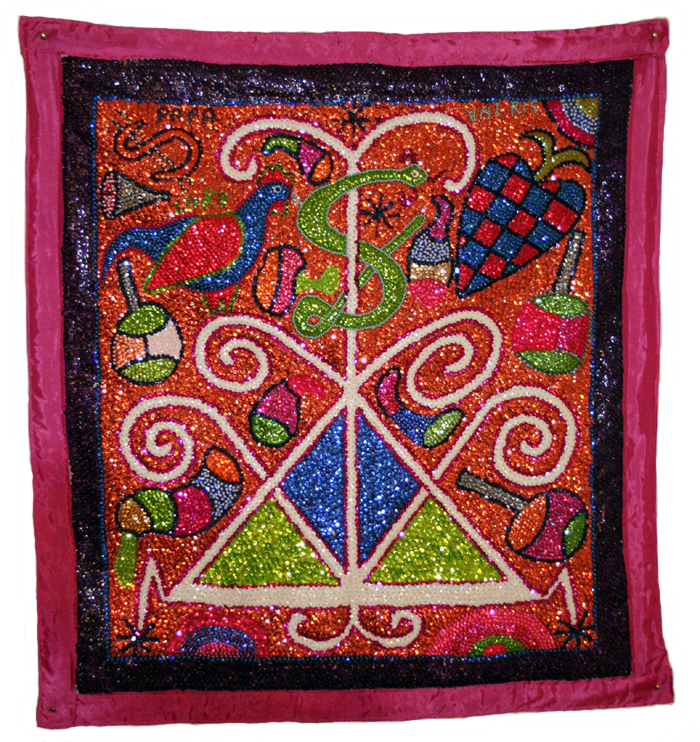
An Afro-Haitian religion blending West African traditions with Catholicism and FreemasonryTradition · Protection · Healing Living
🇭🇹 Haiti and 2 moreHaitian VodouVodou
An Afro-Haitian religion blending West African traditions with Catholicism and FreemasonryTradition · Protection · Healing Living
 🇮🇶 Iraq and 5 moreGrimoire
A textbook containing instructions for spells, rituals, and the creation of magical objects.Text · Protection · Healing Historical
🇮🇶 Iraq and 5 moreGrimoire
A textbook containing instructions for spells, rituals, and the creation of magical objects.Text · Protection · Healing Historical
 🇮🇳 India and 5 moreSnake worship
Veneration of serpents as divine or ancestral beings across global culturesTradition · Protection · Healing Living
🇮🇳 India and 5 moreSnake worship
Veneration of serpents as divine or ancestral beings across global culturesTradition · Protection · Healing Living