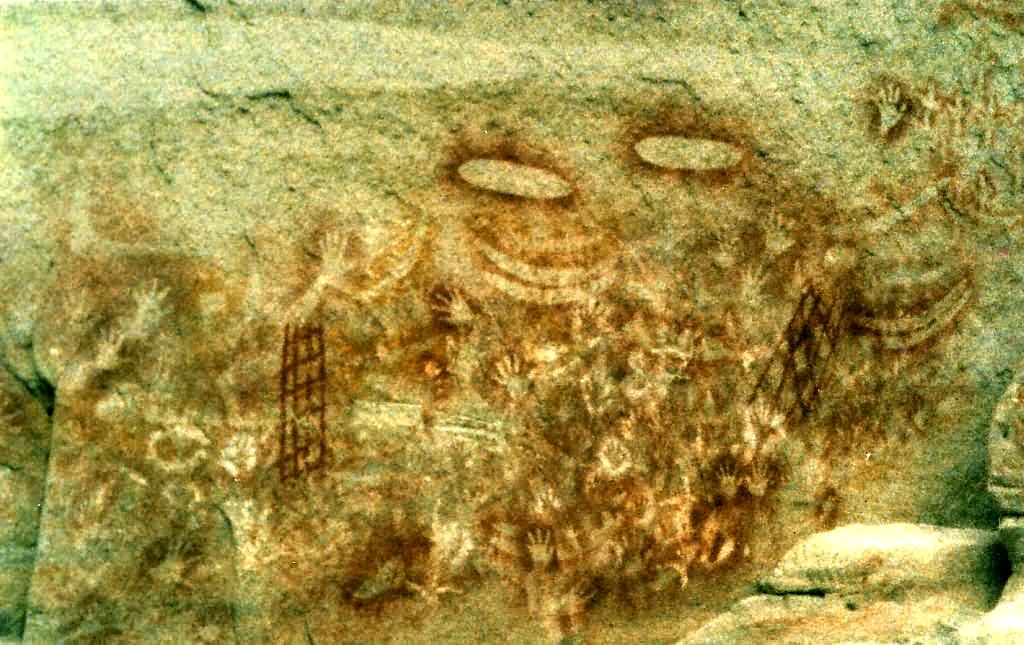
The Dreaming
from English translation of Arandic alcheringa, meaning dream or eternal past
A worldview of ancestral creation and eternal law in Australian Aboriginal culture
The Dreaming is a term for the religio-cultural worldview of Australian Aboriginal peoples. It describes an eternal time when ancestral beings created the land and laid down laws for living.
- Term coined by Gillen and Spencer in the 1890s to translate alcheringa
- Songlines act as topographical maps for navigation and resource management
- Uluru is viewed as the physical remains of ancestral beings
- Varies by group: Jukurrpa (Warlpiri), Ngarrankarni (Gija), Ungud (Ngarinyin)
What it is
The Dreaming is a complex of meanings that forms the basis of Australian Aboriginal spirituality and culture. This concept is often called Everywhen by scholars to capture its simultaneous nature. It encompasses the creation of the world by ancestral figures and the laws they established for human conduct. The Dreaming provides a total way of life, integrating moral codes, environmental rules, and social obligations into a single framework. It is a lived daily reality for many Aboriginal people, rather than a distant myth.
Where it comes from
The term was coined by early anthropologists Francis Gillen and Walter Baldwin Spencer in the late nineteenth century. They used it to translate the Arrernte word alcheringa. Later scholars like A. P. Elkin popularized the phrase. However, the translation has been widely disputed. Critics argue that Dreamtime misrepresents the original concept by implying a temporary state of sleep. Some researchers suggest the word was influenced by Christian missionary attempts to equate Aboriginal beliefs with the God of Christianity. Despite these academic debates, the term remains central to how non-Indigenous people understand Aboriginal cosmology.
How it is done
The Dreaming is maintained through storytelling, art, and ceremony. Songlines serve as navigational maps that encode knowledge of water sources and land management. Ceremonies at sacred sites are believed to re-create the actions of ancestral beings. These rituals keep the life force of the land active and ensure the continuation of new life. Artworks often depict specific Dreamings associated with particular places or skin groups. Singing to Country is a practice used to maintain the spiritual health of the environment. These methods connect people to their ancestors and the physical landscape.
The Dreaming, drawn and placed
- Living
- Revived
- Fading
- Historical
- Legendary
- Performed
- Lineage
- Australian Aboriginal mythology
What it is for
The Dreaming serves as a legal code and a system of environmental stewardship. It dictates kinship systems, marriage rules, and dispute resolution within communities. It also guides interactions with the natural world, treating land as a kin relation rather than a commodity. For groups like the Yolngu, it provides detailed ecological data for managing biodiversity and fire risks. The purpose is to maintain balance between people, animals, plants, and the land. It offers a moral framework that integrates spiritual beliefs with practical survival skills.
Peoples and places
The concept varies significantly across different Aboriginal language groups. There are hundreds of distinct language groups, each with its own variations of belief. The Warlpiri use Jukurrpa or Tjukurrpa to describe their ancestral law. The Gija people refer to it as Ngarrankarni. Other terms include Ungud among the Ngarinyin and Manguny in Martu Wangka. While all share the core idea of ancestral creation, the specific stories, beings, and laws differ. This diversity means that no single definition can fully capture the breadth of Aboriginal spirituality. The term Dreaming is now widely used across Australia, often blending these distinct traditions.
At a glance: who, where and when
Who does it
Belief worlds


What people believe
Central to the Dreaming is the belief that ancestral beings shaped the formless land into its current state. These beings often took animal or hybrid forms and left physical traces in the landscape. Features like Uluru are seen as the remains of these ancestors. The land is considered sentient, possessing memory and agency. Ancestral narratives dictate the relationship between humans and the environment. Life is viewed as a continuous cycle connected to the actions of the creators. Rejection of land as property is a key tenet, replaced by a duty of care and reciprocity.
How scholars and sceptics see it
Anthropologists and linguists have debated the accuracy of the term Dreaming for decades. Carl Strehlow argued in 1908 that the original word meant an eternal being, not a time of dreams. He suggested the translation was a misunderstanding of Arrernte vocabulary. Sam Gill noted that Spencer and Strehlow had conflicting views due to their different cultural backgrounds. David Campbell Moore criticized the etymological link between dream and alcheringa as an illusion. William Stanner proposed understanding it as a complex of meanings rather than a literal time period. Modern scholarship emphasizes the limitations of English translations.
Today
The Dreaming has entered popular culture and tourism, sometimes leading to idealized or fictionalized representations. Since the 1970s, the term has become ubiquitous in the English vocabulary of Aboriginal Australians. It is integrated into contemporary land management programs alongside Western science. Consultation with Traditional Owners is required for urban planning to respect spiritual sites. The concept continues to function as a primary legal and social framework in remote communities. It adapts to modern challenges while maintaining its core connection to ancestry and country.
Questions people ask about The Dreaming
What is the Dreaming?
It is the religio-cultural worldview of Australian Aboriginal peoples. It describes an eternal time when ancestral beings created the land and established laws for living. It is a lived reality, not just a myth.
Where does the term come from?
It comes from the English translation of the Arrernte word alcheringa. Early anthropologists Francis Gillen and Walter Baldwin Spencer introduced it in the late nineteenth century to describe Aboriginal concepts of time and creation.
Is it only about dreams?
No. Many Aboriginal people find the word inappropriate because it implies unreality. The concept is a daily reality involving law, land, and identity.
How is it practiced today?
It is maintained through storytelling, art, and ceremony. Songlines guide land management and navigation. It also functions as a customary legal code for social obligations and dispute resolution in many communities.
Good reading and sources
- The Dreaming on WikipediaEncyclopedia
- More photos on Wikimedia CommonsPhotos and video
- Wikidata recordOpen data
The facts on this page come from the Wikipedia article "The Dreaming", written by its contributors and used under the CC BY-SA 4.0 licence, and from its Wikidata record (CC0). EveryJaadu rewrote the text in its own words, with AI assistance, and compares every page with the article to make sure no passage is copied. It may be reused under the same CC BY-SA 4.0 licence with a link back.
It may contain mistakes. Names and customs differ from one community to the next, and some knowledge is closed to outsiders and left out here. This page describes belief and practice. It does not say that any of it works, it is not a how-to, and it is not medical advice. If something is wrong, tell us. Last refreshed 2026-10-06.
More from Australia
All the entries from Australia 🇻🇺 Vanuatu and 5 moreKava culture
A shared ritual across Oceania where a root brew marks ceremony, respect, and social gathering.Tradition · Speaking with spirits and the dead · Luck and prosperity Living
🇻🇺 Vanuatu and 5 moreKava culture
A shared ritual across Oceania where a root brew marks ceremony, respect, and social gathering.Tradition · Speaking with spirits and the dead · Luck and prosperity Living
 🇦🇺 AustraliaKurdaitchakwertatye
A ritual executioner and feathered shoes of the Arrernte people in Central Australia.Tradition · Cursing and harm · Power and authority Historical
🇦🇺 AustraliaKurdaitchakwertatye
A ritual executioner and feathered shoes of the Arrernte people in Central Australia.Tradition · Cursing and harm · Power and authority Historical
 🇦🇺 Australia and 1 moreTattoo
A permanent mark made by placing pigment under the skin to form a design.Tradition · Protection · Power and authority Living
🇦🇺 Australia and 1 moreTattoo
A permanent mark made by placing pigment under the skin to form a design.Tradition · Protection · Power and authority Living
 🇻🇺 Vanuatu and 3 moreKastom
A Melanesian term for traditional life, covering magic, law and ritualTradition · Speaking with spirits and the dead · Power and authority Living
🇻🇺 Vanuatu and 3 moreKastom
A Melanesian term for traditional life, covering magic, law and ritualTradition · Speaking with spirits and the dead · Power and authority Living
Related elsewhere
All tradition 🇪🇸 Spain and 5 moreSt John's Eve
A Christian vigil marked by bonfires and plant gathering on the summer solstice eveRite · Protection · Speaking with spirits and the dead Living
🇪🇸 Spain and 5 moreSt John's Eve
A Christian vigil marked by bonfires and plant gathering on the summer solstice eveRite · Protection · Speaking with spirits and the dead Living
 🇮🇳 India and 2 moreHomaहोम
A fire ritual found across Asian religions where offerings are burned as a votive exchange with the divine.Rite · Protection · Speaking with spirits and the dead Living
🇮🇳 India and 2 moreHomaहोम
A fire ritual found across Asian religions where offerings are burned as a votive exchange with the divine.Rite · Protection · Speaking with spirits and the dead Living
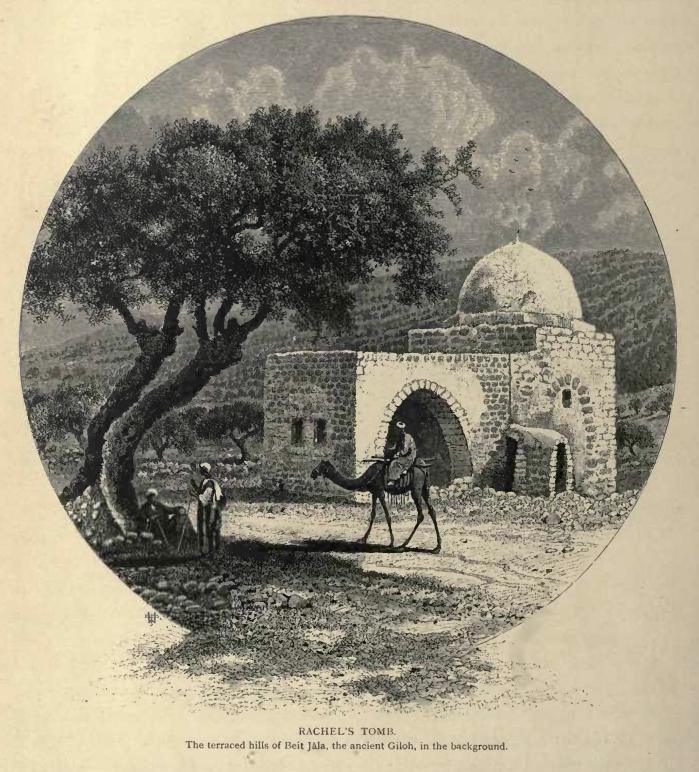 🇵🇸 Palestine and 1 moreRachel's TombQever Raḥel; Qabr Rāḥīl
A shared holy site near Bethlehem revered by Jews, Christians, and MuslimsTradition · Speaking with spirits and the dead · Protection Living
🇨🇳 China and 4 moreKitchen God灶君
The Chinese hearth deity who reports domestic conduct to the Jade EmperorBeing · Protection · Luck and prosperity Living
🇵🇸 Palestine and 1 moreRachel's TombQever Raḥel; Qabr Rāḥīl
A shared holy site near Bethlehem revered by Jews, Christians, and MuslimsTradition · Speaking with spirits and the dead · Protection Living
🇨🇳 China and 4 moreKitchen God灶君
The Chinese hearth deity who reports domestic conduct to the Jade EmperorBeing · Protection · Luck and prosperity Living