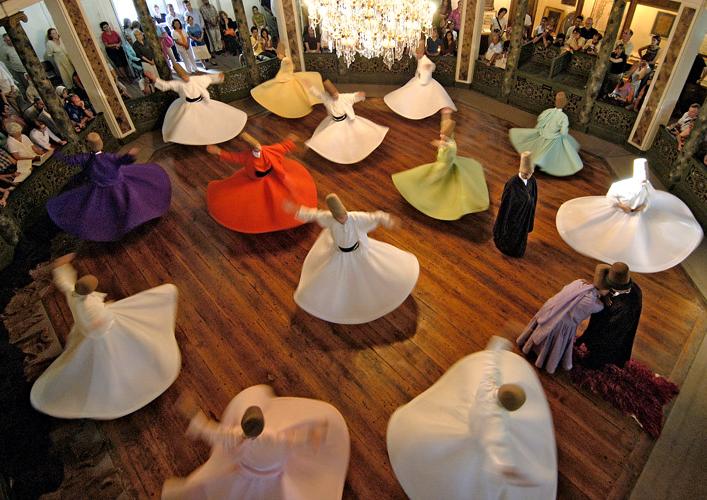
Sama
In its own language: سماع
from Arabic s-m-a, meaning listening or acceptance by tradition
A Sufi ritual of listening, music, and whirling to reach spiritual ecstasy
Sama is a Sufi ceremony of listening that uses song, dance, and poetry to meditate on God. Practised mainly in Turkey, Egypt, Iran, and Turkmenistan, it aims to purify the heart and achieve trance.
- Sama means listening in Arabic
- Linked to Rumi's ecstatic trance
- UNESCO intangible heritage since 2005
- Uses flute, tambourine, and bells
- Aims for wajd, a state of ecstasy
What it is
Sama is a Sufi ritual centered on listening to sacred sounds. It forms part of Dhikr, the practice of remembering God. The ceremony blends singing, instrument playing, poetry recitation, and dancing. Participants seek to reflect on the presence of the divine through these sensory experiences. It is considered a popular form of worship within Sufi traditions across several regions.
Where it comes from
The practice is often linked to Rumi, who reportedly entered an ecstatic state after hearing goldbeaters hammering metal. This event inspired the spinning movements central to the Mevlevi Order. Abu Sa'id also played a key role by introducing music and dance into collective devotional rituals in the tenth century. The term itself has been used since then to describe this type of remembrance ceremony.
How it is done
Practitioners gather in circles to listen to hymns and instrumental music. Dancers, known as dervishes, spin in place while maintaining specific postures. They move as a group but also turn individually. The physical motion accompanies the auditory experience. Participants remain silent and still unless they enter a state of wajd, or spiritual ecstasy. The goal is selfless expression rather than personal display.
Tools and materials
The ceremony uses specific instruments like the flute, tambourine, and bells. These are chosen for their symbolic value rather than profane associations. Dancers wear tall hats and long robes that represent spiritual garments. Poetry and hymns, called qawl and bayt, are recited to aid contemplation. Sacred texts are treated with reverence and not improvised upon.
Sama, drawn and placed
- Living
- Revived
- Fading
- Historical
- Legendary
- Performed
- Lineage
- Sufism
- Timing
- during dhikr ceremonies and festivals
What it is for
Sama aims to purify the soul and deepen love for God. It helps practitioners reach wajd, a trance-like state of ecstasy. Some hope to achieve khamra, or spiritual drunkenness. The ritual is believed to reveal what already exists in the heart. It serves as a means to communicate directly with the divine without intermediaries.
Who does it
Mevlevi practitioners are adult initiates into the order. Historically, only men participated, though modern groups may include women. Alevi and Bektashi ceremonies involve teenagers performing in mixed groups. Leaders guide the session, ensuring proper intent and etiquette. Training involves learning the specific movements and musical structures required for the ritual.
Peoples and places
The Mevlevi Order in Turkey is the most famous practitioner. Alevis and Bektashis in Turkey and Albania also perform sema. In Egypt, the practice appears as tannoura, often adapted for folk performance. Iranian traditions trace roots to early Sufi masters. Each group modifies the ritual to fit local customs and theological views.
At a glance: who, where and when
Belief worlds
Occasions


What people believe
Turning symbolizes leaving the ego behind to find truth. The circle of dancers mirrors the pilgrimage to Mecca. Practitioners believe the ritual brings them closer to God. The concept of tawhid, or divine unity, underpins the entire experience. Spiritual ascent happens through mind and love.
When it is done
Ceremonies occur during daily dhikr sessions and special festivals. The Hacı Bektaş Veli Festival features organized sema groups. Specific times are chosen to align with spiritual readiness. The rhythm of the music guides the pace of the dancing. Seasonal events often highlight the communal aspect of the practice.
How scholars and sceptics see it
Al-Ghazali wrote about music and dance as aids to religious life. He argued that pure hearts benefit from these practices. Modern scholars study the ritual as a form of embodied meditation. Anthropologists note its role in community bonding. Critics sometimes view it as innovation, while supporters see it as essential devotion.
Cautions and what is closed
Some Muslim groups oppose sama, calling it heretical. They compare the trance state to physical drunkenness. Extreme cases of wajd can lead to fainting or death. Participants must maintain genuine intent to avoid negative effects. Faking ecstasy is considered harmful to spiritual progress. Proper etiquette prevents misuse of the ritual.
Compare and confuse
Qawwali in South Asia shares similarities with sama. Both use music and dance for spiritual purposes. Hadhra in Arab Sufism also involves collective remembrance. Tannoura in Egypt differs by focusing more on visual spectacle. All these forms aim to connect the practitioner with the divine through sensory engagement.
Law and persecution
UNESCO recognized the Mevlevi Sema Ceremony as intangible heritage in 2005. This status protects the tradition from loss. Turkey supports the preservation of these rituals. Legal frameworks vary by country regarding religious performances. Some regions restrict public displays of certain Sufi practices.
Questions people ask about Sama
What does Sama mean?
Sama literally means listening in Arabic. It refers to a Sufi ritual where participants listen to sacred music and poetry to remember God. The practice involves sound, movement, and spiritual focus.
Where did Sama originate?
Sama is associated with Rumi and the Mevlevi Order in Turkey. It also has roots in Iran, where Abu Sa'id introduced music into devotional rituals. The tradition spread to Egypt and other regions over time.
What happens during a Sama ceremony?
Practitioners sing hymns, play instruments like flutes, and dance. Dervishes spin in circles while listening to poetry. The goal is to reach a trance state called wajd, which signifies spiritual closeness to God.
Who performs Sama today?
Mevlevi dervishes in Turkey are well-known practitioners. Alevis and Bektashis also perform sema, often involving teenagers. In Egypt, tannoura shows adapt the ritual for folk audiences. All groups follow strict etiquette.
Good reading and sources
- Sama (Sufism) on WikipediaEncyclopedia
- More photos on Wikimedia CommonsPhotos and video
- Wikidata recordOpen data
The facts on this page come from the Wikipedia article "Sama (Sufism)", written by its contributors and used under the CC BY-SA 4.0 licence, and from its Wikidata record (CC0). EveryJaadu rewrote the text in its own words, with AI assistance, and compares every page with the article to make sure no passage is copied. It may be reused under the same CC BY-SA 4.0 licence with a link back.
It may contain mistakes. Names and customs differ from one community to the next, and some knowledge is closed to outsiders and left out here. This page describes belief and practice. It does not say that any of it works, it is not a how-to, and it is not medical advice. If something is wrong, tell us. Last refreshed 2026-10-10.
More from Turkey
All the entries from Turkey 🇮🇷 Iran and 4 moreChaharshanbe Suriچهارشنبهسوری
An Iranian fire festival marking the transition from winter to springTradition · Luck and prosperity · Speaking with spirits and the dead Living
🇹🇷 Turkey and 3 moreSufi whirlingSemazen
A spinning meditation practiced by Sufi dervishes to reach spiritual connection with Allah.Tradition · Speaking with spirits and the dead · Love and attraction Living
🇮🇷 Iran and 4 moreChaharshanbe Suriچهارشنبهسوری
An Iranian fire festival marking the transition from winter to springTradition · Luck and prosperity · Speaking with spirits and the dead Living
🇹🇷 Turkey and 3 moreSufi whirlingSemazen
A spinning meditation practiced by Sufi dervishes to reach spiritual connection with Allah.Tradition · Speaking with spirits and the dead · Love and attraction Living
 🇹🇷 Turkey and 2 moreHadraحضرة
A collective Sufi ritual of remembrance and chanting to experience Divine PresenceRite · Speaking with spirits and the dead · Power and authority Living
🇹🇷 Turkey and 4 moreSufi whirlingSemazen
A spinning meditation practiced by Sufi dervishes to reach spiritual connection through music and movement.Rite · Speaking with spirits and the dead · Change and initiation Living
🇹🇷 Turkey and 2 moreHadraحضرة
A collective Sufi ritual of remembrance and chanting to experience Divine PresenceRite · Speaking with spirits and the dead · Power and authority Living
🇹🇷 Turkey and 4 moreSufi whirlingSemazen
A spinning meditation practiced by Sufi dervishes to reach spiritual connection through music and movement.Rite · Speaking with spirits and the dead · Change and initiation Living
Related elsewhere
All rite 🇮🇳 IndiaChakraचक्र
Meditation points in the subtle body used in Hindu and Buddhist yogaTradition · Speaking with spirits and the dead · Change and initiation Living
🇮🇳 IndiaChakraचक्र
Meditation points in the subtle body used in Hindu and Buddhist yogaTradition · Speaking with spirits and the dead · Change and initiation Living
 🇳🇬 NigeriaOrunmilaỌ̀rúnmìlà
Yoruba deity of wisdom and the creator of the Ifá divination systemBeing · Seeing and foretelling · Speaking with spirits and the dead Living
🇳🇬 NigeriaOrunmilaỌ̀rúnmìlà
Yoruba deity of wisdom and the creator of the Ifá divination systemBeing · Seeing and foretelling · Speaking with spirits and the dead Living
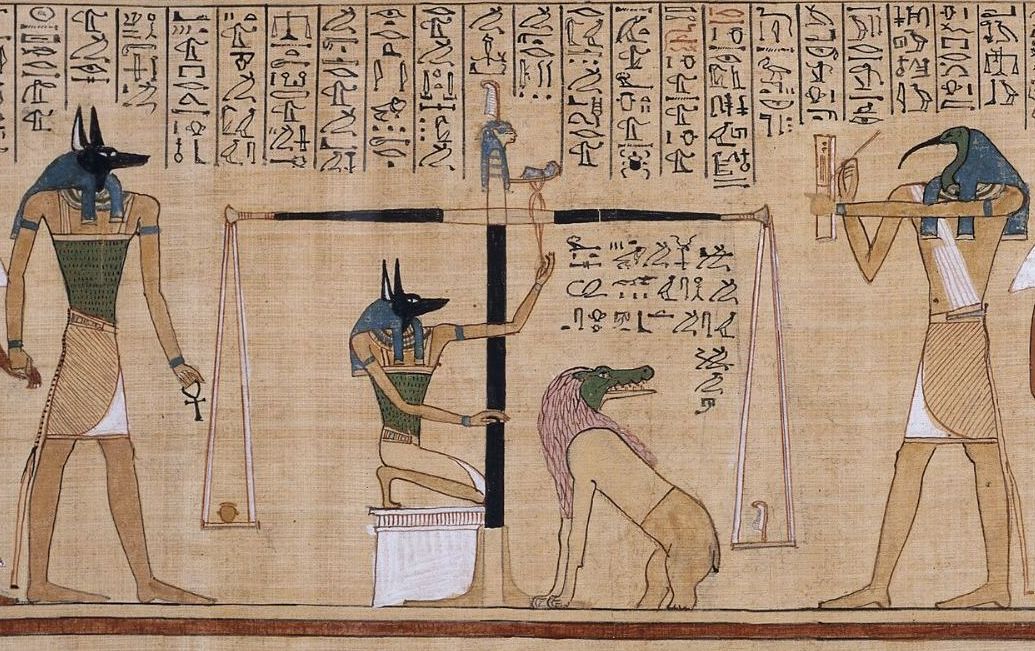 🇪🇬 EgyptAncient Egyptian afterlife beliefs
A system of rituals and texts guiding the soul through the underworld to eternal rebirthTradition · Protection · Speaking with spirits and the dead Historical
🇪🇬 EgyptAncient Egyptian afterlife beliefs
A system of rituals and texts guiding the soul through the underworld to eternal rebirthTradition · Protection · Speaking with spirits and the dead Historical
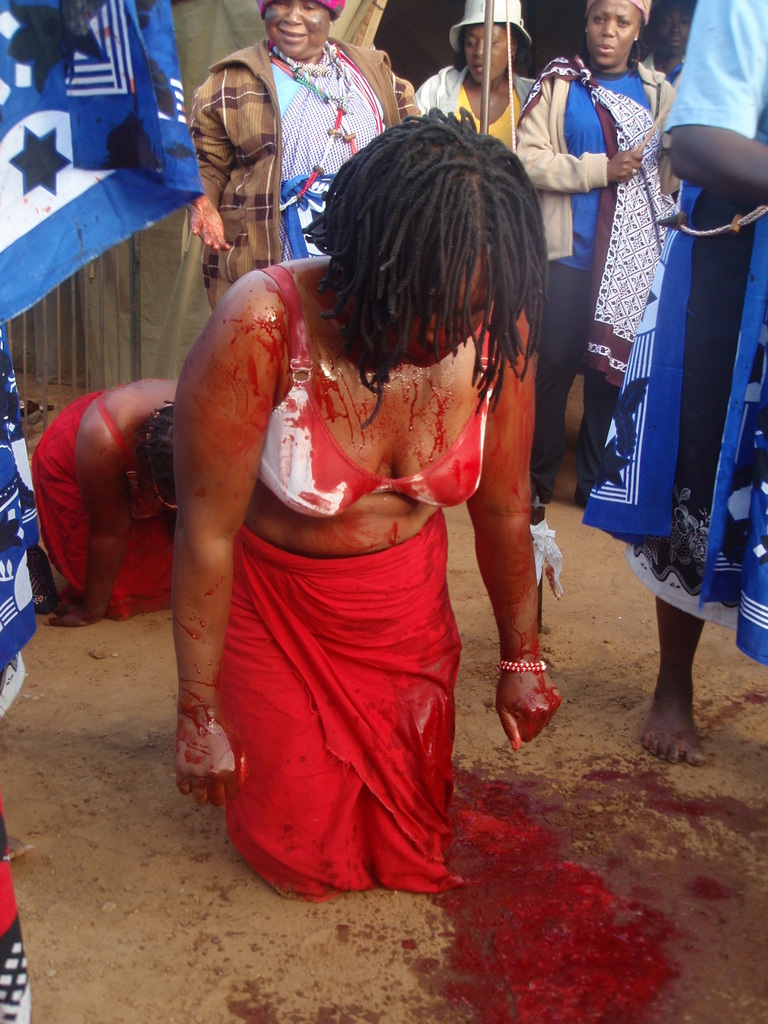 🇿🇦 South AfricaUkuthwasa
A spiritual calling and initiation process for traditional healers in Southern Africa.Rite · Healing · Speaking with spirits and the dead Living
🇿🇦 South AfricaUkuthwasa
A spiritual calling and initiation process for traditional healers in Southern Africa.Rite · Healing · Speaking with spirits and the dead Living