Phallic saints are holy figures or local gods whose images include a penis and who are invoked for fertility. The penis is treated as a benevolent sign of abundant offspring, and barren women and young girls are named among their devotees; examples range from Cosmas and Damian at Isernia to the Slavic god Yarilo.
- Wax models of body parts, most often penises, were left at Isernia as offerings.
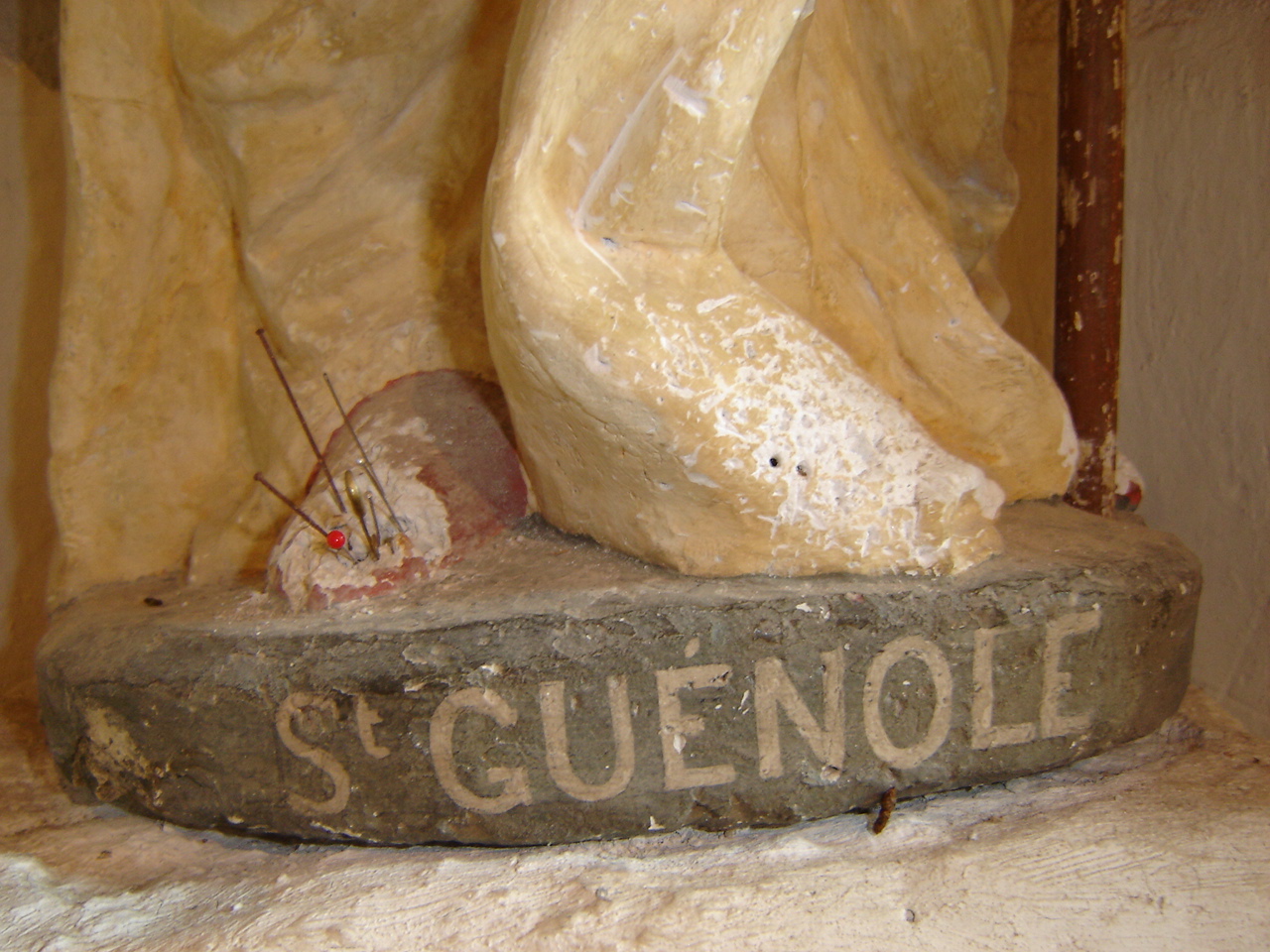
- Saint Guignolé gained a fertility link by confusion with gignere, glossed 'to beget'.
- Saint Foutin's name was linked to foutre, and wine was poured over his phallus.
- Yarilo, a Slavic god of spring fertility, takes his name from a root meaning 'ardent' or 'frantic'.
- Richard Payne Knight reproduced examples of the effigies in his study.
What it is
The term covers holy figures and local gods whose images include a penis. Worshippers call on them for fertility, and the penis is read as a friendly sign of plentiful offspring rather than as an obscene mark. Barren women and young girls are named as especially devoted. The category takes in Christian saints whose cults gained this trait, and also Slavic gods of spring and reproduction. In each case the sexual image is tied to fruitfulness: children, crops, livestock and the renewal of nature.
Where it comes from
The figures have mixed backgrounds. Many began as ordinary saints, then acquired a genital attribute through folk etymology, the process by which a name is heard or explained as a different word. Guignolé was linked to gignere, glossed 'to beget'; Pothin became Foutin through the verb foutre. The Slavic side is older in tone: Yarilo, also called Yarovit or Gerovit, is a god who wakes nature, and his name comes from a root yar meaning 'ardent, frantic, strong', with links to spring fertility. One hymn in his voice claims grass for the plains, leaves for trees, crops for fields and young for livestock.
How it is done
At Isernia, near Naples, people brought wax models of body parts to Cosmas and Damian on their feast day; models of the penis were the most common. Devotion to Saint Foutin included pouring wine over his phallus. The shrine of Saint Guignolé was venerated until 1793. These are acts of offering and shrine devotion, not a scripted ceremony.
Tools and materials
Wax is the main material named. Worshippers shaped it into models of body parts and left them as offerings. The penis appears as a separate effigy, and examples were copied by Richard Payne Knight. Wine is used in the devotion to Saint Foutin, poured over the phallus. Shrines hold the images and give the cult a fixed place. The signs point to fertility: the body part stands for offspring, and the wax offering makes the request visible.
Phallic saint, drawn and placed
- Living
- Revived
- Fading
- Historical
- Legendary
- Performed
- Lineage
- Christian saint veneration and Slavic godhood
- Timing
- on the feast day of Cosmas and Damian; spring for Yarilo
What it is for
The purpose is fertility. The figures are invoked for prolificacy and reproductive fruitfulness, words that cover children and the abundance of living things. Barren women and young girls are the devotees named most directly. The phallus is not presented as a coarse joke; it is a sign of fruitfulness offered for reverence. In the Slavic hymn, the same aim widens to crops and livestock. The expected good is increase: in the family, in the fields and among animals.
Who does it
The devotees named are barren women and young girls, who revere the figures and leave offerings. The holy figures themselves come from different ranks: Cosmas and Damian are twin physicians, Guignolé was the first abbot of Landévennec, and Pothin was the first bishop of Lyon. Ters of Antwerp is a local figure, also called Semini or God Jumenas. Gender and status vary: the worshippers are female, while the named saints include monks, bishops and a local figure.
Peoples and places
The examples are scattered across Europe. Isernia lies near Naples; Antwerp, Landévennec, Lyon, Bourg-Dieu, Cotentin and Anjou are also named. The Slavic material gives Yarilo under several forms: Yarila, Yarovit, Gerovit and the Serbian-Croatian Јarilo. He belongs to the Slavic godhood and is a god of waking nature. The Christian examples are saints with local cults, while the Slavic figure is a deity of spring. The entry therefore crosses two settings: saint veneration and Slavic folk religion.
At a glance: who, where and when
What people believe
The worldview joins fertility to the sacred. A penis image can be a benevolent emblem of plenty, and a saint or local god is asked for children. Folk etymology is part of the logic: if a name sounds like a word for begetting, the figure may gain a sexual sign. In the Slavic case, the god's name carries heat and force, and spring is the season when nature wakes. The same power is imagined in crops, beasts and human families. The focus is increase in crops, animals and families.
When it is done
The feast day of Cosmas and Damian at Isernia is the one fixed occasion named. On it, wax models of body parts were presented. Yarilo is tied to spring and the awakening of nature, when grass, leaves, crops and young livestock are said to come. The shrine of Guignolé stood until 1793, when it was destroyed. Beyond these points, the figures are linked to fertility rather than to a detailed calendar.
How scholars and sceptics see it
Sir William Hamilton, who lived from 1730 to 1803, reported the wax offerings at Isernia. He found that penis models were the most common among them. His observations fed Richard Payne Knight's study, where examples of the effigies were reproduced. The broader analysis turns on folk etymology: several saints are said to have gained their sexual attribute because their names were confused with unrelated words. That reading treats the cults as products of language and local custom, not as official teaching.
Compare and confuse
The category sits beside folk saints and local deities. Some figures are recognized saints, while others, like Yarilo, are gods of the Slavic godhood. The same pattern appears under different names: Ters is also Semini or God Jumenas, and Guignolé is Winwaloe. The sexual trait comes from popular wordplay.
Questions people ask about Phallic saint
What is a phallic saint?
A holy figure or local god whose image includes a penis and who is called on for fertility. The penis is treated as a sign of abundance and offspring, and barren women and young girls are named as devotees.
Where are phallic saints found?
Examples are recorded at Isernia near Naples, Antwerp, Landévennec, Lyon, Bourg-Dieu, Cotentin and Anjou. Slavic material names Yarilo, also called Yarovit or Gerovit, a god of spring fertility.
Why do some saints have this attribute?
Many are ordinary saints whose names were later linked by folk etymology to words about begetting. Guignolé was confused with gignere, and Pothin with foutre, giving them a sexual meaning they did not originally carry.
What offerings are recorded?
At Isernia, wax models of body parts were presented to Cosmas and Damian, with penises said to be the most common. Wine was poured over the phallus of Saint Foutin.
Who worshipped them?
The devotees named most directly are barren women and young girls. The figures themselves are saints or local deities, and the examples include an abbot, a bishop and a local figure at Antwerp.
Good reading and sources
The facts on this page come from the Wikipedia article "Phallic saint", written by its contributors and used under the CC BY-SA 4.0 licence, and from its Wikidata record (CC0). EveryJaadu rewrote the text in its own words, with AI assistance, and compares every page with the article to make sure no passage is copied. It may be reused under the same CC BY-SA 4.0 licence with a link back.
It may contain mistakes. Names and customs differ from one community to the next, and some knowledge is closed to outsiders and left out here. This page describes belief and practice. It does not say that any of it works, it is not a how-to, and it is not medical advice. If something is wrong, tell us. Last refreshed 2026-10-17.
More from Italy
All the entries from Italy 🇩🇪 Germany and 5 moreMaypoleMaibaum
A tall wooden pole raised for European spring festivals, accompanied by dance and celebration.Tradition · Luck and prosperity · Love and attraction Living
🇩🇪 Germany and 5 moreMaypoleMaibaum
A tall wooden pole raised for European spring festivals, accompanied by dance and celebration.Tradition · Luck and prosperity · Love and attraction Living
 🇮🇹 ItalyFortunaFortūna
The Roman goddess of luck and fate, shown with a wheel and a horn of plentyBeing · Luck and prosperity · Seeing and foretelling Historical
🇮🇹 ItalyFortunaFortūna
The Roman goddess of luck and fate, shown with a wheel and a horn of plentyBeing · Luck and prosperity · Seeing and foretelling Historical
 🇬🇷 Greece and 5 moreBay Laurelδάφνη
An aromatic Mediterranean plant used in cooking and as a symbol of victory and purification.Substance · Protection · Cleansing and purification Living
🇮🇹 Italy and 1 moreAradia
A figure of Italian folklore and modern pagan witchcraft, seen as a teacher of magic and liberation.Figure · Cursing and harm · Power and authority Revived
🇬🇷 Greece and 5 moreBay Laurelδάφνη
An aromatic Mediterranean plant used in cooking and as a symbol of victory and purification.Substance · Protection · Cleansing and purification Living
🇮🇹 Italy and 1 moreAradia
A figure of Italian folklore and modern pagan witchcraft, seen as a teacher of magic and liberation.Figure · Cursing and harm · Power and authority Revived
Related elsewhere
All belief 🇨🇱 ChileTrauco
A small forest spirit from Chiloé mythology known for seducing women and causing pregnancyBeing · Love and attraction · Cursing and harm Legendary
🇨🇱 ChileTrauco
A small forest spirit from Chiloé mythology known for seducing women and causing pregnancyBeing · Love and attraction · Cursing and harm Legendary
 🇳🇬 Nigeria and 3 moreOshunỌ̀ṣun
A Yoruba water spirit linked to love, wealth, and the Osun River in Nigeria.Being · Love and attraction · Luck and prosperity Living
🇳🇬 Nigeria and 3 moreOshunỌ̀ṣun
A Yoruba water spirit linked to love, wealth, and the Osun River in Nigeria.Being · Love and attraction · Luck and prosperity Living
 🇮🇳 India and 5 moreHoliहोली
A Hindu spring festival marked by coloured powders and bonfires to celebrate love and virtue.Tradition · Love and attraction · Cursing and harm Living
🇧🇷 Brazil and 1 moreQuimbanda
An Afro-Brazilian religion focused on male and female street spirits for worldly mattersTradition · Protection · Luck and prosperity Living
🇮🇳 India and 5 moreHoliहोली
A Hindu spring festival marked by coloured powders and bonfires to celebrate love and virtue.Tradition · Love and attraction · Cursing and harm Living
🇧🇷 Brazil and 1 moreQuimbanda
An Afro-Brazilian religion focused on male and female street spirits for worldly mattersTradition · Protection · Luck and prosperity Living