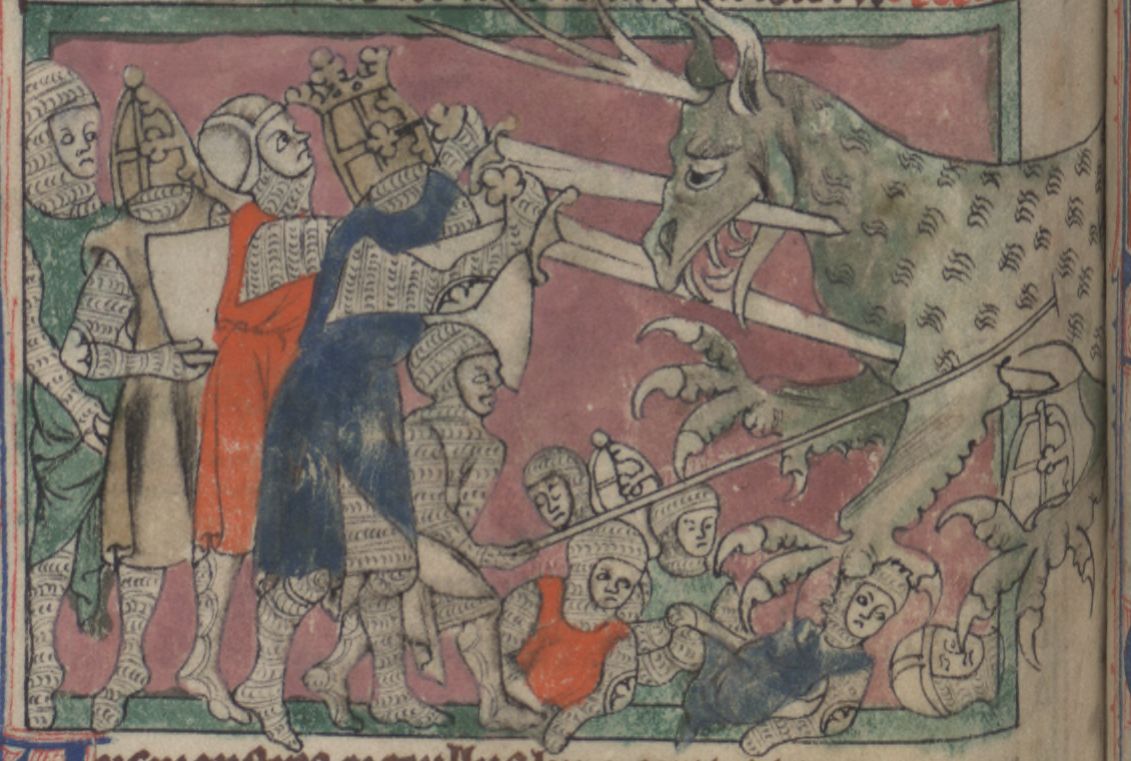
Odontotyrannos
In its own language: όδοντοτύραννος
from Greek words for tooth and tyrant
A mythical three-horned beast from Alexander the Great's Indian campaigns
The Odontotyrannos is a legendary creature described in medieval retellings of Alexander the Great's journey. It appears as a massive, horned monster that attacks Macedonian troops in India. Scholars view it as a fictional addition to the Alexandrian romance tradition.
- Described as larger than an elephant with three horns
- Attacks Macedonian troops in Alexander's Indian campaign
- Name means tooth-tyrant in Greek and related languages
- Appears in the Letter from Alexander to Aristotle
- Scholars link it to crocodiles or rhinoceroses
What it is
The Odontotyrannos is a legendary beast from the stories surrounding Alexander the Great. It is known by several names, including odontotyrannus and dentityrannos. The creature is typically described as having a black, horse-like head with three horns on its forehead. It is said to be larger than an elephant. Medieval texts describe it as an amphibious carnivore capable of devouring other large animals. Some versions call it a tooth-tyrant or lord of teeth. It serves as a monstrous obstacle in the romantic tales of Alexander's eastern campaigns.
Where it comes from
The creature appears in the apocryphal Letter from Alexander to Aristotle. It also features in medieval romantic retellings of the Alexandrian legend. Different cultural versions offer varying details about the beast. A Latin translation by Julius Valerius spells the name as odontotyrannus. The Syriac version of Pseudo-Callisthenes refers to it as Mashḳėlath. Armenian accounts provide different numbers regarding the effort needed to move its body. These variations show how the legend evolved across languages and regions over centuries.
Odontotyrannos, drawn and placed
- Living
- Revived
- Fading
- Historical
- Legendary
- Performed
- Lineage
- Greek mythology
Peoples and places
The legend involves interactions between Macedonians and local Indians. Indian sources reportedly called the beast a tooth-tyrant. Scholars have tried to link the name to Sanskrit roots like dantešvara. Other theories suggest connections to Hindu mythological creatures like the makara. The story reflects ancient European perceptions of exotic Indian wildlife. It blends historical figures with fantastical elements common in travel literature of the era.
How scholars and sceptics see it
Researchers have attempted to identify the Odontotyrannos with real animals. Budge suggested it might be a crocodilian native to the Ganges river. Others proposed it was based on a rhinoceros or a giant fanged worm described by Ctesias. Christian Lassen reconstructed a Sanskrit name meaning lord of teeth. Roger Goossens rejected this, proposing dvijarāja instead. Many scholars now consider it an imaginary creature born from literary imagination rather than zoological observation.
Compare and confuse
The Odontotyrannos shares traits with other legendary monsters in Alexander's adventures. It resembles the makara from Hindu mythology in some interpretations. The description of a giant worm aligns with earlier accounts by Ctesias. Variations in the name across Latin, Syriac, and Greek texts show how legends transform. The beast functions similarly to other exotic threats found in medieval romances about distant lands.
Questions people ask about Odontotyrannos
What is the Odontotyrannos?
It is a mythical three-horned beast from legends about Alexander the Great. Described as larger than an elephant, it attacks his men in India. The name translates to tooth-tyrant in Greek.
Where does the story come from?
The tale appears in the apocryphal Letter from Alexander to Aristotle. It also features in medieval romantic retellings of the Alexandrian legend across various cultures.
What does the name mean?
The Greek name ὀδοντοτύραννος means tooth-tyrant. Local Indians reportedly used similar terms. Scholars have also reconstructed Sanskrit origins meaning lord of teeth.
Good reading and sources
The facts on this page come from the Wikipedia article "Odontotyrannos", written by its contributors and used under the CC BY-SA 4.0 licence, and from its Wikidata record (CC0). EveryJaadu rewrote the text in its own words, with AI assistance, and compares every page with the article to make sure no passage is copied. It may be reused under the same CC BY-SA 4.0 licence with a link back.
It may contain mistakes. Names and customs differ from one community to the next, and some knowledge is closed to outsiders and left out here. This page describes belief and practice. It does not say that any of it works, it is not a how-to, and it is not medical advice. If something is wrong, tell us. Last refreshed 2026-10-06.
More from Syria
All the entries from Syria 🇮🇱 Israel and 1 moreAzazelעזאזל
A desert place and fallen angel linked to the Yom Kippur scapegoat ritualFigure · Cursing and harm · Cleansing and purification Historical
🇮🇱 Israel and 1 moreAzazelעזאזל
A desert place and fallen angel linked to the Yom Kippur scapegoat ritualFigure · Cursing and harm · Cleansing and purification Historical
 🇪🇹 Ethiopia and 5 morePrester John
A legendary Christian king and priest said to rule a lost kingdom in the East.Figure · Power and authority · Wonder and entertainment Legendary
🇪🇹 Ethiopia and 5 morePrester John
A legendary Christian king and priest said to rule a lost kingdom in the East.Figure · Power and authority · Wonder and entertainment Legendary
 🇹🇷 Turkey and 2 moreApollonius of TyanaἈπολλώνιος ὁ Τυανεύς
A first-century philosopher and miracle worker whose life became a legend of divine power.Figure · Wonder and entertainment Historical
🇹🇷 Turkey and 2 moreApollonius of TyanaἈπολλώνιος ὁ Τυανεύς
A first-century philosopher and miracle worker whose life became a legend of divine power.Figure · Wonder and entertainment Historical
 🇪🇬 Egypt and 3 moreAmulet
A portable object worn or carried to ward off harm and invite fortuneCharm · Protection · Luck and prosperity Living
🇪🇬 Egypt and 3 moreAmulet
A portable object worn or carried to ward off harm and invite fortuneCharm · Protection · Luck and prosperity Living
Related elsewhere
All figure 🇷🇸 Serbia and 5 moreVampire
An undead creature from folklore that feeds on the blood or life force of the livingBeing · Cursing and harm · Luck and prosperity Legendary
🇷🇸 Serbia and 5 moreVampire
An undead creature from folklore that feeds on the blood or life force of the livingBeing · Cursing and harm · Luck and prosperity Legendary
 🇬🇧 United Kingdom and 2 moreKing ArthurBrenin Arthur
A legendary British king and folk hero of medieval literature and Welsh mythologyFigure · Power and authority · Wonder and entertainment Legendary
🇬🇧 United Kingdom and 2 moreKing ArthurBrenin Arthur
A legendary British king and folk hero of medieval literature and Welsh mythologyFigure · Power and authority · Wonder and entertainment Legendary
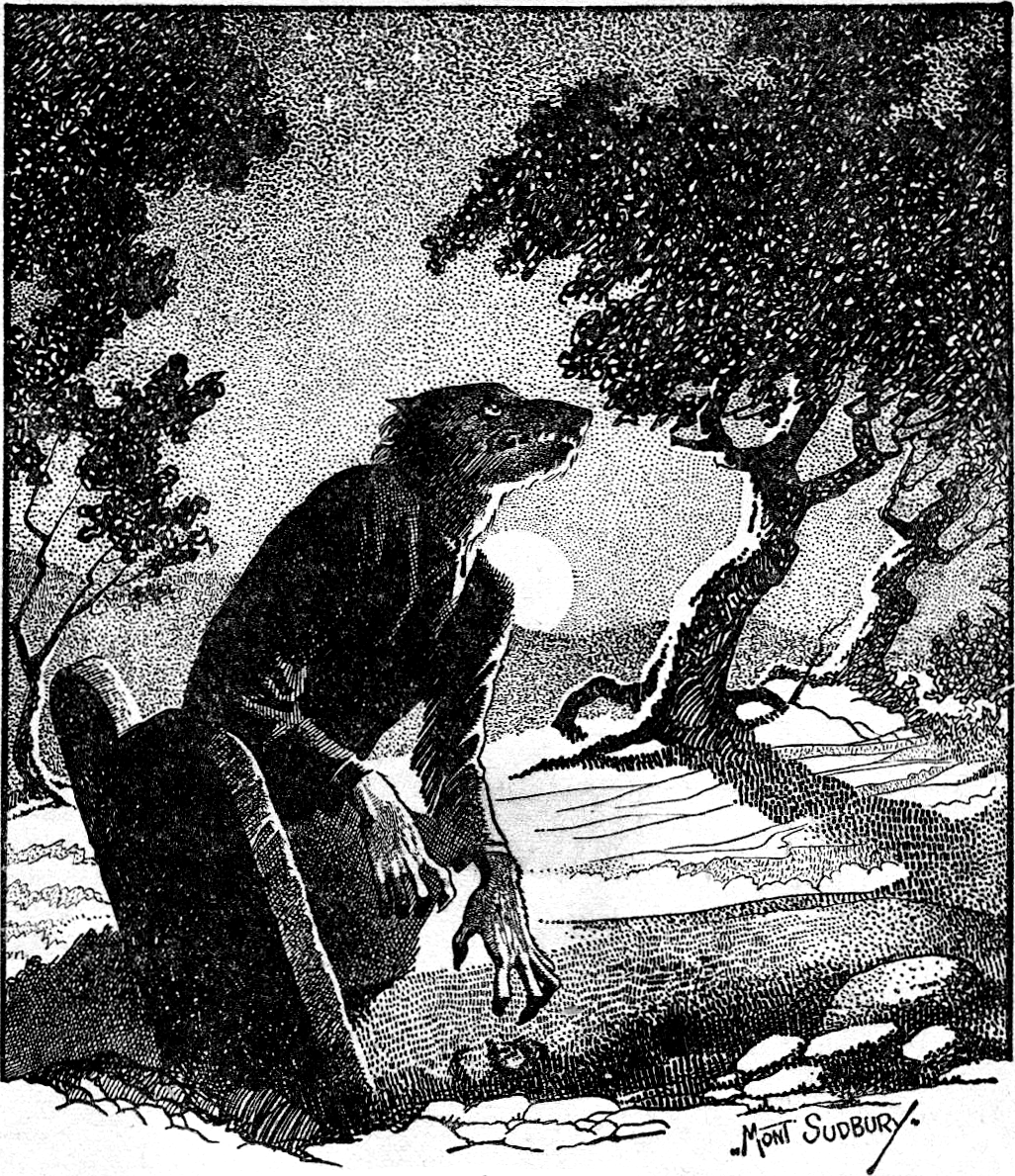 🇫🇷 France and 5 moreWerewolf
A mythical shapeshifter that turns into a wolf, central to European witch-hunts and Gothic horror.Being · Cursing and harm · Wonder and entertainment Legendary
🇫🇷 France and 5 moreWerewolf
A mythical shapeshifter that turns into a wolf, central to European witch-hunts and Gothic horror.Being · Cursing and harm · Wonder and entertainment Legendary
 🇪🇬 Egypt and 1 moreLilithלִילִית
A feminine figure from Mesopotamian and Jewish mythology, often depicted as a night demon or spirit.Being · Cursing and harm Legendary
🇪🇬 Egypt and 1 moreLilithלִילִית
A feminine figure from Mesopotamian and Jewish mythology, often depicted as a night demon or spirit.Being · Cursing and harm Legendary