
Hermetic Order of the Golden Dawn
In its own language: Ordo Hermeticus Aurorae Aureae
from Latin for 'Hermetic Order of the Golden Aurora'
A late-19th-century British magical order that shaped modern Western occultism
The Hermetic Order of the Golden Dawn was a secret society active in Great Britain from 1887 to 1903. It combined Rosicrucian and Masonic traditions with Hermetic philosophy to teach ritual magic and spiritual development. Its structured system became a primary influence on later movements like Wicca and Thelema.
- Founded in London in 1887 by Westcott, Mathers, and Woodman
- Based on decoded Cipher Manuscripts using a Trithemius cipher
- Allowed women to participate on equal footing with men
- Major influence on modern Wicca and Thelema
- Dissolved in 1903 due to internal leadership conflicts
What it is
The Hermetic Order of the Golden Dawn operated as a magical organization within the Western esoteric tradition. It focused on the study of occult Hermeticism and metaphysics. Members engaged in theurgy, which is ritual magic intended to invoke divine presence. The group aimed at personal spiritual growth through strict hierarchical initiation. It blended elements from Rosicrucianism and Freemasonry into a cohesive system. This structure allowed members to progress through specific grades of knowledge.
Where it comes from
The Order emerged in London in 1887 based on decoded Cipher Manuscripts. These documents were originally written in English using a Trithemius cipher. They passed from scholar Kenneth Mackenzie to William Wynn Westcott. Westcott decoded them and collaborated with Samuel Liddell MacGregor Mathers and William Robert Woodman. They established the Isis-Urania Temple in London. The founders claimed authority from a German countess named Anna Sprengel and her Secret Chiefs.
How it is done
Initiates progressed through a graded curriculum. The First Order taught esoteric philosophy and the four classical elements. Students learned astrology, geomancy, and tarot divination. The Second Order, known as the Rosae Rubeae et Aureae Crucis, focused on advanced practices. Members studied scrying, astral travel, and alchemy. Rituals were conducted in temples across Britain and France. The Third Order involved communication with the Secret Chiefs.
Tools and materials
The Order relied heavily on the Cipher Manuscripts for its rituals. Members used Tarot cards for divination and symbolic study. Astrological charts guided their understanding of celestial influences. The classical elements served as foundational concepts for meditation. The Rose Cross lamen represented the highest grade of achievement.
Hermetic Order of the Golden Dawn, drawn and placed
- Living
- Revived
- Fading
- Historical
- Legendary
- Performed
- Lineage
- Western esoteric tradition, Rosicrucianism, Freemasonry
- Timing
- during initiation grades and regular temple meetings
What it is for
Members sought spiritual transformation and communion with higher forces. The practice aimed to elevate the individual through structured learning. Participants believed they could access hidden wisdom from the Secret Chiefs. The Order provided a framework for mastering metaphysical concepts. It offered a path for those interested in ceremonial magic and inner development.
Who does it
Founders included Westcott, Mathers, and Woodman, who were all Freemasons. Women participated on equal terms with men, unlike many contemporary groups. Notable members included poets and artists like W.B. Yeats and Aleister Crowley. Leadership shifted as internal conflicts arose. Mathers eventually controlled the Order after Westcott left.
Peoples and places
The Golden Dawn attracted members from Victorian society. It gained prominence in Great Britain with temples in London, Edinburgh, and Bristol. A temple was also established in Paris by Mathers. The group influenced later occultists in English-speaking countries. Its legacy persists in modern magical traditions despite its short active life.
At a glance: who, where and when
What people believe
The Order believed in a hierarchy of spiritual beings called the Secret Chiefs. These entities were thought to guide the lower orders through spirit communication. The system assumed that structured ritual could alter consciousness. It integrated Kabbalistic concepts with Christian mysticism and alchemy.
When it is done
Activities centered around initiation ceremonies and regular temple meetings. There were no specific public festivals tied to the Order. Progression depended on completing the requirements of each grade. The timeline of events followed the establishment of new temples. Key dates mark the founding of the Isis-Urania Temple and subsequent splits.
How scholars and sceptics see it
Historians view the Golden Dawn as a pivotal moment in occult history. Scholars note its influence on 20th-century magical revival. Researchers analyze the Cipher Manuscripts to understand its origins. Critics point out the fabricated claims regarding Anna Sprengel. The group is studied for its impact on figures like Aleister Crowley.
Cautions and what is closed
Internal disputes led to the dissolution of the original Order. Personal conflicts between leaders caused significant fragmentation. Accusations of fraud surrounded the claims about the Secret Chiefs. The departure of key members weakened the central authority. Modern groups claim lineage but operate independently.
Compare and confuse
The Golden Dawn differs from Freemasonry by admitting women equally. It shares roots with Rosicrucian societies but developed unique rituals. Later orders like the Stella Matutina split from the original group. It influenced Wicca and Thelema more directly than earlier traditions.
Questions people ask about Hermetic Order of the Golden Dawn
What is the Hermetic Order of the Golden Dawn?
It was a secret magical society active in Britain from 1887 to 1903. It combined Rosicrucian and Masonic traditions to teach ritual magic and spiritual development.
Where did the Golden Dawn originate?
It originated in London, United Kingdom. The founders used decoded Cipher Manuscripts to establish the Isis-Urania Temple in 1888.
Who were the main founders?
The three founders were William Wynn Westcott, Samuel Liddell MacGregor Mathers, and William Robert Woodman. All were high-ranking Freemasons.
How did the Golden Dawn influence modern magic?
Its structured rituals and teachings inspired major 20th-century movements like Wicca and Thelema. Many contemporary occult concepts trace back to its curriculum.
Good reading and sources
- Hermetic Order of the Golden Dawn on WikipediaEncyclopedia
- More photos on Wikimedia CommonsPhotos and video
- Wikidata recordOpen data
The facts on this page come from the Wikipedia article "Hermetic Order of the Golden Dawn", written by its contributors and used under the CC BY-SA 4.0 licence, and from its Wikidata record (CC0). EveryJaadu rewrote the text in its own words, with AI assistance, and compares every page with the article to make sure no passage is copied. It may be reused under the same CC BY-SA 4.0 licence with a link back.
It may contain mistakes. Names and customs differ from one community to the next, and some knowledge is closed to outsiders and left out here. This page describes belief and practice. It does not say that any of it works, it is not a how-to, and it is not medical advice. If something is wrong, tell us. Last refreshed 2026-10-05.
More from the United Kingdom
All the entries from the United Kingdom 🇫🇷 France and 2 moreÉliphas Lévi
A French writer who shaped modern occult thought and ceremonial magic.Text · Power and authority · Speaking with spirits and the dead Historical
🇫🇷 France and 2 moreÉliphas Lévi
A French writer who shaped modern occult thought and ceremonial magic.Text · Power and authority · Speaking with spirits and the dead Historical
 🇬🇧 United KingdomEnochian magic
A Renaissance system of ceremonial magic based on angelic revelations recorded by John Dee and Edward Kelley.Tradition · Speaking with spirits and the dead · Power and authority Living
🇬🇧 United KingdomEnochian magic
A Renaissance system of ceremonial magic based on angelic revelations recorded by John Dee and Edward Kelley.Tradition · Speaking with spirits and the dead · Power and authority Living
 🇬🇧 United Kingdom and 5 moreAleister Crowley
English occultist and founder of the religion of ThelemaText · Power and authority · Change and initiation Living
🇬🇧 United Kingdom and 5 moreAleister Crowley
English occultist and founder of the religion of ThelemaText · Power and authority · Change and initiation Living
 🇬🇧 United Kingdom and 4 moreCorn dolly
A woven straw figure made from the last sheaf of a European harvest to house the crop spirit.Tradition · Protection · Speaking with spirits and the dead Revived
🇬🇧 United Kingdom and 4 moreCorn dolly
A woven straw figure made from the last sheaf of a European harvest to house the crop spirit.Tradition · Protection · Speaking with spirits and the dead Revived
Related elsewhere
All tradition 🇺🇸 United StatesGhost DanceNanissaanah
A circular movement seeking spiritual renewal and reunion with ancestorsRite · Speaking with spirits and the dead · Change and initiation Living
🇺🇸 United StatesGhost DanceNanissaanah
A circular movement seeking spiritual renewal and reunion with ancestorsRite · Speaking with spirits and the dead · Change and initiation Living
 🇮🇳 IndiaChakraचक्र
Meditation points in the subtle body used in Hindu and Buddhist yogaTradition · Speaking with spirits and the dead · Change and initiation Living
🇮🇳 IndiaChakraचक्र
Meditation points in the subtle body used in Hindu and Buddhist yogaTradition · Speaking with spirits and the dead · Change and initiation Living
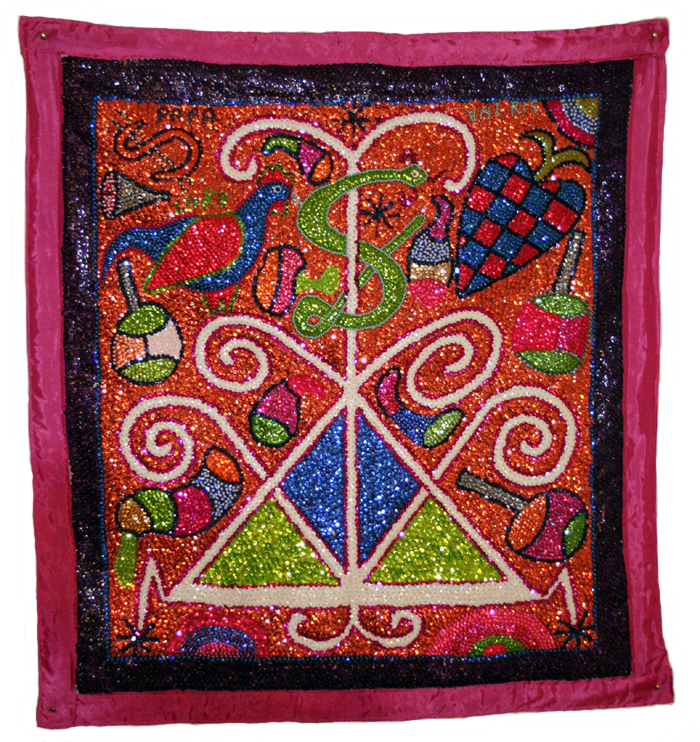 🇭🇹 Haiti and 2 moreHaitian VodouVodou
An Afro-Haitian religion blending West African traditions with Catholicism and FreemasonryTradition · Protection · Healing Living
🇭🇹 Haiti and 2 moreHaitian VodouVodou
An Afro-Haitian religion blending West African traditions with Catholicism and FreemasonryTradition · Protection · Healing Living
 🇮🇳 India and 1 moreMantraमन्त्रम्
A sacred sound or phrase repeated to focus the mind and invoke spiritual powerText · Speaking with spirits and the dead · Power and authority Living
🇮🇳 India and 1 moreMantraमन्त्रम्
A sacred sound or phrase repeated to focus the mind and invoke spiritual powerText · Speaking with spirits and the dead · Power and authority Living