Execration texts
from Latin execratio, meaning a curse or condemnation
Ancient Egyptian magical texts inscribed on objects to be destroyed, targeting enemies of the state.
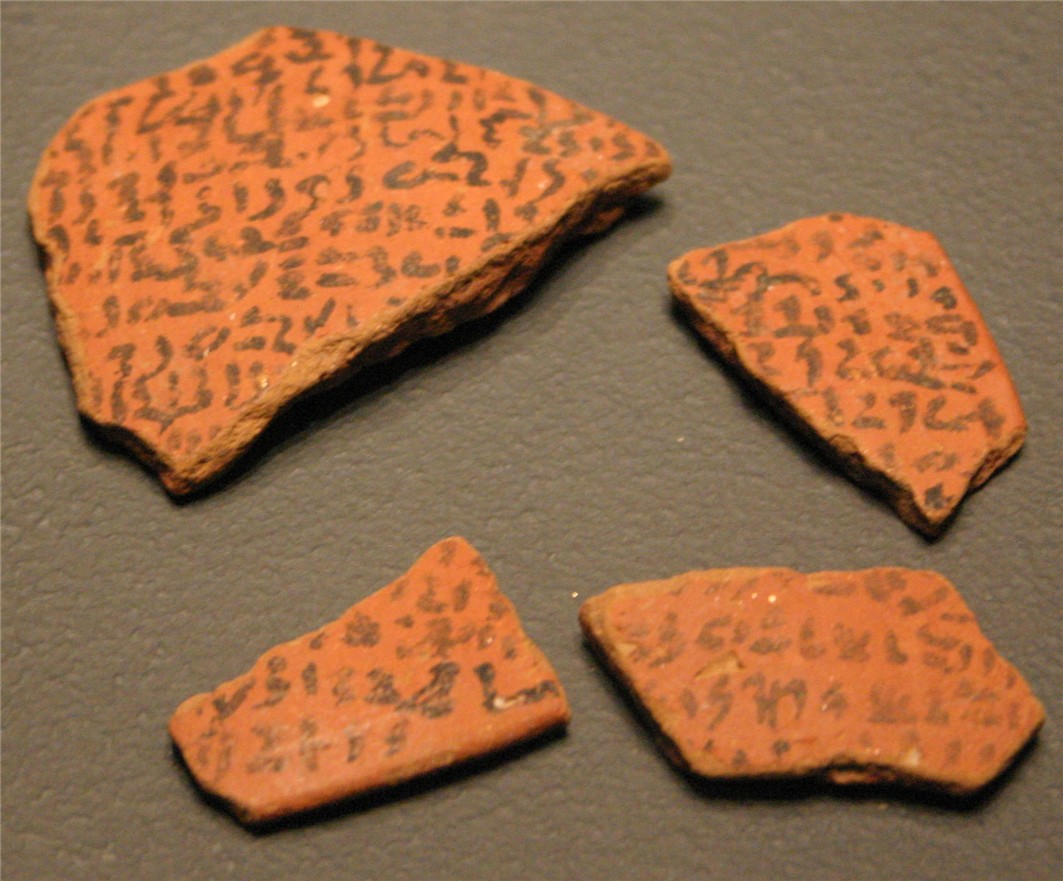
Execration texts are hieratic records from ancient Egypt that list names of foreign enemies and troublesome neighbors. Practitioners wrote these names on clay figurines, pottery, or stone blocks before breaking or burying them in a ritual intended to neutralize the named individuals.
- Earliest examples date to the sixth dynasty, c. 24th century BCE.
- Over 1,000 deposits found at sites like Giza and Saqqara.
- Rituals included smashing, burning, and burying inscribed objects.
- Texts list names of Canaanite, Phoenician, and Nubian enemies.
- Later texts may reflect Old Kingdom traditions rather than contemporary history.
What it is
Execration texts function as ancient Egyptian proscription lists designed to ward off threats to the pharaoh and the state. These documents record the names of hostile foreign entities and internal troublemakers. The practice relies on sympathetic magic, where destroying an object bearing a name is believed to destroy the person it represents. This method was particularly active during periods of tension with Asiatic neighbors.
Where it comes from
The earliest physical examples date to the sixth dynasty of the Old Kingdom, around the twenty-fourth century BCE. Initially, these were unbaked clay statuettes shaped like bound prisoners, found at Giza and Elephantine. By the Middle Kingdom, the practice expanded to include pottery vessels and continued through the New Kingdom, though fewer examples survive from later periods. Later texts often reused formulas from older traditions rather than reflecting current historical realities.
How it is done
The ritual involved inscribing enemy names onto materials such as clay, stone, or pottery. The objects were then subjected to violent destruction. Actions included smashing, stomping, stabbing, burning, or saturating the items in urine. Afterward, the fragments were buried near tombs or ritual sites. Some rites included spitting on the figures or locking them in boxes to ensure the complete eradication of the named threat.
Tools and materials
Practitioners used various materials depending on the era. Early texts featured clay figurines of bound foreigners, sometimes marked with red ink. Middle Kingdom rituals utilized pottery jars and vases, which were deliberately shattered. Pigments included black carbon and red iron oxide. Archaeological finds also reveal traces of beeswax and human remains, indicating more extreme forms of the rite involving sacrifice.
Execration texts, drawn and placed
- Living
- Revived
- Fading
- Historical
- Legendary
- Performed
- Lineage
- Ancient Egyptian magic
- Timing
- during times of conflict with foreign neighbors
What it is for
The primary goal was protection through the elimination of perceived dangers. The texts targeted kings, cities, and tribes that posed military or political threats to Egypt. Over time, the practice shifted from state-sponsored protection for the pharaoh to personal use by individual Egyptians seeking to remove specific adversaries or misfortunes from their lives.
Who does it
Initially, the rite was conducted by priests acting on behalf of the state to safeguard the pharaoh. As the tradition evolved, ordinary households adopted the practice for personal grievances. The texts do not specify detailed training for these household practitioners, suggesting the ritual became a common folk custom accessible to the general population beyond the temple elite.
Peoples and places
The texts primarily concern Ancient Egyptians and their interactions with neighboring cultures. They list numerous Canaanite and Phoenician cities, as well as Nubian kingdoms. The inclusion of names from regions like Moab and areas across the Jordan River highlights the geopolitical concerns of the time. The practice reflects the Egyptian view of their relationship with the surrounding Syro-Palestinian and Nubian worlds.
At a glance: who, where and when
Belief worlds

What people believe
The underlying worldview posits that names hold power over their bearers. By inscribing a name on a vulnerable object and destroying it, the practitioner transfers that vulnerability to the person named. This form of sympathetic magic assumes a direct link between the symbolic representation and the physical reality of the enemy, allowing for remote influence over distant foes.
How scholars and sceptics see it
Researchers value these texts for reconstructing the history of the ancient Near East, particularly the twenty-first to eighteenth centuries BCE. Scholars like Kurt Sethe and Georges Posener have published major groups of texts, revealing names of cities and rulers. Modern techniques like multi-spectral imaging help recover faded inscriptions. Historians also analyze the texts to understand biblical connections and the settlement patterns of Canaan.
Cautions and what is closed
Some excavations at sites like Mirgissa and Avaris have uncovered human remains alongside the ritual objects. These findings suggest that extreme versions of the execration rite occasionally involved human sacrifice, including the ritual severing of heads or the burial of skeletons. Such practices indicate the severity with which certain threats were viewed and the willingness to employ lethal symbolism.
Questions people ask about Execration texts
What are execration texts?
They are ancient Egyptian lists of enemies written on objects like clay figurines or pottery. The objects were broken or buried in a ritual meant to harm or neutralize the named individuals through sympathetic magic.
Where did this practice originate?
The practice began in the Old Kingdom, with the earliest physical texts dating to the sixth dynasty around the twenty-fourth century BCE. It continued through the Middle and New Kingdoms.
Who were the targets of these curses?
The texts primarily listed foreign enemies, including kings and cities from Canaan, Phoenicia, and Nubia. They also included internal troublemakers who threatened the stability of the Egyptian state.
How were the texts used in rituals?
Inscribed objects were subjected to violent acts such as smashing, stabbing, burning, or spitting on. The fragments were then buried near tombs or ritual sites to complete the curse against the named enemies.
Good reading and sources
- Execration texts on WikipediaEncyclopedia
- More photos on Wikimedia CommonsPhotos and video
- Wikidata recordOpen data
The facts on this page come from the Wikipedia article "Execration texts", written by its contributors and used under the CC BY-SA 4.0 licence, and from its Wikidata record (CC0). EveryJaadu rewrote the text in its own words, with AI assistance, and compares every page with the article to make sure no passage is copied. It may be reused under the same CC BY-SA 4.0 licence with a link back.
It may contain mistakes. Names and customs differ from one community to the next, and some knowledge is closed to outsiders and left out here. This page describes belief and practice. It does not say that any of it works, it is not a how-to, and it is not medical advice. If something is wrong, tell us. Last refreshed 2026-10-15.
More from Egypt
All the entries from Egypt 🇪🇬 Egypt and 5 moreHermetica
A collection of ancient texts attributed to Hermes Trismegistus, covering magic, alchemy and philosophy.Text · Seeing and foretelling · Change and initiation Historical
🇪🇬 Egypt and 5 moreHermetica
A collection of ancient texts attributed to Hermes Trismegistus, covering magic, alchemy and philosophy.Text · Seeing and foretelling · Change and initiation Historical
 🇮🇱 Israel and 3 moreGematriaגימטריה
A numeric writing system that assigns numerical values to words and phrases for interpretation.Text · Seeing and foretelling · Power and authority Living
🇮🇱 Israel and 3 moreGematriaגימטריה
A numeric writing system that assigns numerical values to words and phrases for interpretation.Text · Seeing and foretelling · Power and authority Living
 🇪🇬 Egypt and 1 moreCorpus Hermeticum
A collection of Greek writings attributed to Hermes Trismegistus that shaped Western esoteric thoughtText · Speaking with spirits and the dead · Change and initiation Historical
🇪🇬 Egypt and 1 moreCorpus Hermeticum
A collection of Greek writings attributed to Hermes Trismegistus that shaped Western esoteric thoughtText · Speaking with spirits and the dead · Change and initiation Historical
Related elsewhere
All text 🇪🇬 EgyptCurse
A spoken wish for harm, often backed by ritual or divine authorityBelief · Cursing and harm · Protection Historical
🇪🇬 EgyptCurse
A spoken wish for harm, often backed by ritual or divine authorityBelief · Cursing and harm · Protection Historical
 🇫🇷 FranceLady of the LakeDame du Lac
A water spirit who raises knights and captures wizards in Arthurian talesFigure · Protection · Cursing and harm Legendary
🇫🇷 FranceLady of the LakeDame du Lac
A water spirit who raises knights and captures wizards in Arthurian talesFigure · Protection · Cursing and harm Legendary
 🇮🇪 IrelandPúca
A shape-shifting spirit of Celtic folklore that brings fortune or mischiefBeing · Luck and prosperity · Cursing and harm Legendary
🇬🇧 United KingdomGlaistig
A Scottish shape-shifting spirit linked to cattle, deer, and haunted castles.Being · Protection · Cursing and harm Legendary
🇮🇪 IrelandPúca
A shape-shifting spirit of Celtic folklore that brings fortune or mischiefBeing · Luck and prosperity · Cursing and harm Legendary
🇬🇧 United KingdomGlaistig
A Scottish shape-shifting spirit linked to cattle, deer, and haunted castles.Being · Protection · Cursing and harm Legendary