Celestial Ferryman
Modern name for an ancient god whose titles mean 'He whose face is behind him'
An ancient Egyptian god who guides souls and judges sins in the underworld.
The Celestial Ferryman is an Ancient Egyptian deity known by names meaning he sees behind him. He acts as a psychopomp to guide the dead and serves as one of the Assessors of Maat.
- Known as Hraf-haf or Ma-haf in ancient times
- Acts as a psychopomp guiding souls to the Field of Reeds
- One of the Assessors of Maat judging specific sins
- Depicted in the Book of the Dead with a backward-facing head
- First mentioned in the Pyramid Texts of the Old Kingdom
What it is
The Celestial Ferryman is an Ancient Egyptian deity recognized by modern scholars. His ancient titles include Hraf-haf and Ma-haf, which translate to concepts like seeing behind oneself. He functions as a psychopomp, a guide for souls traveling through the waters of the underworld toward the Field of Reeds. He is also recorded as one of the Assessors of Maat, participating in the judgment of the dead.
Where it comes from
The earliest references to this figure appear in the Pyramid Texts from the Old Kingdom period. During this time, he was referred to as Ma-haf and served as a guard for Osiris. The tradition continued into the Middle Kingdom, where he appears in the Coffin Texts with the same role and name. Later depictions show him physically interacting with the deceased.
How it is done
In artistic representations, such as those found in the Book of the Dead of Ani, the deity is depicted sitting in a boat. His head is turned backward, facing away from the direction of travel. This visual style aligns with his descriptive names that emphasize looking behind. As a judge, he evaluates specific sins within the Cavern of Wrong.
Tools and materials
A boat serves as the primary vessel for transporting souls across the underworld waters. The imagery associated with him emphasizes his unique physical orientation, specifically his backward-facing gaze, which distinguishes him from other figures in funerary texts.
Celestial Ferryman, drawn and placed
- Living
- Revived
- Fading
- Historical
- Legendary
- Performed
- Lineage
- Assessors of Maat
What it is for
Practitioners of the ancient religion believed he guided the deceased safely to the afterlife. He also played a role in moral evaluation, judging transgressions such as copulating with a boy. His presence ensured the proper transition of the soul and the maintenance of cosmic order.
Who does it
Scholars study his role through ancient texts and tomb art. In the ancient context, priests and scribes recorded his attributes in religious literature. No specific group of living practitioners performs rites dedicated to him today, as the religion is historical.
Peoples and places
The deity belongs to the mythology of Ancient Egypt. He appears in key funerary collections including the Pyramid Texts, Coffin Texts, and the Book of the Dead. These texts were used by the elite to ensure their safe passage and judgment in the afterlife.
At a glance: who, where and when
Peoples
What people believe
He is part of the system of Maat, representing truth and order. He originates from the Cavern of Wrong, a location associated with judgment. His dual role as both guide and judge highlights the importance of correct conduct and proper burial practices in ancient Egyptian belief.
How scholars and sceptics see it
Researchers identify him through textual analysis of the Pyramid, Coffin, and Book of the Dead texts. Scholars note the consistency of his name and role across different historical periods of Ancient Egypt. Art historians analyze his depiction in papyri to understand iconographic traditions.
Compare and confuse
He is similar to other psychopomps in various cultures who guide souls. His title meanings are unique in emphasizing backward vision. Other Egyptian deities like Anubis also handle the dead, but his specific role as an Assessor of Maat sets him apart.
Questions people ask about Celestial Ferryman
Who is the Celestial Ferryman?
He is an Ancient Egyptian deity who guides souls through the underworld. His ancient names mean he sees behind him, reflecting his backward-facing depiction in art.
What does he do in the afterlife?
He helps guide the dead to the Field of Reeds. He also serves as an Assessor of Maat, judging sins committed by the deceased during their life.
Where does his name come from?
His most common ancient names are Hraf-haf and Ma-haf. These roughly translate to 'He whose face is behind him' or 'He who sees behind him'.
Good reading and sources
The facts on this page come from the Wikipedia article "Celestial Ferryman", written by its contributors and used under the CC BY-SA 4.0 licence, and from its Wikidata record (CC0). EveryJaadu rewrote the text in its own words, with AI assistance, and compares every page with the article to make sure no passage is copied. It may be reused under the same CC BY-SA 4.0 licence with a link back.
It may contain mistakes. Names and customs differ from one community to the next, and some knowledge is closed to outsiders and left out here. This page describes belief and practice. It does not say that any of it works, it is not a how-to, and it is not medical advice. If something is wrong, tell us. Last refreshed 2026-10-07.
More from Egypt
All the entries from Egypt 🇪🇬 Egypt and 1 moreLilithלִילִית
A feminine figure from Mesopotamian and Jewish mythology, often depicted as a night demon or spirit.Being · Cursing and harm Legendary
🇪🇬 Egypt and 1 moreLilithלִילִית
A feminine figure from Mesopotamian and Jewish mythology, often depicted as a night demon or spirit.Being · Cursing and harm Legendary
 🇪🇬 EgyptImhotepỉỉ-m-ḥtp
An ancient Egyptian architect deified as a god of healing and wisdomBeing · Healing · Power and authority Historical
🇪🇬 EgyptImhotepỉỉ-m-ḥtp
An ancient Egyptian architect deified as a god of healing and wisdomBeing · Healing · Power and authority Historical
 🇪🇬 EgyptAnubis𓇋𓈖𓊪𓃣
The jackal-headed god who guides souls and oversees mummification in ancient Egypt.Being · Protection · Speaking with spirits and the dead Historical
🇪🇬 EgyptAnubis𓇋𓈖𓊪𓃣
The jackal-headed god who guides souls and oversees mummification in ancient Egypt.Being · Protection · Speaking with spirits and the dead Historical
 🇪🇬 Egypt and 2 moreIsisꜣst (Egyptian)
Egyptian goddess of magic, mourning and kingship, mother of HorusBeing · Protection · Healing Historical
🇪🇬 Egypt and 2 moreIsisꜣst (Egyptian)
Egyptian goddess of magic, mourning and kingship, mother of HorusBeing · Protection · Healing Historical
Related elsewhere
All being 🇮🇳 IndiaChakraचक्र
Meditation points in the subtle body used in Hindu and Buddhist yogaTradition · Speaking with spirits and the dead · Change and initiation Living
🇮🇳 IndiaChakraचक्र
Meditation points in the subtle body used in Hindu and Buddhist yogaTradition · Speaking with spirits and the dead · Change and initiation Living
 🇳🇬 NigeriaOrunmilaỌ̀rúnmìlà
Yoruba deity of wisdom and the creator of the Ifá divination systemBeing · Seeing and foretelling · Speaking with spirits and the dead Living
🇳🇬 NigeriaOrunmilaỌ̀rúnmìlà
Yoruba deity of wisdom and the creator of the Ifá divination systemBeing · Seeing and foretelling · Speaking with spirits and the dead Living
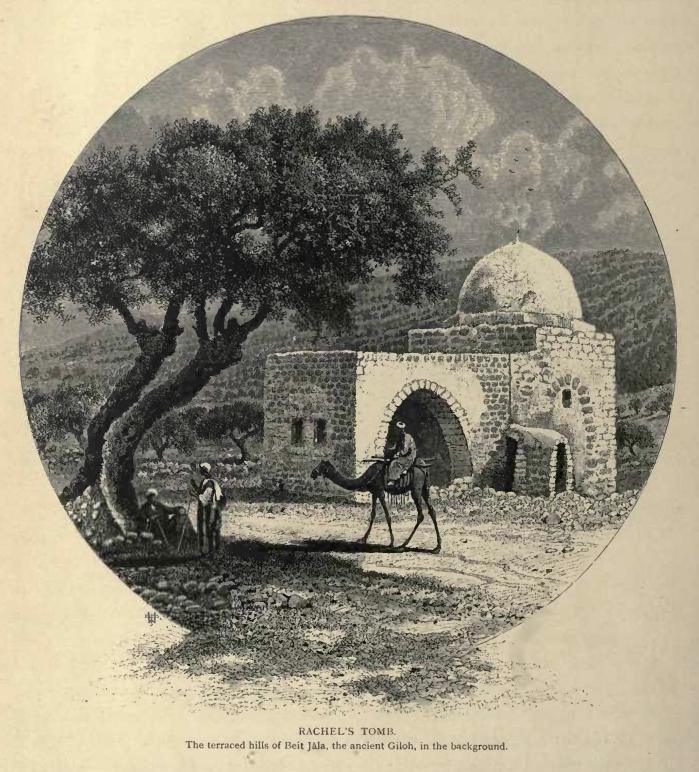 🇵🇸 Palestine and 1 moreRachel's TombQever Raḥel; Qabr Rāḥīl
A shared holy site near Bethlehem revered by Jews, Christians, and MuslimsTradition · Speaking with spirits and the dead · Protection Living
🇵🇸 Palestine and 1 moreRachel's TombQever Raḥel; Qabr Rāḥīl
A shared holy site near Bethlehem revered by Jews, Christians, and MuslimsTradition · Speaking with spirits and the dead · Protection Living
 🇪🇸 Spain and 5 moreSt John's Eve
A Christian vigil marked by bonfires and plant gathering on the summer solstice eveRite · Protection · Speaking with spirits and the dead Living
🇪🇸 Spain and 5 moreSt John's Eve
A Christian vigil marked by bonfires and plant gathering on the summer solstice eveRite · Protection · Speaking with spirits and the dead Living