
Book of Magical Charms
A seventeenth-century English manuscript of spells and medical remedies held in Chicago.
This handwritten volume contains spells for health and spirit communication. It was likely written by a London lawyer named Robert Ashley during the 1600s.
- Written by London attorney Robert Ashley
- Housed at the Newberry Library in Chicago
- Contains spells for healing and spirit talk
- No copies were ever made
- Uses iron gall ink and Latin
What it is
The Book of Magical Charms is an unpublished journal from the seventeenth century. It serves as a collection of occult knowledge and practical remedies. The volume includes instructions for treating physical ailments like toothaches. It also contains methods for communicating with spirits. Scholars classify its content under medicine, mysticism, and spagiric magic. The text is written in both Latin and archaic English. It remains a unique historical artifact of early modern magical practice.
Where it comes from
The manuscript was created in England between 1600 and 1699. No copies were ever produced during or after its creation. Library staff assigned its current title upon acquiring it in 1988. They found it alongside other medical texts. The original binding is dos-à-dos and lacks a title page. Researchers identified the author through handwriting analysis in 2017. He was a London attorney named Robert Ashley. He likely wrote the entries over many years.
How it is done
The text records various rituals and remedies. It details how to prepare charms for healing specific pains. It outlines procedures for speaking to spiritual entities. The author used iron gall ink and a quill pen. The writing style reflects common practices of the time. The book functions as a personal reference guide. It combines medical advice with magical incantations. Readers can access digital transcriptions online.
Tools and materials
The author utilized iron gall ink for writing. A quill pen was likely used for drafting the pages. The materials reflect standard writing tools of the era. The physical book features a dos-à-dos binding style. This structure allowed for compact storage of notes. The text itself acts as a tool for practitioners. It provides specific words and actions for desired outcomes.
Book of Magical Charms, drawn and placed
- Living
- Revived
- Fading
- Historical
- Legendary
- Performed
What it is for
Users sought solutions for health issues and spiritual contact. The text offers remedies for lost voices and dental pain. It aims to help individuals communicate with unseen forces. These practices were part of everyday life for some. The book blends scientific observation with magical belief. It served as a personal archive of useful knowledge. Owners could consult it for immediate problems.
Who does it
Robert Ashley is suspected to be the primary author. He worked as an attorney in London. His profession may have influenced his detailed record-keeping. Handwriting experts confirmed his identity in 2017. The book appears to be a lifelong project. It was never intended for public distribution. Modern scholars study it for historical insights.
Peoples and places
The manuscript originates from seventeenth-century England. It reflects the cultural context of that period. London legal professionals had access to diverse knowledge. The text shows interest in both body and spirit. Such interests were common among educated classes. The work survived centuries to reach modern libraries.
At a glance: who, where and when
Who does it
What people believe
The text assumes spirits can be contacted. It treats magical charms as effective remedies. Health issues are addressed through combined methods. The author believed in the power of words. Spagiric magic suggests a connection between nature and healing. These beliefs were not uncommon in early modern Europe.
How scholars and sceptics see it
Researchers analyze the handwriting to identify authors. The Newberry Library facilitates public transcription projects. Experts date the manuscript based on linguistic features. Studies focus on its structure and content diversity. The work provides insight into private magical practices. Scholars note the blend of medicine and mysticism.
Today
The Newberry Library holds the original manuscript. Digital images allow global access to the text. Volunteers help transcribe and translate the archaic language. The library makes these resources available for research. The book remains a significant example of English occult literature.
Questions people ask about Book of Magical Charms
What is the Book of Magical Charms?
It is a seventeenth-century handwritten journal containing spells and remedies. It includes instructions for healing ailments and contacting spirits.
Who wrote the Book of Magical Charms?
Handwriting analysis identifies the author as Robert Ashley, a London attorney. He likely composed the entries over his lifetime.
Where is the book kept today?
The original manuscript is held by the Newberry Library in Chicago. Digital versions are available for public study.
What languages does the book use?
The text is written in Latin and archaic English. It uses iron gall ink and a quill pen.
Good reading and sources
The facts on this page come from the Wikipedia article "Book of Magical Charms", written by its contributors and used under the CC BY-SA 4.0 licence, and from its Wikidata record (CC0). EveryJaadu rewrote the text in its own words, with AI assistance, and compares every page with the article to make sure no passage is copied. It may be reused under the same CC BY-SA 4.0 licence with a link back.
It may contain mistakes. Names and customs differ from one community to the next, and some knowledge is closed to outsiders and left out here. This page describes belief and practice. It does not say that any of it works, it is not a how-to, and it is not medical advice. If something is wrong, tell us. Last refreshed 2026-10-06.
More from the United Kingdom
All the entries from the United Kingdom 🇫🇷 France and 2 moreÉliphas Lévi
A French writer who shaped modern occult thought and ceremonial magic.Text · Power and authority · Speaking with spirits and the dead Historical
🇫🇷 France and 2 moreÉliphas Lévi
A French writer who shaped modern occult thought and ceremonial magic.Text · Power and authority · Speaking with spirits and the dead Historical
 🇬🇧 United KingdomWilliam Lilly
A seventeenth-century English astrologer and author who shaped Western tradition.Text · Seeing and foretelling · Power and authority Historical
🇬🇧 United KingdomWilliam Lilly
A seventeenth-century English astrologer and author who shaped Western tradition.Text · Seeing and foretelling · Power and authority Historical
 🇬🇧 United Kingdom and 5 moreAleister Crowley
English occultist and founder of the religion of ThelemaText · Power and authority · Change and initiation Living
🇬🇧 United Kingdom and 5 moreAleister Crowley
English occultist and founder of the religion of ThelemaText · Power and authority · Change and initiation Living
 🇬🇧 United KingdomMother Shipton
An English prophetess and herbalist from folklore, known for predictions printed long after her death.Figure · Seeing and foretelling · Healing Historical
🇬🇧 United KingdomMother Shipton
An English prophetess and herbalist from folklore, known for predictions printed long after her death.Figure · Seeing and foretelling · Healing Historical
Related elsewhere
All text 🇸🇳 Senegal and 1 moreSerer religionA ƭat Roog
The traditional faith of the Serer people, centred on the supreme deity Roog and ancestral veneration.Tradition · Protection · Speaking with spirits and the dead Living
🇸🇳 Senegal and 1 moreSerer religionA ƭat Roog
The traditional faith of the Serer people, centred on the supreme deity Roog and ancestral veneration.Tradition · Protection · Speaking with spirits and the dead Living
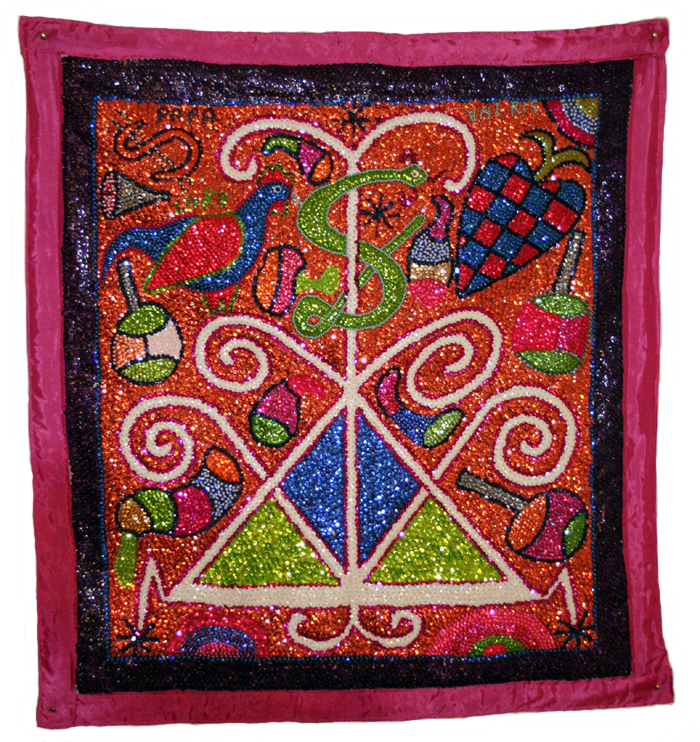 🇭🇹 Haiti and 2 moreHaitian VodouVodou
An Afro-Haitian religion blending West African traditions with Catholicism and FreemasonryTradition · Protection · Healing Living
🇭🇹 Haiti and 2 moreHaitian VodouVodou
An Afro-Haitian religion blending West African traditions with Catholicism and FreemasonryTradition · Protection · Healing Living
 🇮🇳 India and 1 moreAmritaअमृत (Sanskrit)
A Sanskrit concept of immortality and the nectar that grants it across Indian religionsBelief · Healing · Power and authority Living
🇮🇳 India and 1 moreAmritaअमृत (Sanskrit)
A Sanskrit concept of immortality and the nectar that grants it across Indian religionsBelief · Healing · Power and authority Living