
Aghori
In its own language: अघोर
from Sanskrit aghora, meaning not dreadful or dreadless
An ascetic monastic order of Shaivite sadhus known for antinomian rituals in cremation grounds
The Aghori are a Tantric Hindu monastic order based in Uttar Pradesh, India. They follow the Kāpālika tradition and engage in post-mortem practices to realize non-duality.
- Originates from the medieval Kāpālika tradition
- Dwell in charnel grounds and cremation sites
- Use human skulls for ritual cups and jewelry
- Revere Dattatreya as founding guru
- Practice antinomian rituals to break taboos
What it is
The Aghori form a distinct monastic order within Hindu Shaivism. Members are ascetic sadhus who live by Tantric principles that oppose mainstream social norms. Their path focuses on liberation from the cycle of rebirth through the realization of non-duality. Practitioners believe all opposites are illusory. To break down fear and attachment, they embrace pollution and death. This approach aims to reveal the fundamental unity of existence. The order traces its spiritual lineage to ancient ascetics and deities associated with cremation sites.
Where it comes from
Historical records link the Aghori to the Kāpālika tradition, which emerged in medieval India between the fourth and eighth centuries CE. Scholars note a lack of primary sources for the Kāpālikas, relying instead on fictional accounts and disparaging texts from other traditions. Chinese pilgrims described similar ash-covered ascetics in regions now part of Pakistan during the seventh century. The Aghori consider Baba Keenaram, an ascetic who lived until the eighteenth century, as a key figure. They also revere Dattatreya as their founding guru. The tradition survives today alongside other Shaivite offshoots like the Kaula and Trika orders.
How it is done
Rituals involve dwelling in charnel grounds and smearing bodies with cremation ashes. Practitioners use human remains to create jewelry and skull cups. Some consume substances considered taboo, including intoxicants and corpse flesh obtained from funeral ghats. Meditation often takes place atop corpses. These acts serve to dismantle conventional distinctions between purity and impurity. The goal is to achieve an altered state of consciousness that perceives the illusory nature of social categories. Practices include invoking goddesses associated with cremation grounds to gain supernatural abilities.
Tools and materials
Skull cups and bone jewelry are central to their iconography. Cremation ashes cover their skin as a mark of renunciation. Intoxicating drinks like bhaṅga are used in rituals. Human remains provide materials for sacred objects. These items mirror the forms held by Shiva and other deities in art. The tools facilitate direct engagement with death and decay. They serve as reminders of mortality and the transient nature of the physical world.
Aghori, drawn and placed
- Living
- Revived
- Fading
- Historical
- Legendary
- Performed
- Lineage
- Tantric Shaivism
- Timing
- during eremitic rites and renunciation practices
What it is for
Practitioners seek healing powers and protection against aging. Rural populations often view Aghori gurus with reverence due to reputed miraculous abilities. The ultimate aim is mokṣa, or liberation from samsara. Achieving this requires understanding the identity of the self with the absolute. Rituals help unlearn cultural fears about death and filth. By facing mortality directly, practitioners hope to transcend discrimination. Healing is seen as a byproduct of intense spiritual discipline and renunciation.
Who does it
Aghoris are male ascetics who follow a strict monastic life. They undergo intense eremitic rites to acquire spiritual power. Training involves learning from gurus in isolated settings. Disciples establish deep relationships with their teachers. Historically, Aghori gurus were buried upright in meditation posture rather than cremated. The community maintains a hierarchy based on spiritual attainment. Initiation into specific rituals may be restricted to dedicated followers.
Peoples and places
The order is primarily located in Uttar Pradesh, India. Varanasi serves as a significant center for their activities. Historical connections exist with ascetic groups in Kashmir and the Deccan Plateau. The tradition has influenced and been influenced by Vajrayana Buddhist practices. Similar ascetic behaviors appear in Jain and Pashupata traditions. The Aghori maintain a distinct identity while sharing roots with broader Tantric movements across South Asia.
At a glance: who, where and when


What people believe
Philosophy centers on advaita, or non-dualism. All dualities are viewed as mental constructs obscuring reality. Shiva manifests as Aghora, a fierce aspect associated with destruction. Goddesses like Kali and Tara are also venerated. Dattatreya represents the union of major Hindu deities. Belief holds that humans are naturally born without discrimination. Social taboos are artificial barriers to spiritual truth. Death is accepted as a natural process essential for enlightenment.
How scholars and sceptics see it
Religion scholars study the Aghori as successors to the Kāpālikas. Mircea Eliade highlighted their role in preserving ancient ascetic methods. David Lorenzen notes the scarcity of historical documentation. Researchers analyze their practices through anthropological lenses. Skeptics often focus on controversial aspects like cannibalism. Academic work examines how these rituals challenge orthodox Hindu norms. Studies also explore the psychological impact of such extreme renunciation.
Cautions and what is closed
Consumption of human flesh raises legal and ethical concerns. Media reports have documented instances of corpse consumption. Such practices can lead to social ostracization or legal action. Outsiders may misinterpret rituals as mere shock tactics. The closed nature of some teachings limits external understanding. Health risks are inherent in handling decomposing matter. Misuse of spiritual authority by individuals claiming Aghori status poses fraud risks.
Questions people ask about Aghori
What does the name Aghori mean?
The term comes from Sanskrit aghora, translating to not dreadful or dreadless. It reflects the philosophy of overcoming fear and aversion to death and impurity.
Where do Aghori monks live?
They are based in Uttar Pradesh, India, particularly around Varanasi. Many reside in cremation grounds to practice their rituals amidst death.
Why do they use human remains?
Skulls and bones are used to make cups and jewelry. This practice mirrors deity iconography and helps practitioners confront mortality directly.
Is cannibalism part of their beliefs?
Some members consume corpse flesh obtained from funeral ghats. This is done to transcend social taboos and achieve spiritual liberation through extreme renunciation.
Good reading and sources
- Aghori on WikipediaEncyclopedia
- More photos on Wikimedia CommonsPhotos and video
- Wikidata recordOpen data
The facts on this page come from the Wikipedia article "Aghori", written by its contributors and used under the CC BY-SA 4.0 licence, and from its Wikidata record (CC0). EveryJaadu rewrote the text in its own words, with AI assistance, and compares every page with the article to make sure no passage is copied. It may be reused under the same CC BY-SA 4.0 licence with a link back.
It may contain mistakes. Names and customs differ from one community to the next, and some knowledge is closed to outsiders and left out here. This page describes belief and practice. It does not say that any of it works, it is not a how-to, and it is not medical advice. If something is wrong, tell us. Last refreshed 2026-10-06.
More from India
All the entries from India 🇮🇳 IndiaChakraचक्र
Meditation points in the subtle body used in Hindu and Buddhist yogaTradition · Speaking with spirits and the dead · Change and initiation Living
🇮🇳 IndiaChakraचक्र
Meditation points in the subtle body used in Hindu and Buddhist yogaTradition · Speaking with spirits and the dead · Change and initiation Living
 🇮🇳 IndiaMahakaleshwar JyotirlingaMahākāleśvara
A sacred Shiva shrine in Ujjain, India, known for its south-facing idol and ancient origins.Tradition · Protection · Power and authority Living
🇮🇳 IndiaMahakaleshwar JyotirlingaMahākāleśvara
A sacred Shiva shrine in Ujjain, India, known for its south-facing idol and ancient origins.Tradition · Protection · Power and authority Living
 🇮🇳 India and 5 moreKolamகோலம்
A daily geometric floor drawing made with rice flour at the home entrance in South IndiaTradition · Protection · Luck and prosperity Living
🇮🇳 India and 5 moreKolamகோலம்
A daily geometric floor drawing made with rice flour at the home entrance in South IndiaTradition · Protection · Luck and prosperity Living
 🇮🇳 India and 5 moreHoliहोली
A Hindu spring festival marked by coloured powders and bonfires to celebrate love and virtue.Tradition · Love and attraction · Cursing and harm Living
🇮🇳 India and 5 moreHoliहोली
A Hindu spring festival marked by coloured powders and bonfires to celebrate love and virtue.Tradition · Love and attraction · Cursing and harm Living
Related elsewhere
All tradition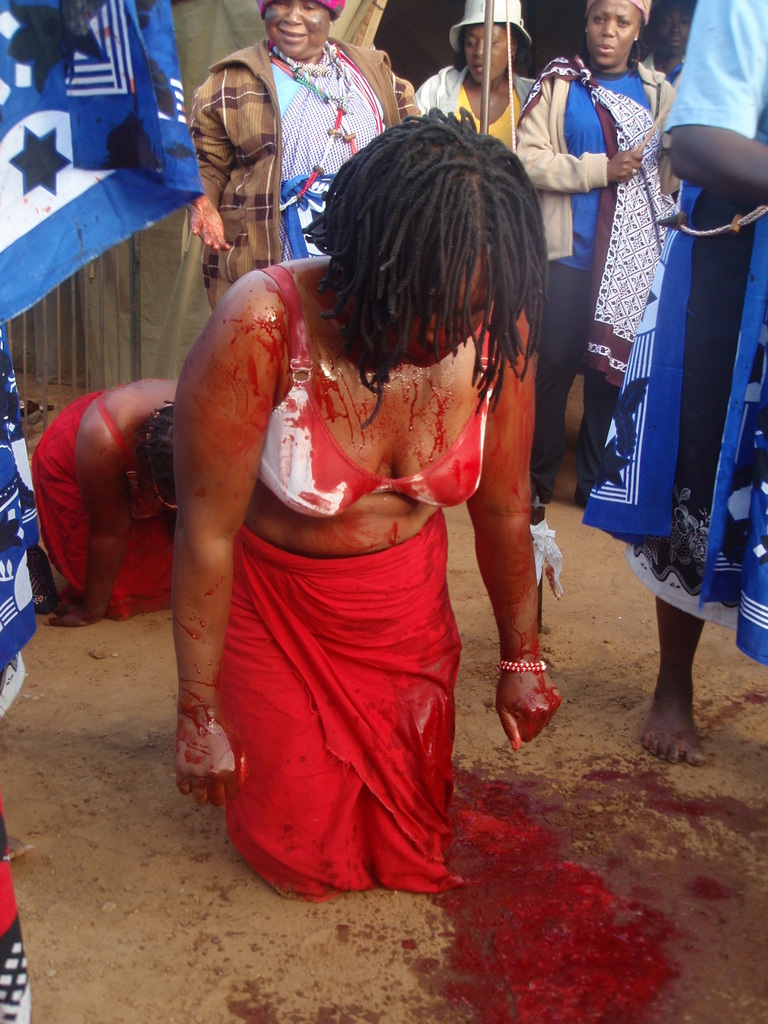 🇿🇦 South AfricaUkuthwasa
A spiritual calling and initiation process for traditional healers in Southern Africa.Rite · Healing · Speaking with spirits and the dead Living
🇿🇦 South AfricaUkuthwasa
A spiritual calling and initiation process for traditional healers in Southern Africa.Rite · Healing · Speaking with spirits and the dead Living
 🇮🇳 India and 5 moreFountain of Youth
A legendary spring said to reverse aging and cure illness, appearing in myths across the world.Belief · Healing · Change and initiation Legendary
🇨🇳 China and 3 moreQi氣 / 气
A vital force in Chinese philosophy and medicine, believed to flow through all living things.Substance · Healing · Power and authority Living
🇮🇳 India and 5 moreFountain of Youth
A legendary spring said to reverse aging and cure illness, appearing in myths across the world.Belief · Healing · Change and initiation Legendary
🇨🇳 China and 3 moreQi氣 / 气
A vital force in Chinese philosophy and medicine, believed to flow through all living things.Substance · Healing · Power and authority Living
 🇪🇬 Egypt and 2 moreIsisꜣst (Egyptian)
Egyptian goddess of magic, mourning and kingship, mother of HorusBeing · Protection · Healing Historical
🇪🇬 Egypt and 2 moreIsisꜣst (Egyptian)
Egyptian goddess of magic, mourning and kingship, mother of HorusBeing · Protection · Healing Historical