
Aeon
In its own language: αἰών
from Greek for age or era
Emanations of the divine source in Gnostic cosmology
In Gnosticism, Aeons are spiritual beings that emanate from the ultimate God. They form a divine fullness called Pleroma and represent ideal concepts like mind or truth.
- Aeons are emanations from the supreme God
- They form the Pleroma or divine fullness
- Valentinians listed thirty Aeons in pairs
- A flaw created the physical world
- Sige represents silence in some systems
What it is
Aeons are spiritual entities within Gnostic belief systems. They are not created but flow directly from the supreme source known as the One or Monad. These beings inhabit a perfect realm called the Pleroma, which means fullness. Each Aeon represents an abstract quality such as mind, truth, or life. They exist as immaterial ideas rather than physical forms. Some traditions describe them as paired male and female figures called syzygies. Others view them as numbers or sounds. Together they make up the divine structure of the upper world.
Where it comes from
The concept appears in various ancient Gnostic texts. Different schools named and grouped these beings differently. The Basilidians called them sonships. Valentinians organized them into thirty pairs. Early Christian writers like Irenaeus and Tertullian recorded these systems to argue against them. The Gospel of Judas also mentions Aeons. Scholars trace the term to Greek philosophical ideas about time and eternity.
Aeon, drawn and placed
- Living
- Revived
- Fading
- Historical
- Legendary
- Performed
- Lineage
- Gnosticism
At a glance: who, where and when
What people believe
This error occurred when an Aeon acted without its partner. This mistake produced the Demiurge, a creator god who made the physical universe. The Aeons remain in the perfect realm above. Humans seek to return to this state through knowledge. This process is called gnosis. It involves repentance and undoing the sin of matter. The savior Aeons help guide souls back to the Pleroma.
How scholars and sceptics see it
Historians study Aeons to understand early Christian diversity. They see them as part of a complex mythology. Psychologists view them as symbols of inner states. Critics note similarities to pagan myths. Some scholars suggest Gnostics borrowed from Egyptian or Greek ideas. The detailed lists of Aeons show a structured attempt to explain creation. These texts reveal how ancient groups tried to reconcile monotheism with multiple divine beings.
Compare and confuse
Aeons resemble angels in Abrahamic faiths. Both serve as divine messengers and emanations. However, Aeons are strictly non-material ideas. Angels often have specific tasks in the physical world. Syzygies differ from standard angelic pairs by emphasizing sexual complementarity. The Pleroma is unique to Gnostic thought compared to other heavenly realms.
Questions people ask about Aeon
What is an Aeon?
An Aeon is a spiritual being in Gnosticism. It flows from the ultimate source. These beings represent abstract qualities. They live in the perfect realm of Pleroma.
Where does the word come from?
The word comes from Greek. It means age or era. Gnostics used it for divine emanations.
How many Aeons are there?
Numbers vary by tradition. Valentinians counted thirty. Others had different totals. They often appeared in male-female pairs.
Good reading and sources
- Aeon (Gnosticism) on WikipediaEncyclopedia
- More photos on Wikimedia CommonsPhotos and video
- Wikidata recordOpen data
The facts on this page come from the Wikipedia article "Aeon (Gnosticism)", written by its contributors and used under the CC BY-SA 4.0 licence, and from its Wikidata record (CC0). EveryJaadu rewrote the text in its own words, with AI assistance, and compares every page with the article to make sure no passage is copied. It may be reused under the same CC BY-SA 4.0 licence with a link back.
It may contain mistakes. Names and customs differ from one community to the next, and some knowledge is closed to outsiders and left out here. This page describes belief and practice. It does not say that any of it works, it is not a how-to, and it is not medical advice. If something is wrong, tell us. Last refreshed 2026-10-06.
More from Egypt
All the entries from Egypt 🇪🇬 Egypt and 1 moreLilithלִילִית
A feminine figure from Mesopotamian and Jewish mythology, often depicted as a night demon or spirit.Being · Cursing and harm Legendary
🇪🇬 Egypt and 1 moreLilithלִילִית
A feminine figure from Mesopotamian and Jewish mythology, often depicted as a night demon or spirit.Being · Cursing and harm Legendary
 🇪🇬 EgyptImhotepỉỉ-m-ḥtp
An ancient Egyptian architect deified as a god of healing and wisdomBeing · Healing · Power and authority Historical
🇪🇬 EgyptImhotepỉỉ-m-ḥtp
An ancient Egyptian architect deified as a god of healing and wisdomBeing · Healing · Power and authority Historical
 🇪🇬 EgyptAnubis𓇋𓈖𓊪𓃣
The jackal-headed god who guides souls and oversees mummification in ancient Egypt.Being · Protection · Speaking with spirits and the dead Historical
🇪🇬 EgyptAnubis𓇋𓈖𓊪𓃣
The jackal-headed god who guides souls and oversees mummification in ancient Egypt.Being · Protection · Speaking with spirits and the dead Historical
 🇪🇬 Egypt and 2 moreIsisꜣst (Egyptian)
Egyptian goddess of magic, mourning and kingship, mother of HorusBeing · Protection · Healing Historical
🇪🇬 Egypt and 2 moreIsisꜣst (Egyptian)
Egyptian goddess of magic, mourning and kingship, mother of HorusBeing · Protection · Healing Historical
Related elsewhere
All being 🇮🇳 IndiaChakraचक्र
Meditation points in the subtle body used in Hindu and Buddhist yogaTradition · Speaking with spirits and the dead · Change and initiation Living
🇮🇳 IndiaChakraचक्र
Meditation points in the subtle body used in Hindu and Buddhist yogaTradition · Speaking with spirits and the dead · Change and initiation Living
 🇳🇬 NigeriaOrunmilaỌ̀rúnmìlà
Yoruba deity of wisdom and the creator of the Ifá divination systemBeing · Seeing and foretelling · Speaking with spirits and the dead Living
🇳🇬 NigeriaOrunmilaỌ̀rúnmìlà
Yoruba deity of wisdom and the creator of the Ifá divination systemBeing · Seeing and foretelling · Speaking with spirits and the dead Living
 🇮🇳 India and 2 moreHomaहोम
A fire ritual found across Asian religions where offerings are burned as a votive exchange with the divine.Rite · Protection · Speaking with spirits and the dead Living
🇮🇳 India and 2 moreHomaहोम
A fire ritual found across Asian religions where offerings are burned as a votive exchange with the divine.Rite · Protection · Speaking with spirits and the dead Living
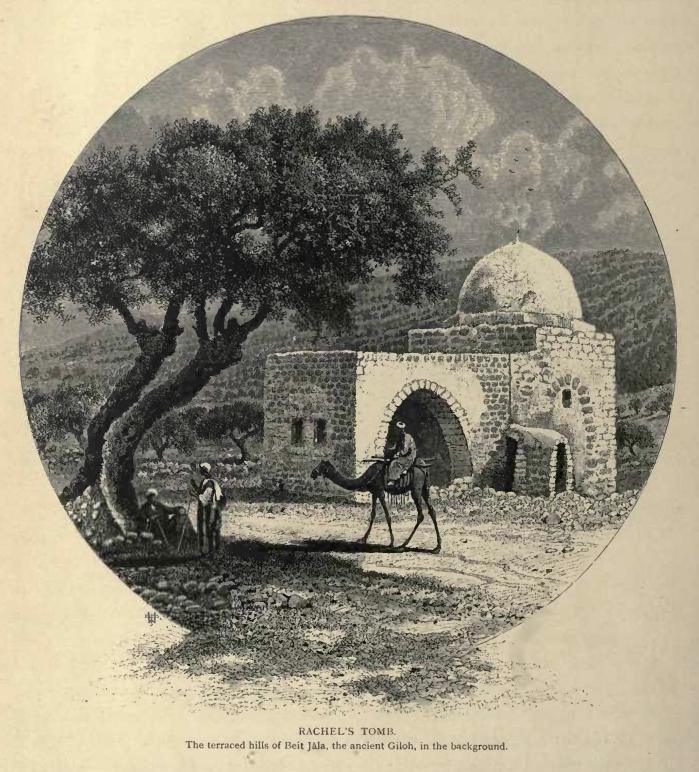 🇵🇸 Palestine and 1 moreRachel's TombQever Raḥel; Qabr Rāḥīl
A shared holy site near Bethlehem revered by Jews, Christians, and MuslimsTradition · Speaking with spirits and the dead · Protection Living
🇵🇸 Palestine and 1 moreRachel's TombQever Raḥel; Qabr Rāḥīl
A shared holy site near Bethlehem revered by Jews, Christians, and MuslimsTradition · Speaking with spirits and the dead · Protection Living