A Treatise on White Magic
An esoteric textbook by Alice Bailey outlining fifteen rules for spiritual service and initiation.
Published in 1934, this book serves as a foundational guide for students of Theosophy. It outlines a disciplined path focused on serving humanity through spiritual evolution and the mastery of seven distinct energies.
- Published in 1934 by Alice Bailey.
- Contains fifteen rules of magic.
- Claimed to be dictated by Djwal Khul.
- Focuses on the Seven Rays.
- Aims for human spiritual evolution.
What it is
This work is an esoteric manual designed to introduce readers to the principles of white magic. It functions as a basic textbook for those seeking initiation within the Western tradition. The text presents a structured approach to spiritual development, emphasizing service to others over personal gain. It covers complex topics such as the interaction between different spiritual realms and the psychology of the soul. The content aims to guide aspirants through the mysteries of higher consciousness.
Where it comes from
Alice Bailey published the book in 1934 under the subtitle 'The Way of the Disciple'. This places the work within the broader context of Theosophical literature. The text is considered one of her most significant contributions because it offers a more practical and less abstract framework than her other writings. It establishes a programmatic foundation for her subsequent teachings on spiritual discipline.
How it is done
The text divides its teachings into fifteen specific rules of magic. Each rule is intended to take the reader deeper into spiritual understanding. The practice involves meditation work and an understanding of the Seven Rays. Students are taught to prepare themselves for service by aligning with these spiritual energies. The method focuses on soul control and the management of various influences. It requires a disciplined study of the relationship between the individual and the macrocosm.
A Treatise on White Magic, drawn and placed
- Living
- Revived
- Fading
- Historical
- Legendary
- Performed
- Lineage
- Theosophy
What it is for
The ultimate goal is the furtherance of both spiritual and material evolution for humanity. Practitioners believe that white magic facilitates this progress through the benevolent manifestation of seven spiritual energies. These energies are referred to as the Seven Rays. Adept practitioners use these forces to contribute to cultural and spiritual advancement. The primary purpose is often linked to the energy of Love-Wisdom, which is associated with the second ray.
Who does it
The intended audience consists of Western aspirants seeking initiation. They are expected to be students of Theosophy and Alice Bailey's writings. The text assumes a level of dedication to serving humanity. Historically, some Theosophists believed that only individuals pure of heart, mind, and body could perform white magic. Any action tinged with selfishness was considered black magic. The practitioner must navigate the complexities of spiritual psychology and occult concepts.
At a glance: who, where and when
Who does it
Belief worlds
What people believe
The worldview is rooted in Theosophy and the concept of the Seven Rays. These rays represent different spiritual energies or influences. The text discusses the Hierarchy of Masters and esoteric groups. It explores the interactions between the physical, astral, causal, and spiritual realms. The central theme is soul control and the alignment of the individual with higher spiritual forces. The second ray, representing Love-Wisdom, is seen as the primary expression of the Solar Logos.
Questions people ask about A Treatise on White Magic
What is the main purpose of white magic according to this text?
It aims to further the spiritual and material evolution of humanity through the benevolent use of seven spiritual energies known as the Seven Rays.
Who is credited with writing this book?
Alice Bailey wrote the book, though she stated it was dictated to her telepathically by a Tibetan Master named Djwal Khul.
Where does this text originate from?
It originates from the Theosophical movement and is part of Alice Bailey's extensive body of esoteric writings published in the early twentieth century.
Good reading and sources
The facts on this page come from the Wikipedia article "A Treatise on White Magic", written by its contributors and used under the CC BY-SA 4.0 licence, and from its Wikidata record (CC0). EveryJaadu rewrote the text in its own words, with AI assistance, and compares every page with the article to make sure no passage is copied. It may be reused under the same CC BY-SA 4.0 licence with a link back.
It may contain mistakes. Names and customs differ from one community to the next, and some knowledge is closed to outsiders and left out here. This page describes belief and practice. It does not say that any of it works, it is not a how-to, and it is not medical advice. If something is wrong, tell us. Last refreshed 2026-10-11.
More from India
All the entries from India 🇳🇵 Nepal and 1 moreMatsyendranathMacchindranāth, Mīnanātha
A yogi and rain deity revered across Hindu and Buddhist traditions in South Asia.Figure · Speaking with spirits and the dead · Power and authority Living
🇳🇵 Nepal and 1 moreMatsyendranathMacchindranāth, Mīnanātha
A yogi and rain deity revered across Hindu and Buddhist traditions in South Asia.Figure · Speaking with spirits and the dead · Power and authority Living
 🇮🇳 India and 4 moreTantraतन्त्र
An esoteric yogic tradition from India focusing on ritual, mantra, and body-based spiritual practices.Tradition · Power and authority · Change and initiation Living
🇮🇳 India and 4 moreTantraतन्त्र
An esoteric yogic tradition from India focusing on ritual, mantra, and body-based spiritual practices.Tradition · Power and authority · Change and initiation Living
 🇮🇳 India and 1 moreMantraमन्त्रम्
A sacred sound or phrase repeated to focus the mind and invoke spiritual powerText · Speaking with spirits and the dead · Power and authority Living
🇮🇳 India and 1 moreMantraमन्त्रम्
A sacred sound or phrase repeated to focus the mind and invoke spiritual powerText · Speaking with spirits and the dead · Power and authority Living
 🇮🇳 IndiaAtharvavedaअथर्ववेद
The fourth Veda of Hinduism, containing spells, healing rites, and domestic rituals.Text · Protection · Healing Historical
🇮🇳 IndiaAtharvavedaअथर्ववेद
The fourth Veda of Hinduism, containing spells, healing rites, and domestic rituals.Text · Protection · Healing Historical
Related elsewhere
All text 🇬🇧 United KingdomHermetic Order of the Golden DawnOrdo Hermeticus Aurorae Aureae
A late-19th-century British magical order that shaped modern Western occultismTradition · Speaking with spirits and the dead · Change and initiation Historical
🇬🇧 United KingdomHermetic Order of the Golden DawnOrdo Hermeticus Aurorae Aureae
A late-19th-century British magical order that shaped modern Western occultismTradition · Speaking with spirits and the dead · Change and initiation Historical
 🇺🇸 United StatesGhost DanceNanissaanah
A circular movement seeking spiritual renewal and reunion with ancestorsRite · Speaking with spirits and the dead · Change and initiation Living
🇺🇸 United StatesGhost DanceNanissaanah
A circular movement seeking spiritual renewal and reunion with ancestorsRite · Speaking with spirits and the dead · Change and initiation Living
 🇮🇹 ItalyArcheosofica
A school of esoteric Christianity founded in Rome that teaches ascetic disciplines and magical theory.Tradition · Power and authority · Speaking with spirits and the dead Living
🇮🇹 ItalyArcheosofica
A school of esoteric Christianity founded in Rome that teaches ascetic disciplines and magical theory.Tradition · Power and authority · Speaking with spirits and the dead Living
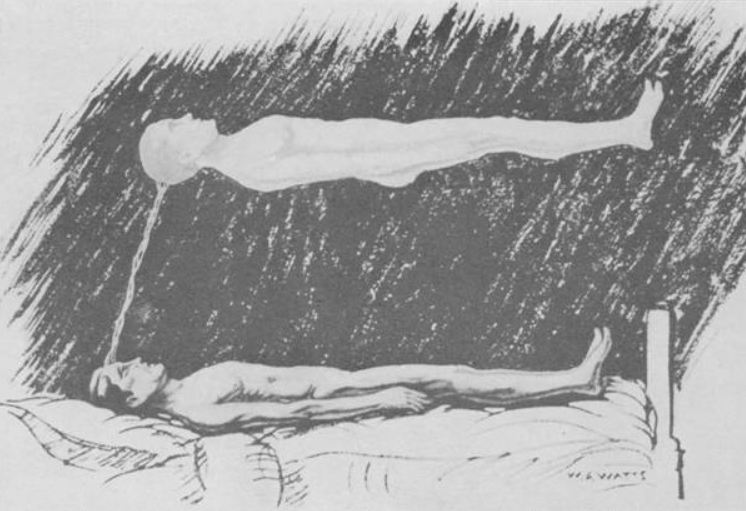 🇮🇳 India and 3 moreAstral projection
An intentional out-of-body experience where consciousness travels through the astral planeTradition · Speaking with spirits and the dead · Change and initiation Living
🇮🇳 India and 3 moreAstral projection
An intentional out-of-body experience where consciousness travels through the astral planeTradition · Speaking with spirits and the dead · Change and initiation Living