Next: 13 Dec 2026
St Lucy's Day and Lussi Night
Once thought of as the longest night, when in Scandinavian belief the troll-woman Lussi rides and animals must be guarded.
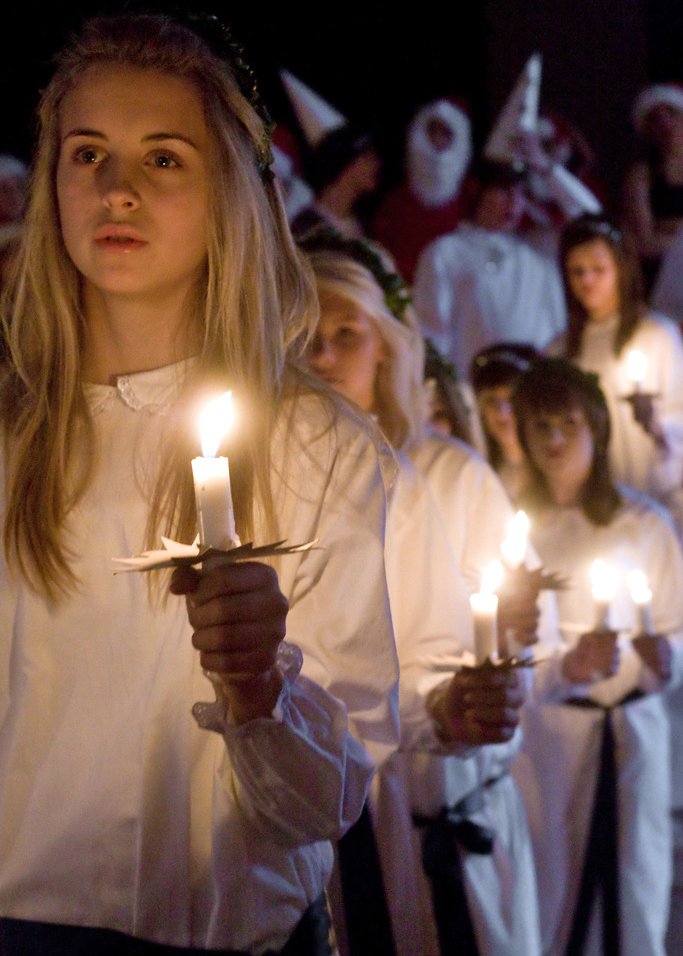
About St Lucy's Day and Lussi Night
Before calendar reform, 13 December was held to be the winter solstice, and the night was seen as dangerous in the Nordic countryside. Folk tradition in Norway and Sweden speaks of Lussi or Lussi-Lang, a being who flies with a band of spirits and punishes those who work or leave things undone, so households finished their tasks and guarded stores and animals. Later the day became St Lucy's, with a procession of white-robed girls carrying candles, a custom now strongly associated with Sweden. How the older beliefs relate to the saint's feast is uncertain, since the source material is mostly from the nineteenth century. The candle procession has become one of Scandinavia's best-known winter customs.
Also part of it, and being written: Saint Lucy's Day (The feast and its candle procession.), Lussi (The Nordic figure of the night.).
Written by the EveryJaadu desk with AI assistance. Background: "Saint Lucy's Day" on Wikipedia. Customs differ from place to place and family to family, and are described as belief and practice. If this is your tradition and we have it wrong, tell us.