Spirit work
Haitian Vodou service
A ceremony in a Vodou temple, the ounfo, with drums, song, offerings, and the arrival of the lwa in a devotee.
Presented by ClearTrust Customs described as customs, free to read.
Vodou is the religion of many Haitians, formed in the Caribbean from West and Central African traditions and Catholic imagery. A service, or sevis, is held by a priest, an oungan, or a priestess, a manbo, in a temple called an ounfo. Drums and song call the lwa, the spirits, who are said to mount a devotee and speak to the community.
This is an outline of a custom, said as belief and practice. It is not instruction, it does not say that the rite works, and it is not medical advice.
What goes into it
- DrumsToolThree drums carry the rhythm.
- VeveObjectA symbol drawn in flour or cornmeal.
- Food and drinkOfferingChosen for each lwa.
- Songs in CreoleWordGreet and call the spirits.
- OunfoSpaceThe temple.
- Tool
- Object
- Offering
- Word
- Space
Each part has an equal wedge. The ring shows what goes into the rite, not how much. Colour is the part's role.
The steps, drawn
Each drawing shows the kind of act in that step. Details differ from place to place, family to family and practitioner to practitioner.
Step 1: Cleanse The temple is prepared and the poteau-mitan is honoured. Step 2: Speak Opening prayers and songs greet Papa Legba and the spirits. Step 3: Circle Drumming and dance build until a lwa arrives. Step 4: Read The lwa speaks through the possessed devotee to the community. Step 5: Offer Offerings are made and shared. Step 6: Close The service ends with a closing song.
What happens
A service opens with Catholic prayers and songs in Haitian Creole, and a veve, a drawn symbol, may mark the ground for a lwa. Food, drink and, in some rites, animals are offered. The lwa Papa Legba, who opens the way, is greeted first. Parts of the religion, and initiation, are closed.
History
The Haitian Revolution began in 1791 with a ceremony at Bois Caiman, a story told with variations. Colonial and later authorities banned the religion and the Roman Catholic Church mounted campaigns against it. Vodou was recognised by the Haitian state in 2003.
Misrepresentation
Outsiders for generations used the word voodoo for sensational stories of dolls and zombies. Doll-and-pin images are mostly from European folk magic and Hollywood, and are not a central part of Vodou.
What it is for
- Honouring the lwa
- Healing
- Guidance and protection
Who does it
Related entries
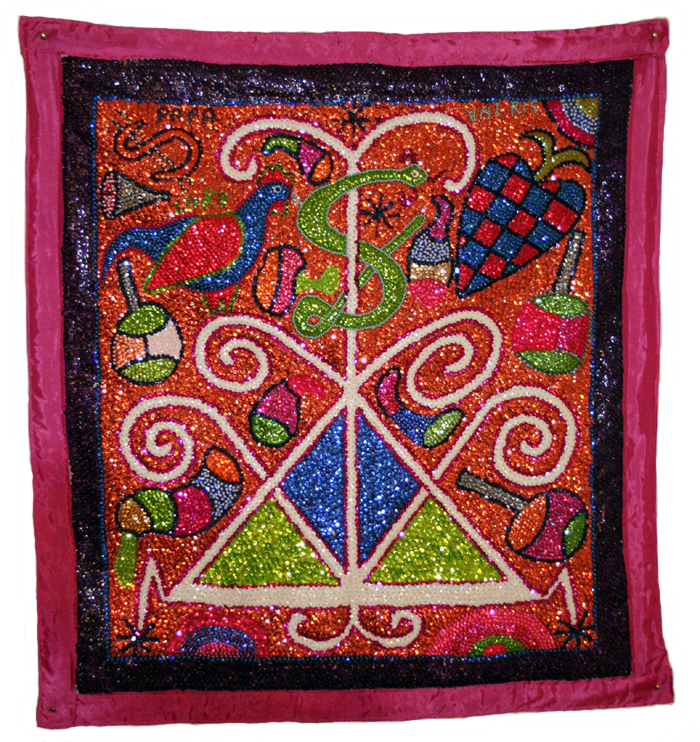

Also part of it, and being written: Vèvè (The symbols.).
More on EveryJaadu
No entries here yet. New pages are added every day.
Sources and further reading
Original text and drawings by the EveryJaadu desk, written with AI assistance and checked against the sources above. Closed or sacred detail is left out. If we have something wrong, tell us.
Photo credits on this page
The small pictures above come from Wikimedia Commons under free licences. Some are cropped to fit.
- Haitian Vodou: Sam Fentress, CC BY-SA 2.0, source
- Lwa: Hector Hyppolite, Public domain, source