
UR Group
from the phonetic expression u-r, meaning fire or bull in Chaldean and Runic traditions, or a German prefix for somethin
An Italian esoteric circle studying magic and traditional philosophy in the late 1920s.
The UR Group was an Italian association of intellectuals active around 1927. Members studied Traditionalism and magic to revitalize ancient sacred mysteries through shared esoteric research.
- Founded around 1927 by Julius Evola and others in Italy.
- Published monthly journals UR (1927-28) and KRUR (1929).
- Writings compiled into Introduction to Magic as Science of the Self.
- Members used pseudonyms to protect their identities.
- Included followers of Steiner, Pythagoras, and Hermeticism.
What it is
This group operated as an Italian esotericist association focused on the study of Traditionalism and Magic. Its members gathered to explore ascetic practices and share esoteric knowledge. They aimed to revitalize the perennial tradition of ancient sacred mysteries. The circle included individuals from various backgrounds, such as Freemasons, Catholics, and followers of Rudolf Steiner. Despite their different origins, they united under a common intention to pursue spiritual development through rigorous study and practice.
Where it comes from
Julius Evola founded the group around 1927 with the initial goal of influencing Benito Mussolini. He hoped to steer the leader toward an aristocratic regime based on ancient Roman virtues. Other key figures included Arturo Reghini and Giovanni Colazza. Reghini brought neo-Pythagorean influences, while Colazza introduced anthroposophy. The group declared independence from modern esoteric schools, referencing a universal Tradition instead. Internal conflicts soon arose, particularly between Evola and Reghini over Freemasonry, leading to a split and the creation of a new journal.
How it is done
Members employed anthroposophical exercises taught by Rudolf Steiner for spiritual growth. They also utilized techniques derived from Buddhist, Tantric, and rare Hermetic texts. The group published monthly journals named UR and later KRUR. Authors used pseudonyms to maintain anonymity and focus on ideas rather than personal fame. These publications contained hermetic-alchemical texts and philosophical works. The writings were eventually compiled into volumes titled Introduction to Magic as Science of the Self.
Tools and materials
The primary tools were the journals UR and KRUR, which served as platforms for disseminating thought. Members adopted symbolic names to sign their articles, reflecting a concept of active impersonality. Materials included translations of texts like the Turba philosophorum and Gichtel's Theosophia practica. The group relied on written discourse and shared reading of esoteric literature to facilitate their studies and maintain cohesion among diverse participants.
UR Group, drawn and placed
- Living
- Revived
- Fading
- Historical
- Legendary
- Performed
- Lineage
- Traditionalism and Magic
- Timing
- monthly publication in 1927, 1928, and 1929
What it is for
The group sought to revitalize ancient sacred mysteries through shared esoteric studies. Members aimed to initiate asceticism and achieve spiritual development. Some founders initially hoped to influence political structures using magical means. Over time, the focus shifted toward pure study and practice. Participants believed in a universal Tradition prior to specific doctrinal forms. Their work emphasized the science of the self and the path of initiatic wisdom.
Who does it
Julius Evola led the group and edited its first magazine. Other notable members included Arturo Reghini, Giovanni Colazza, and Giulio Parise. The circle consisted of approximately twelve to fifteen people. Members came from varied backgrounds, including poets, psychoanalysts, and mountaineers. Many were disciples of Rudolf Steiner or followers of Pythagoreanism. Pseudonyms protected their identities, though researchers have since linked many names to their real identities.
Peoples and places
The UR Group was primarily an Italian phenomenon. It emerged within the intellectual circles of Italy during the late 1920s. Members included Italians from diverse professional fields. The group attracted those interested in cross-cultural esoteric traditions. While rooted in Italy, it engaged with global philosophical currents. The movement reflected a broader interest in traditionalism and magic among European intellectuals of the era.
At a glance: who, where and when
Who does it
Peoples
Belief worlds
What people believe
Members adhered to a universal Tradition transcending specific religious forms. Anthroposophy significantly influenced many participants. Some were Catholics, while others followed Hermeticism or Pythagoreanism. They believed in the value of asceticism and spiritual discipline. They viewed magic as a science of the self requiring rigorous study. This worldview integrated elements from Christian esotericism and Eastern philosophies.
When it is done
The group published journals monthly during three specific years: 1927, 1928, and 1929. The first journal was named UR, and the second KRUR. These publications marked the active period of the group's literary output. No specific festivals or calendar days are associated with their rituals. Their activities were structured around the release of their magazines and internal meetings.
How scholars and sceptics see it
Researchers such as Gianfranco de Turris and Renato Del Ponte have investigated the group's membership. Scholars have analyzed the pseudonyms used by members to reveal their identities. Academic work focuses on the group's role in Italian esoteric history. Studies examine the influence of figures like Evola and Reghini on modern traditionalism. Historians note the group's significance in the context of early twentieth-century occultism.
Cautions and what is closed
Internal disagreements led to splits within the group. Conflicts between Evola and Reghini resulted in the departure of some members. The group's political ambitions regarding Mussolini did not materialize. The use of pseudonyms created ambiguity about authorship. Modern readers must distinguish between historical facts and the group's own claims. The legacy includes both scholarly interest and controversy due to Evola's later associations.
Compare and confuse
The UR Group is related to other traditionalist movements of the time. It shares similarities with groups influenced by René Guénon and Amedeo Rocco Armentano. Unlike some esoteric orders, it remained small and informal. The group's publications overlap with interests in Hermeticism and Neopythagoreanism found in other contemporary Italian circles.
Questions people ask about UR Group
What was the UR Group?
It was an Italian esotericist association founded around 1927. Members studied Traditionalism and magic to revitalize ancient sacred mysteries through shared research and practice.
Who founded the UR Group?
Julius Evola founded the group. Key collaborators included Arturo Reghini and Giovanni Colazza, who brought diverse esoteric backgrounds to the circle.
What did the group publish?
They published monthly journals named UR and KRUR. These articles were later reprinted in volumes titled Introduction to Magic as Science of the Self.
Why did members use pseudonyms?
Authors signed with pseudonyms to spread their thoughts without advertising their personal identities. This reflected a belief in active impersonality within their esoteric work.
Good reading and sources
- UR Group on WikipediaEncyclopedia
- More photos on Wikimedia CommonsPhotos and video
- Wikidata recordOpen data
The facts on this page come from the Wikipedia article "UR Group", written by its contributors and used under the CC BY-SA 4.0 licence, and from its Wikidata record (CC0). EveryJaadu rewrote the text in its own words, with AI assistance, and compares every page with the article to make sure no passage is copied. It may be reused under the same CC BY-SA 4.0 licence with a link back.
It may contain mistakes. Names and customs differ from one community to the next, and some knowledge is closed to outsiders and left out here. This page describes belief and practice. It does not say that any of it works, it is not a how-to, and it is not medical advice. If something is wrong, tell us. Last refreshed 2026-10-07.
More from Italy
All the entries from Italy 🇩🇪 Germany and 5 moreMaypoleMaibaum
A tall wooden pole raised for European spring festivals, accompanied by dance and celebration.Tradition · Luck and prosperity · Love and attraction Living
🇩🇪 Germany and 5 moreMaypoleMaibaum
A tall wooden pole raised for European spring festivals, accompanied by dance and celebration.Tradition · Luck and prosperity · Love and attraction Living
 🇮🇹 Italy and 3 moreSaturnalia
An ancient Roman winter festival of role reversal and feasting in honor of SaturnTradition · Luck and prosperity · Wonder and entertainment Historical
🇮🇹 Italy and 3 moreSaturnalia
An ancient Roman winter festival of role reversal and feasting in honor of SaturnTradition · Luck and prosperity · Wonder and entertainment Historical
 🇮🇹 Italy and 5 moreTarottarocchi
A set of playing cards used for games and divinationTradition · Seeing and foretelling · Luck and prosperity Living
🇮🇹 Italy and 5 moreTarottarocchi
A set of playing cards used for games and divinationTradition · Seeing and foretelling · Luck and prosperity Living
 🇬🇧 United Kingdom and 3 moreWelsh mythologyY Chwedlau
The ancient legends of Wales and the Celtic Britons, preserved in medieval manuscripts.Tradition · Wonder and entertainment Historical
🇬🇧 United Kingdom and 3 moreWelsh mythologyY Chwedlau
The ancient legends of Wales and the Celtic Britons, preserved in medieval manuscripts.Tradition · Wonder and entertainment Historical
Related elsewhere
All tradition 🇮🇳 IndiaChakraचक्र
Meditation points in the subtle body used in Hindu and Buddhist yogaTradition · Speaking with spirits and the dead · Change and initiation Living
🇮🇳 IndiaChakraचक्र
Meditation points in the subtle body used in Hindu and Buddhist yogaTradition · Speaking with spirits and the dead · Change and initiation Living
 🇮🇱 Israel and 4 moreIsaac Luriaיִצְחָק בן שלמה אשכנזי לוּרְיָא
A sixteenth-century rabbi who founded modern Kabbalah through oral teachings in Safed.Text · Speaking with spirits and the dead · Change and initiation Living
🇮🇱 Israel and 4 moreIsaac Luriaיִצְחָק בן שלמה אשכנזי לוּרְיָא
A sixteenth-century rabbi who founded modern Kabbalah through oral teachings in Safed.Text · Speaking with spirits and the dead · Change and initiation Living
 🇳🇬 NigeriaOrunmilaỌ̀rúnmìlà
Yoruba deity of wisdom and the creator of the Ifá divination systemBeing · Seeing and foretelling · Speaking with spirits and the dead Living
🇳🇬 NigeriaOrunmilaỌ̀rúnmìlà
Yoruba deity of wisdom and the creator of the Ifá divination systemBeing · Seeing and foretelling · Speaking with spirits and the dead Living
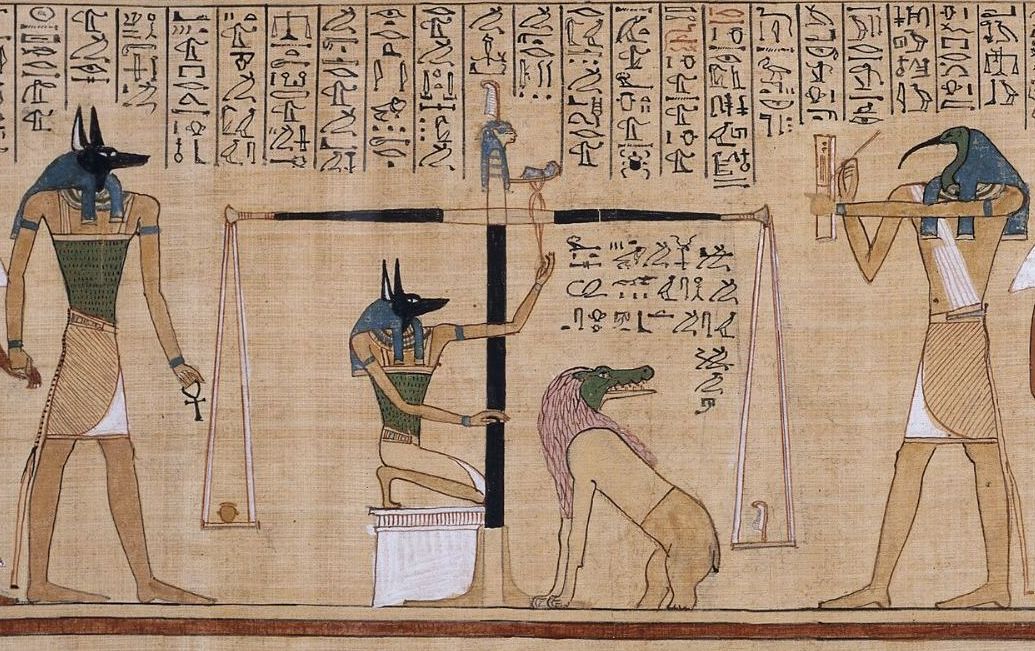 🇪🇬 EgyptAncient Egyptian afterlife beliefs
A system of rituals and texts guiding the soul through the underworld to eternal rebirthTradition · Protection · Speaking with spirits and the dead Historical
🇪🇬 EgyptAncient Egyptian afterlife beliefs
A system of rituals and texts guiding the soul through the underworld to eternal rebirthTradition · Protection · Speaking with spirits and the dead Historical