
Trochilus
In its own language: τροχίλος
from Greek trokhilos, meaning runner
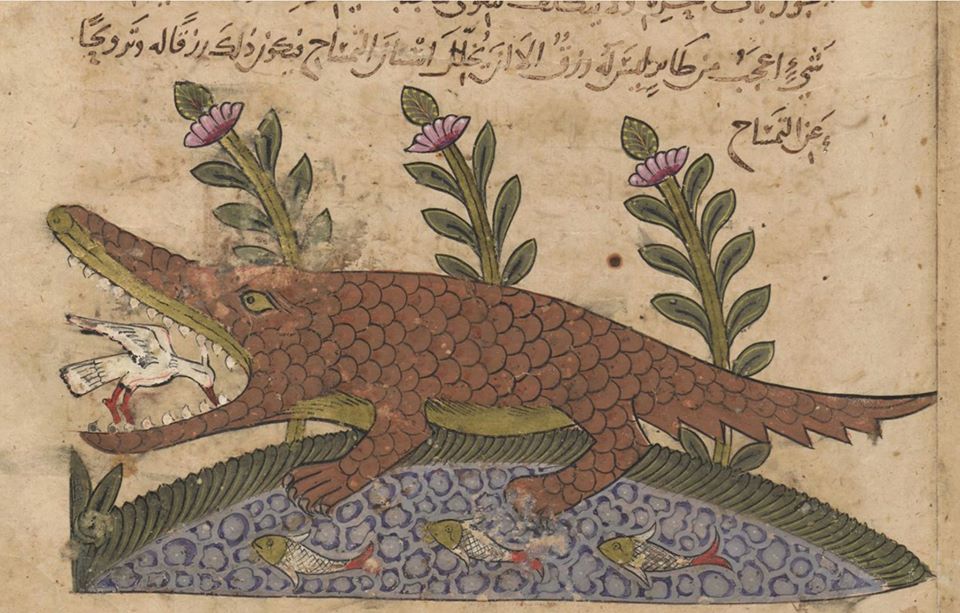
A legendary bird said to clean the teeth of Nile crocodiles
The trochilus is a mythical bird first described by Herodotus in ancient Egypt. It was believed to enter the open mouths of Nile crocodiles to remove parasites and food debris.
- First described by Herodotus around 440 BC
- Believed to clean crocodile teeth or remove leeches
- Symbol of ingratitude in Elizabethan literature
- Later identified with spur-winged plovers
- Considered a fable by modern biologists
What it is
The trochilus is a legendary bird from ancient Egyptian lore. Ancient writers described it as a small creature that lived in harmony with the Nile crocodile. The bird was said to fly into the reptile's wide-open mouth to feed on leeches or rotting meat lodged between its teeth. This relationship was viewed as a mutual benefit where the crocodile received cleaning while the bird obtained food without danger.
Where it comes from
The story appears in the Histories of Herodotus around 440 BC. Later authors including Aristotle, Pliny the Elder, and Aelian expanded on the tale. They varied the details, with some claiming the bird cleaned teeth while others focused on leech removal. The narrative became a staple of ancient natural history despite lacking empirical verification.
How it is done
Accounts describe the crocodile lying on the shore with its mouth agape. The trochilus would hop inside to pick at parasites or flesh. Some versions suggested the bird provoked the opening by pricking the palate with thorns or spurs. The crocodile would remain still, enjoying the sensation, allowing the bird to work safely.
Tools and materials
The primary elements were the crocodile's open jaws and the parasites within. The bird acted as a biological tool for hygiene. No physical objects were used beyond the natural anatomy of the animals involved.
Trochilus, drawn and placed
- Living
- Revived
- Fading
- Historical
- Legendary
- Performed
- Lineage
- ancient natural history
- Timing
- when basking on riverbanks
What it is for
The legend served to illustrate natural harmony and symbiosis. In later literature, particularly among Elizabethan writers, the trochilus became a symbol of ingratitude. The relationship was often used metaphorically to critique betrayal despite kindness received.
Who does it
No living practitioners perform rituals involving the trochilus. The figure exists solely within historical texts and literary traditions. Scholars and naturalists have studied the accounts to understand ancient perceptions of wildlife and ecology.
Peoples and places
The tradition originated in Egypt, associated with the Nile valley. It spread through Greek and Roman writings. Later European travelers and naturalists attempted to identify the real bird behind the myth, linking it to plovers and lapwings found in Africa.
At a glance: who, where and when
Peoples


What people believe
Ancient observers believed in a strict ecological balance where different species assisted one another. The trochilus represented a rare exception to the general fear humans and beasts held toward crocodiles. Modern science views the account as a fable, noting that reliable evidence for such a specific symbiotic relationship is absent.
When it is done
The activity was described as occurring whenever crocodiles basked on riverbanks.
How scholars and sceptics see it
Modern biologists consider the story suspect due to lack of observational proof. The legend persists as an example of how ancient writers interpreted animal behavior through moral or symbolic lenses.
Cautions and what is closed
The trochilus is a fictional entity derived from misinterpreted observations. No actual danger or ritual risk is associated with it.
Compare and confuse
The trochilus is often compared to modern examples of cleaning symbiosis, such as cleaner fish or birds that remove parasites from larger animals. It is also linked to the ichneumon, another creature featured in ancient tales of crocodile predation.
Questions people ask about Trochilus
What is the trochilus?
It is a legendary bird from ancient Egypt described by Herodotus. It was believed to enter crocodile mouths to eat parasites or food debris left behind after feeding.
Where does the name come from?
The name comes from the Greek word trokhilos, which means runner. This referred to the bird's movement along the riverbanks and into the crocodile's mouth.
Is the trochilus a real bird?
No, it is a mythical figure. Ancient writers likely confused it with real birds like the spur-winged plover or sandpiper that are sometimes seen near crocodiles.
Good reading and sources
- Trochilus (crocodile bird) on WikipediaEncyclopedia
- More photos on Wikimedia CommonsPhotos and video
- Wikidata recordOpen data
The facts on this page come from the Wikipedia article "Trochilus (crocodile bird)", written by its contributors and used under the CC BY-SA 4.0 licence, and from its Wikidata record (CC0). EveryJaadu rewrote the text in its own words, with AI assistance, and compares every page with the article to make sure no passage is copied. It may be reused under the same CC BY-SA 4.0 licence with a link back.
It may contain mistakes. Names and customs differ from one community to the next, and some knowledge is closed to outsiders and left out here. This page describes belief and practice. It does not say that any of it works, it is not a how-to, and it is not medical advice. If something is wrong, tell us. Last refreshed 2026-10-23.
More from Egypt
All the entries from Egypt 🇪🇬 EgyptKhaemwesetḫꜥ m wꜣst
A prince and priest remembered for restoring ancient Egyptian monuments.Figure Historical
🇪🇬 EgyptDjedi
A fictional magician from the Westcar Papyrus who resurrects animals and foretells a king's lineage.Figure · Seeing and foretelling · Wonder and entertainment Legendary
 🇪🇬 EgyptImhotepỉỉ-m-ḥtp
An ancient Egyptian architect deified as a god of healing and wisdomBeing · Healing · Power and authority Historical
 🇪🇬 EgyptLucifer
A Latin name for the planet Venus that became an epithet for the Devil in Christian traditionFigure · Cursing and harm Historical
Related elsewhere
All figure 🇫🇷 France and 2 moreKing ArthurBrenin Arthur
A legendary British king and folk hero of medieval literature and Welsh mythologyFigure · Power and authority · Wonder and entertainment Legendary
 🇫🇷 FranceHoly GrailSaint Graal
A cup or stone from Arthurian legend with miraculous powersFigure · Healing · Luck and prosperity Legendary
 🇮🇳 India and 1 moreMantraमन्त्रम्
A sacred sound or phrase repeated to focus the mind and invoke spiritual powerText · Speaking with spirits and the dead · Power and authority Living
 🇨🇿 Czech RepublicCzech folklore
The folk traditions of the Czech people, from seasonal rites to music and craft.Tradition · Protection · Luck and prosperity Living