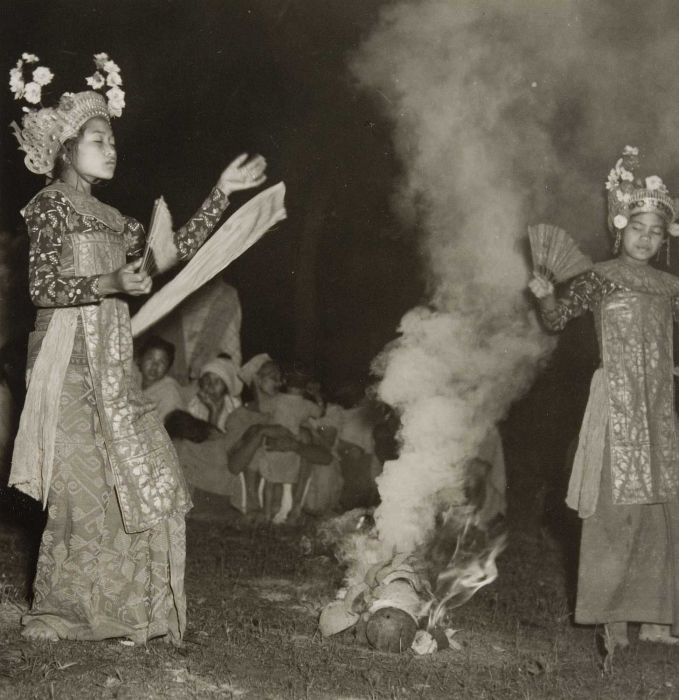
Sanghyang
In its own language: ᬲᬂᬳ᭄ᬬᬂ (Tari Sanghyang)
A Balinese sacred dance where performers enter trance to host spiritual entities
Sanghyang is a traditional sacred dance from the Indonesian island of Bali. It involves dancers entering a trance state to allow a spiritual entity called hyang to inhabit their bodies.
- Sanghyang is a sacred Balinese ritual dance
- Dancers enter trance to host hyang spirits
- Performed exclusively at religious ceremonies
- Includes variants like bojog and dedari
- Recognized by UNESCO as intangible heritage
What it is
Sanghyang is a sacred ritual dance originating in Bali, Indonesia. The performance centers on a dancer entering a deep trance. During this state, the performer is believed to be inhabited by a spirit known as a hyang. These hyangs are significant figures in ancient Indonesian mythology. The dance is not for entertainment but serves as a religious act. It is performed exclusively during temple ceremonies and other sacred events in Bali.
Where it comes from
The dance comes from the island of Bali within Indonesia. It is rooted in the local indigenous belief system. The practice relies on the concept of hyangs, which are spiritual forces or entities. Ancient Indonesian mythology identifies these beings as important presences. The tradition has been maintained by the Balinese people as part of their cultural heritage.
Tools and materials
The music accompanies the dance using traditional instruments. A gamelan orchestra provides the main rhythm. A suling bamboo flute adds melodic lines. Kendhang drums mark the beats. Specific props appear in certain versions. Deling dolls made from lontar leaves are used in one variant. Broomsticks or bamboo pieces may be held by dancers in others.
Sanghyang, drawn and placed
- Living
- Revived
- Fading
- Historical
- Legendary
- Performed
- Lineage
- Balinese sacred dance
- Timing
- at religious ceremonies
What it is for
The dance is performed to commune with spirits. It is a form of religious worship at Balinese temples. The goal is to allow the hyang to interact with the community through the dancer. It is not done for casual viewing. The presence of the spirit is considered a blessing or a necessary ritual act for the ceremony.
Who does it
Performers can be men, women, or children. In some dances, pre-pubescent girls are the main dancers. Others involve adult men acting as animals. The dancers must undergo a process to enter the trance. They are chosen for the role and prepare through specific rituals. The status of the dancer is that of a vessel for the spirit.
Peoples and places
The practice belongs to the Balinese people of Indonesia. Various villages have their own versions. Sanghyang bojog is found in Bugbug, Karangasem. Sanghyang celeng is specific to Duda, Karangasem. Other forms are more widespread across Bali. The Balinese maintain these traditions as part of their religious life.
At a glance: who, where and when
Who does it
Peoples
Belief worlds
Occasions


What people believe
The underlying belief is that spirits called hyangs can enter human bodies. These entities are central to ancient Indonesian mythology. The trance is the mechanism that allows this connection. The dancer becomes a medium for the spiritual world. This reflects a worldview where the physical and spiritual realms intersect during rituals.
When it is done
The dance is performed at religious ceremonies. These often coincide with temple festivals. The timing is tied to the ritual calendar of the Balinese Hindu tradition. Specific occasions require the presence of the hyangs through dance.
How scholars and sceptics see it
Scholars view Sanghyang as a key example of Balinese ritual performance. Anthropologists study it to understand spirit possession in Southeast Asia. It is recognized as intangible cultural heritage by UNESCO. This classification highlights its importance to Indonesian identity and tradition.
Cautions and what is closed
The trance state involves real psychological and physical risks. Performers lose conscious control during the ritual. The practice is closed to outsiders who do not participate in the religion. Respect for the sacred nature of the dance is required.
Compare and confuse
Sanghyang is related to other Balinese dances like Legong and Kecak. However, those are often for entertainment. Sanghyang remains strictly sacred. It differs from Javanese Kuda Lumping, though both use trance and hobby horses. The term sanghyang specifically refers to the sacred genre.
Law and persecution
UNESCO listed Sanghyang as part of 'Three genres of traditional dance in Bali' in 2015. This recognition protects the dance as intangible cultural heritage. Indonesia supports the preservation of these performances. There are no legal restrictions mentioned against the practice.
Questions people ask about Sanghyang
What is Sanghyang?
It is a sacred Balinese dance from Indonesia where performers enter a trance to allow spirits to inhabit them.
Where does it come from?
It originates from the island of Bali in Indonesia, practiced by the Balinese people.
Who performs it?
Men, women, and children perform it, depending on the specific variant and ritual requirements.
Why is it done?
It is performed to commune with hyang spirits during religious ceremonies at Balinese temples.
Good reading and sources
- Sanghyang on WikipediaEncyclopedia
- More photos on Wikimedia CommonsPhotos and video
- Wikidata recordOpen data
The facts on this page come from the Wikipedia article "Sanghyang", written by its contributors and used under the CC BY-SA 4.0 licence, and from its Wikidata record (CC0). EveryJaadu rewrote the text in its own words, with AI assistance, and compares every page with the article to make sure no passage is copied. It may be reused under the same CC BY-SA 4.0 licence with a link back.
It may contain mistakes. Names and customs differ from one community to the next, and some knowledge is closed to outsiders and left out here. This page describes belief and practice. It does not say that any of it works, it is not a how-to, and it is not medical advice. If something is wrong, tell us. Last refreshed 2026-10-06.
More from Indonesia
All the entries from Indonesia 🇮🇩 IndonesiaNyepiᬜᬾᬧᬶ
A Balinese day of total silence, fasting, and self-reflection to mark the new year.Rite · Cleansing and purification · Speaking with spirits and the dead Living
🇮🇩 IndonesiaNyepiᬜᬾᬧᬶ
A Balinese day of total silence, fasting, and self-reflection to mark the new year.Rite · Cleansing and purification · Speaking with spirits and the dead Living
 🇹🇭 Thailand and 7 moreSpirit house
A small roofed shrine that shelters a place's protective spiritCharm · Protection Living
🇹🇭 Thailand and 7 moreSpirit house
A small roofed shrine that shelters a place's protective spiritCharm · Protection Living
 🇮🇩 IndonesiaOgoh-ogohᬳᭀᬕᭀᬄ ᬳᭀᬕᭀᬄ
Balinese sculptures paraded and burned to cleanse the environment before NyepiTradition · Cursing and harm · Cleansing and purification Living
🇮🇩 IndonesiaOgoh-ogohᬳᭀᬕᭀᬄ ᬳᭀᬕᭀᬄ
Balinese sculptures paraded and burned to cleanse the environment before NyepiTradition · Cursing and harm · Cleansing and purification Living
 🇮🇩 IndonesiaRangdaᬭᬗ᭄ᬤ
A Balinese demon queen who leads witches in an eternal battle against good.Figure · Cursing and harm · Wonder and entertainment Legendary
🇮🇩 IndonesiaRangdaᬭᬗ᭄ᬤ
A Balinese demon queen who leads witches in an eternal battle against good.Figure · Cursing and harm · Wonder and entertainment Legendary
Related elsewhere
All illusion 🇮🇳 IndiaChakraचक्र
Meditation points in the subtle body used in Hindu and Buddhist yogaTradition · Speaking with spirits and the dead · Change and initiation Living
🇮🇳 IndiaChakraचक्र
Meditation points in the subtle body used in Hindu and Buddhist yogaTradition · Speaking with spirits and the dead · Change and initiation Living
 🇳🇬 NigeriaOrunmilaỌ̀rúnmìlà
Yoruba deity of wisdom and the creator of the Ifá divination systemBeing · Seeing and foretelling · Speaking with spirits and the dead Living
🇳🇬 NigeriaOrunmilaỌ̀rúnmìlà
Yoruba deity of wisdom and the creator of the Ifá divination systemBeing · Seeing and foretelling · Speaking with spirits and the dead Living
 🇪🇸 Spain and 5 moreSt John's Eve
A Christian vigil marked by bonfires and plant gathering on the summer solstice eveRite · Protection · Speaking with spirits and the dead Living
🇪🇸 Spain and 5 moreSt John's Eve
A Christian vigil marked by bonfires and plant gathering on the summer solstice eveRite · Protection · Speaking with spirits and the dead Living
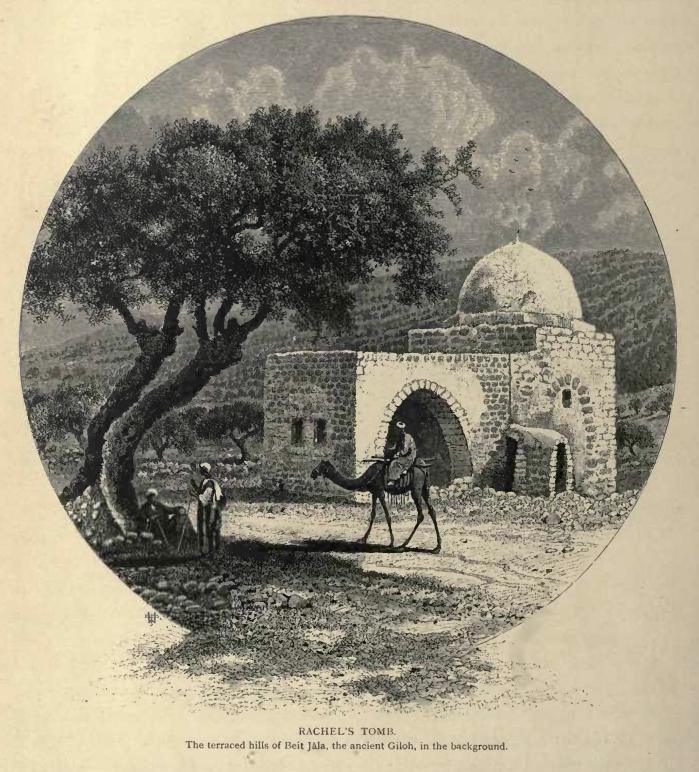 🇵🇸 Palestine and 1 moreRachel's TombQever Raḥel; Qabr Rāḥīl
A shared holy site near Bethlehem revered by Jews, Christians, and MuslimsTradition · Speaking with spirits and the dead · Protection Living
🇵🇸 Palestine and 1 moreRachel's TombQever Raḥel; Qabr Rāḥīl
A shared holy site near Bethlehem revered by Jews, Christians, and MuslimsTradition · Speaking with spirits and the dead · Protection Living